





Antique German Candelabra
These antique German candelabra bring elaborate porcelain figures and sinuous metalwork to the dining table or mantelpiece.
Antique German Candelabra
When you search for antique German candelabra, you find branch-light fittings and matching candlesticks created across the nineteenth and early twentieth centuries. The pieces on this page span the 1880s through to around 1905, taking the form of multi-arm candelabra, figural candlesticks and complete clock garnitures. Factory-made porcelain and metalwork dominate the selection, often grouped in matching pairs.
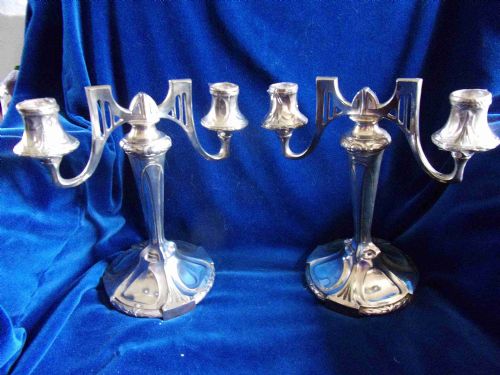
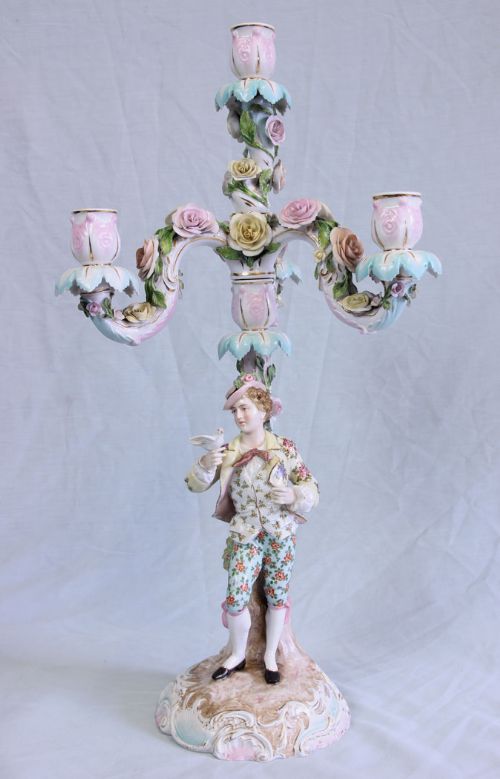
Porcelain examples frequently feature modelled figures such as gardeners alongside applied floral bases, while metal versions lean towards silvered pewter and silver plate. The aesthetic ranges from the sweeping curves of Jugendstil and Art Nouveau to the ornate scrollwork of Rococo Revival. Most items originate from established workshops including Meissen, Sitzendorf, Dresden and WMF.
How they were made
The porcelain pieces rely on hard-paste ceramic bodies fired at high temperatures, then hand-painted with enamels and decorated with gold leaf or gilt highlights. Modelled figural elements and intricate applied flowers require careful manual assembly by skilled ceramicists before glazing.
Metal candelabra utilise base metal cores finished with silver plating or cast in silvered pewter to achieve their metallic sheen. Workshops employed casting and chasing techniques to produce the organic tendrils and maiden figures characteristic of the Jugendstil period.
Antique German Candelabra Retail Price Guide 2026
Typical asking prices for german candelabra among the pieces listed under this phrase on Sellingantiques today, from the lower quarter to the upper quarter. They describe what is for sale here now, not the wider market.
Listings feature hard-paste porcelain, silvered pewter, and gold leaf across periods from the 1880s to 1905.
What varies in quality
In metalwork, the depth of the chasing and the integrity of the silvered or plated surfaces define the standard. Superior manufacturing shows in clean casting lines and harmonious proportions across multi-arm branches and figural stems.
Meissen·Sitzendorf·WMF·Dresden
The Antique German Candelabra Glossary
- Hard-paste porcelain
- A durable ceramic material composed of kaolin and petuntse, fired at very high temperatures. It provides the dense, white body typical of nineteenth-century German figural pieces.
- Jugendstil
- The German manifestation of Art Nouveau, flourishing around 1900. It is characterised by flowing, organic lines and stylised floral motifs.
- Clock garniture
- A set comprising a mantel clock flanked by matching decorative objects such as candelabra or urns. These sets were designed to create a symmetrical arrangement on a fireplace mantel.
- Silvered pewter
- A base metal alloy coated with a thin layer of silver to imitate solid silver. It was widely utilised by metalware firms in the late nineteenth and early twentieth centuries.
Antique German Candelabra: Frequently Asked Questions
Are these candelabra made of solid silver?
The metal examples on this page utilise silvered pewter, silver plate, or base metal rather than solid silver. Archive pieces show solid silver construction is less common among these listings.
Porcelain forms the primary material for the majority of these German lights, often decorated with gold leaf rather than precious metal sheets.
How do I identify a Meissen candelabra?
Meissen pieces usually feature hard-paste porcelain modelled with figural elements, elaborate scrollwork, and painted floral motifs. They date primarily from the nineteenth century.
Examining the underside for factory marks helps confirm the origin, alongside the characteristic weight and detail of the ceramic body.
What is a clock garniture?
A clock garniture is a decorative set that pairs a central mantel clock with matching side pieces like candelabra. These sets created a balanced, symmetrical display on nineteenth-century drawing room mantelpieces.
The materials and decorative style match across all items in the set, often incorporating porcelain figures or gilt bronze.
How do I care for antique porcelain candelabra?
Dust these delicate pieces gently with a soft brush to avoid damaging fragile applied porcelain flowers and painted details. Keep them away from direct sunlight to preserve the enamel colours.
Avoid using harsh chemical cleaners on gilt highlights or hand-painted surfaces to maintain the original finish.