


19th Century Partners Table
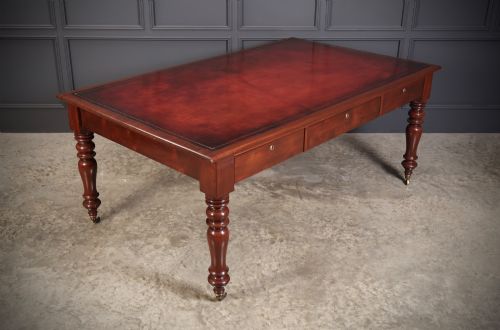
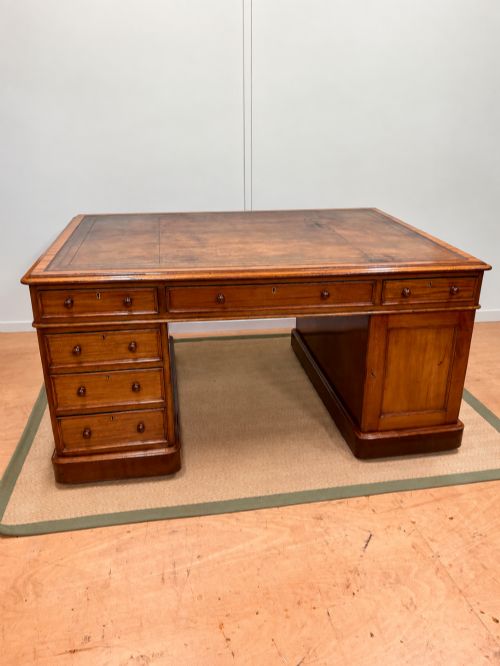
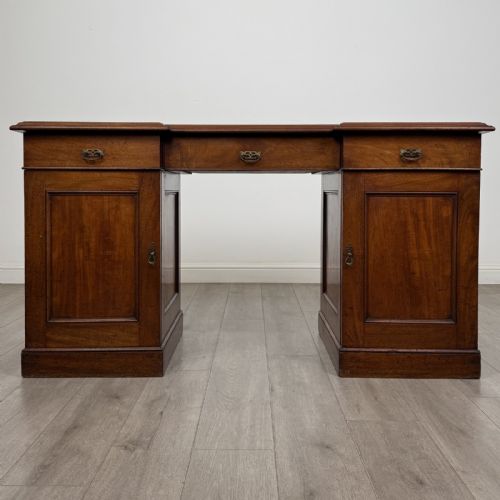
A 19th century partners table offers substantial double-sided workspace and deep library drawers, designed for shared administrative use.
19th Century Partners Table
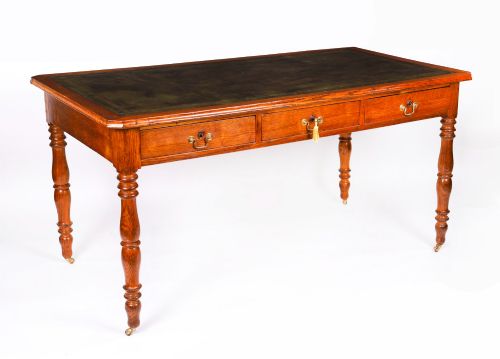
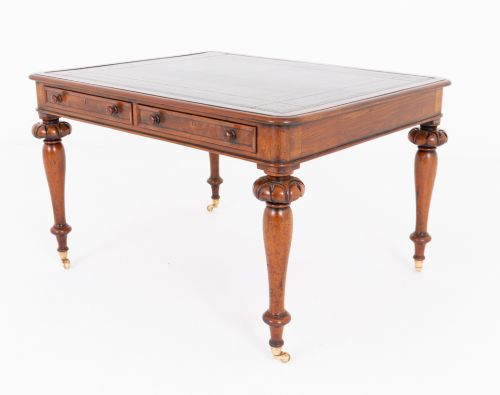
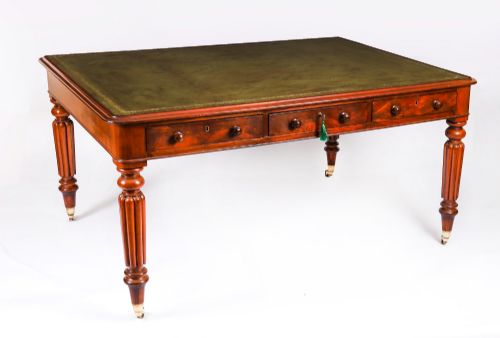
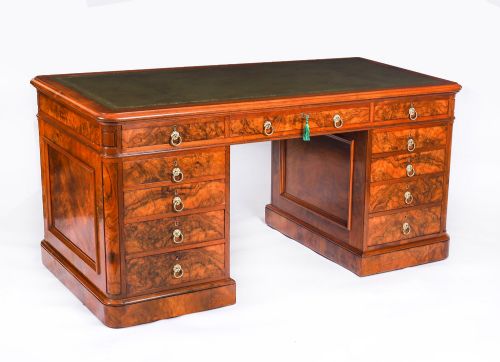
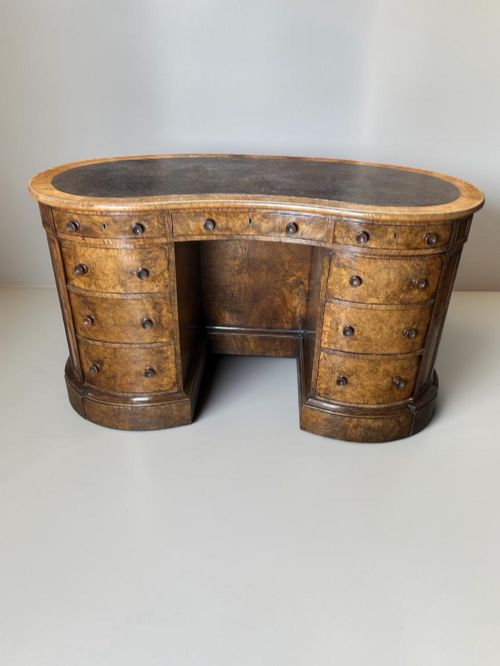
A 19th century partners table is a large, freestanding piece designed to accommodate two people working opposite one another, complete with matching drawer arrangements on both sides. These desks and library tables emerge frequently in mahogany, burr walnut, and oak across Victorian, Regency, and George IV periods.
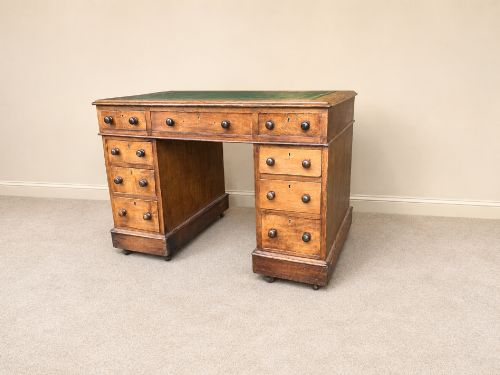
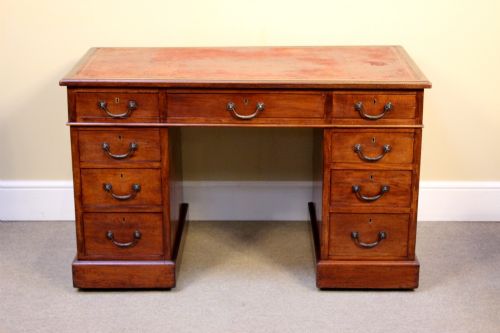
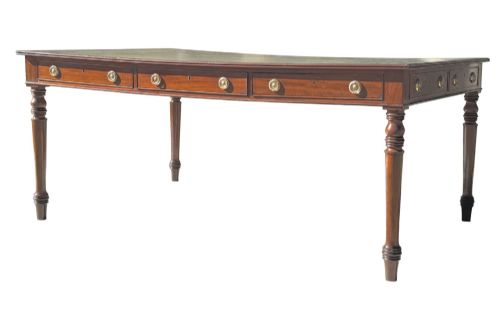
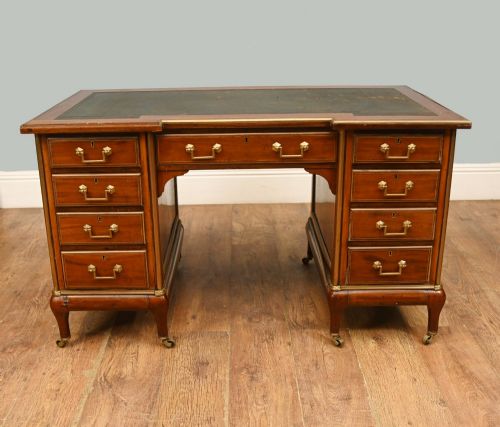
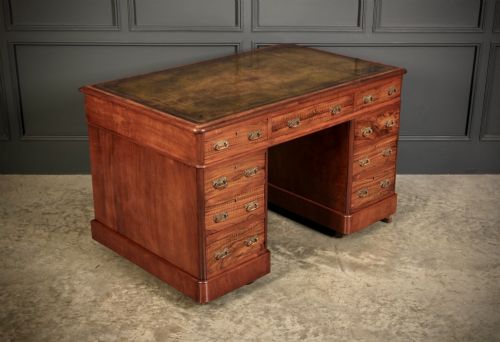
The most common form on this page is the twin pedestal desk or free-standing library table, often fitted with a leather writing surface. Examples range from compact four-foot writing tables to six-foot flame mahogany pieces with numerous drawers.
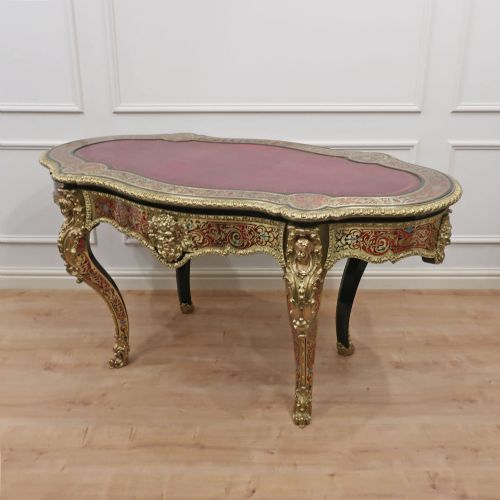
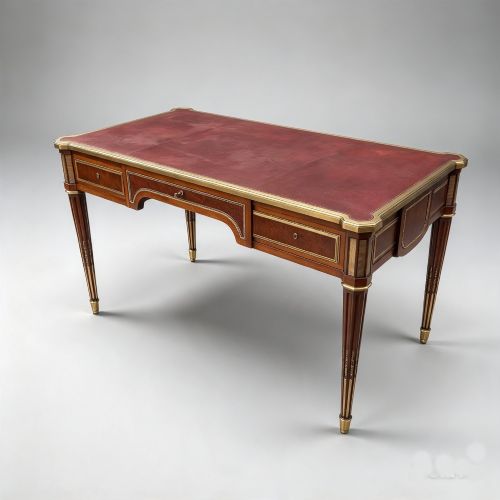
Makers and styles span standard English designs to French Empire bureau plats and Anglo-Indian carved padauk variations. They provide imposing centrepieces for studies and libraries, maintaining finished panels on all four sides so they sit centrally in a room.
How They Were Made
Cabinet makers utilised dense primary timbers such as mahogany, oak, walnut, and satin birch to build rigid structural frames and pedestal carcases. Drawer linings often employ secondary softwoods, joined with hand-cut dovetails.
Writing surfaces were inset with panels of leather, frequently tooled with blind or gilt decoration around the borders. Brass hardware, handles, and occasional ormolu mounts provide functional and decorative contrast to the dark timber.
Carved details appear on specific styles, ranging from Gothic Revival oak to Anglo-Indian carved padauk. French pieces such as the bureau plat incorporate ebonised finishes and distinct kneehole configurations.
19th Century Partners Table Retail Price Guide 2026
Typical asking prices for 19th century partners table among the pieces listed under this phrase on Sellingantiques today, from the lower quarter to the upper quarter. They describe what is for sale here now, not the wider market.
Listings feature woods including mahogany, burr walnut, oak, satin birch, kingwood, and padauk across the 19th century.
What Varies in Quality
The grade of timber selected for the primary surfaces sets the visual standard, with figured flame mahogany and burr walnut commanding attention over plain grains. Timber choice dictates the depth of natural patina achieved over centuries of use.
Holland and Sons·Trollope and Sons·Gillows
The 19th Century Partners Table Glossary
- Partners Table
- A large double-sided desk or library table built with drawers on opposing faces to allow two people to work simultaneously.
- Pedestal Desk
- A form comprising two freestanding drawer pedestals supporting a wide top, often connected by a central modesty panel or recessed kneehole.
- Bureau Plat
- A French freestanding writing table, typically featuring a leather-inset top and multiple frieze drawers, lacking the pedestal columns of English desks.
- Padauk
- A dense tropical timber valued for its durability and rich reddish-brown colour, seen in carved Anglo-Indian pieces.
- Ormolu
- Gilded bronze used for decorative mounts and furniture embellishments, characteristic of French Empire and Napoleon III styles.
19th Century Partners Table: Frequently Asked Questions
What is a partners table?
A partners table is a large, double-sided desk designed with matching drawer sets on both long faces. This layout allowed two people, such as business partners or bankers, to sit opposite each other.
Unlike standard desks meant to face a wall, these tables are finished on all four sides so they can stand freely in the middle of a library or study.
How do I care for the leather top?
The leather writing surface benefits from gentle dusting and occasional applications of neutral leather balm to keep the hide supple. Avoid using harsh chemical cleaners or excess water.
Keep the desk away from direct heat sources and strong sunlight to prevent the leather from drying out and cracking over time.
How do I tell Regency from Victorian styles?
Regency pieces, dating from the early part of the century, typically display clean classical lines, restrained brass inlay, and rich mahogany patination. They often reflect neoclassical or Grecian influences.
Victorian pieces, produced later in the century, tend to be heavier and more ornate, frequently incorporating burr walnut, carved cabriole legs, or Gothic Revival motifs.
Can these tables be dismantled for moving?
Most large pedestals and library tables are constructed in multiple modular parts, usually separating into two drawer pedestals and a heavy top. This modular build made transport through narrow hallways feasible.
Securing components safely requires checking for internal timber screws or wooden pegs that lock the top to the pedestals before lifting.