



19th Century Music Canterbury
A 19th century music canterbury is a dedicated stand designed to hold sheet music and folios, bringing both practical storage and period charm to a room.
19th Century Music Canterbury
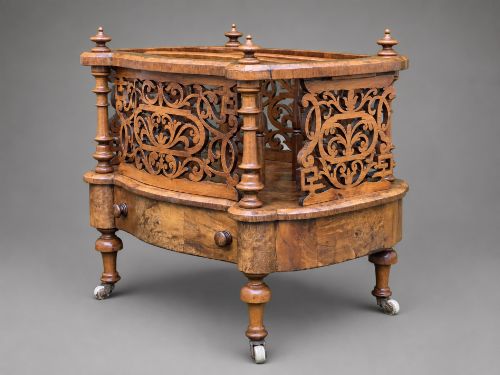
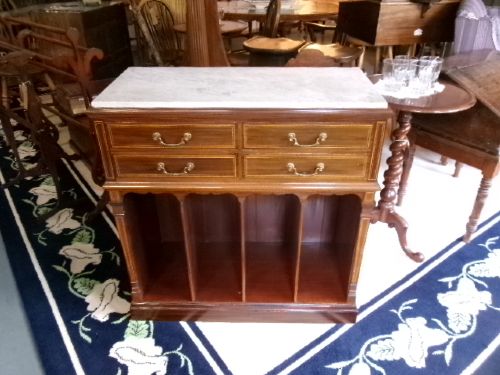
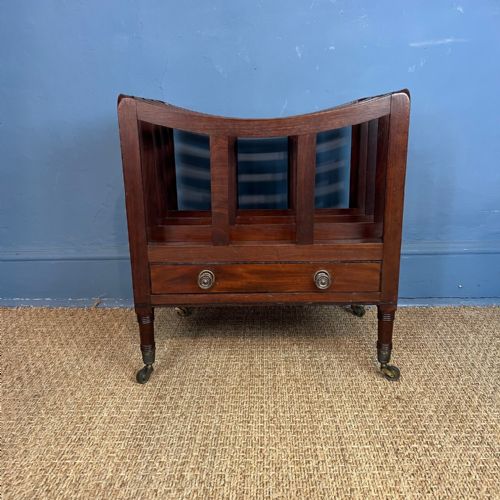
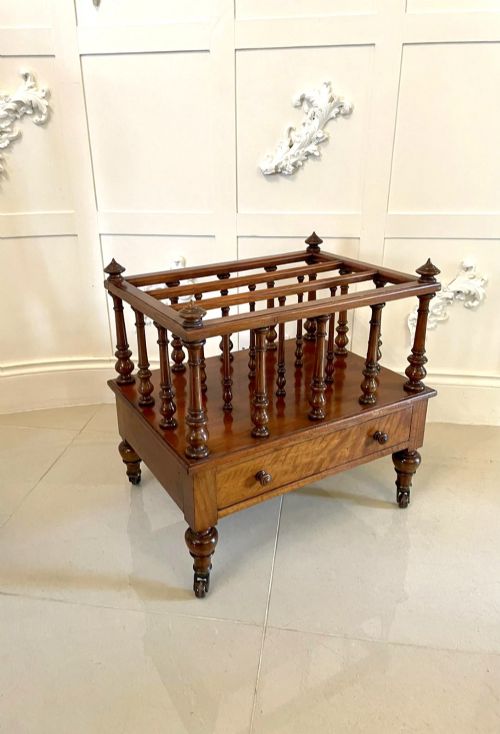
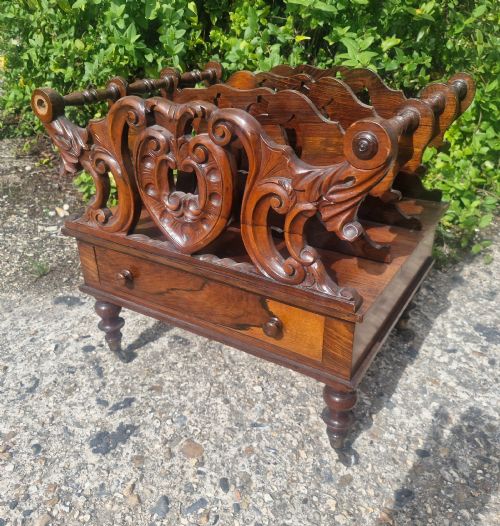
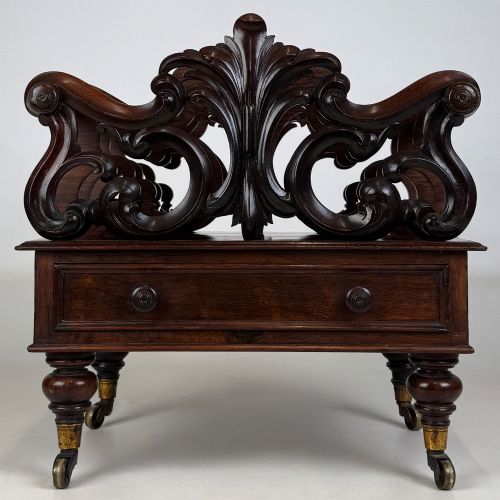
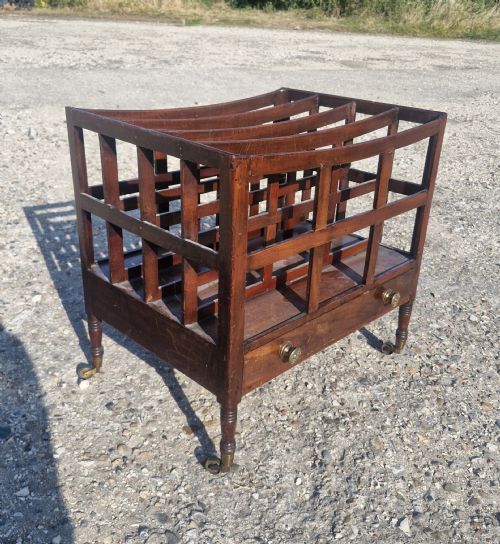
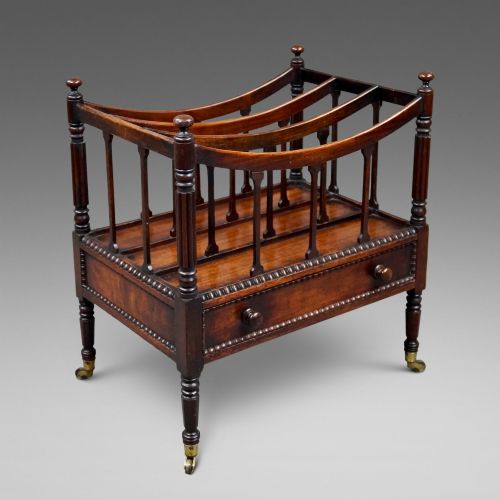
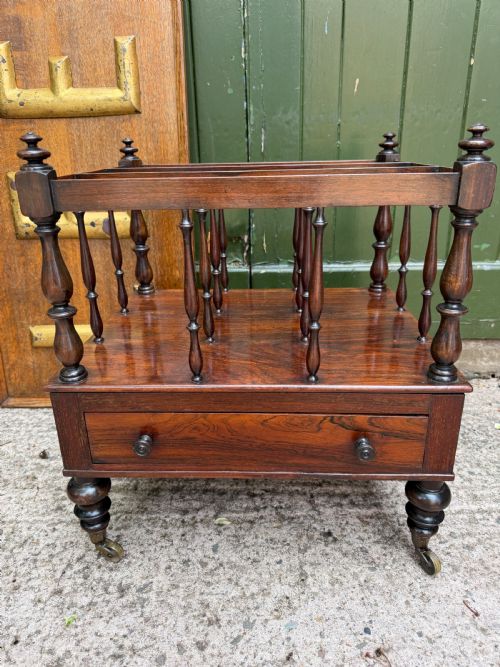
A 19th century music canterbury is a piece of furniture originally designed to hold sheet music, scores, and folios near a piano or in a drawing room. These items typically feature open slatted dividers for upright storage, frequently paired with a low drawer at the base for smaller papers.
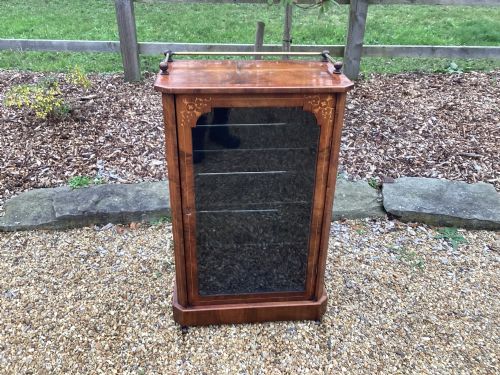
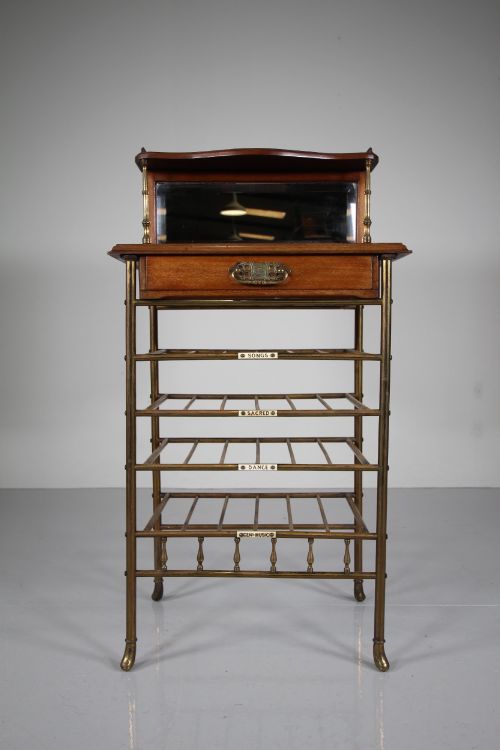
The versions most commonly met on this page date from the Regency, William IV, and Victorian periods. Alongside traditional low stands, the selection includes combination pieces such as music cabinets, whatnot tables, and magazine racks.
Originating in Georgian times as simple stands, they evolved through the decades into more ornate forms influenced by the Aesthetic Movement and Gothic Revival. They serve today just as effectively for contemporary magazines and newspapers as they did for nineteenth-century sheet music.
Materials and Construction
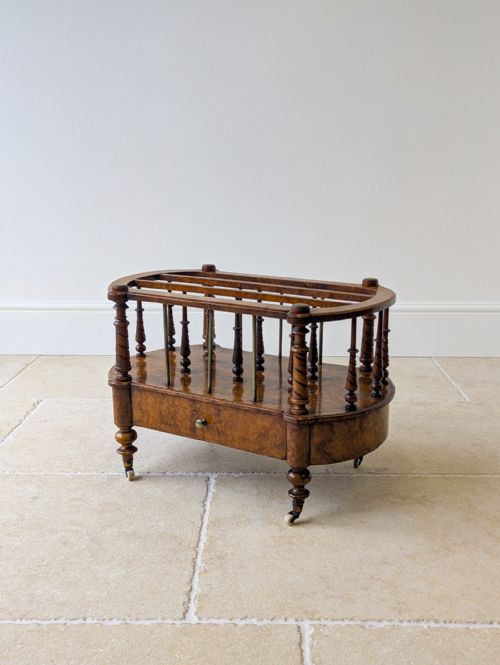
Makers utilised rich timbers such as mahogany, rosewood, and walnut, often selecting highly figured veneers or burr walnut for the primary surfaces. These woods were chosen for their deep natural grain and ability to take a fine polished finish.
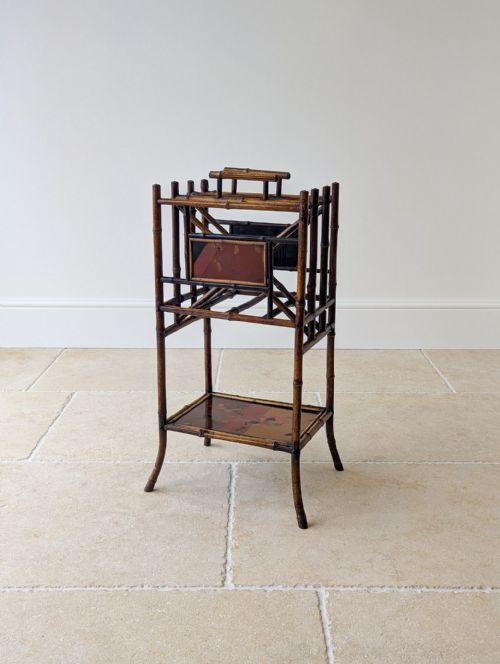
Metal components appear frequently, with brass castors fitted to the feet for mobility and brass or metal rods incorporated into the structural framework of the dividers. More unconventional examples employ bamboo for a lighter, exotic aesthetic popular towards the end of the century.
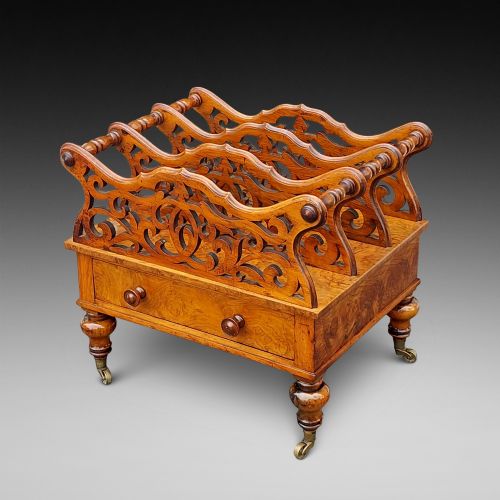
Construction techniques combined traditional joinery with decorative detailing, including turned supports, carved fretwork, and delicate inlay work. Pieces often integrated tiers and work tops, blending solid joinery with multi-functional design.
19th Century Music Canterbury Retail Price Guide 2026
Typical asking prices for 19th century music canterbury among the pieces listed under this phrase on Sellingantiques today, from the lower quarter to the upper quarter. They describe what is for sale here now, not the wider market.
Listings feature items spanning the Georgian, Regency, William IV, and Victorian periods, constructed from rosewood, mahogany, walnut, and bamboo.
Distinctions in Quality
The distinction between standard examples and the finest pieces lies in the selection of timber and the depth of craftsmanship. Highly figured veneers, dense burr walnut, and rich rosewood indicate a higher grade of material chosen by the cabinetmaker.
Structural refinement also sets pieces apart, seen in the crispness of turned columns, the precision of fretwork dividers, and the inclusion of dovetailed drawers. Finer items often display thoughtful integration of additional functions, such as combined whatnot tiers or bespoke brass fittings.
Henry Ogden and Son
The 19th Century Music Canterbury Glossary
- Canterbury
- A low stand with upright divisions for holding sheet music, folios, or periodicals, usually fitted with legs and castors.
- Whatnot
- An open set of multi-tiered shelves used for displaying ornaments, books, or small objects, sometimes combined directly with a music stand.
- Aesthetic Movement
- A late-nineteenth-century design style that emphasised visual beauty and craftsmanship over historical revival, often incorporating bamboo or Japanese-influenced motifs.
- Figure
- The natural pattern or grain configuration visible in timber, particularly pronounced in varieties like walnut and mahogany.
- Boat-shaped
- Descriptive of a Canterbury base or frame with curved, sweeping sides reminiscent of a hull.
19th Century Music Canterbury: Frequently Asked Questions
What is a 19th century music canterbury used for?
These pieces were originally built to hold sheet music, folios, and songbooks close to a piano or music room seating area.
Today, they function equally well for organising contemporary magazines, newspapers, and large books in a living space.
How do I identify a Regency period piece?
Regency items typically display clean architectural lines, classical proportions, and the use of dark timbers like rosewood or mahogany.
They frequently feature turned uprights and brass castors, reflecting the neoclassical design influences of the early nineteenth century.
Did Victorians use bamboo for these stands?
Yes, towards the end of the nineteenth century, makers embraced exotic materials as part of the Aesthetic Movement.
Bamboo frames paired with lacquered panels or fabric racks introduced a lighter, more eclectic look compared to heavy mahogany or walnut.
What is the difference between a cabinet and a rack?
A standard rack relies on open slatted vertical partitions to keep sheet music upright and visible from the sides.
Music cabinets enclose the storage behind doors or drop-front panels, offering a more concealed and dust-free environment for paper collections.