

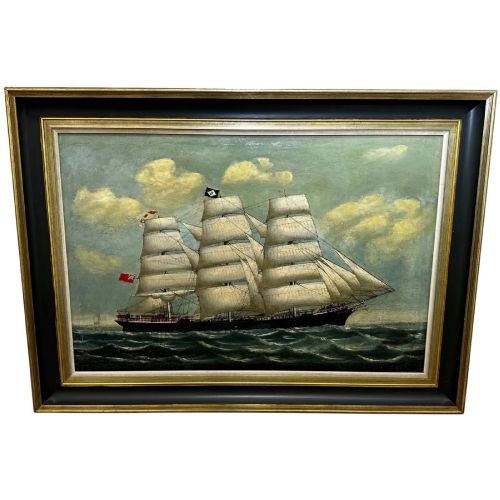
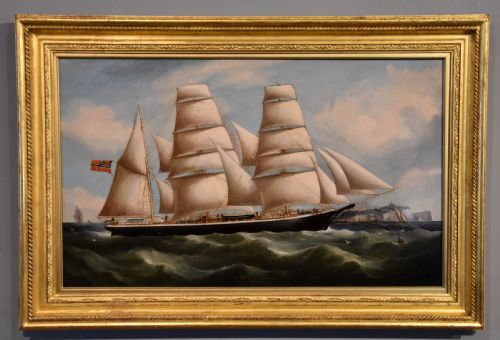


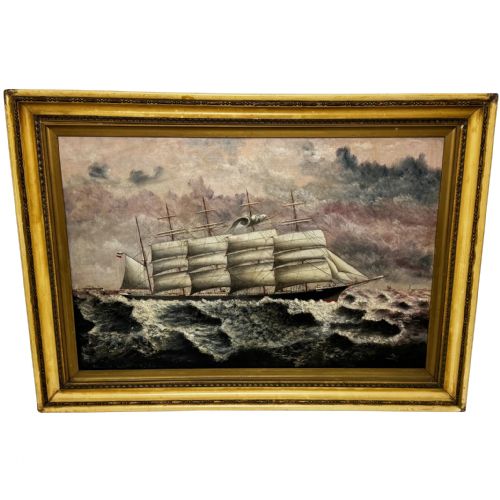


19th Century Marine Portrait
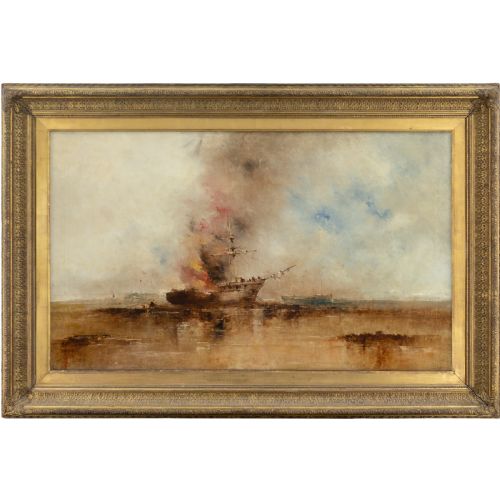
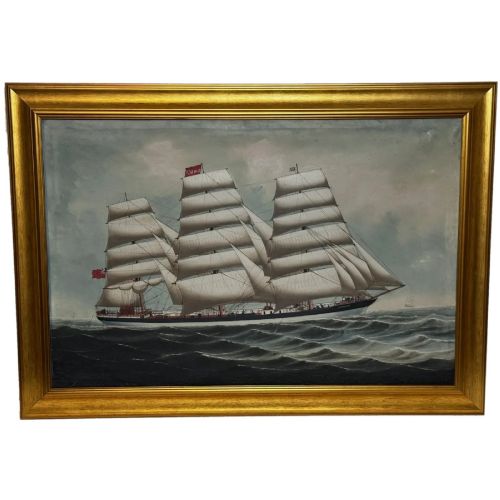
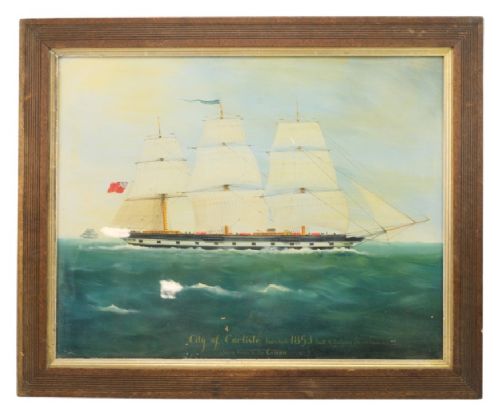
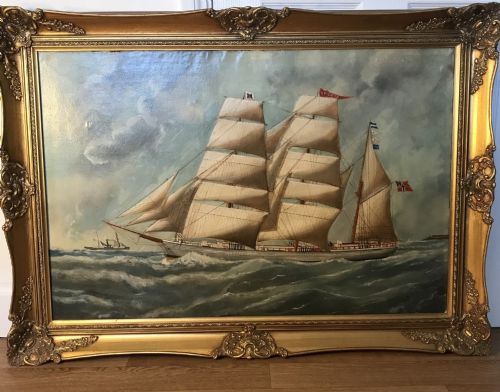
When you search for a 19th century marine portrait, you find oil paintings and watercolours depicting named vessels and coastal scenes.
19th Century Marine Portrait
A 19th century marine portrait typically depicts a specific sailing ship, steam vessel, or coastal scene, often recorded with precise attention to rigging and hull design.
The pieces appearing here include oil paintings on canvas or panel and watercolours on paper, framed in wood, giltwood, and glass.
Makers and schools represented range from English, Scottish, and Dutch traditions to Anglo-Chinese works and pierhead paintings.
How they were made
These works rely primarily on oil paint or watercolour applied to canvas, panel, or paper to capture nautical subjects and coastal lighting.
Frames utilise wood, glass, and gold leaf, often finished with giltwood mouldings that complement the maritime artwork.
Listings feature works from the nineteenth century utilising oil paint, canvas, panel, watercolour, and paper.
What varies in quality
Quality rests in the precision of the vessel's rigging, the handling of water and atmospheric conditions, and the clarity of the ship portrait.
The execution of the surrounding sea, whether choppy waters or heavy seas, defines the depth and capability of the hand behind the brush.
Reginald Arthur Borstel·Lai Fong·Richard B. Spencer·Marie-Edouard Adam·Joseph Heard·WF Mitchell·Johan Jens Neumann
The 19th Century Marine Portrait Glossary
- Pierhead painting
- A genre of ship portrait created at major ports, typically depicting specific vessels entering or leaving harbour for visiting captains and owners.
- Barque
- A sailing vessel with three or more masts, having the foremast and mainmast square-rigged and the mizzenmast fore-and-aft rigged.
- Giltwood
- Wood that has been coated with gold leaf or gold paint, frequently used for traditional picture frames enclosing these works.
- Watercolour
- A painting method in which the paints are made of pigments suspended in a water-based solution, seen on paper supports in this selection.
- Clipper
- A very fast nineteenth century merchant sailing ship, characterised by a sharp bow and large sail area.
19th Century Marine Portrait: Frequently Asked Questions
What is a marine portrait?
A marine portrait is a painting or watercolour that focuses on a specific vessel, recording its distinct architectural and rigging details.
These works frequently document named ships, barques, and clippers commissioned by captains, owners, or maritime enthusiasts.
How were these paintings displayed?
Maritime artworks were typically mounted behind glass within wooden or giltwood frames designed to protect the paper or canvas.
Owners hung them in parlours, offices, and maritime institutions to honour specific voyages or vessels.
How do I identify the period?
Dating relies on the ship types depicted, such as steam vessels, iron hulls, or traditional wooden barques, alongside framing materials and artist signatures.
Nineteenth-century works often combine detailed rigging records with realist landscape or seascape conventions.
What subjects besides ships appear?
Artists also recorded coastal fishermen, harbour views, lighthouses, and dramatic shipwrecks alongside individual vessel portraits.
Works span European coastal scenes as well as Anglo-Chinese commissions created for the trade market.