




19th Century Marble Candlesticks
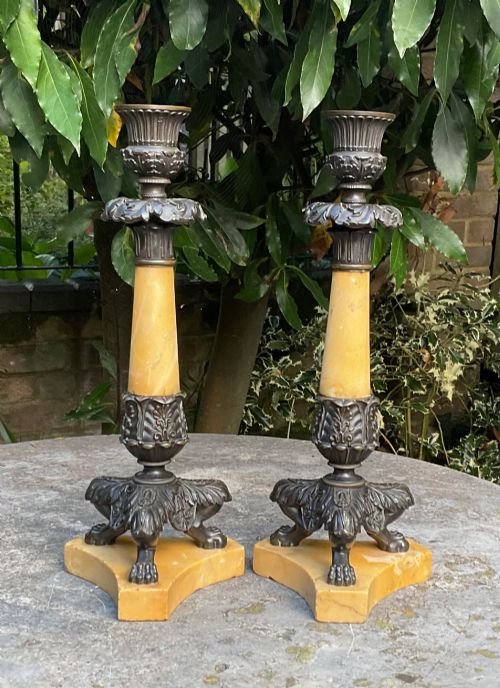
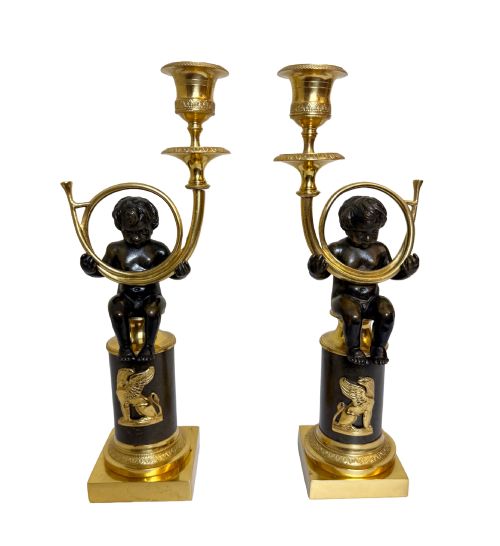
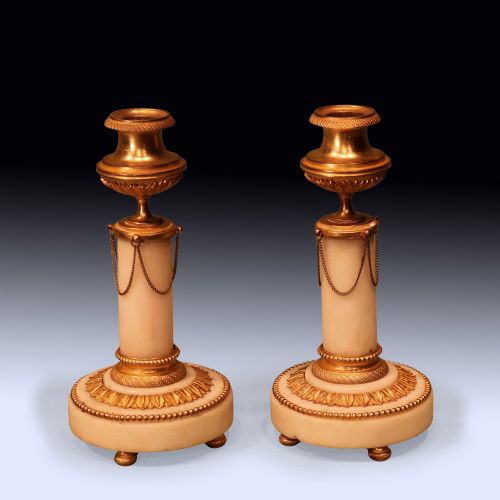
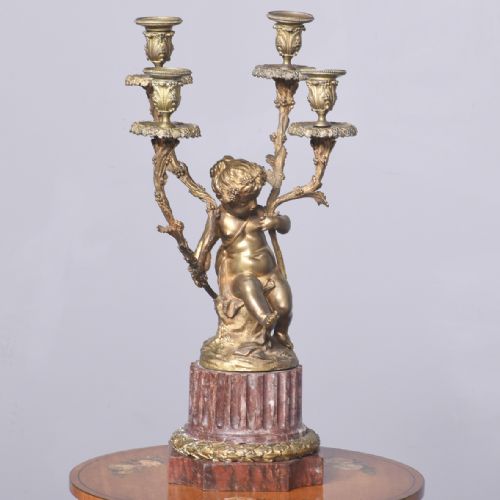
These 19th century marble candlesticks combine solid stone bases with cast metal figures, bringing weight and classical proportion to a mantelpiece.
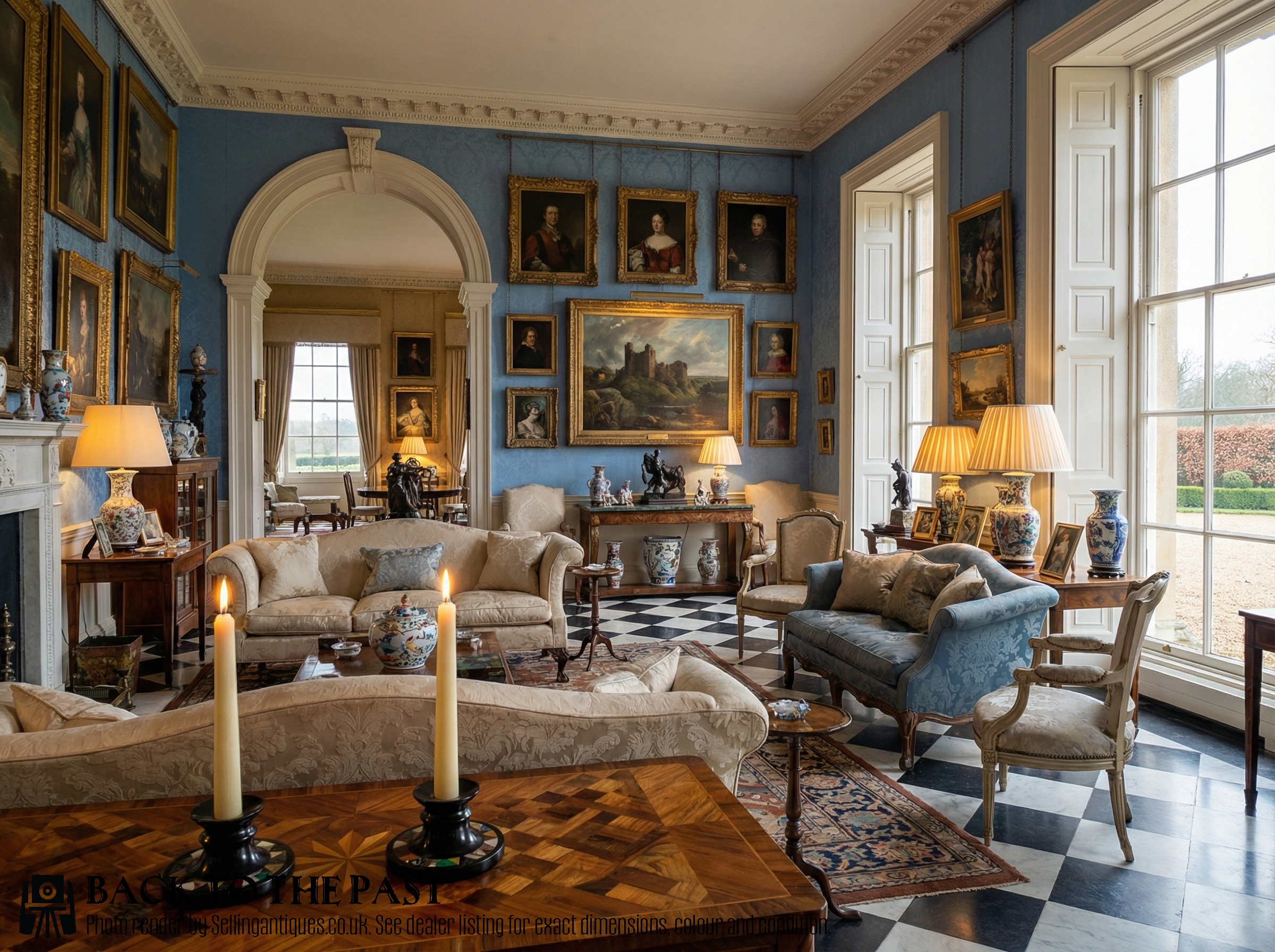
19th Century Marble Candlesticks
When you search for 19th century marble candlesticks, you encounter pieces spanning the Georgian, Regency, and Victorian periods, alongside specific dates such as 1860, 1880, and 1890. The selection ranges from straightforward chambersticks and single candlesticks to multi-armed candelabra and converted table lamps.
The most common formats on this page are matched pairs mounted on circular or square stone plinths. Many incorporate bronze figures, cherubs, putti, or maidens standing upon the stone bases.
Stylistic influences draw heavily from French Empire, Louis XVI, Neoclassical, and Grand Tour designs. These objects reflect nineteenth-century tastes for classical antiquity and decorative interior metalwork.
Materials and construction methods
Makers combined natural stone with cast metals, pairing white marble, sienna marble, and Ashford black marble with bronze, patinated bronze, gilt bronze, and ormolu. The stone elements were turned on lathes or hand-cut into plinths and columns.
Metal components such as putti, dolphins, and candle sockets were produced through metal casting and chased by hand to refine the detail. Gilt highlights and ormolu applications were then applied to contrast against the dark patinated bronze and pale marble.
Object forms on this page range from standard candlesticks and multi-arm candelabra to chambersticks and converted standard lamps.
Judging the standard of execution
Quality rests in the crispness of the metal chasing and the density of the stone work. Superior examples show finely rendered fingers, hair, and drapery on the bronze figures rather than soft, smoothed contours from worn moulds.
The integration between the metal mounts and the marble base dictates the integrity of the piece. Tighter tolerances in assembly and heavier gauge bronze indicate workshop production of a higher order.
Claude Clodion·Holtzapffel
The 19th Century Marble Candlesticks Glossary
- Ormolu
- A technique of applying finely ground high-carat gold to a bronze base using mercury. This creates a durable, luminous golden surface found on many French nineteenth-century mounts.
- Grand Tour
- A term for items acquired by travellers touring continental Europe during the eighteenth and nineteenth centuries. These objects typically reproduce classical antiquities in bronze and marble.
- Sienna marble
- A distinctive yellow-orange decorative stone quarried in Italy with dark grey or purple veining. It was frequently utilised for plinths in neoclassical and Empire designs.
- Ashford black marble
- A dark limestone from Derbyshire inlaid with coloured mineral specimens or etched with floral motifs. It provides a dense, glossy black foundation for Victorian candle wares.
- Chamberstick
- A low candlestick fitted with a saucer base and a handle for carrying through a house. Some examples include an attached extinguisher cone.
19th Century Marble Candlesticks: Frequently Asked Questions
How do I identify a Grand Tour piece?
Grand Tour items usually depict classical figures, mythological subjects, or miniature architectural forms gathered by travellers in Italy. They rely on patinated bronze and coloured marbles such as sienna.
These pieces emphasise classical antiquity and were produced specifically to appeal to collectors returning from European travels during the nineteenth century.
What styles dominate these listings?
French Empire and Louis XVI styles appear frequently alongside Regency and Neoclassical designs. These movements share a vocabulary of symmetrical proportions, classical motifs, and gilt metal mounts.
Victorian and Grand Tour interpretations also feature prominently, often incorporating cherubs, putti, or biological motifs such as dolphins into the support structure.
Where were these pieces used originally?
Pairs of candlesticks and candelabra stood upon mantelpieces, sideboards, and pier tables in formal nineteenth-century reception rooms. Their reflective ormolu and polished marble surfaces amplified the light from oil lamps and candles.
Smaller chambersticks were carried up staircases to illuminate bedchambers before the widespread adoption of domestic gas and electric lighting.