


Victorian Ashford Marble
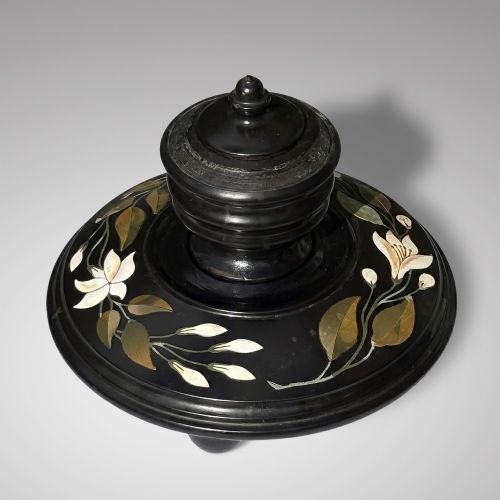
Victorian ashford marble pieces are dense, polished stone objects inlaid with delicate floral and geometric hardstones that bring a rich nineteenth-century weight to a desk.
Victorian Ashford Marble
Most pieces date across the nineteenth century, including specific decades such as eighteen-sixty and eighteen-eighty, showcasing either plain black marble surfaces or elaborate multi-coloured inlay. Forms range from utilitarian desk accessories to architectural obelisks and decorative urns.
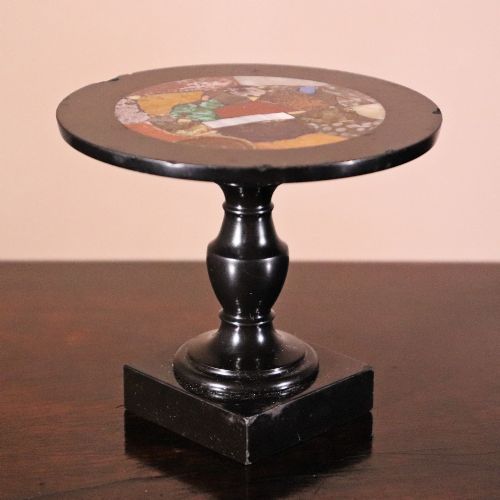
Stylistically, these items often adopt Victorian neoclassical lines or Egyptian revival motifs, drawing upon classical design principles adapted for domestic display. The range of objects includes specialised items like thermometer obelisks and occasional tables alongside smaller personal items.
How they were made
Craftsmen utilised dark Ashford black marble as the foundational body for these pieces, providing a heavy and uniform dark ground. This dense limestone takes a high, glass-like polish that contrasts sharply with the colourful stones set into its surface.
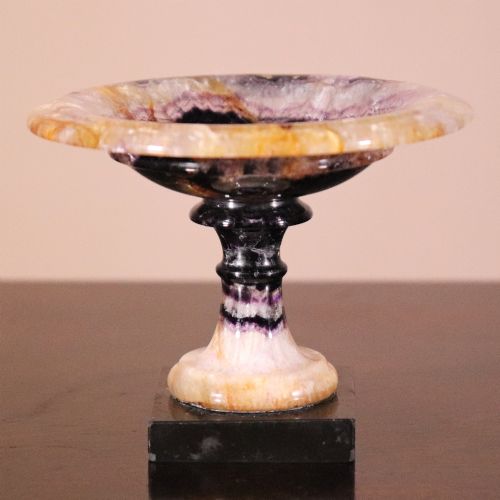
Makers embellished the stone through hardstone inlay and pietra dura techniques, pressing thin slices of minerals into precisely carved recesses. These decorative insertions frequently incorporated materials such as malachite, blue John, fluorite, shell, and various specimen marbles to create botanical and geometric patterns.
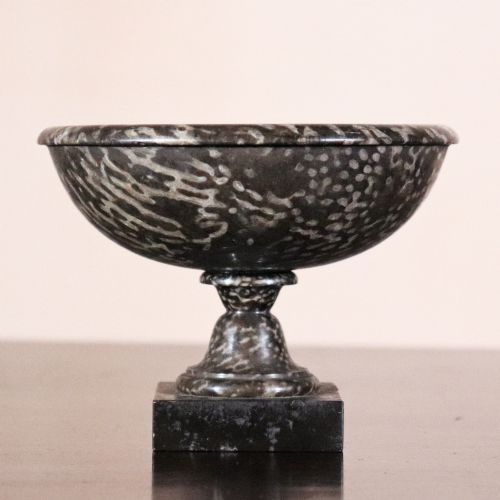
Recorded forms on this page include obelisks, inkwells, tazzas, occasional tables, candlesticks, urns, and desk weights.
What varies in quality
The precision of the hardstone inlay dictates much of the visual success of a piece, separating tightly fitted botanical motifs from looser, simpler arrangements. Clean junctions between the inlaid flora and the black marble ground reflect superior workshop execution.
The choice and variety of minerals used for the specimen work also influence the character of the object. Pieces incorporating rarer stones like blue John or malachite alongside standard floral motifs demonstrate a higher ambition in material selection.
Selim Bright
The Victorian Ashford Marble Glossary
- Ashford Black Marble
- A dense, dark limestone quarried in Derbyshire that takes an exceptional polish and serves as the dark ground for inlaid decoration. It forms the structural base for the majority of these nineteenth-century decorative objects.
- Pietra Dura
- An artistic technique involving the inlay of cut and fitted polished coloured stones into a contrasting background to create pictorial or geometric designs. This method produces the floral sprays seen on nineteenth-century desks and obelisks.
- Obelisk
- An ancient Egyptian architectural form scaled down into a solid stone decorative object during the nineteenth century. These tapered monuments were popular as desk ornaments and mantelpiece items.
- Tazza
- A small decorative cup or shallow bowl raised on a stem and foot, designed for display on tables or desks. In stone, these pieces highlight the turning and polishing skills of lapidary workers.
Victorian Ashford Marble: Frequently Asked Questions
What is Ashford marble?
Ashford marble is not actually marble, but a dense, dark carboniferous limestone quarried in Derbyshire that can be polished to a deep black shine.
Craftsmen used this dark stone as a solid canvas for inlaying brightly coloured minerals and shells to create floral and geometric patterns.
How were desk weights used?
Victorian desk weights anchored loose papers and added weight to writing surfaces in studies and libraries during the nineteenth century.
They doubled as decorative objects that displayed the lapidary skill and geological variety available to Victorian collectors.
Why were obelisk forms popular?
Obelisks reflected a broader nineteenth-century fascination with Egyptian revival design following archaeological discoveries and military campaigns in the Near East.
Carved in polished stone, these tapering monuments brought architectural drama and scholarly taste into the domestic interior.
What is pietra dura?
Pietra dura is a lapidary technique where artisans cut and tightly fit coloured hardstones into carved recesses within a base stone.
This painstaking method allowed makers to compose permanent floral arrangements that would not fade over time.