



19th Century Mahogany Washstand
A 19th century mahogany washstand brings utilitarian 19th-century bedroom design into modern interiors as a practical surface or plant stand.
19th Century Mahogany Washstand
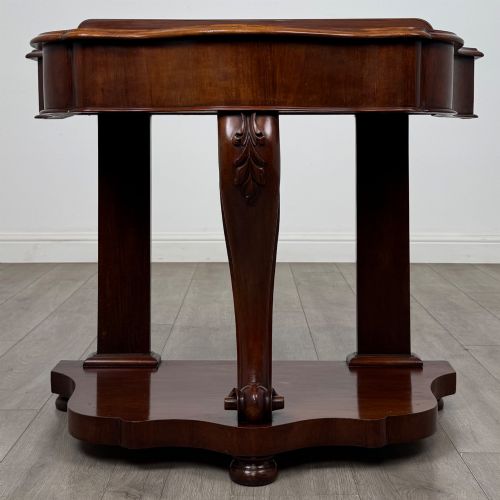
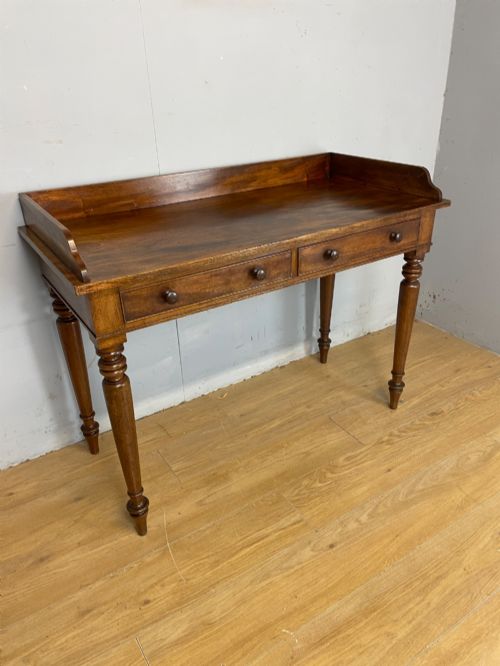
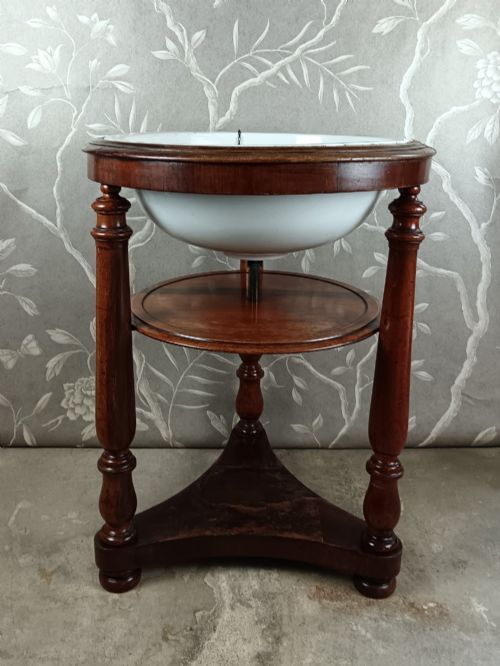
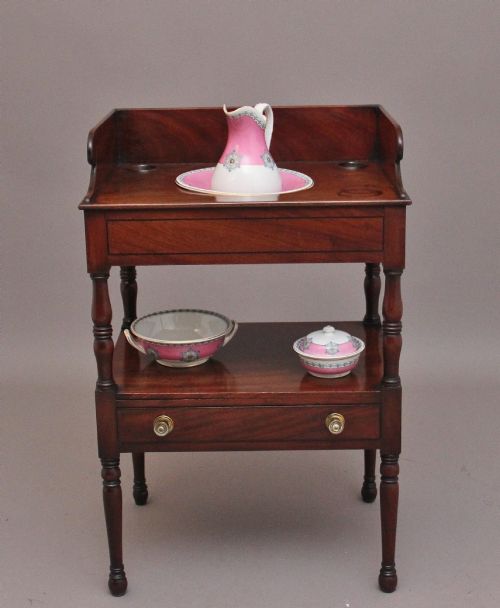
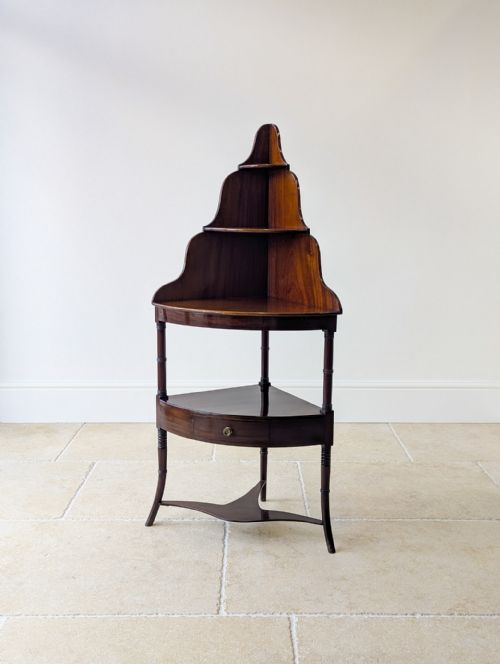
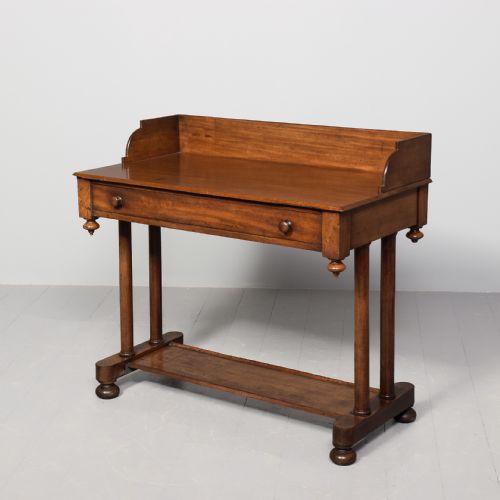
A 19th century mahogany washstand is a functional bedroom or dressing room piece designed to hold basins, ewers, and ablution gear. These items appear across Georgian, Regency, William IV, and Victorian periods, reflecting shifting domestic habits over a century.
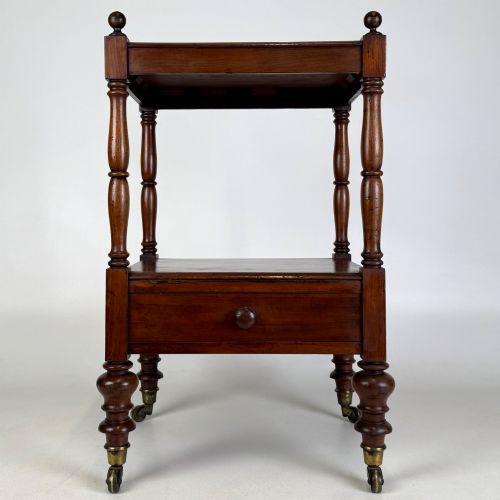
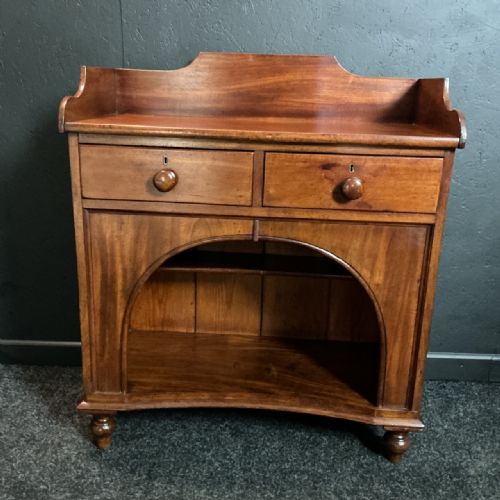
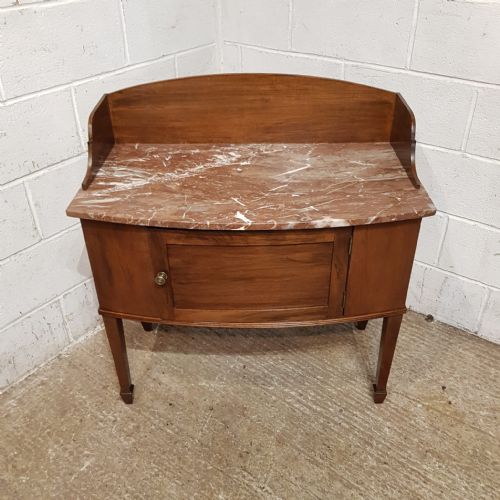
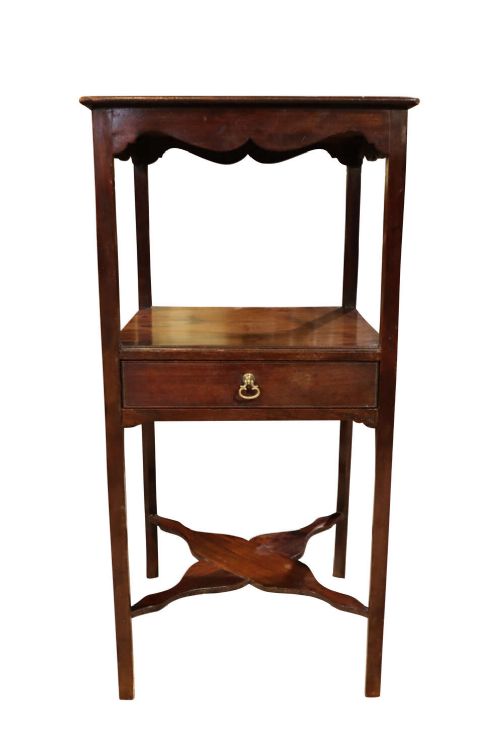
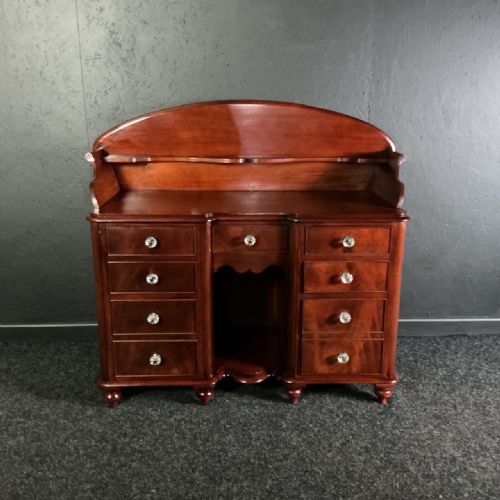
The version most commonly met on this page is the marble-topped washstand or the corner stand, often fitted with gallery backs, drawers, or cupboards. Alongside standard washstands, related forms include bedside tables, side tables, and bidet stools produced in solid mahogany or with flame mahogany veneer.
Originating primarily from English workshops, these pieces range from compact corner units intended to maximise small chambers to substantial bow-fronted and serpentine tables. Surviving examples frequently show adaptations for modern domestic use, such as converted basins or repurposed cupboard interiors.
Materials and construction
Makers utilised solid mahogany and flame mahogany veneer over secondary timbers like pine, combining structural strength with decorative grain patterns. Selected pieces incorporate contrasting inlay, satinwood, or brass fittings to accent the primary timber.
Surface utility dictated structural details, resulting in marble tops for water resistance, three-quarter gallery surrounds, and upstand backs to protect walls. Drawer construction relies on traditional joinery, while specialised pieces incorporate folding tops, campaign elements, and ceramic or glass components.
Materials recorded across the archive include flame mahogany veneer, solid mahogany, marble, brass, glass, ceramic, pine, and satinwood.
Judging quality and execution
Quality rests in the selection of the timber, particularly the grain figuration in flame mahogany veneers, and the precision of the cabinetmaker's joinery. Superior examples display thoughtful proportions, crisp edge moulding, and original brass or ceramic hardware.
The integration of functional elements - such as properly fitted marble tops, stable gallery upstands, and smoothly operating drawers - separates standard utility items from finer workshop output. Maker attribution, through stamps or distinct regional characteristics, further distinguishes select pieces.
Gillows Lancaster·Maples
The 19th Century Mahogany Washstand Glossary
- Washstand
- A bedroom table or cabinet designed to hold washing basins and water jugs. These pieces often feature tiered shelves, marble tops, or splash backs.
- Gallery
- A raised wooden border running along the back and sides of a table top. This feature prevented wash bowls and toiletries from sliding off.
- Campaign
- Portable furniture made for travel, typically featuring recessed brass handles and corner brackets. Pieces designed for military or ship use dismantle or fold easily.
- Serpentine
- A furniture front curving outward in the centre and inward at the sides in an 'S' shape. This profile demands advanced woodworking skill.
- Bidet
- A low basin-stand used for personal hygiene before modern plumbing. In 19th-century rooms, these often doubled as enclosed stools with fitted wooden covers.
19th Century Mahogany Washstand: Frequently Asked Questions
What is a 19th century mahogany washstand used for now?
Today, these pieces function well as side tables, bathroom vanity bases, or plant stands. Their marble tops and low drawers offer practical surfaces for modern living rooms and hallways.
Many buyers adapt the enclosed cupboards for storage or place the corner stands in unused spaces. They provide period character without requiring dedicated bedroom placement.
How do I identify a Regency washstand?
Regency pieces often display classical restraint, clean lines, and architectural bracket feet or turned legs. Mahogany grain selection remained a primary decorative element during this period.
Look for tiered corner stands or campaign variations dating from the early decades of the 19th century. Stamped maker marks occasionally appear on these items.
Did all washstands originally have marble tops?
Early 19th-century washstands typically featured solid mahogany or wood tops designed to hold removable ceramic basins and jugs. Marble tops became more prevalent towards the mid-Victorian era for water resistance.
Later Victorian and 1900 examples frequently integrated white or grey marble slabs. Some washstands were also retrofitted with marble at a later date.
How do I care for mahogany and marble?
Maintenance involves dusting mahogany with a dry cloth and occasionally applying natural wax to nourish the timber. Avoid placing damp items directly onto unsealed wood surfaces.
Marble tops require prompt wiping of acidic liquids to prevent staining. Mild soap and water suffice for routine stone cleaning.