

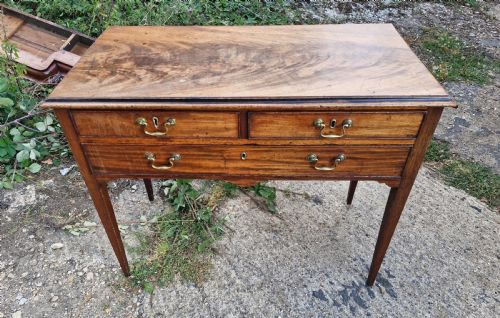
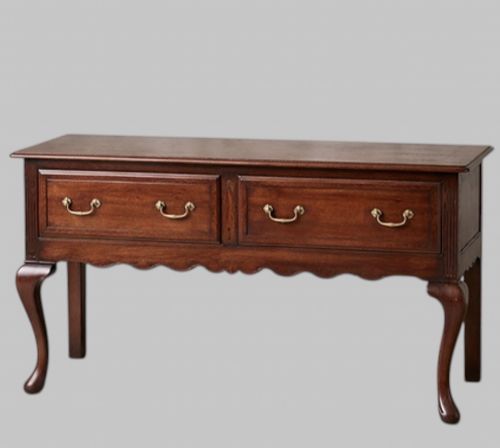


19th Century Lowboy Table
A 19th century lowboy table brings compact, versatile drawer storage and classic proportions to a hallway, bedroom or living space.
19th Century Lowboy Table
A 19th century lowboy table typically presents as a low occasional or side table fitted with one, two or three drawers. The pieces seen here span the Georgian, Regency and Victorian periods, alongside later revivals.
Makers and craftsmen built these forms in timber such as oak, mahogany, walnut, fruitwood and elm. They frequently double in records as side tables, console tables, dressing tables or dresser bases.
The most common form encountered on this page is the oak or mahogany lowboy with turned or cabriole legs and brass hardware. Buyers often select them to serve narrow spaces where standard desks or chests fail to fit.
Materials and construction methods
Makers constructed the primary frames of these tables from dense domestic and imported hardwoods including oak, mahogany, walnut and cherry wood. Secondary woods and fruitwoods also appear across the archive.
Surface treatments range from plain timber finishes to burr veneers, hand-painted geometric decoration and inlaid details. Metalwork relies on brass for handles and key escutcheons.
19th Century Lowboy Table Retail Price Guide 2026
Typical asking prices for 19th century lowboy table among the pieces listed under this phrase on Sellingantiques today, from the lower quarter to the upper quarter. They describe what is for sale here now, not the wider market.
Listings feature woods spanning oak, mahogany, walnut, fruitwood, elm and burr walnut across the nineteenth century.
Judging quality in lowboy tables
Quality reveals itself in the choice of timber figure, such as figured walnut or closely grained mahogany, alongside the crispness of any carved detailing or inlaid work. Plain oak versions rely entirely on honest proportions and sturdy joinery.
The integrity of the drawer construction and the retention of original brass hardware elevate certain examples above standard utility pieces. Finer workshops demonstrate superior timber selection for both primary surfaces and secondary linings.
Gillows
The 19th Century Lowboy Table Glossary
- Lowboy
- A small table with drawers, standing on relatively short legs. Originally designed for domestic use as a dressing table or side table.
- Dresser base
- A heavy lower sideboard or table structure featuring multiple drawers. These often share similar proportions and functions with larger lowboys.
- Console table
- A table designed to be fixed against a wall, frequently supported by brackets or legs. Many share the narrow rectangular format of the lowboy.
- Burr walnut
- Timber taken from the burls or growths on a walnut tree, yielding highly decorative swirling grain patterns. Cabinet makers prized this for veneering prominent surfaces.
- Inlay
- A technique where pieces of contrasting wood or other materials are fitted into depressed areas of the base surface to form a pattern.
19th Century Lowboy Table: Frequently Asked Questions
What is a lowboy table used for?
A lowboy functions as a compact side table, hall table or dressing table. The fitted drawers offer convenient storage for small household items while keeping the footprint small.
Historically placed in bedrooms or reception rooms, today they suit narrow hallways and living spaces as statement furniture.
How do I date a 19th century lowboy?
Dating relies on observing timber choices, hardware styles and construction techniques recorded across different decades. Oak pieces often reflect earlier Georgian traditions, while burr walnut frequently points toward later Victorian periods.
Stylistic revivals also occur, meaning construction methods and secondary timbers provide vital clues alongside surface appearance.
Are lowboys the same as side tables?
Not all side tables feature drawers, but lowboys specifically designate a low table equipped with one or more drawers. The terms frequently overlap in historical records and modern listings.
When a piece includes multiple drawers and kneehole spaces, it leans closer to traditional lowboy or dressing table forms.
How do I care for antique timber?
Keep wooden lowboys away from direct heat sources and strong sunlight to prevent the timber and veneers from drying out. Regular dusting with a soft, dry cloth preserves the polished finish.
Applying appropriate wax occasionally helps nourish older oak, mahogany and walnut surfaces without building up heavy residue.