
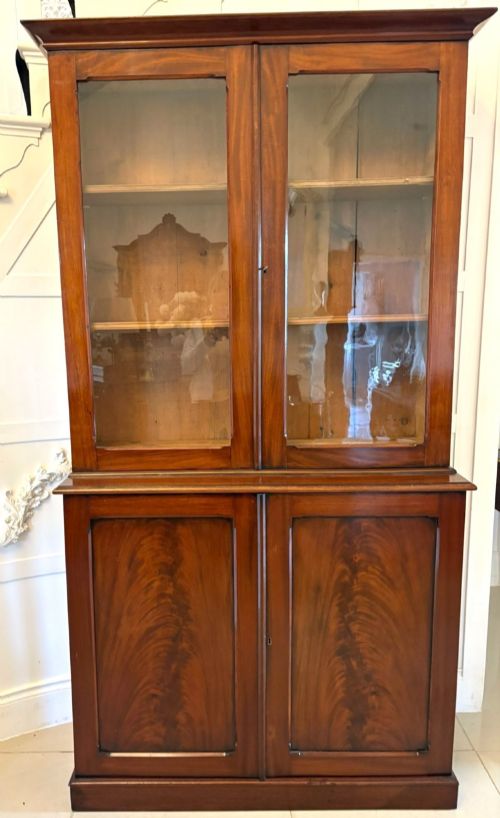
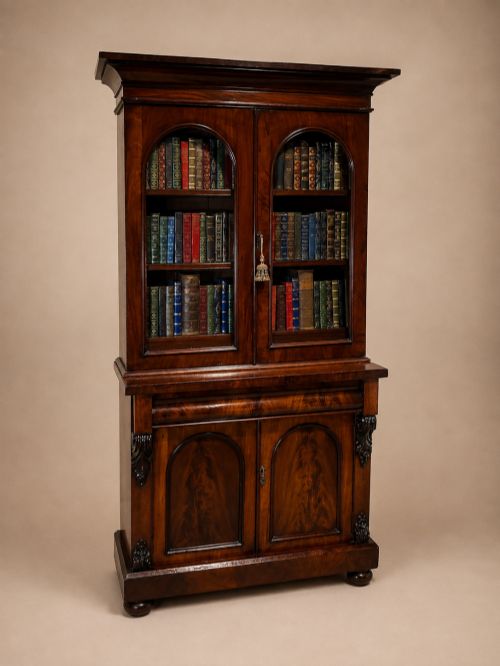
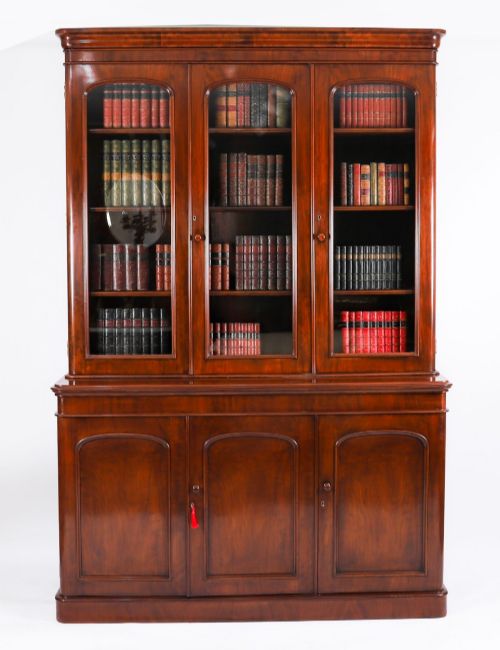
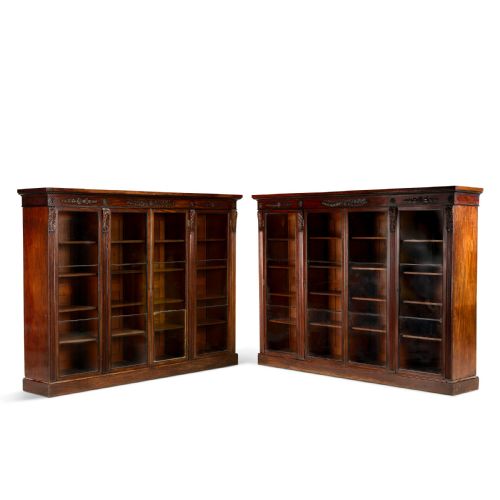
19th Century Library Cabinet
A 19th century library cabinet delivers substantial timber presence and practical shelving for serious book collections.
19th Century Library Cabinet
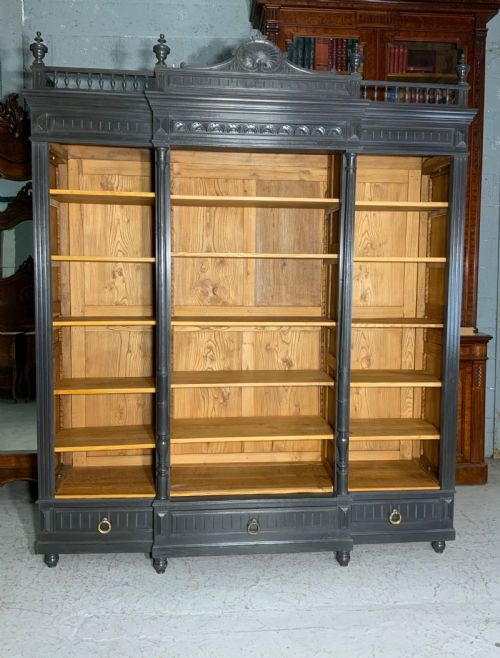
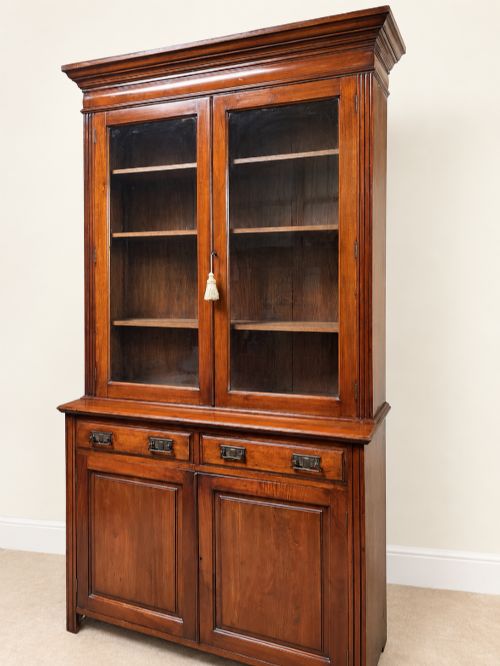
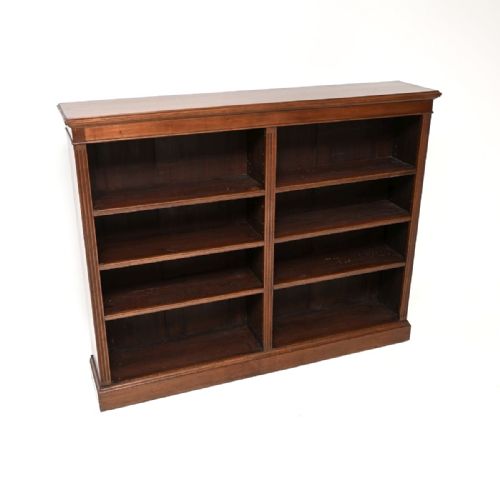
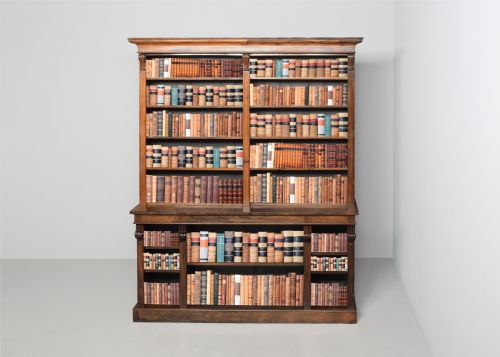
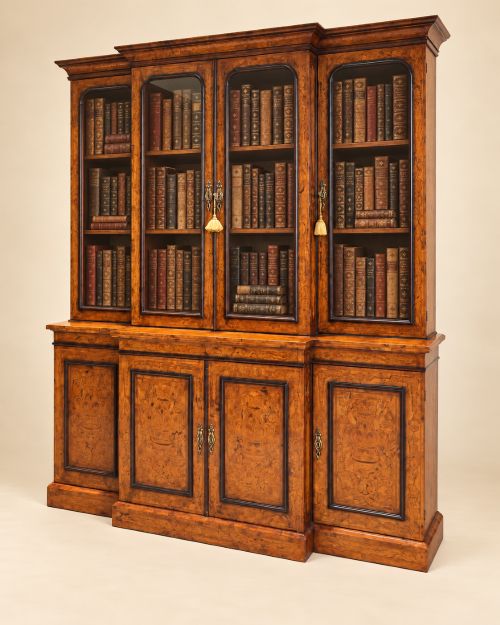
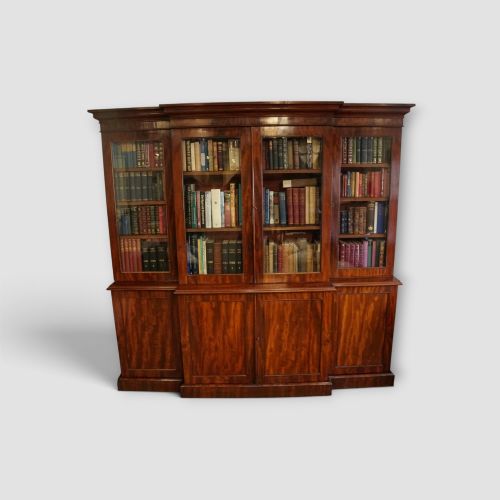
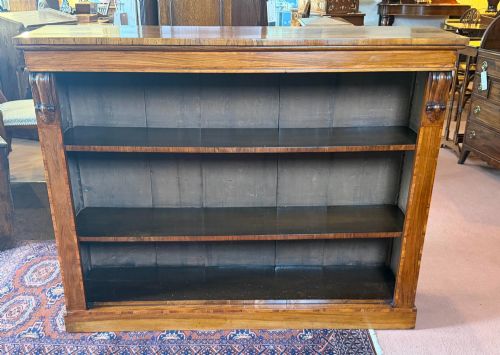
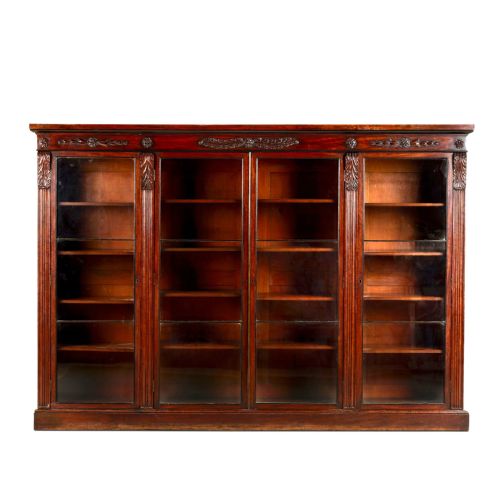
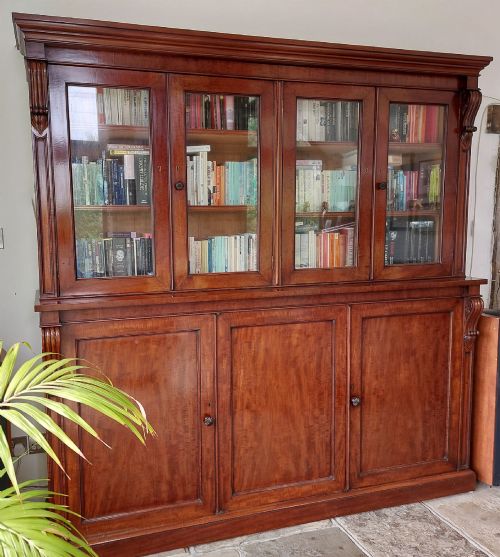
A 19th century library cabinet combines storage and display, appearing most frequently as tall breakfront bookcases, open shelving units, and glazed cabinets across this selection. Buyers encounter pieces spanning the Regency, Victorian, and William IV eras, constructed primarily in mahogany and walnut.
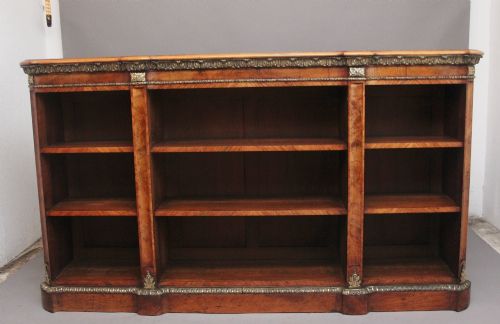
Makers utilised timber grains to create visual depth, applying figured mahogany, burr walnut, and rosewood across large double and triple bookcase configurations. Open bookcase formats sit alongside glazed door variants designed to protect volumes from dust.
Materials and construction
Cabinet makers built these pieces using solid hardwoods like oak and mahogany for structural integrity, often overlaid with flame mahogany or walnut veneers on primary facades. Brass fittings, ormolu mounts, and glass panes complete the construction of glazed and open library furniture.
Joinery techniques prioritised adjustable shelving systems and multi-section breakfront carcasses, allowing large library bookcases to be disassembled for transport. Carved details and inlaid work appear selectively, reflecting Regency, Gothic Revival, or Victorian design influences.
A solitary Gothic Revival satinwood bookcase introduces unexpected pale tones into an otherwise dark timber-heavy lineup.
Distinctions in execution
The degree of refinement rests on timber selection and cabinetmaking execution, visible in the matching of figured wood veneers across large breakfront surfaces and doors. Superior examples feature integrated adjustable shelf mechanisms, heavy brass hardware, and crisp architectural mouldings rather than plain timber framing.
Proportion and scale dictate the success of the piece, with finer library cabinets displaying balanced symmetry and well-executed glazing bars. The presence of secondary timbers such as oak for drawer linings indicates higher standards of workshop production.
Johnstone and Jeanes
The 19th Century Library Cabinet Glossary
- Breakfront
- A cabinet design where the central section projects forward from the flanking outer sections.
- Astragal
- A small moulding profile used to divide glass panes within a glazed cabinet door.
- Ormolu
- Gilded bronze mounts applied to furniture as decorative enrichment.
- Pollard oak
- Timber taken from trees that have been pollarded, producing a knotted, highly figured grain pattern.
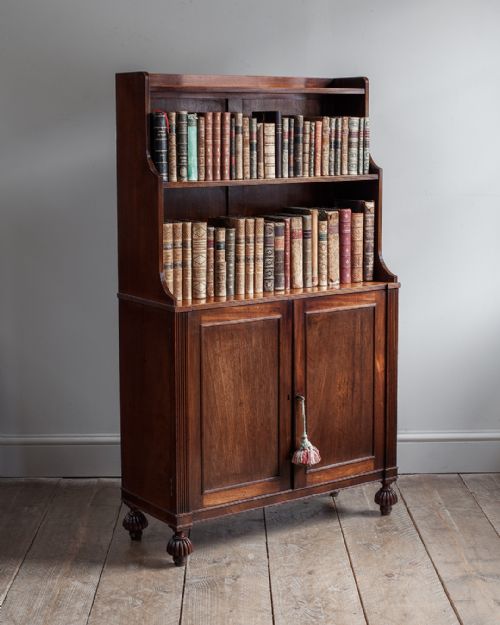
- Waterfall bookcase
- A tiered set of open bookshelves where the sides step back progressively toward the top.
19th Century Library Cabinet: Frequently Asked Questions
How do I adjust the shelves?
Most period library cabinets utilise wooden ratchets, brass studs, or notched vertical slips fixed to the interior sides to support the shelves at varying heights.
Lifting the shelf allows it to be repositioned into alternative slots to accommodate different book sizes.
Are the doors glazed or open?
Cabinets appear in both configurations, offering either unobstructed access through open shelving or protection via glass-fronted doors.
Glazed variants often feature wooden or brass astragal bars dividing the panes.
How do I distinguish Regency from Victorian pieces?
Regency library furniture typically exhibits classical restraint, clean lines, and rosewood or mahogany veneers influenced by ancient Greek and Roman forms.
Victorian pieces frequently display heavier proportions, richer carving, and more expansive use of figured walnut or burr timbers.
Can large library cabinets be dismantled?
Many breakfront and multi-section bookcases separate into distinct horizontal or vertical modules to facilitate transport and placement.
Cornices, plinths, and central carcass sections unbolt or lift apart depending on the specific construction method.