


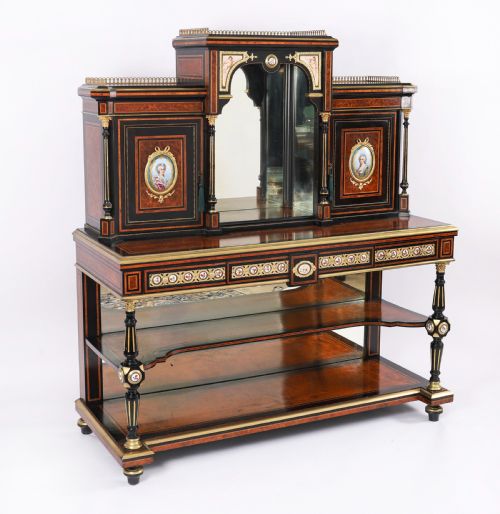

19th Century Ladies Bureau
A 19th century ladies bureau offers a refined writing surface with compact proportions, prized for delicate craftsmanship and decorative elegance.
19th Century Ladies Bureau
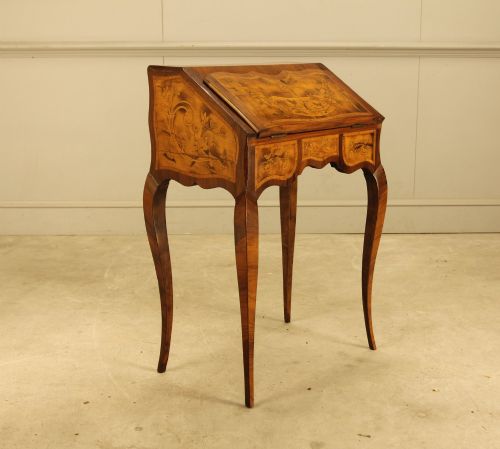
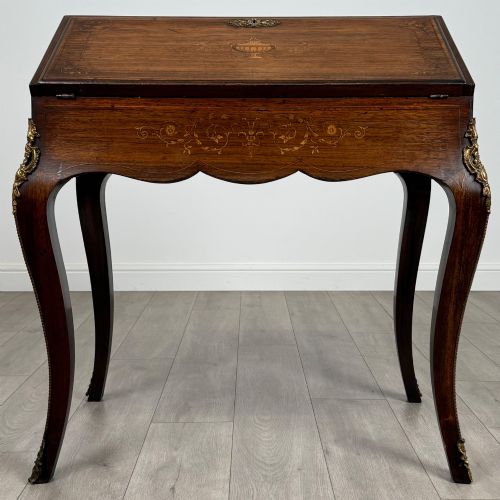
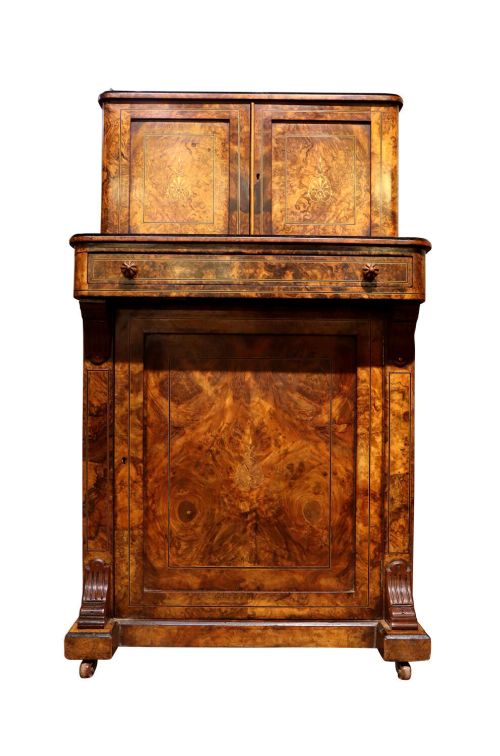
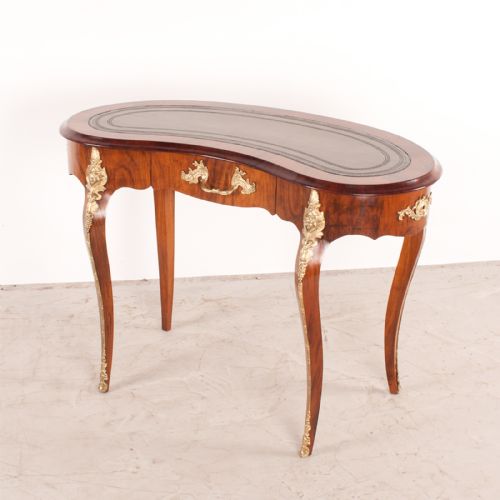
A 19th century ladies bureau encompasses writing desks, bonheur-du-jours, and escritoires originating from English and French makers during the Victorian, Regency, and Napoleon III periods. These compact writing surfaces range from kidney-shaped tables to tiered cabinets designed for correspondence and private papers.
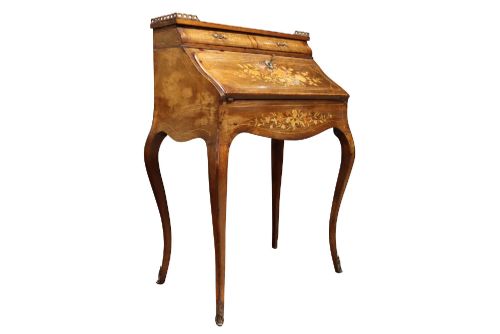
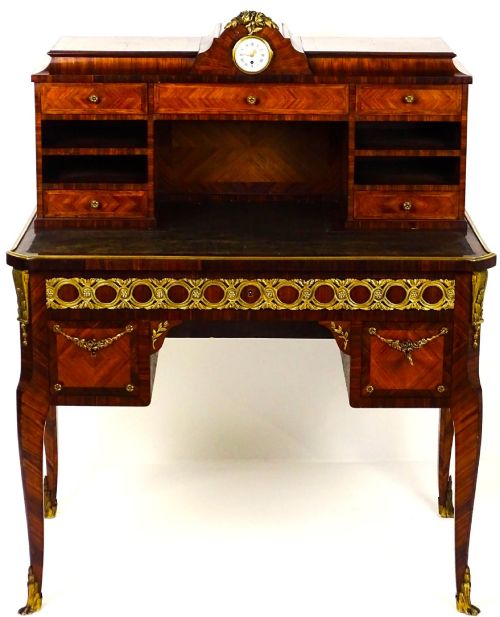
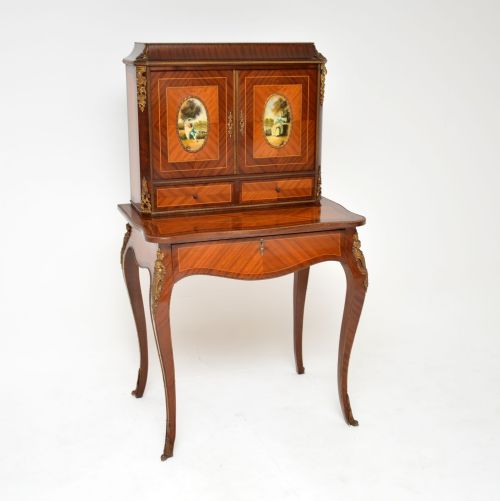
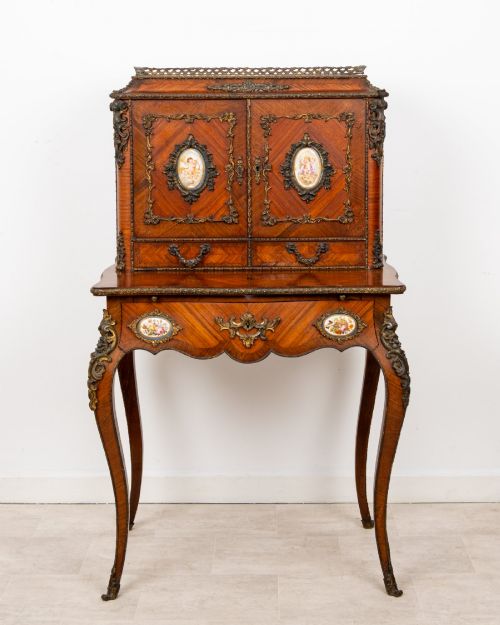
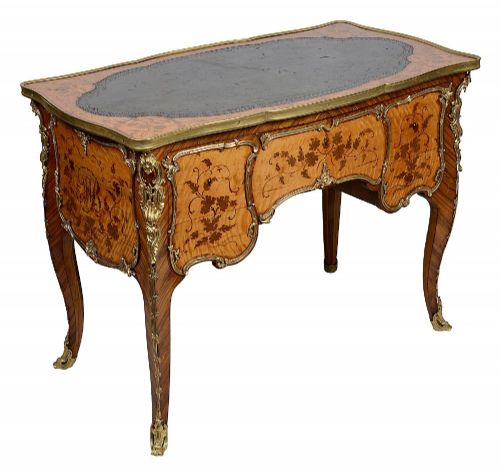
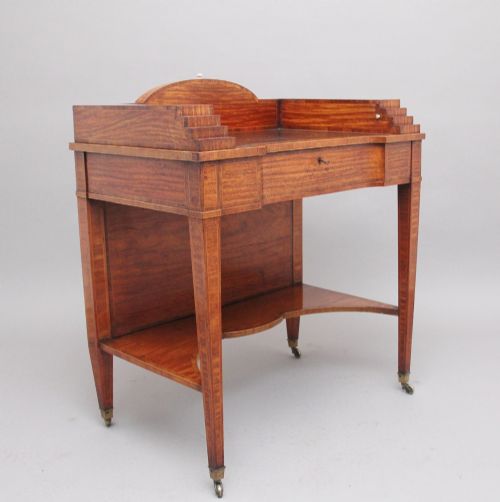
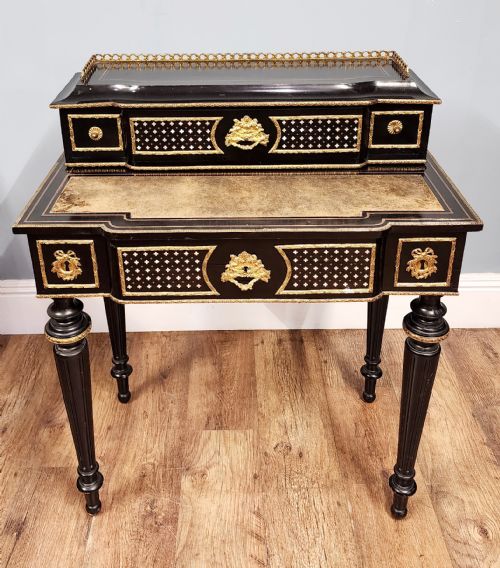
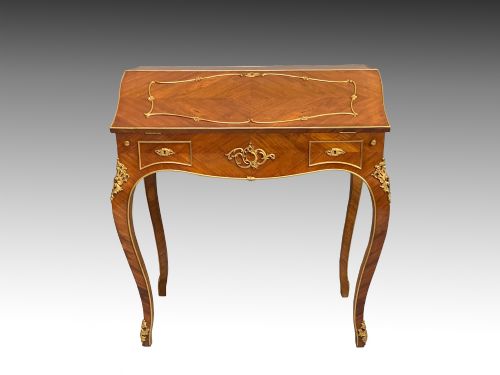
The most frequent form met on this page is the French bureau de dame or bonheur-du-jour, often featuring a superstructure of small drawers and shelves above a fitted writing slope. English variants, including Victorian walnut and satinwood writing desks, appear alongside elaborate continental marquetry pieces.
These items reflect the domestic writing habits of the period, combining functional drawers with decorative facades suitable for a parlour or boudoir. The designs draw heavily on Louis XV, Louis XVI, and Sheraton revival styles.
Materials and Construction
Construction relies on a carcase of hardwoods veneered in exotic timbers such as kingwood, rosewood, walnut, amboyna, and satinwood, frequently enhanced by intricate marquetry and floral inlay. Ormolu mounts, cast gilt bronze, and brass details edge the surfaces, frames, and cabriole legs.
Writing surfaces are frequently inset with panels of leather, while interior fittings often incorporate contrasting light timbers like satinwood and concealed secret drawers. Specialised finishes, including Vernis Martin panels and porcelain plaques, appear on select French cabinetry.
Several desks manage to hide secret compartments behind miniature decorative doors.
Craftsmanship and Detail
Quality separates through the precision of the marquetry work, the weight and chiselling of the ormolu mounts, and the selection of figured veneers like burr walnut and kingwood. Superior examples exhibit seamless integration between the decorative mounts and the underlying timber carcase.
Internal execution dictates overall standard, observed in the secondary woods used in drawer construction, the smoothness of sliding mechanisms, and the intricacy of fitted stationery compartments. Maker attribution, such as pieces associated with Paul Sormani or John MaClean, elevates the standing of an item.
Paul Sormani·John MaClean
The 19th Century Ladies Bureau Glossary
- Bureau de dame
- A small ladies writing desk, typically featuring a sloped writing flap or a fitted superstructure, popular in 19th-century French interiors.
- Bonheur-du-jour
- A light daytime desk featuring a small cabinet or set of pigeonholes and drawers on the upper writing surface.
- Ormolu
- Gilded bronze used for decorative mounts, feet, and edging on 19th-century furniture, requiring careful casting and chasing.
- Marquetry
- The art of applying pieces of veneer to a structure to form decorative patterns, utilising woods like tulipwood, kingwood, and satinwood.
- Vernis Martin
- A type of simulated Japanese lacquer developed in France, applied in translucent layers to cabinet panels and writing desks.
19th Century Ladies Bureau: Frequently Asked Questions
What is a bonheur-du-jour?
A bonheur-du-jour is a light daytime writing desk equipped with a small set of drawers or shelves on top.
These pieces were designed for correspondence and light reading in a private sitting room.
How do French and English desks differ?
French desks from this era often feature curved cabriole legs, extensive ormolu mounts, and floral marquetry.
English variants tend to favour straight tapered legs, satinwood inlay, and classical revival forms like the Sheraton style.
Where were these desks used?
These writing furniture pieces were typically placed in private boudoirs, drawing rooms, or bedrooms.
They provided a designated space for writing letters and managing personal accounts.
What woods are common?
Makers utilised decorative hardwoods including walnut, rosewood, kingwood, and satinwood for their veneers.
Burr walnut and amboyna were frequently chosen for their distinctive grain patterns.