


19th Century Interior Watercolour
These 19th century interior watercolour paintings capture domestic rooms, grand halls, and religious spaces with fine brushwork.
19th Century Interior Watercolour
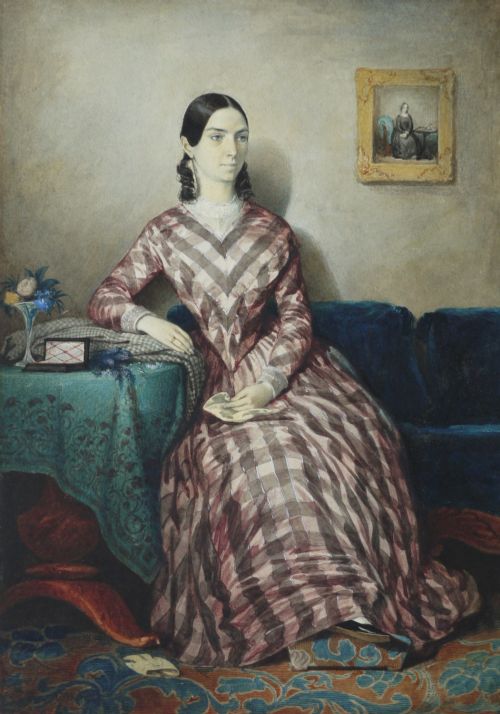
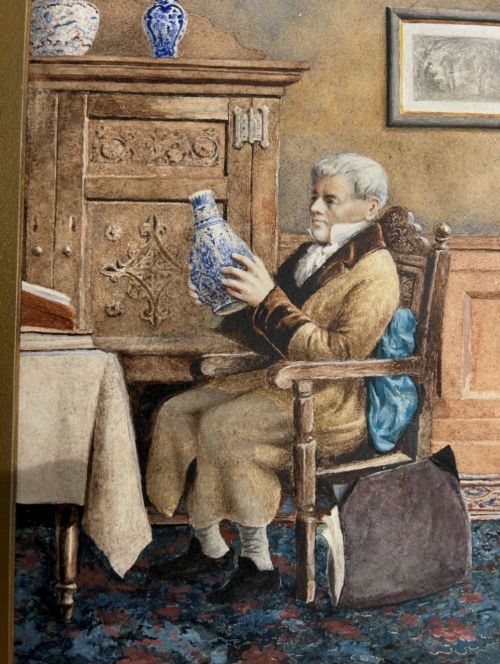
A 19th century interior watercolour brings domestic rooms, domestic corners, and grand architectural spaces onto paper through pigment and water. Buyers seek these works to study historical domestic arrangements, architectural details, and social scenes recorded by contemporary artists.
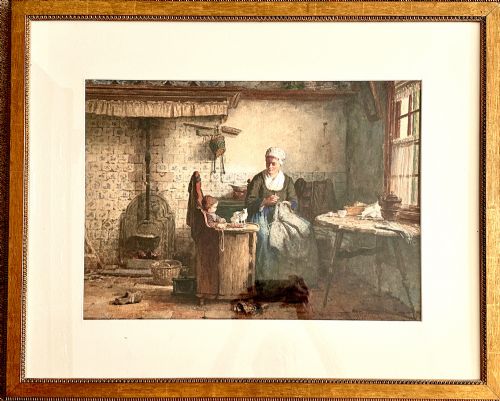
The selections available range from naive works and provincial domestic settings to detailed depictions of historic houses like Hatfield House and Old Forde House. Figures often inhabit these rooms, depicted dining, reading, or resting by a fireside.
Works span the Victorian and Edwardian eras, touching upon British Impressionism, Dutch Realism, and Italian genre painting. Framing typically involves wood and glass to protect the delicate paper medium.
Materials and execution
Artists painted primarily with watercolour pigments applied directly onto paper supports, sometimes utilising gesso within framing preparations.
Protective framing commonly integrates wood and glass, safeguarding the paper from environmental degradation while displaying the artwork.
The listings include paper supports, wood frames, and glass elements spanning the 19th century into the early 20th century.
Distinctions in quality
Quality rests upon the artist's ability to render light, shadow, and architectural perspective convincingly within a domestic or public interior. Works by named painters with established exhibition records demonstrate superior draughtsmanship and compositional depth compared to anonymous school pieces.
The preservation of the paper surface and the vibrancy of the original watercolour pigments also determine the standing of a piece within the range.
Henry Stacy Marks·Henry Silkstone Hopwood·Hendrik Valkenberg·James Hayllar·George Kilburne·Henry Spernon Tozer·Margaret Thompson·George Cattermole·Dorofield Hardy·Charles James Barraud·James Shaw Crompton·Arnold Willms
The 19th Century Interior Watercolour Glossary
- Watercolour
- A paint consisting of a solution of colour in water, commonly applied to paper. It allows for transparent washes and fine line work.
- Gesso
- A plaster mixture used as a prepared surface or within frames. It provides a smooth base for decorative elements.
- Genre painting
- The pictorial representation of scenes from everyday life. These works depict ordinary people engaged in familiar activities.
- Impressionism
- A style of painting emphasising light and its changing qualities. British variations appear among later period works.
- Realism
- The accurate and unidealized depiction of nature or contemporary life. Dutch examples emphasise everyday domestic interiors.
19th Century Interior Watercolour: Frequently Asked Questions
What subjects do these watercolours show?
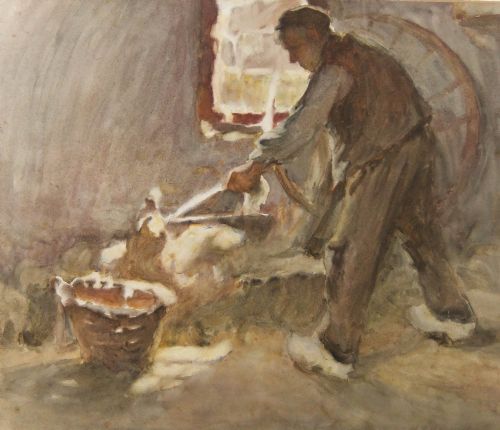
These works depict domestic rooms, long galleries, cathedral interiors, and blacksmiths' shops. Figures appear dining, reading, singing, or resting by the fireside.
Scenes range from humble domestic spaces to grand historic houses and foreign architectural studies.
How should I frame and display them?
Pieces require protective framing behind glass to shield the paper from moisture and direct sunlight. Wood frames are traditional for this period.
Keep them away from direct heat sources and bright windows to prevent the watercolour pigments from fading.
How do I identify the period?
Periods are identified through costume, interior decor, architectural styles, and artist signatures or dates. Victorian and Edwardian dress offers clear dating clues.
Many works carry artist attributions or period labels that indicate the exact decade of creation.
What is the difference between naive and academic works?
Naive watercolours display simpler perspective and charmingly direct interpretations of domestic scenes. They often come from anonymous or provincial English school artists.
Academic and professional works demonstrate precise draughtsmanship, advanced handling of light, and distinct artistic attributions.