




Framed Architectural Interior Art
Framed architectural interior art captures grand rooms and historic stone spaces, offering a glimpse into stately halls and ecclesiastical interiors.
Framed Architectural Interior Art
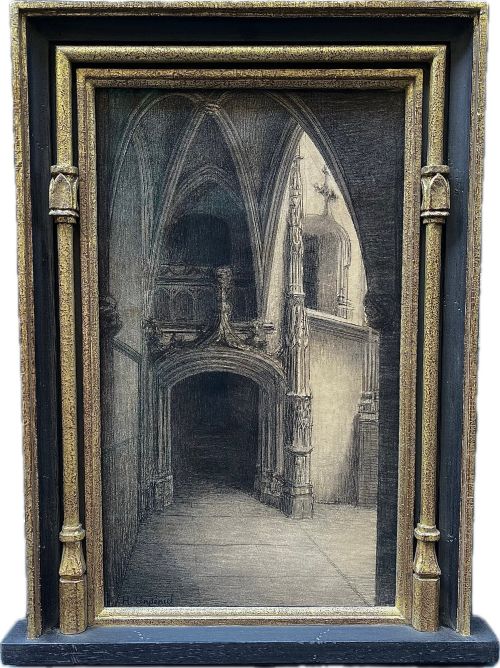
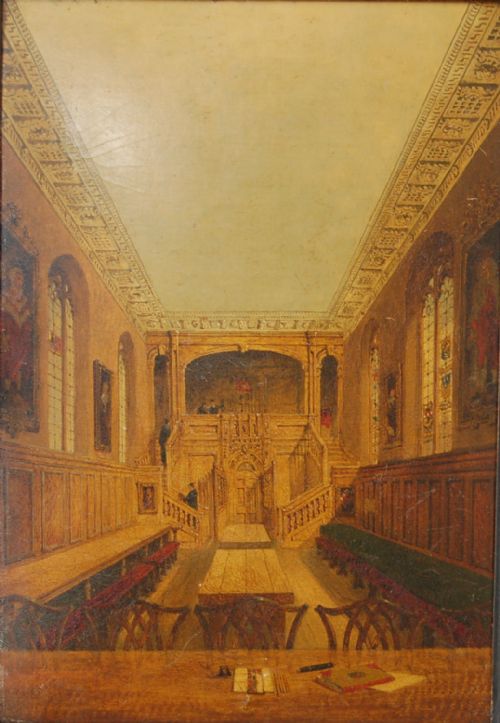
Buyers seeking framed architectural interior art find depictions of historic spaces, churches, and stately rooms rendered in various media. These pieces document grand galleries, abbey interiors, and cathedral halls.
The selection ranges from Victorian watercolours and early nineteenth-century lithographs to twentieth-century oils and constructivist factory scenes. Many focus on specific British buildings, such as Hatfield House and Selby Abbey.
Works appear in formats including original drawings, engravings, and pen and ink studies. Collectors select them to bring historic perspective and detailed interior geometry to wall displays.
How they were made
Artists utilised paper, canvas, and wood panels as supports for ink, watercolour, oil paint, and gold leaf. Many works incorporate detailed pen and ink line work combined with washes of watercolour.
Framing often complements the period of the artwork, with original Hogarth frames appearing alongside traditional wood mouldings. Draughtsmen and painters recorded perspective meticulously to capture intricate wall panels, chimneypieces, and vaulted ceilings.
One listed drawing specifically illustrates a page from the history of Gothic art book featuring Selby Abbey.
What varies in quality
Quality rests upon the precision of the draughtsmanship and the clarity of architectural perspective. Works executed by named artists or exhibited practitioners demonstrate superior handling of light within cavernous stone halls.
The condition of the paper or canvas and the originality of the framing contribute to the stature of a piece. Earlier nineteenth-century examples with documented provenance relating to specific historic houses hold distinct visual weight.
Henri Charles Angéniol·Frank Moss Bennett·Margaret Thompson·Elinor Margaret Charteris·Joseph Murray Ince
The Framed Architectural Interior Art Glossary
- Lithograph
- A print made from a planographic process on stone or metal. This technique allows for detailed tonal gradations in architectural views.
- Constructivism
- An artistic style originating in the twentieth century that emphasises geometric forms and industrial structures. Pieces in this style often depict factories and machinery.
- Gothic Revival
- An architectural and artistic movement drawing inspiration from medieval design. Works in this style frequently portray pointed arches, vaulted ceilings, and church interiors.
- Watercolour
- A paint consisting of pigment suspended in a water-based solution. Artists applied it in transparent washes on paper to capture light within grand rooms.
Framed Architectural Interior Art: Frequently Asked Questions
What periods do these pieces span?
The selections span from the nineteenth century through the Edwardian era and into the mid-twentieth century. Pieces date from the eighteen hundreds up to the nineteen fifties.
Earlier works often depict ecclesiastical buildings and historic country houses, while later examples include industrial constructivist scenes.
Which buildings are commonly depicted?
Artworks frequently feature notable British locations including Hatfield House, Selby Abbey, and Magdalene College in Cambridge. Cathedrals such as Reims and Ely also appear.
These subjects offer detailed records of historic interior decoration, chimneypieces, and elaborate wall panels.
What media were used by the artists?
Artists employed paper, canvas, and wood panels. Pigments include oil paint, watercolour, ink, and gold leaf.
Works range from pen and ink drawings to large engravings and oil on board paintings.
How should I display them at home?
These framed works suit studies, libraries, and hallways where their architectural detail can be appreciated up close. Many retain period surrounds such as original Hogarth frames.
Pairing them with traditional or eclectic wall arrangements enhances their historic character.