

Framed Interior Oil Painting
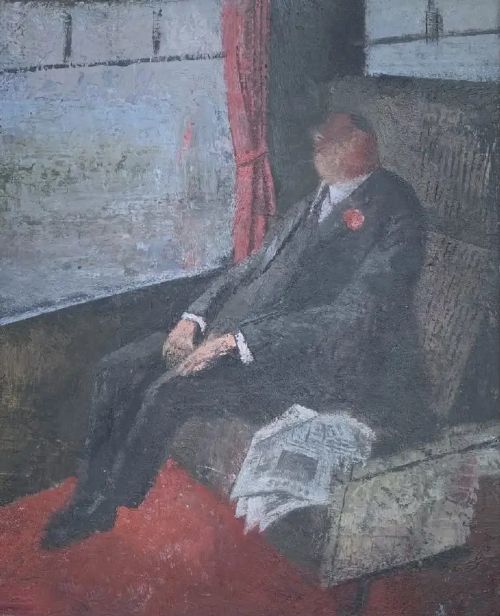
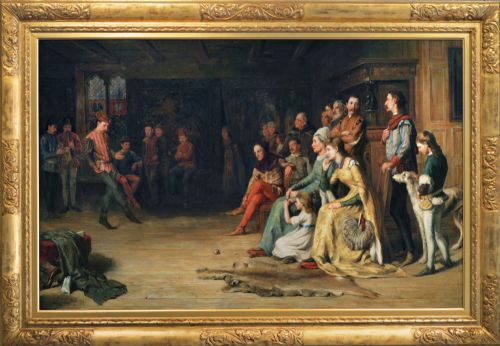
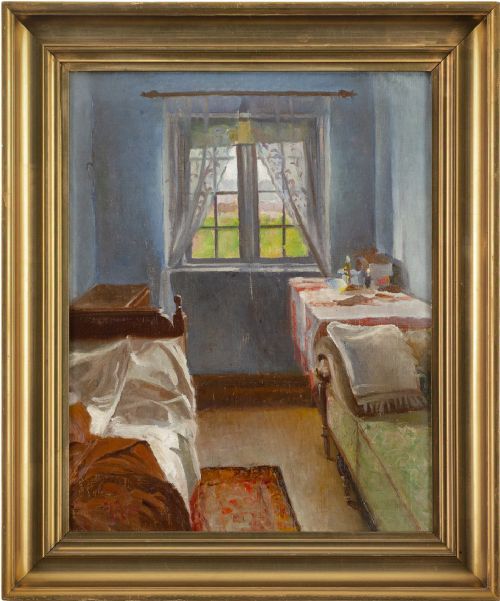
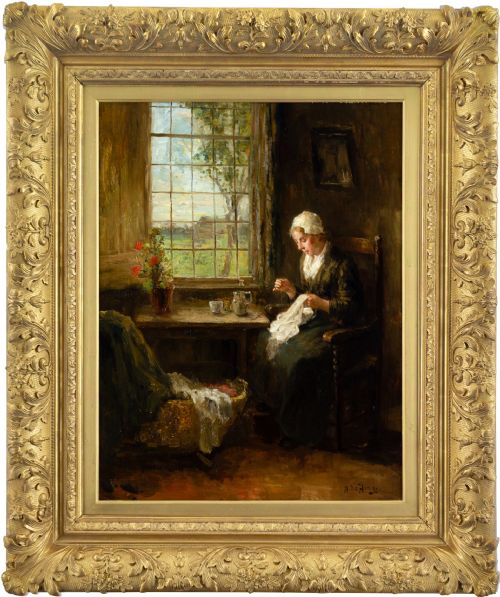
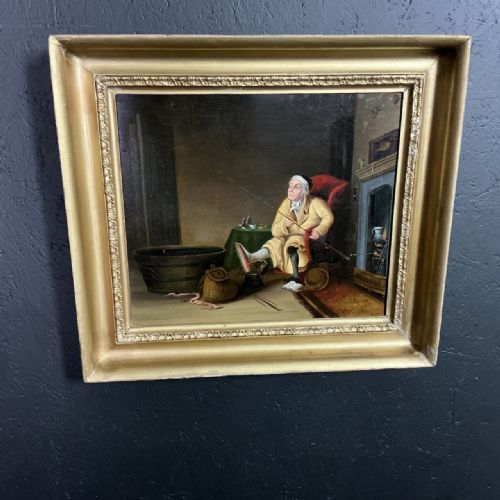
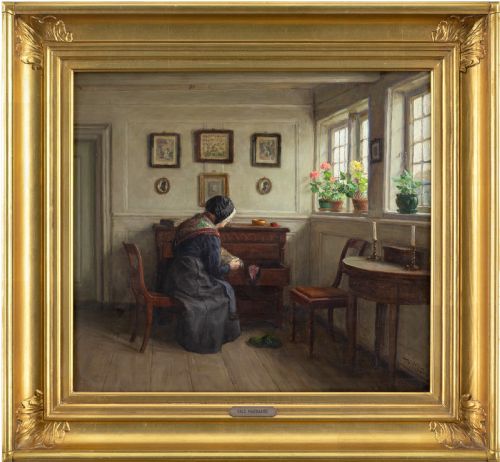
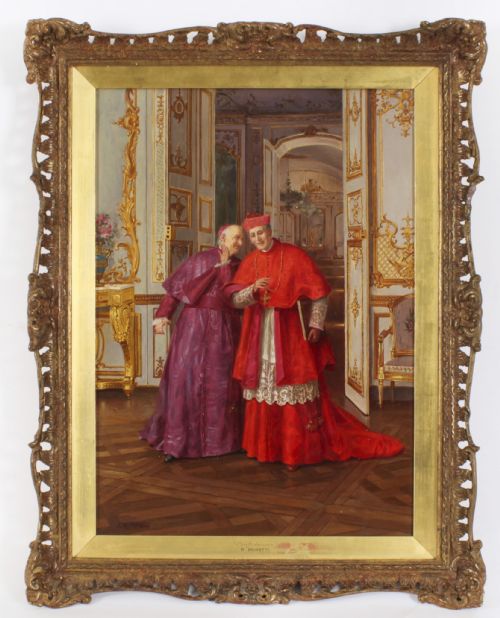
These framed interior oil painting works capture domestic and social scenes set within rooms, bringing centuries of lived history onto the wall.
Framed Interior Oil Painting
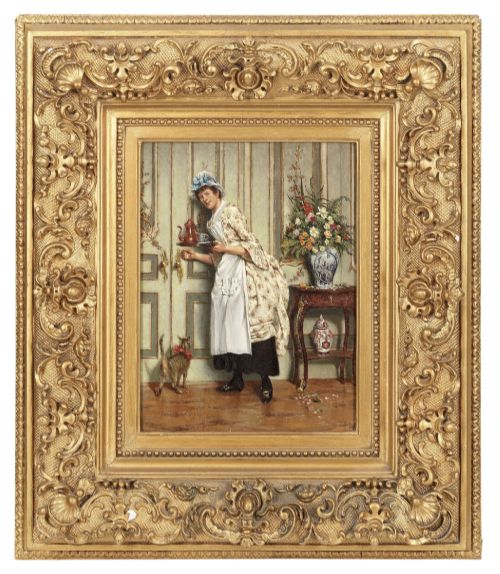
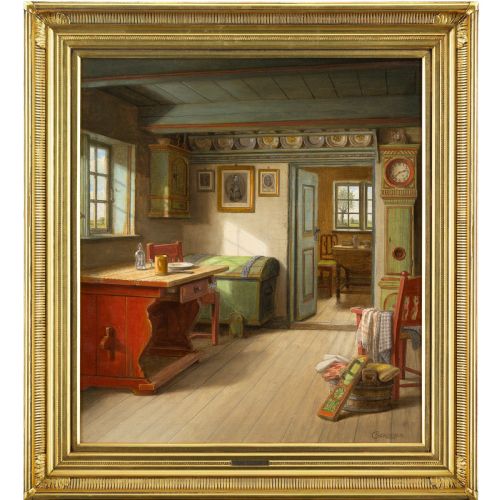
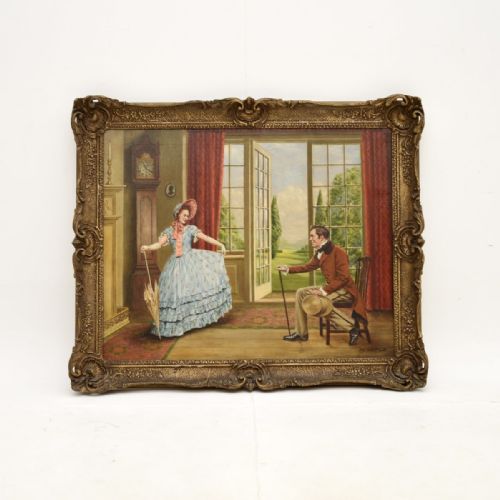
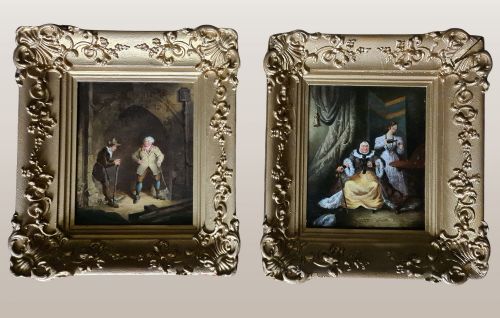
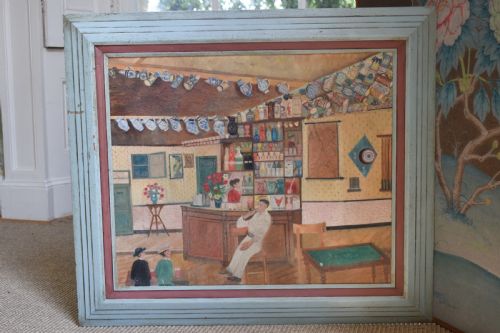
A framed interior oil painting depicts rooms, household gatherings, tavern scenes, and quiet domestic moments captured by artists across the nineteenth and twentieth centuries. Buyers seeking these works find cottage interiors, country house tea times, and bustling bar scenes recorded with notable narrative detail. The selection on this page ranges from Victorian genre studies to mid-century compositions.
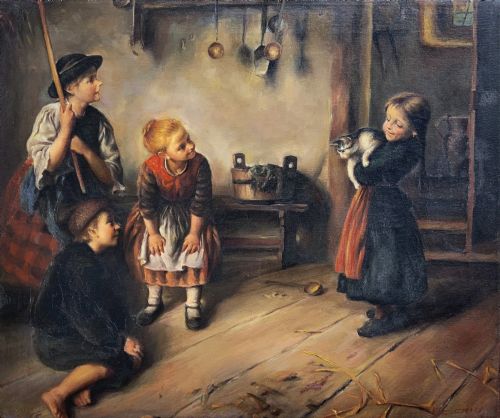
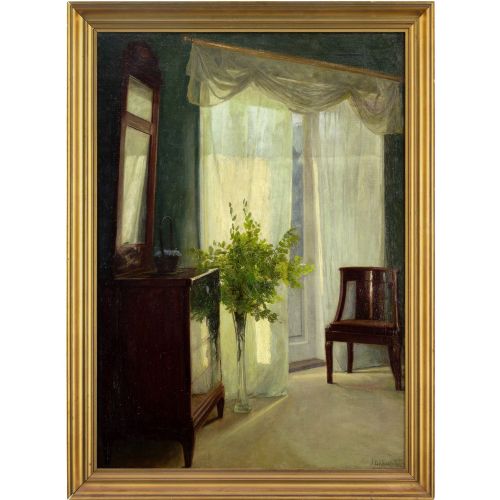
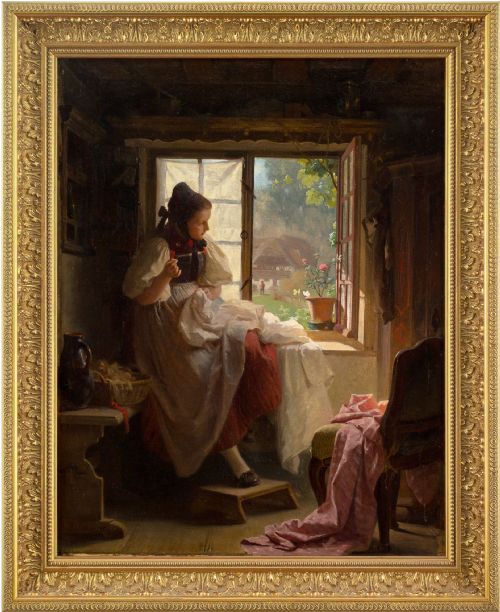
Many examples focus on human activity, showing card players, seamstresses, children playing, or figures gathered by windows and fireplaces. Others present empty rooms filled with sunlight falling across architectural details and floorboards. These canvases offer a direct window into historical domestic life and interior aesthetics.
Origins span British, French, Dutch, and Scandinavian schools, reflecting diverse regional approaches to light and narrative. The Victorian period and the early twentieth century are particularly well represented through works on canvas and board. Each piece relies on the framing to complete the composition and protect the painted surface.
Handling of light and narrative depth
Quality rests in the artist's ability to render light entering through a doorway or window and how it interacts with figures and furnishings. Stronger works demonstrate confident brushwork and precise anatomical drawing, whereas weaker examples can feel stiff or overly formulaic in their execution. The handling of atmosphere and textural detail separates routine academic output from accomplished genre painting.
The condition of both the canvas and the original frame influences the overall integrity of the piece. Surviving frames with original gilding and minimal restoration enhance the historical value of the work. Craquelure, old repairs, or heavy cleaning can alter the visual balance of the painted surface.
Several canvases capture elaborate tea times, reminding us that past generations took their porcelain very seriously indeed.
Stephen Samuel Lewin·Alfred Lyndon Grace·Max Kaltenmoser·Bernard De Hoog·David Teniers The Younger·Valdemar Magaard·Renato Moretti·Jacob Akkersdijk·Lilian Colbourn·Harry Brooker·Johann Hamza·Benjamin Eugene Fichel·John Arthur Lomax·Albert Clark·Charles Haigh Wood·Frank Moss Bennett·Gabriel Puig Roda·Haynes King·James Kyd
The Framed Interior Oil Painting Glossary
- Genre painting
- A style of painting that depicts scenes from everyday life, such as domestic interiors, tavern gatherings, or market activities, rather than grand historical or mythological subjects.
- Chiaroscuro
- An Italian term describing the striking contrast between light and dark within a composition, used by artists to create dramatic focus and a sense of three-dimensional volume.
- Gesso
- A traditional white paint mixture consisting of a binder mixed with chalk, gypsum, or pigment, applied to wooden panels or frames as a smooth base for gilding or oil paint.
- Giltwood
- Wood that has been coated with a thin layer of gold leaf or gold paint, frequently used for traditional picture frames during the nineteenth century.
- Craquelure
- The fine network of minute cracks that appears across the surface of aged oil paintings as the paint film hardens and contracts over decades.
Framed Interior Oil Painting: Frequently Asked Questions
What is a genre interior oil painting?
A genre interior oil painting portrays everyday people engaged in routine activities within a domestic or social room. These works serve as visual records of past domestic habits, clothing, and interior design.
Artists of the nineteenth century used these narrative scenes to tell stories about family life, leisure, and historical settings. They provide a direct look into the private spaces of earlier generations.
How do I know if the frame is original?
Original frames typically show signs of age that match the canvas, including matching wear to the gilding and period-appropriate joinery techniques. The rabbet at the back should show that the canvas has rested in the frame for a very long time.
Examining the corner joints and the composition of the gesso layer helps confirm whether the surround dates to the same period as the artwork. Many nineteenth-century works retain their period giltwood frames.
What subjects are most common?
Common subjects include tea time gatherings, cottage interiors with elderly residents or spinning maids, and quiet moments by windows. Tavern scenes involving card players or musketeers also appear frequently among historical genre works.
These compositions focus on human interaction and the way light falls across furniture, textiles, and architectural doorways. Each scene captures a specific slice of social or domestic history.
How should I care for an oil painting?
Keep oil paintings away from direct sunlight, high humidity, and rapid temperature fluctuations that can cause the canvas to slacken or the wood panel to warp. Dust the surface gently with a soft, dry brush without applying pressure to the paint layer.
Avoid using water, chemical cleaners, or damp cloths on either the canvas or the gilded frame. Professional conservators should handle any structural repairs or surface cleaning.