



19th Century Ice Cooler
A 19th century ice cooler is a stately vessel designed to keep wine and champagne chilled at table, offering both practical service and grand dining room presence.
19th Century Ice Cooler
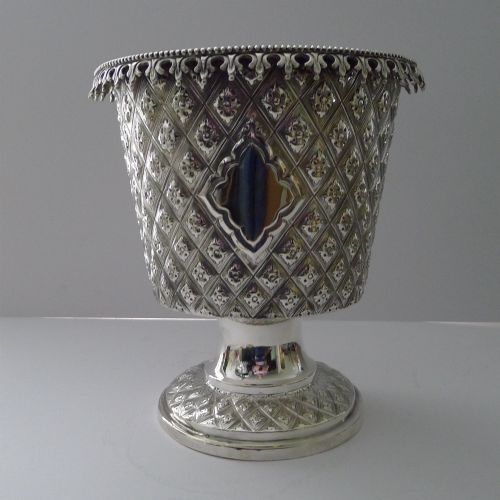
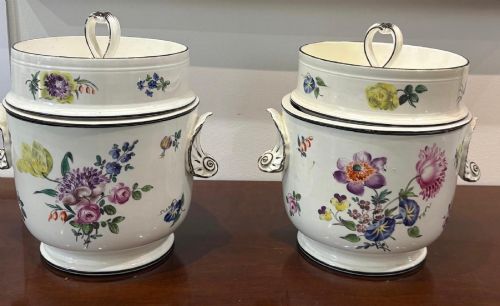
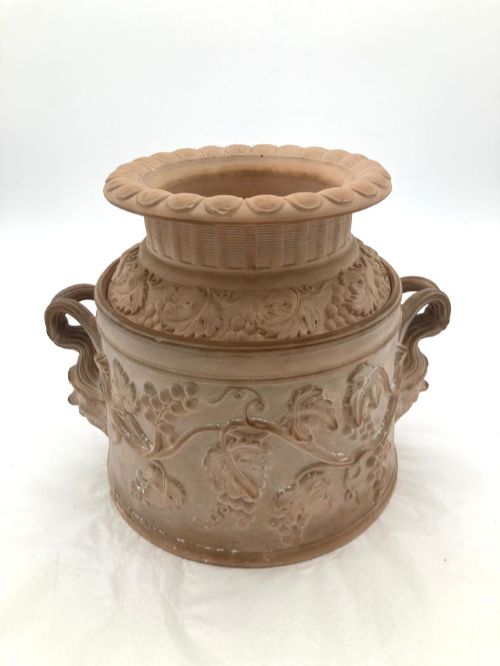
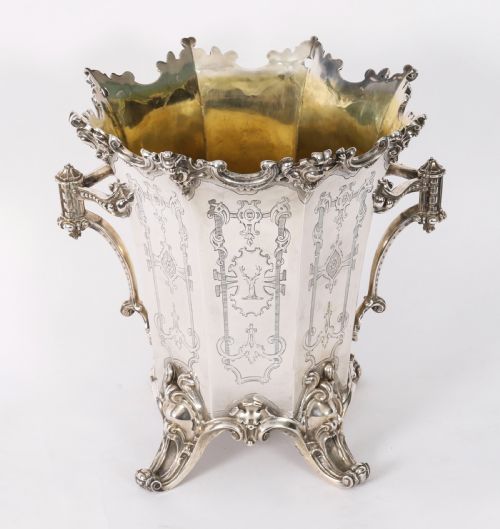
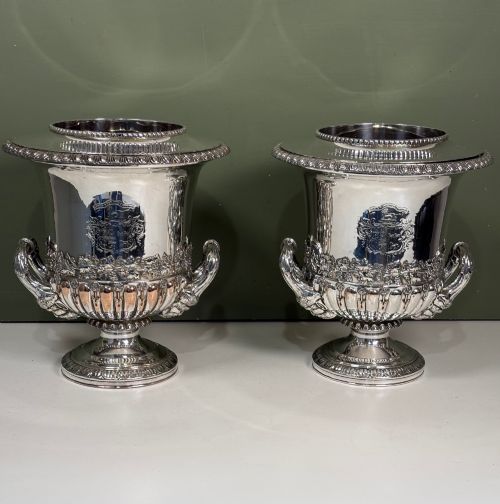
A 19th century ice cooler encompasses a variety of substantial dining vessels, from porcelain bottle coolers and stoneware bodies to mahogany buckets and plated metal urns. The version you are most likely to encounter on this page is the silver plate or Old Sheffield Plate wine cooler, frequently styled in the campana shape.
Makers and workshops of the era utilised diverse forms, ranging from regency campana designs and sarcophagus shapes to oyster buckets bound in brass. These objects served the dining rituals of elite households by holding ice alongside bottles of wine or champagne during formal meals.
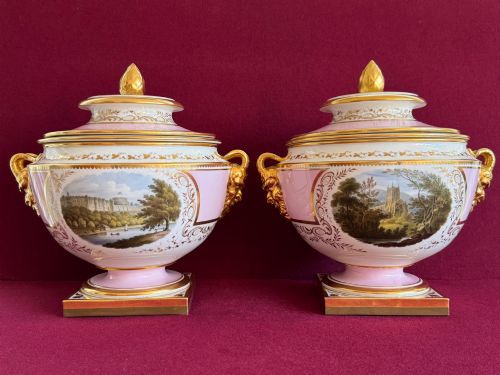
Originating across Georgian, Regency, and Victorian periods, these pieces reflect changing aesthetic movements such as Rococo Revival alongside traditional British craftsmanship. Each form, whether porcelain from Worcester or wood with metal banding, demonstrates the period's focus on elegant hospitality.
How they were made
Metal coolers rely on traditional silver plating techniques, including Old Sheffield Plate methods where a thin layer of silver is fused to a copper base. Makers also shaped solid metals, mahogany with brass hoops, and fired hard-paste porcelain.
Surface ornamentation involved hand-painted details, gilding, and cast applied mounts in neoclassical or revivalist motifs. Artisans turned timber on lathes for stave-constructed buckets and shaped metal via spinning, casting, and hand-chasing.
19th Century Ice Cooler Retail Price Guide 2026
Typical asking prices for 19th century ice cooler among the pieces listed under this phrase on Sellingantiques today, from the lower quarter to the upper quarter. They describe what is for sale here now, not the wider market.
Some nineteenth-century diners required an oyster bucket with brass banding to keep shellfish cold while wine chilled nearby.
What varies in quality
The distinction between ordinary and superior pieces rests on the crispness of cast detail, the weight of the metal or porcelain body, and the integrity of any applied decoration like gold leaf. Fine campana urns exhibit deeply struck maker marks and sharply defined handles, whereas lesser examples show softer, worn ornamentation.
Material choice and construction method dictate durability and visual depth, particularly in plated items where base metals show through heavy wear. Superior timber and brass work in coopered pieces displays tight joinery and heavy gauge mounts.
Flight, Barr and Barr·Elkington, Mason and Co·Hawksworth, Eyre and Co
The 19th Century Ice Cooler Glossary
- Campana
- A bell-shaped vessel with a flared rim and footed base, frequently utilised for wine and ice cooling in the Regency period. This classical silhouette derives from ancient Roman pottery forms.
- Old Sheffield Plate
- An early composite material made by fusing a thin sheet of silver to a copper ingot before rolling them together into sheets. Items made this way often reveal thin lines of copper at edges and seams.
- Sarcophagus
- A box-like wine cooler form with a hinged lid, popular in Georgian dining rooms and often executed in polished mahogany. These heavy pieces typically stood beneath sideboards to hold bottles.
- Silver Plate
- A term covering various methods of applying a thin layer of silver to a base metal substrate, which became widespread during the nineteenth century. Makers such as Elkington, Mason and Co pioneered advanced plating techniques in this era.
- Bottle Cooler
- A ceramic or metal vessel designed to hold an individual bottle and ice, distinguished from larger multi-bottle wine coolers and ice pails. English factories like Worcester produced notable examples in porcelain.
19th Century Ice Cooler: Frequently Asked Questions
How were ice coolers used?
These vessels sat on the dining table or sideboard filled with ice to maintain the temperature of wine and champagne during lengthy meals. Servants added ice to the interior chamber to chill the bottles before presentation.
In grand households, matching pairs framed the dining arrangement, contributing both utility and visual symmetry to the service.
What metals are used?
Nineteenth-century examples employ silver plate, Old Sheffield Plate, copper, and brass bindings alongside porcelain, stoneware, and mahogany bodies. Metal coolers often combined a silvered surface over a base metal core.
Wooden pieces utilised tight coopered construction with brass bands to hold liquids and ice safely without splitting the timber.
How do I date a cooler?
Dating relies on stylistic markers such as Regency campana shapes, Georgian mahogany sarcophagus forms, and Victorian Rococo Revival ornamentation. Maker marks stamped into the metal provide precise attribution for plated pieces.
Porcelain coolers often feature factory script or printed marks underneath, helping connect them to specific periods like the early nineteenth century.
Can I use them today?
Many metal and ceramic examples remain structurally sound for holding ice and bottled drinks during modern dining. Care must be taken with delicate surfaces, gold leaf, and historical plated layers.
Non-metal interiors or wooden buckets require careful handling of moisture to preserve the original timber staves and internal linings.