


Gold Painted Porcelain Urns
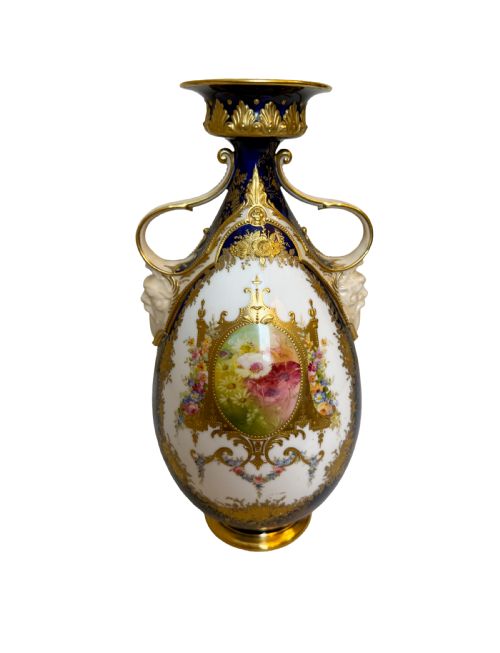
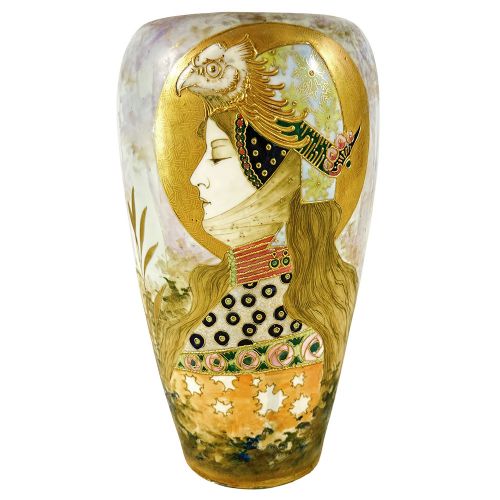
Gold painted porcelain urns bring together refined ceramic forms and metallic decoration across English, European and Japanese traditions.
Gold Painted Porcelain Urns
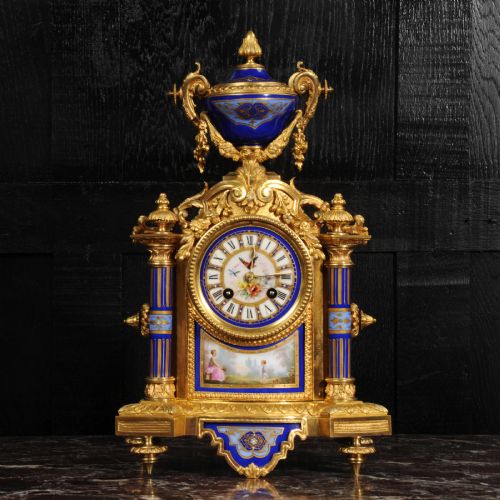
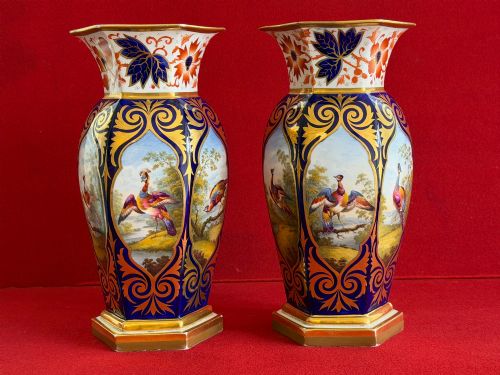
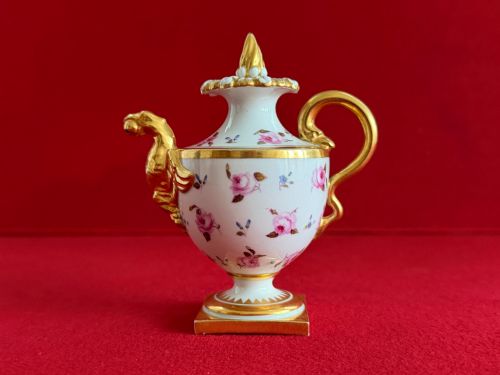
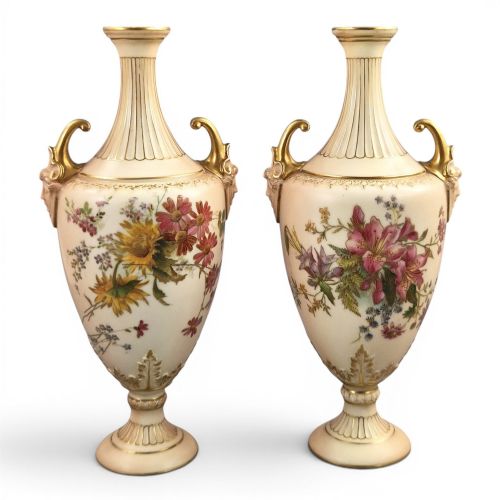
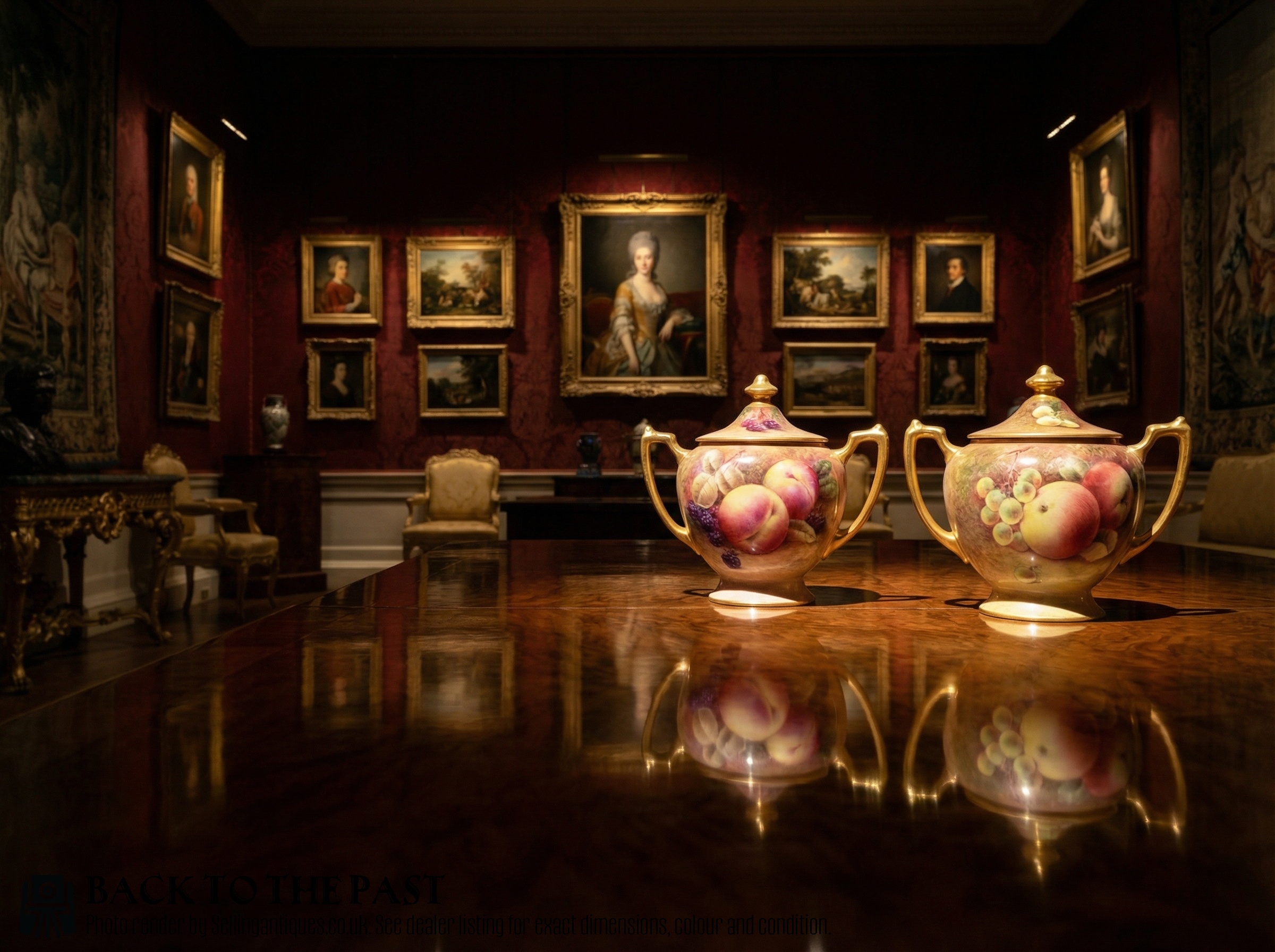
Gold painted porcelain urns comprise decorative vases, campagna urns, garnitures and jars produced across the eighteenth, nineteenth and early twentieth centuries. These vessels combine ceramic bodies with hand-applied gilding, enamel work or ormolu mounts.
Makers from English factories such as Worcester, Derby and Spode sit alongside continental works from Vienna, Paris and Sevres, together with Japanese Satsuma production. Forms range from miniature cabinet pieces to large architectural amphorae and pedestal urns.
The selection on this page relies heavily on nineteenth-century examples, alongside Regency, Georgian, Edwardian and Meiji period pieces. Vases and urns dominate the forms, frequently accompanied by mantel clocks and table lamps.
How they were made
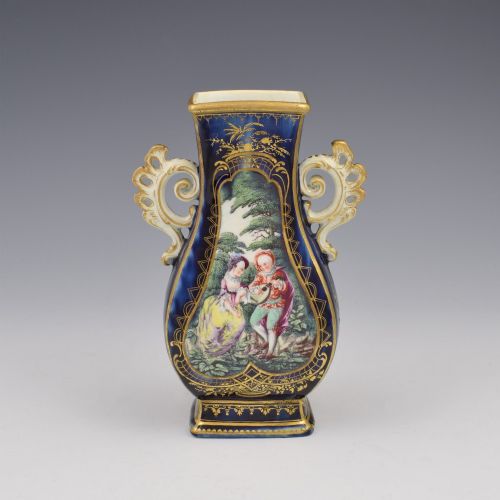
Potters shaped porcelain, earthenware and glass bodies before applying hand-painted scenes, floral motifs and enamel details. Artisans then used gold leaf, gilt, gilding and ormolu to highlight handles, rims and pictorial panels.
Many items underwent multiple firings to fix the enamel colours and secure the metallic leaf or liquid gold before final burnishing. Signed works by named artists show the integration of studio painting with traditional ceramic manufacture.
Storks occasionally share shelf space with parrots and classical gods, proving Victorian mantelpieces had a wild side.
What varies in quality
Quality rests on the crispness of the porcelain body, the precision of the hand-painted detailing and the depth of the gilding. Pieces carrying signatures from known decorators or established factories show superior artistic execution.
The complexity of the form, such as multi-piece garnitures, amphora shapes with covers, or integrated ormolu mounts, separates standard production wares from ambitious exhibition pieces.
Flight Barr and Barr·Royal Worcester·Kinkozan·Japy Freres·Reissner Stellmacher and Kessel
The Gold Painted Porcelain Urns Glossary
- Campagna urn
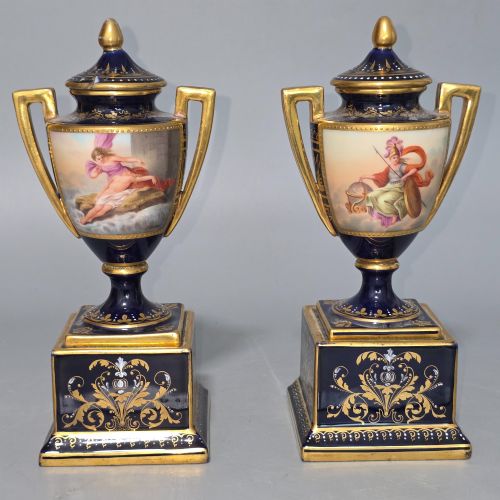
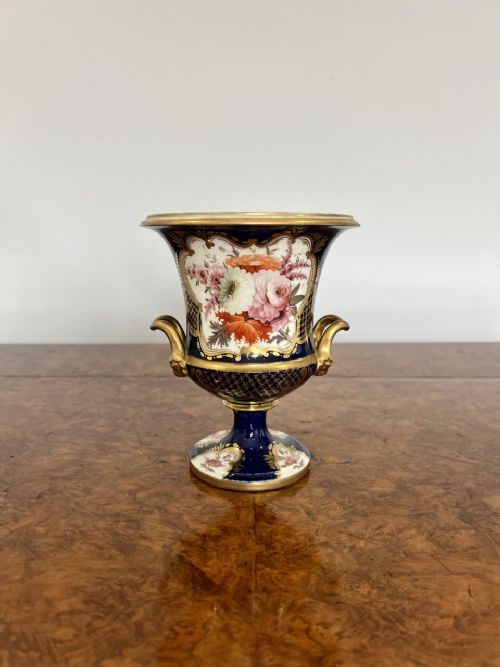
- A bell-shaped classical vessel form popular on nineteenth-century mantelpieces and side tables. These pieces often feature twin handles and pedestal feet.
- Garniture
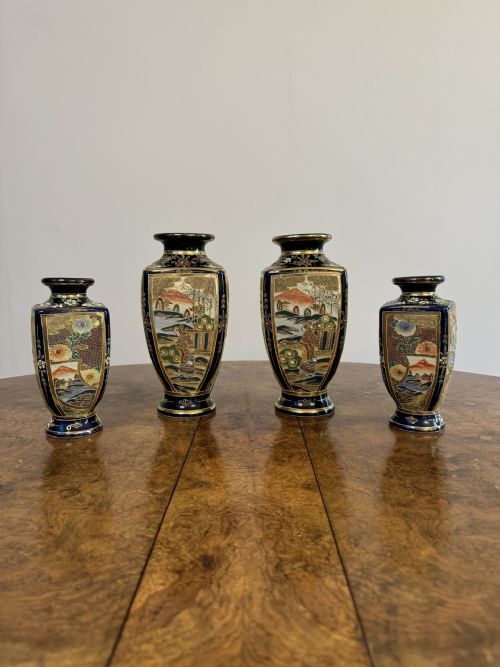
- A set of matching vases or urns designed to be displayed together as a decorative group on a shelf or mantel. They typically comprise three or more graduated pieces.
- Ormolu
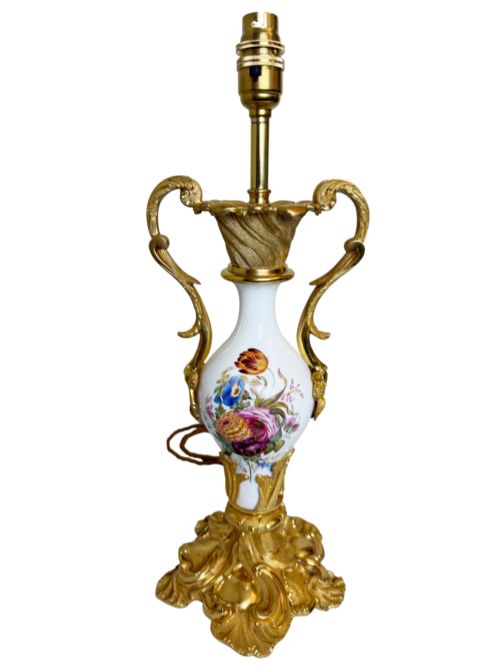
- Cast bronze mounted with a fine gold-mercury amalgam, used for decorative mounts, handles and feet on porcelain vessels. The technique provides a bright metallic finish.
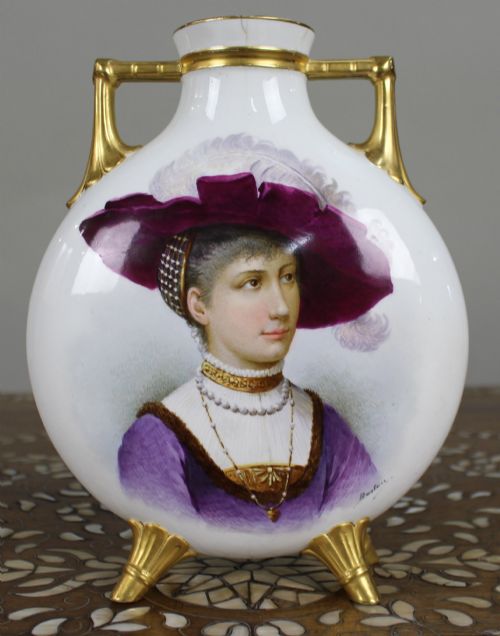
- Moon flask
- A flattened circular ceramic flask supported on a small base, frequently decorated with painted scenes on both sides. This shape draws on traditional Asian and European ceramic forms.
Gold Painted Porcelain Urns: Frequently Asked Questions
How were porcelain urns used?
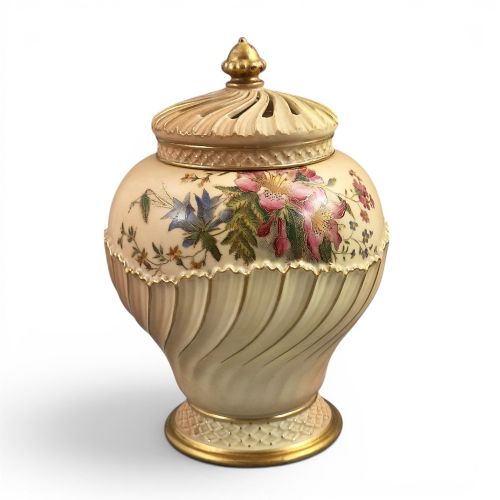
These vessels served primarily as decorative items on mantelpieces, sideboards and pedestals within formal rooms. Some specific forms, such as pot-pourri jars, were filled with dried plant material to scent domestic interiors.
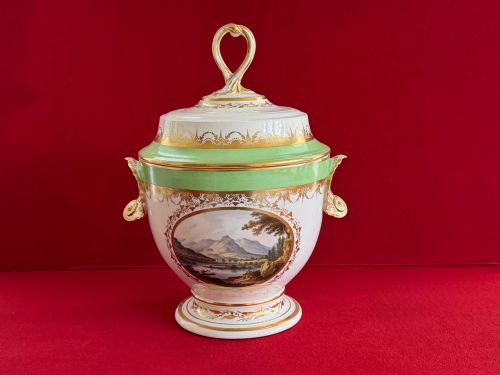
Larger garnitures created a balanced symmetrical display across architectural chimney breasts. Others functioned as practical containers for water or ice when dining.
How do I identify Regency pieces?
Regency vessels often draw on classical Greek and Roman shapes, including campagna urns and Warwick vases. They frequently originate from English factories like Worcester during the early nineteenth century.
Decoration on these examples tends to rely on crisp white or coloured grounds paired with restrained gilding and classical painted panels.
What is Satsuma ware?
Satsuma ware consists of Japanese earthenware and porcelain featuring a distinctive ivory-coloured, crackled glaze. These pieces are heavily decorated with enamel and raised gold detailing.
Production expanded significantly during the Meiji period for export markets, often depicting figural processions, family scenes and nature.
How should I display them?
Place urns on stable surfaces away from direct sunlight and heavy foot traffic to protect fragile gilt and enamel surfaces. Pairs and garnitures look best when kept together to preserve their original visual balance.
Ensure larger pedestal urns sit on secure low furniture where their height and painted details can be viewed from a standing position.