
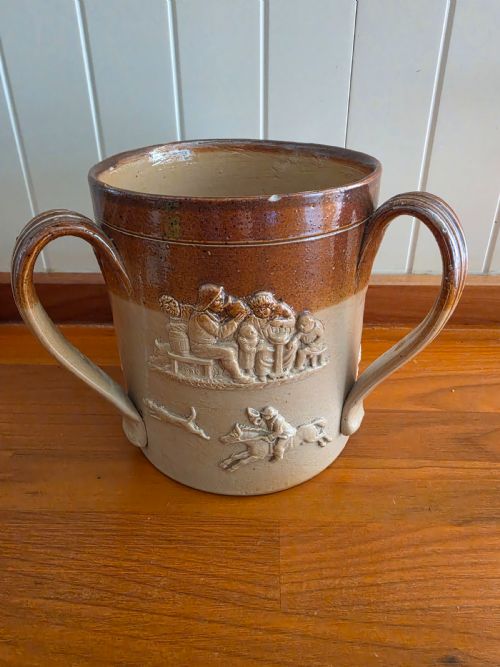


19th Century Hunting Scene
A 19th century hunting scene captures the drama of equestrian sport and rural tradition through period canvas, ceramic and paper works.

19th Century Hunting Scene
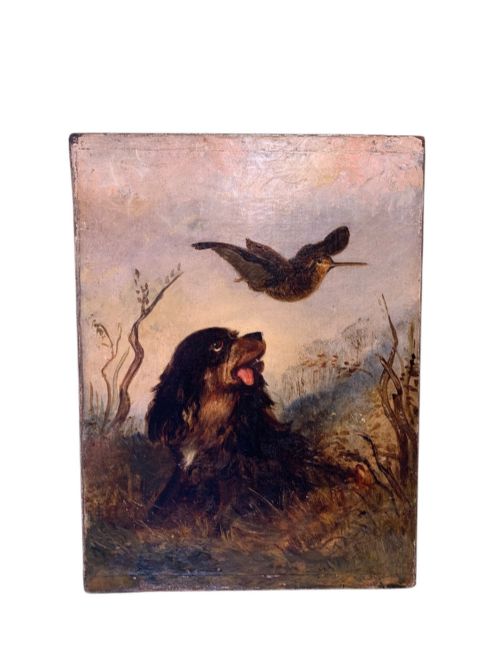
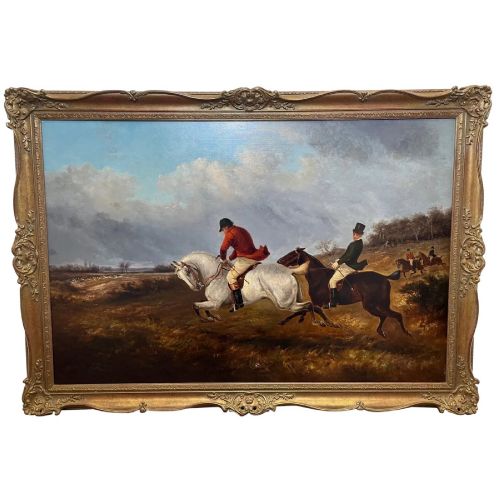
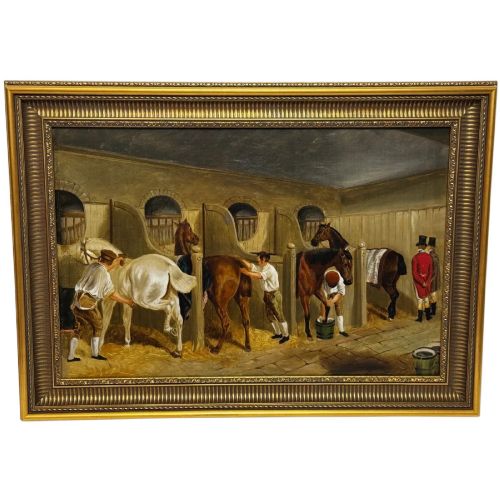
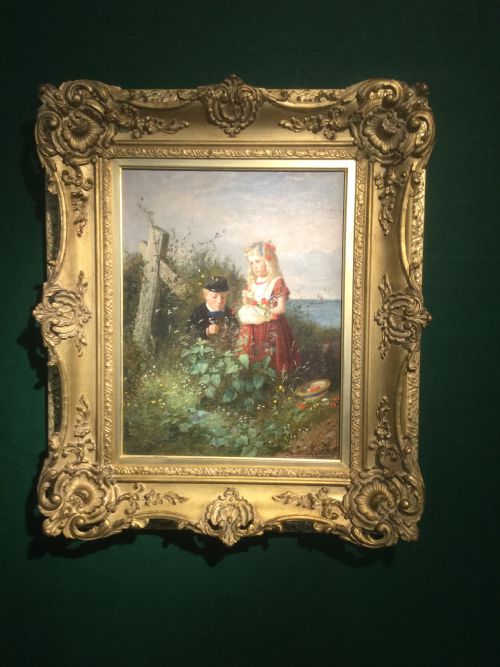
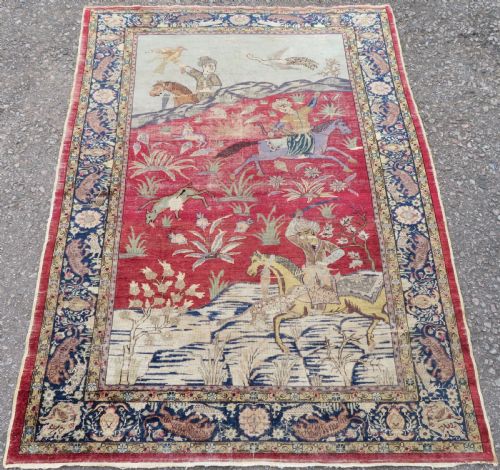
A 19th century hunting scene typically appears as an oil painting on canvas or wood panel, depicting hounds, horses, and riders across country landscapes. Many items originate from the Victorian and Georgian periods, reflecting the era's deep fascination with sporting art.
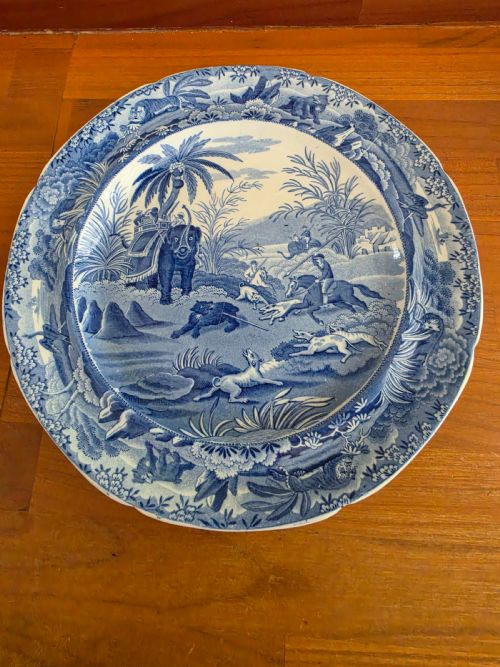
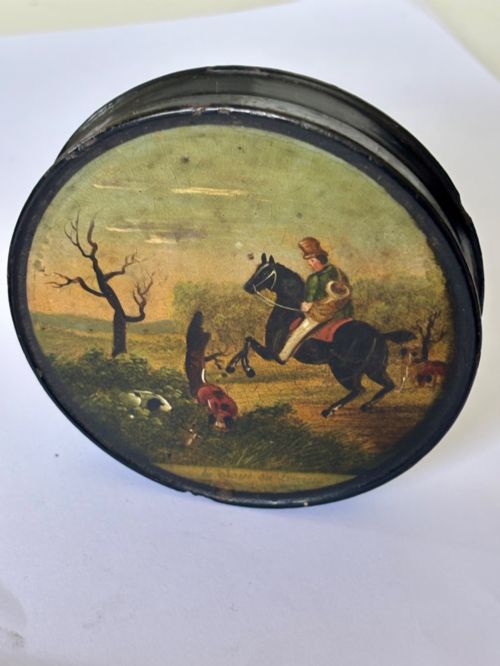
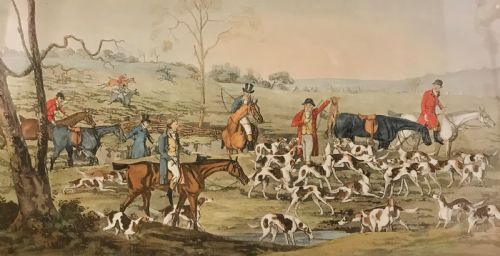
Beyond framed paintings, buyers encounter these subjects on transfer-printed loving mugs, stoneware jugs, papier-mâché snuff boxes, and engraved prints. These varied objects bring historical field sports into domestic spaces through both fine art and utilitarian pottery.
The selection ranges from detailed portrayals of the Berkeley Hunt to quieter studies of spaniels, woodcocks, and retrievers in woodland settings.
How they were made
Painters applied oil paint to stretched canvas or wooden panels, building rich tones for horses, coats, and rural backgrounds. Artisans also worked with paper for lithographs and engravings, utilising fine plates to capture the energetic lines of hounds in pursuit.
Potters shaped stoneware and earthenware to create jugs and mugs, often decorating them with transfer-printed or relief-moulded motifs. Carvers worked with wood such as oak and birch to produce detailed relief panels and snuff boxes depicting field pursuits.
Several transfer-printed loving mugs hide small ceramic frogs inside the vessel, designed to surprise drinkers as the liquid receded.
What varies in quality
Quality rests significantly on the hand of the artist, distinguishing skilled academic painters from competent regional hands. Anatomical accuracy in horses and hounds, alongside the balance of the wider landscape, separates finer canvases from routine work.
The crispness of detail defines printed and ceramic examples, where sharp transfer lines and well-preserved glazes retain their visual impact over centuries. Frame construction also plays a role, with period giltwood frames enhancing the presence of oil paintings.
Thomas Smythe·Charles Hunt·Spode·George Armfield·Charles Faulkner·John Frederick Herring Jnr·Henri Schouten·Heywood Hardy·Robert Cleminson·Guillaume Urban Régamey·George Goodwin Kilburne·Edgar Hunt·Thomas Blinks·Edward Smith·Francis Calcraft Turner·John Nost Sartorius
The 19th Century Hunting Scene Glossary
- Transfer printing
- A decoration technique where an engraved metal plate transfers a design onto paper, which is then pressed onto pottery before glazing. This method allowed intricate monochrome scenes to be reproduced reliably across mugs and jugs.
- Relief moulding
- A ceramic technique where designs are raised above the surrounding surface using a specialised mould. This adds tactile depth to historical jugs and tableware.
- Lithograph
- A print produced from a flat stone or metal plate treated to repel ink except where the drawing requires it. It became a popular medium for reproducing sporting scenes in the nineteenth century.
- Tyg
- A large drinking vessel featuring three or more handles designed for passing around a company. Stoneware examples from the nineteenth century frequently incorporate hunting decorations.
- Giltwood
- Wood that has been coated with a thin layer of gold leaf or powder. Period frames finished in this manner complement traditional oil paintings.
19th Century Hunting Scene: Frequently Asked Questions
How do I identify a Victorian hunting painting?
Examine the canvas preparation, stretcher frames, and the specific attire of the riders, which generally align with nineteenth-century sporting fashions. Signatures, brushwork style, and framing materials also offer clues to the period.
Many works feature specific regional hunts or named animals inscribed on the reverse or within contemporary exhibition records.
Were these artworks meant for display?
Large oil paintings and framed engravings were created primarily to hang in country houses, libraries, and drawing rooms as expressions of rural pursuits. Smaller items like snuff boxes and ceramic jugs served functional roles while celebrating the same cultural interests.
Owners often commissioned works to record prized horses, hounds, or memorable days in the field.
What is the difference between an engraving and an oil painting?
Engravings are printed multiples created by cutting lines into a metal plate, allowing popular scenes to be shared widely among collectors. Oil paintings are unique, hand-painted works executed directly onto canvas or wood.
Paintings offer layered brushwork and rich colour palettes, whereas prints rely on fine line work and monochrome or hand-applied washes.
How should I care for a 19th century oil painting?
Keep paintings away from direct sunlight and dramatic fluctuations in temperature and humidity to protect the canvas and oil pigments. Dust the surface gently with a soft, dry brush without applying pressure.
Avoid using water or chemical cleaners on the paint surface or antique frames.