

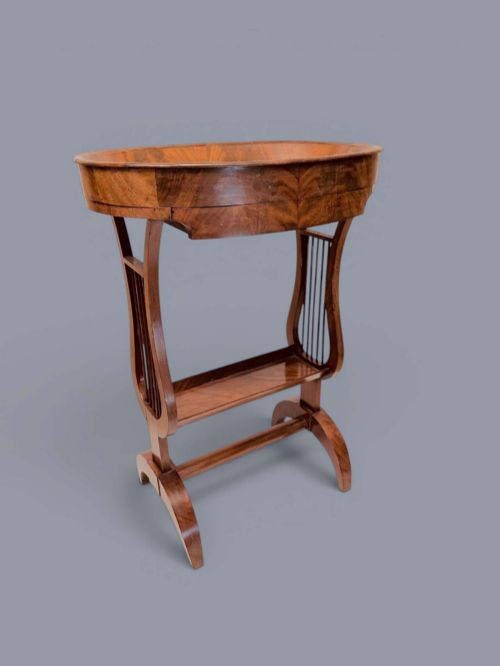
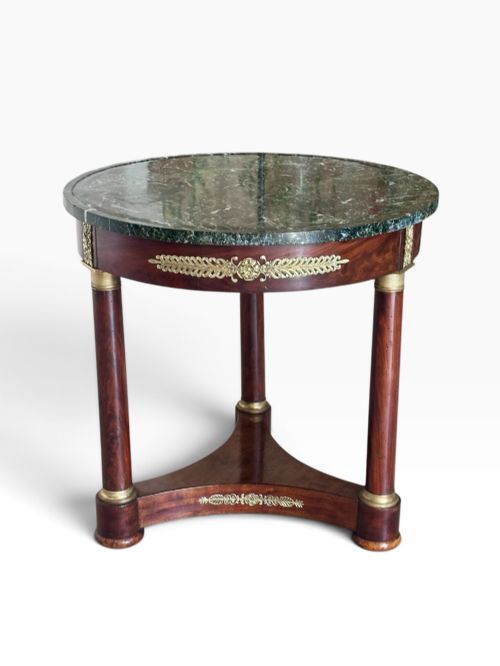
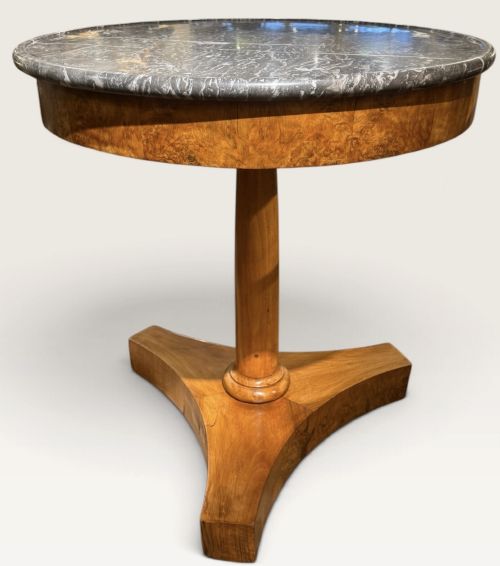
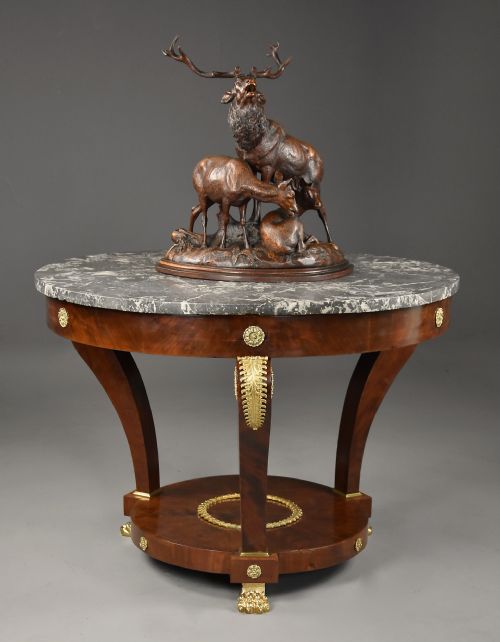
19th Century Gueridon Table
When you search for a 19th century gueridon table, you seek a circular centrepiece that combines classical proportion with practical display.

19th Century Gueridon Table
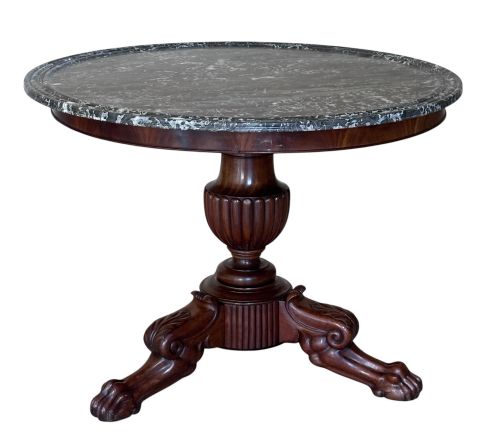
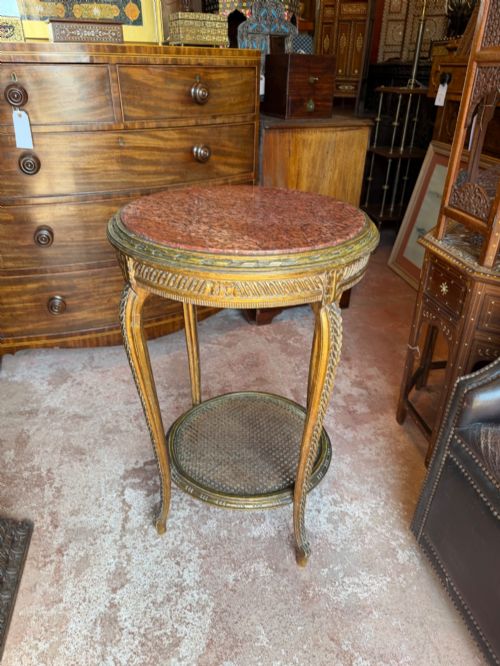
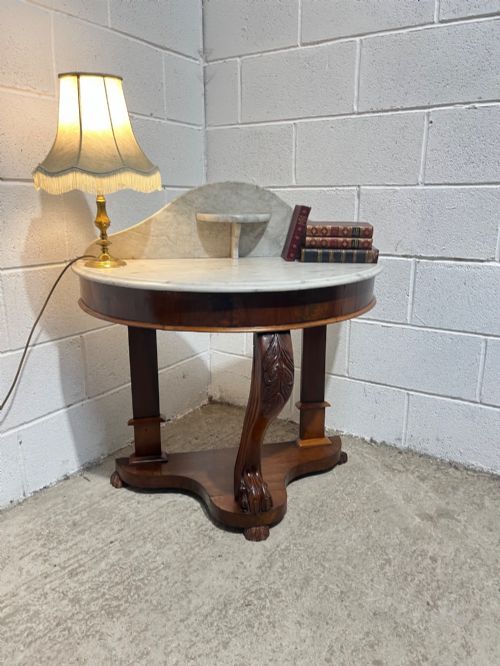
A 19th century gueridon table is a round occasional table designed to stand freestanding in the middle of a room or serve as a decorative support. These pieces trace their origins to French workshop traditions, evolving through various nineteenth-century revivals including French Empire, Louis Philippe, and Louis XVI styles.
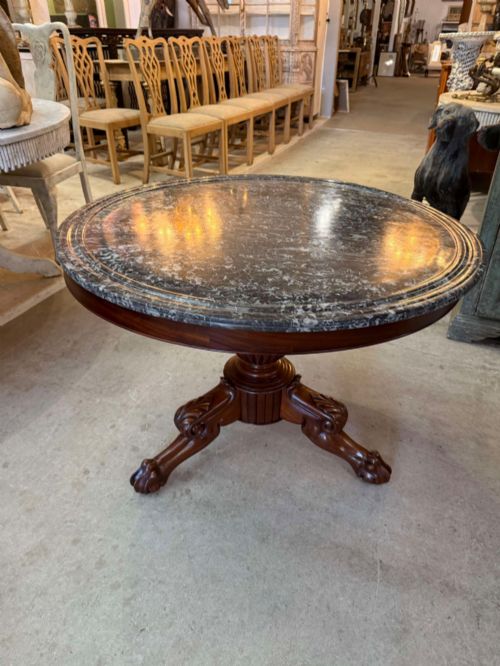
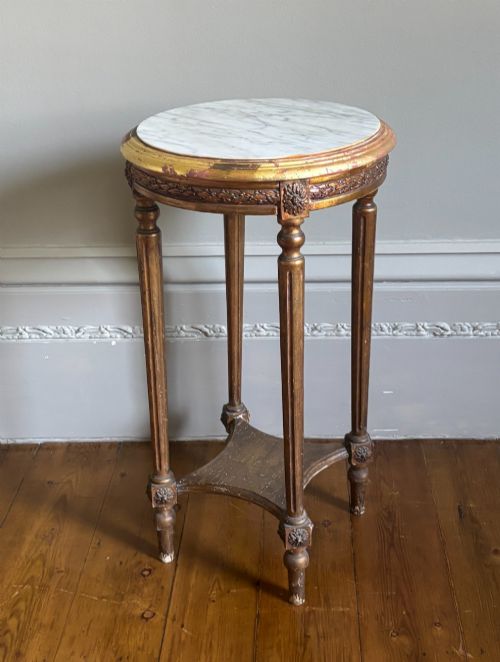
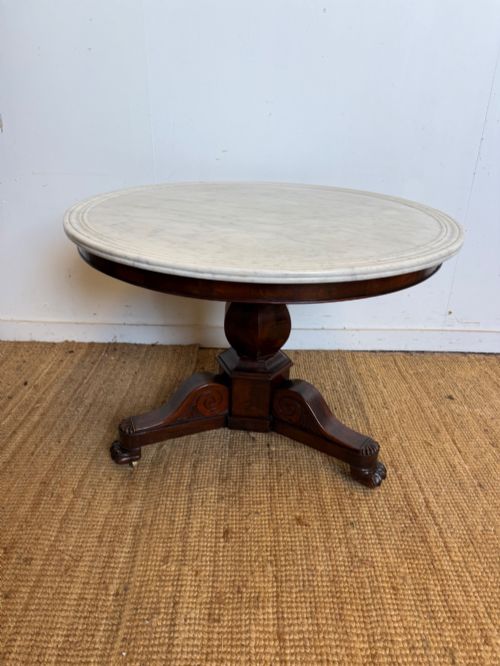
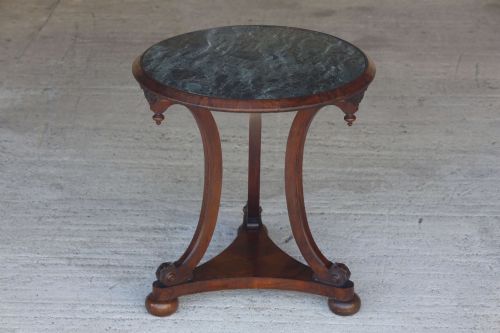
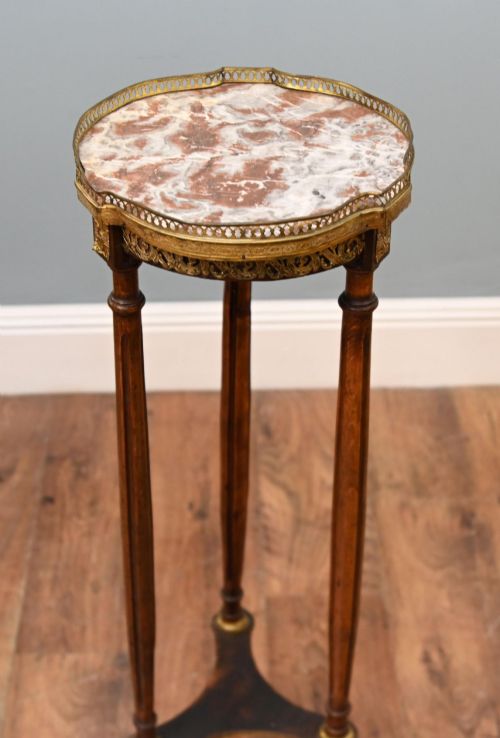
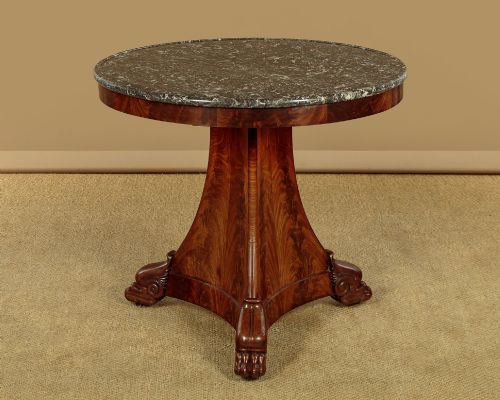
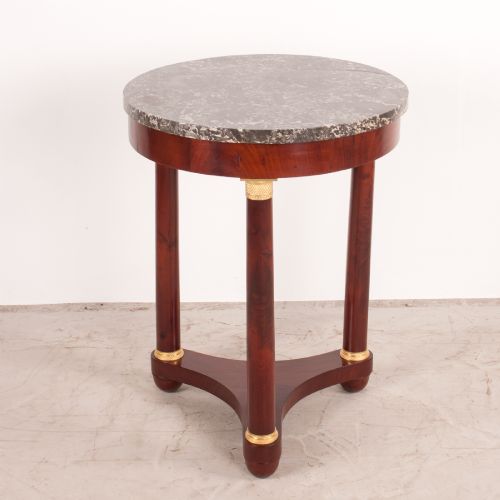
You will most commonly encounter mahogany examples featuring inset marble tops and central pedestal columns, though walnut, birch, and rosewood variants also appear across the selection. Forms range from compact wine tables and plant stands to grand centre tables intended for displaying lamps or decorative objects.
The enduring appeal of these tables lies in their versatile circular geometry and substantial stone or timber surfaces. They anchor a room without dominating the floor plan, functioning equally well as centre tables, side tables, or occasional display surfaces.
Materials and Construction
Makers utilised dense timbers such as mahogany, walnut, and kingwood for the structural frames, often applying veneers over secondary woods to achieve striking grain patterns like sunbursts or figured surfaces. These wooden elements provide the necessary stability to support heavy stone tops.
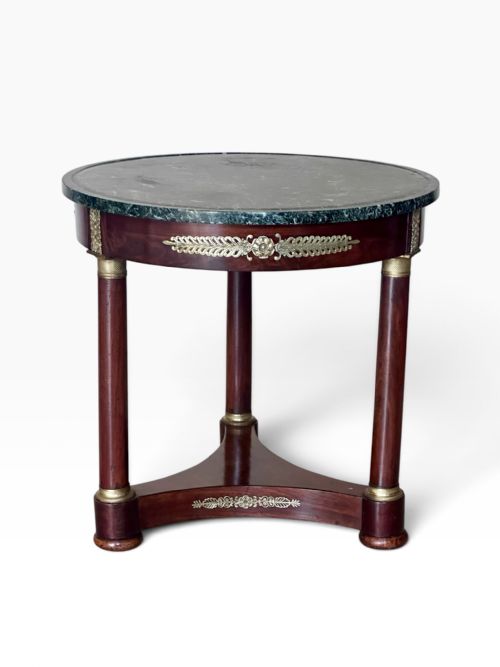
Inset marble tops define a large proportion of these tables, utilising varieties such as white, grey, red, and fossil marble, frequently accompanied by cast brass or ormolu mounts. Ormolu accents and gilded bronze details add decorative contrast to the warm timber bases.
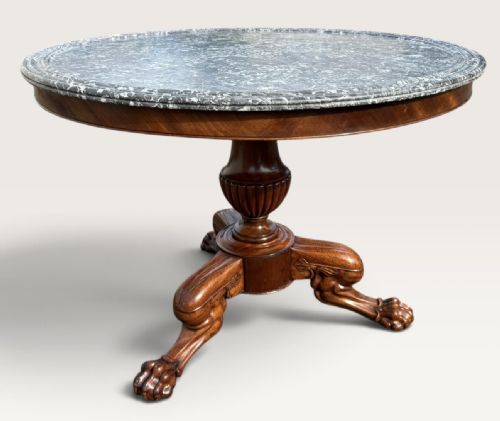
Pedestal supports often incorporate carved elements, ranging from classical pillars and columns to figurative details like animal paws, swans, or rams' heads. Joinery techniques relied on robust central box construction beneath the tabletop to unite the column and tripod or plinth base securely.
19th Century Gueridon Table Retail Price Guide 2026
Typical asking prices for 19th century gueridon table among the pieces listed under this phrase on Sellingantiques today, from the lower quarter to the upper quarter. They describe what is for sale here now, not the wider market.
Listings demonstrate a strong predominance of French regional origins, alongside occasional Swedish birch and Biedermeier examples.
Assessing Quality and Execution
Quality reveals itself in the selection of materials, specifically the choice of figured timber veneers and the weight and veining of the inset marble slab. Superior examples feature stones fitted flush into the surrounding wooden gallery with tight tolerances.
The crispness of carved details distinguishes finer pieces from standard production, particularly on pedestal mounts, pillar collars, and animal paw feet. Cast bronze or ormolu mounts display sharp chasing and secure fixings rather than soft definition or poor alignment.
Structural integrity of the central column and base assembly determines daily utility, as heavy marble tops place constant stress on the underlying joinery. Tables retaining original, unaltered marble slabs and stable pedestal joints command greater appreciation.
Gervais Durand
The 19th Century Gueridon Table Glossary
- Gueridon
- A small circular table or stand, typically supported by a central pillar and plinth or tripod base. The form originated in France during the seventeenth century and remained popular throughout the nineteenth century.
- Ormolu
- Gilded bronze applied as decorative mounts, feet, or gallery borders on furniture. This technique involves coating cast bronze with a mercury and gold amalgam before heating.
- Breccia Marble
- A composite marble featuring angular rock fragments embedded in a contrasting fine-grained matrix. It provides distinctive multicoloured patterns across many nineteenth-century tabletop surfaces.
- Plinth Base
- A heavy flat block or stepped platform supporting the central column of a table. It distributes the weight of the stone top and adds stability to the freestanding frame.
- Bouillotte Table
- A small classical card or occasional table featuring a raised brass gallery around the marble top to prevent items from rolling off. They frequently incorporate candlesticks or lighting attachments rising from the centre.
19th Century Gueridon Table: Frequently Asked Questions
What is a gueridon table used for?
These tables function primarily as freestanding centrepieces in a room, holding lamps, decorative bowls, or books.
They also serve as occasional side tables or plant stands, providing a stable circular surface without requiring placement against a wall.
How do I identify a French Empire gueridon?
Look for architectural forms featuring dark mahogany timbers paired with heavy bronze or ormolu mounts.
Decoration often includes classical motifs such as swans, rams' heads, or lions' paws on the pedestal base.
Are the marble tops original?
Original marble tops fit precisely into the wooden rim and show consistent weathering and age patination matching the base.
Look for matching period characteristics between the stone thickness, edge moulding, and the timber frame supporting it.
How do I care for a nineteenth-century wood and marble table?
Clean the marble surface with a damp cloth and mild neutral soap, avoiding acidic substances that can etch the stone. Feed the timber framing periodically with appropriate wax to maintain the finish without building up residue.