

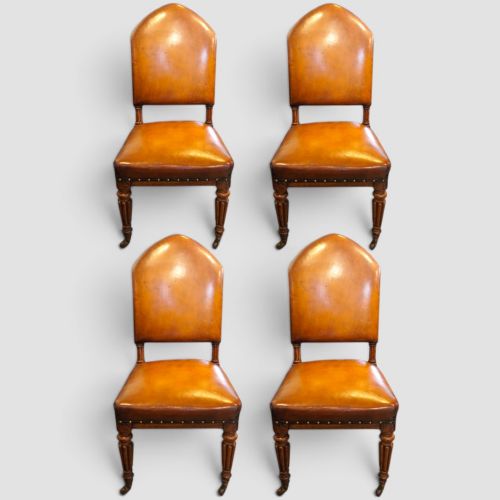
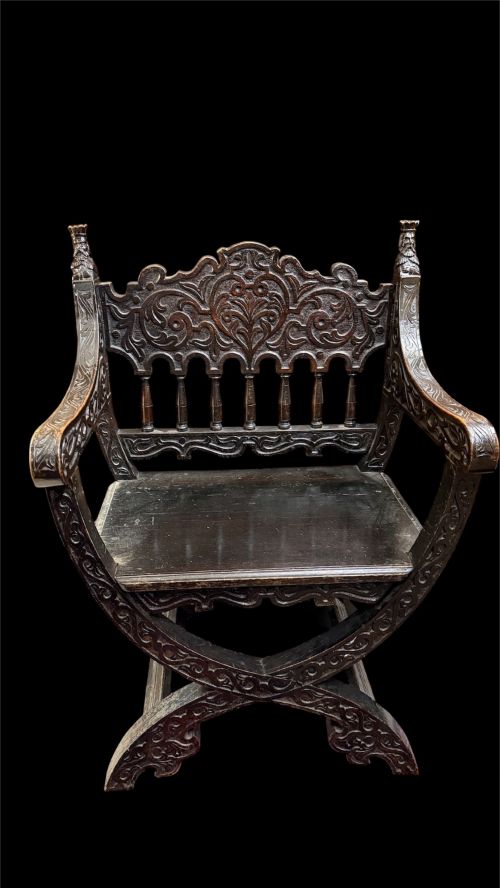
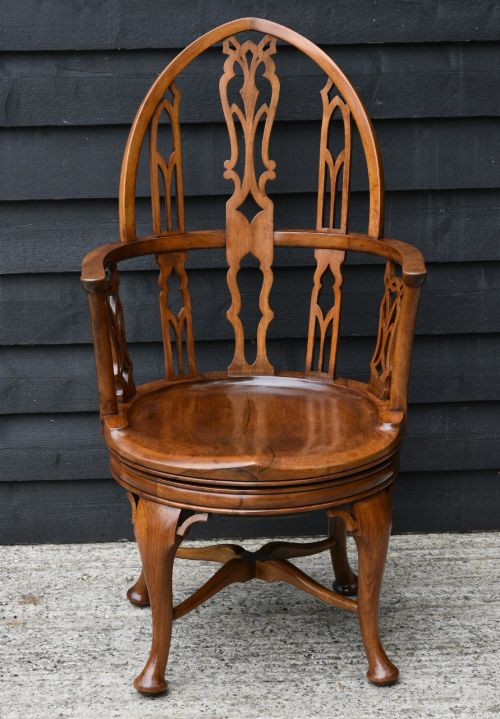
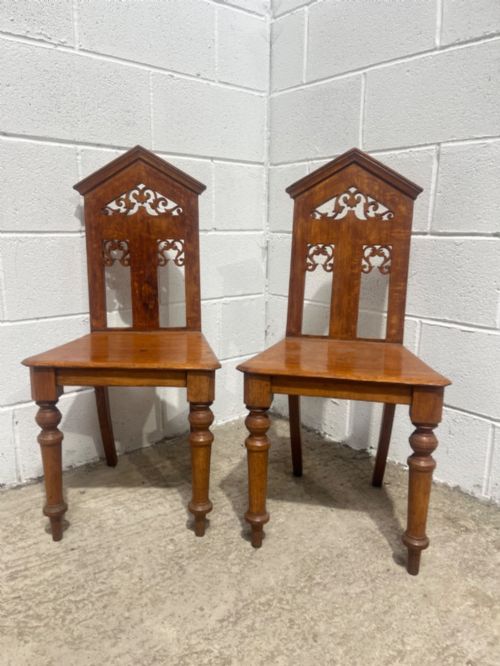
19th Century Gothic Chair
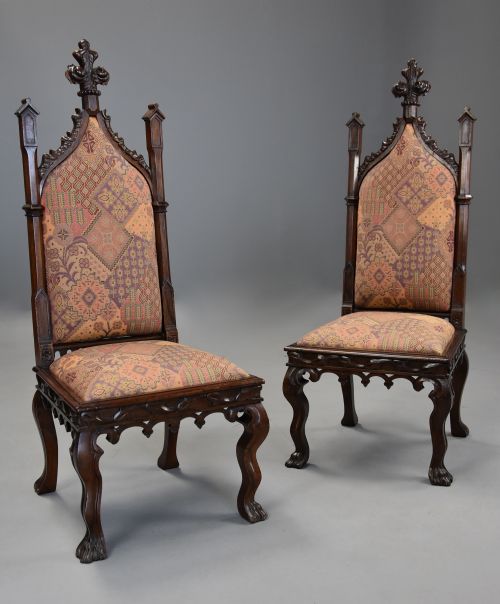
A 19th century gothic chair brings architectural gravity and rich carved timber into a room, offering both sturdy utility and striking historic design.
19th Century Gothic Chair
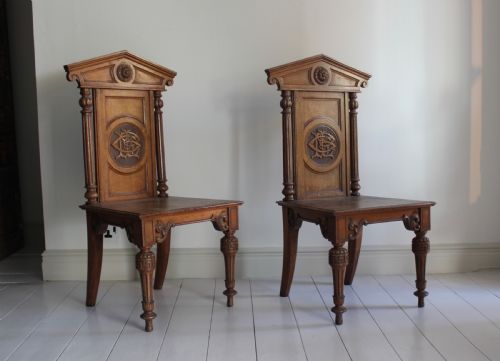
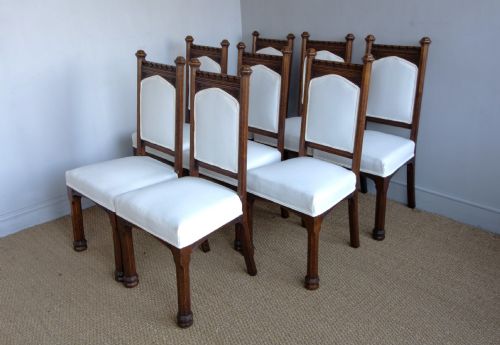
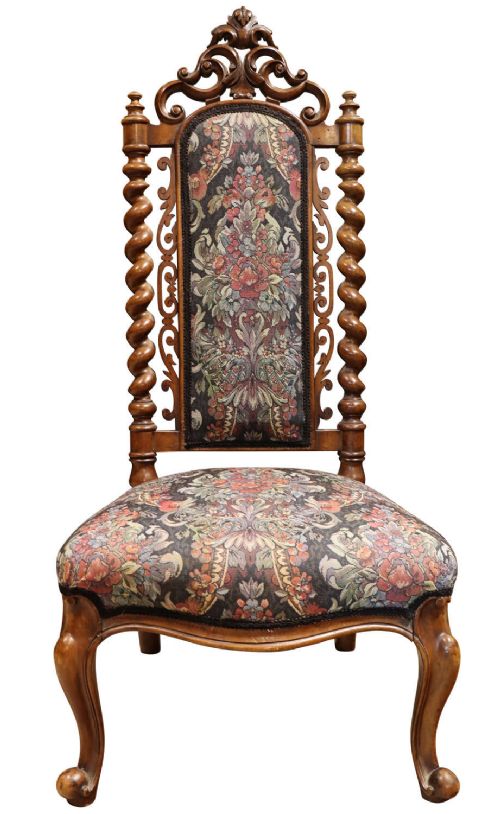
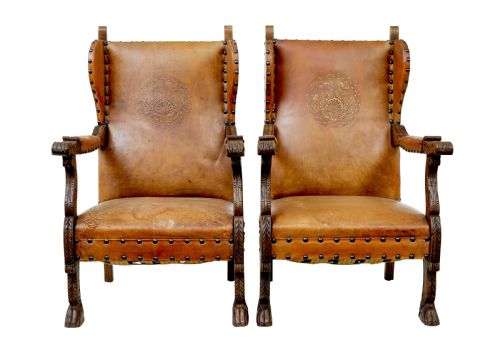
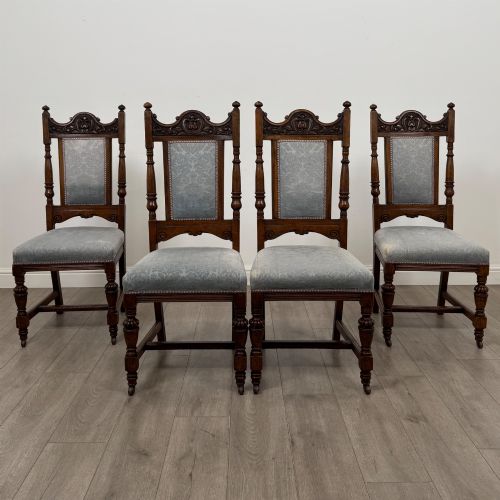
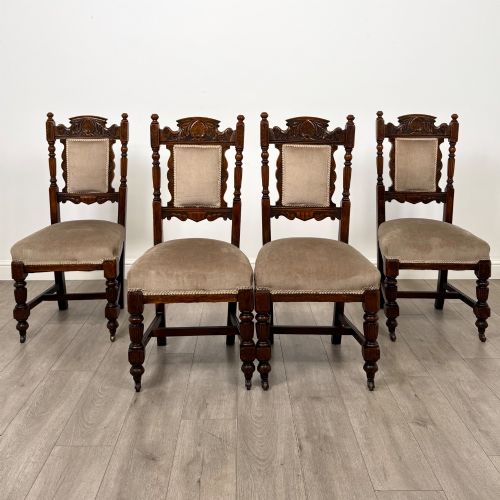
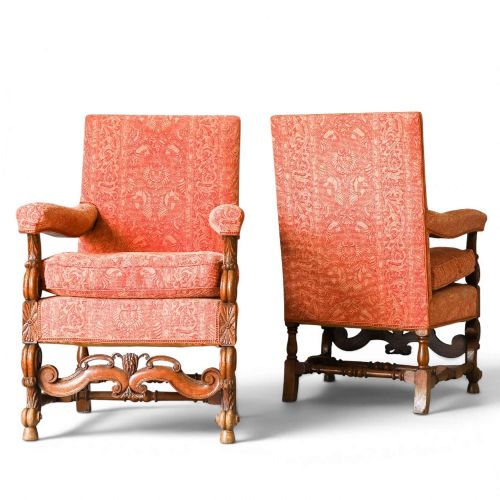
A 19th century gothic chair encompasses a diverse group of seating furniture created during the Gothic Revival movement, drawing inspiration from medieval architecture and ecclesiastical design. These pieces range from upright hall chairs and side chairs to grand armchairs, throne chairs, and dining sets.
How they were made
Makers utilised dense native hardwoods, predominantly oak, alongside walnut, mahogany, and occasional pine or elm, assembled using traditional pegged mortise and tenon joints to withstand heavy daily use. Turnings, chamfering, and deep relief carvings were executed by hand using gouges and chisels to replicate medieval stone and woodwork.
Upholstery methods involved drop-in or fixed pad seats covered in embossed leather, tapestry, velvet, or fabric, secured with brass tacking. Structural elements frequently incorporated architectural frameworks, borrowing principles from ecclesiastical stone tracery and timber roof construction.
Listings demonstrate a strong predominance of solid oak construction, alongside walnut, mahogany, and occasional rosewood or yew.
What varies in quality
The distinction between ordinary and exceptional pieces rests upon the crispness and depth of the wood carving, the quality of the timber selection, and the integrity of the original joinery. Pieces displaying fully articulated architectural forms, such as buttresses, crockets, and figural lion heads, demonstrate superior workshop execution.
Provenance and attribution also elevate certain examples, particularly those bearing maker stamps, paper labels, or documented connections to notable designers like A. W. N. Pugin, Gillows, or Bruce Talbert. Uniformity across matched dining sets and the preservation of original leather or upholstery further define the upper tier of the range.
Gillows of Lancaster·W A Willcocks·G Tilley of Birmingham·Holland and Sons
The 19th Century Gothic Chair Glossary
- Gothic Revival
- An architectural and design movement spanning the 19th century that drew heavily upon medieval forms, pointed arches, and ecclesiastical ornamentation. This aesthetic influenced domestic furniture through dramatic silhouettes and carved tracery.
- Tracery
- Openwork ornamental stone or woodwork consisting of intersecting ribs, commonly seen translated into the backs of chairs. It mimics the stone window patterns found in medieval churches and cathedrals.
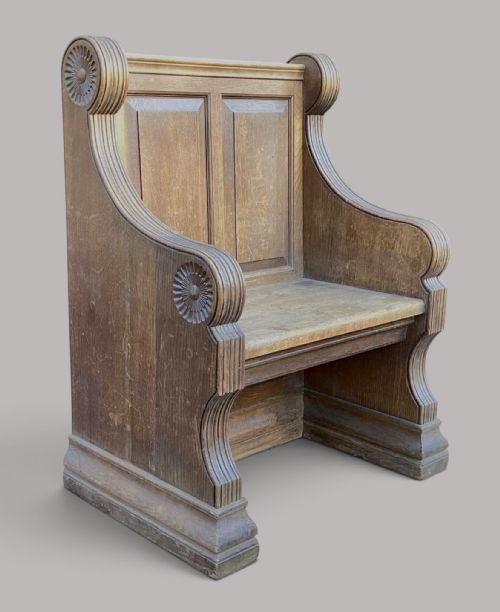
- Wainscot chair
- An early form of wooden armchair, typically constructed from heavy panelled oak with solid arms and a high back. 19th century makers revived this style to evoke a sturdy Tudor or Jacobean interior.
- Caquetoire
- A type of lightweight, high-backed armchair originating in the Renaissance period, featuring a narrow trapezoidal seat designed to accommodate voluminous contemporary dress. 19th century revival versions often incorporate gothic carving.
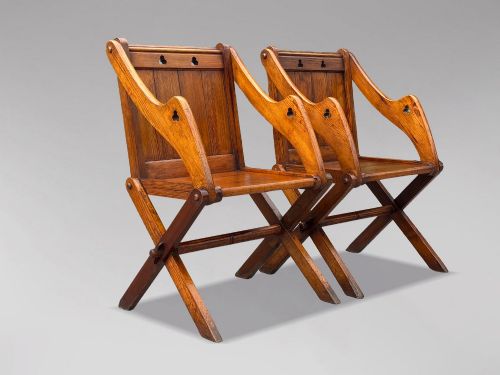
- Glastonbury chair
- A distinctive type of folding or X-framed armchair with a sloping panel back and flat armrests, popularized during the Victorian Gothic Revival after an ancient cathedral relic.
19th Century Gothic Chair: Frequently Asked Questions
How do I spot a true 19th century gothic chair?
Examine the timber surfaces for hand tool marks, peg construction, and the natural oxidation of the wood over time. Authentic examples display the characteristic weight and dense grain of period hardwoods like oak or walnut.
Look closely at the carving style, which should reflect the authentic medieval revival motifs of the Victorian era rather than modern machine routing. Original hardware, such as brass upholstery tacks or maker stamps, also helps confirm the period origin.
Were these chairs used in ordinary homes?
While grander throne chairs and heavy armchairs were designed for libraries, halls, or ecclesiastical settings, lighter side and dining chairs were common in Victorian domestic interiors. Many families embraced the Gothic Revival style to create a picturesque, historically grounded atmosphere in their dining rooms.
Smaller hall chairs served as decorative yet functional seating in entranceways and corridors. Their sturdy construction ensured they could withstand regular household use while displaying the owner's appreciation for historic design.
How do I care for antique oak and leather?
Maintain the timber by keeping the chair away from direct heat sources and sudden humidity changes that can cause the wood to split. Apply a microcrystalline wax polish occasionally to nourish the grain without building up heavy residues.
For leather seats, treat the material gently with a specialised leather conditioner to preserve flexibility and prevent cracking. Avoid harsh chemical cleaners on both the wood and the upholstery.
What is the difference between Pugin style and standard Victorian gothic?
Pugin style furniture strictly adheres to the architectural principles and moral integrity of design championed by A. W. N. Pugin, emphasising structural honesty and direct medieval precedent. These pieces tend to feature cleaner, more restrained lines and precise architectural proportions.
Standard Victorian gothic can encompass a broader, more decorative approach, often incorporating heavier carving, applied ornament, and eclectic Renaissance or Jacobean revivals. These commercial pieces prioritized dramatic domestic effect over strict archaeological accuracy.