



19th Century Gold Brooch
A 19th century gold brooch brings centuries of intricate craftsmanship and wearable history to your lapel, spanning Victorian, Georgian, and French periods.
19th Century Gold Brooch
A 19th century gold brooch encompasses a diverse range of ornamental fastenings created during the Victorian, Georgian, and French Second Empire eras. These pieces frequently double as pendants, offering versatile wearability as both chest ornaments and neckpieces.
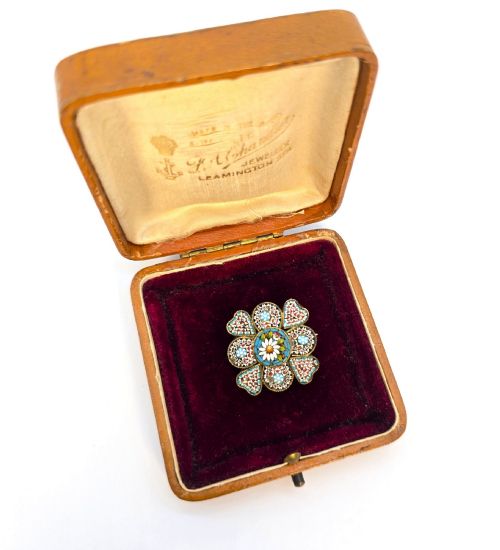
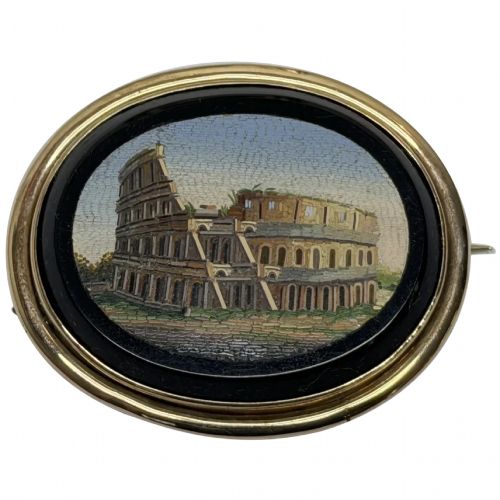
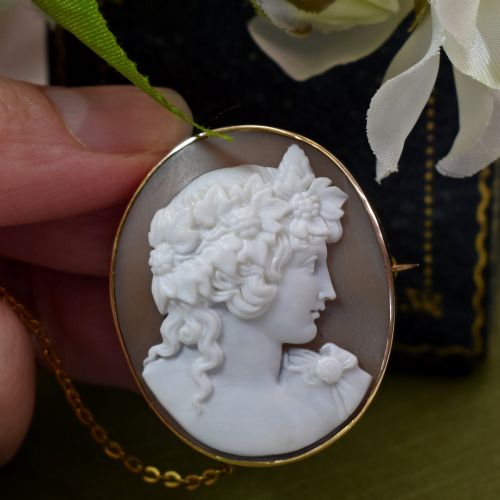
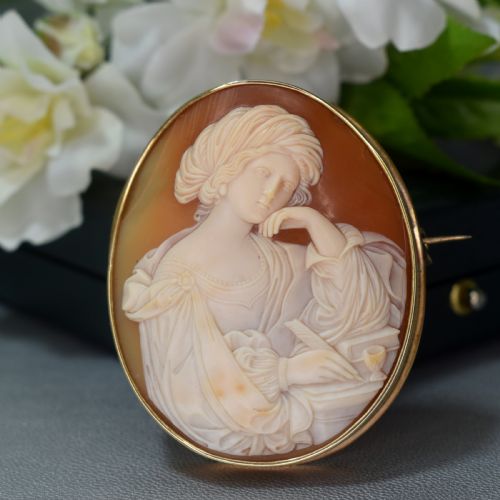
Buyers will encounter various distinct motifs on this page, including detailed shell and hardstone cameos, micromosaics depicting Roman landmarks, floral sprays, and zoomorphic designs such as birds, flies, and turtles. Scottish Revival and Grand Tour souvenirs also appear among the offerings.
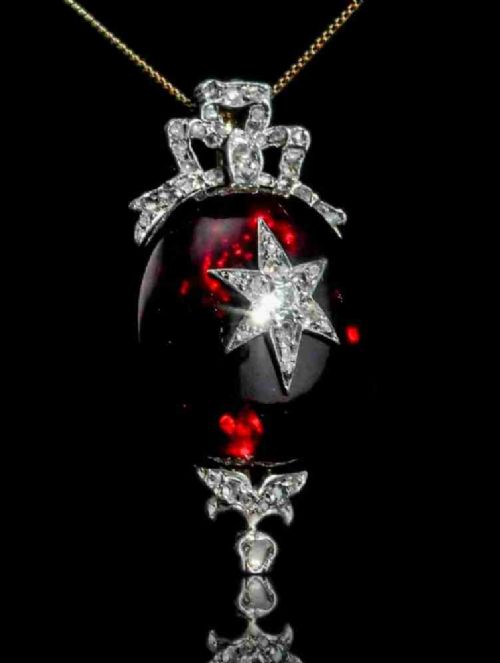
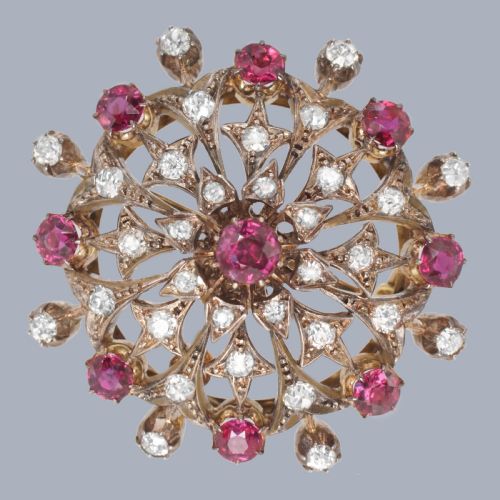
The materials span yellow gold, 18ct gold, silver-topped gold settings, and base metals, paired with gemstones like diamonds, rubies, garnets, sapphires, and amethysts, alongside shell, agate, and coral.
How they were made
Goldsmiths utilised yellow gold, 18ct gold, and silver-topped settings to anchor precious stones, often employing silver to enhance the whiteness of diamonds against warmer gold backs. Metals were hand-formed into delicate filigree, floral clusters, and convertible pendant mounts.
Carvers shaped layered shells and hardstones into high-relief cameos portraying classical figures, while micro-mosaic artisans laid tiny glass tesserae to construct pictorial scenes of Rome. Gemstones including garnets, rubies, and diamonds were hand-cut in flat-cut, cabochon, or faceted styles to catch the light.
19th Century Gold Brooch Retail Price Guide 2026
Typical asking prices for 19th century gold brooch among the pieces listed under this phrase on Sellingantiques today, from the lower quarter to the upper quarter. They describe what is for sale here now, not the wider market.
Listings feature periods spanning the Georgian era through the late Victorian decades, incorporating materials such as shell, lava, mosaic, and precious gemstones.
What varies in quality
Quality rests upon the precision of the hand-carving in cameos and the microscopic density of tesserae in micromosaics, where finer execution yields sharper anatomical details and pictorial clarity. Metalwork complexity also divides standard production from master-level goldsmithing.
The choice and grading of gemstones dictate the upper tier of the range, particularly when natural untreated rubies, unheated sapphires, or substantial old-cut diamonds are present. The preservation of original convertible fittings and secure pin mechanisms further elevates a piece.
The 19th Century Gold Brooch Glossary
- Micromosaic
- A pictorial technique formed by fusing thousands of tiny coloured glass tesserae together to create detailed miniature images. These scenes often depict architectural ruins and classical subjects.
- Cameo
- A method of carving a relief image upon a layered material such as shell, agate, or hardstone. The contrasting strata of the medium allow the subject to stand out distinctly from the background.
- Cabochon
- A gemstone shaping style featuring a smooth, rounded, convex upper surface rather than faceted planes. This cut is frequently utilised for garnets and star stones.
- Flat-cut garnet
- Almandine garnets sliced flat on the back and polished on top, typically foil-backed in closed settings to intensify their deep red colour.
- Convertible pendant brooch
- An item engineered with hidden loops or detachable bails that transform the fastening from a lapel ornament into a necklace pendant.
19th Century Gold Brooch: Frequently Asked Questions
How do I wear a convertible brooch?
These versatile jewels usually feature a concealed loop or a screw-in bale at the reverse, allowing you to thread a chain through and suspend the piece from your neck.
When worn as a brooch, ensure the pin is secured firmly into its clasp, utilising safety chains if provided for added security.
What is a micromosaic brooch?
A micromosaic brooch contains an intricate miniature picture constructed from countless microscopic pieces of coloured glass known as tesserae, fused together with cement.
Popularised during the Grand Tour, these scenes frequently portray famous Roman landmarks or classical iconography.
How can I tell a shell cameo from a hardstone cameo?
Shell cameos utilise conch or helmet shells, displaying warm peach or brown tones against an opaque white upper layer, and often reveal translucent qualities when held to the light.
Hardstone cameos are carved from banded agates or onyx, offering crisper multi-layered profiles and a heavier, cooler feel in the hand.
What is silver-topped gold?
Silver-topped gold is a historic manufacturing technique where a thin layer of silver is soldered to the front of a gold mount, particularly in diamond-set jewellery.
Silversmiths utilised this method because silver's bright white colour enhanced the fire and brilliance of old-cut diamonds without showing tarnish against the skin.