

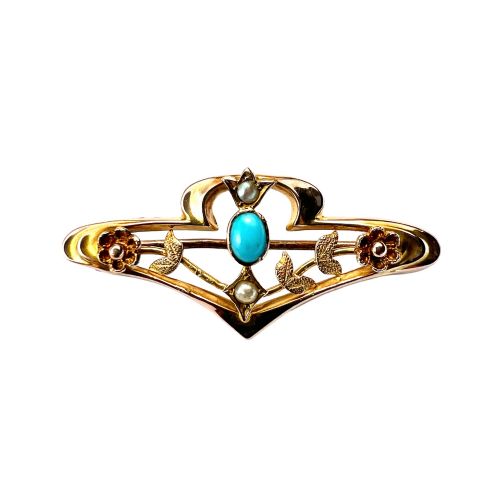
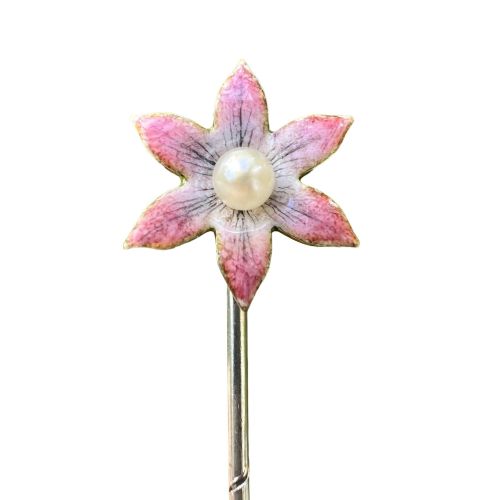
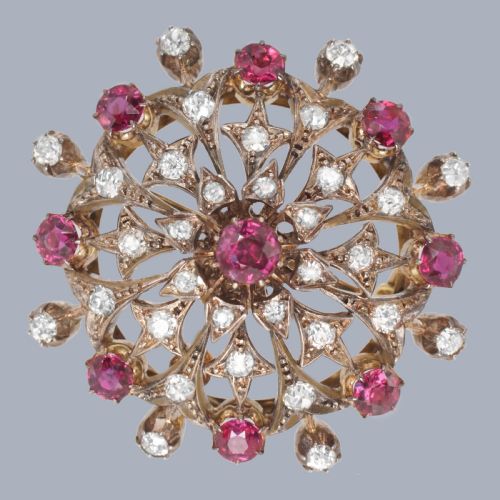


Gold Floral Brooch
A gold floral brooch brings botanical form to nineteenth-century and twentieth-century jewellery, offering miniature sculpture in precious metal.
What They Are
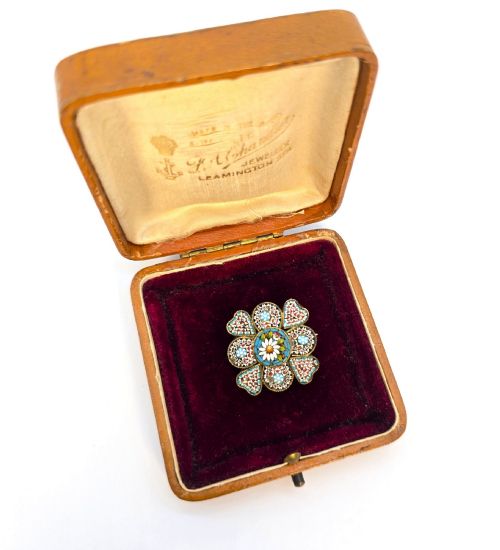
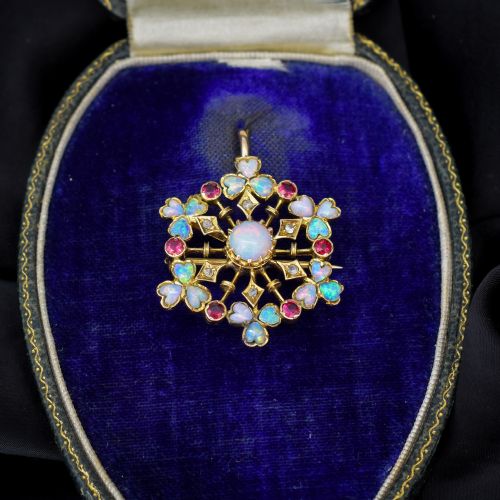
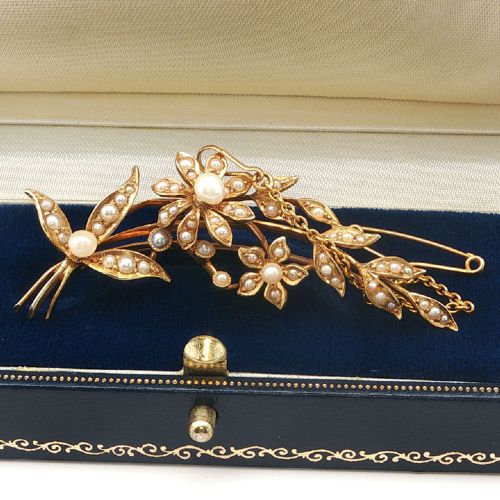
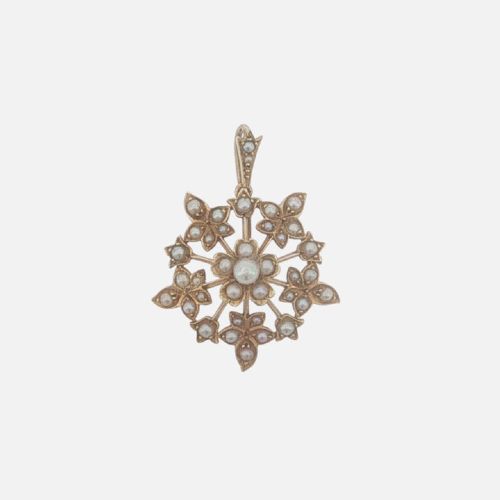
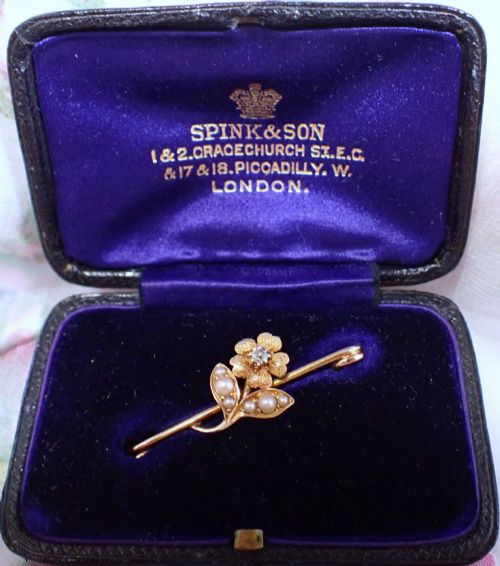
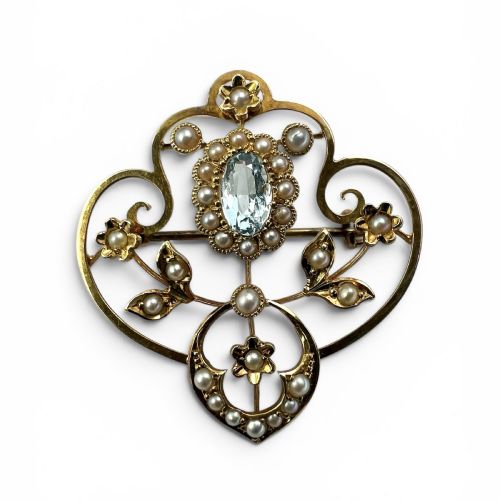
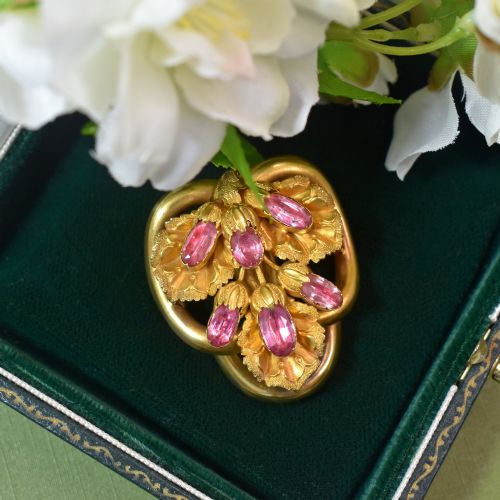
A gold floral brooch is a botanical jewel shaped as flowers, leaves, and stems, designed to be pinned to garments or worn as pendants. These ornaments take varied forms, from nineteenth-century acanthus designs and Georgian seed pearl clusters to Edwardian lily of the valley sprays and Art Deco white gold pins.
The pieces on this page span the nineteenth century and the twentieth century, bringing together yellow and white gold settings. Master jewellers of the Victorian, Edwardian, and Art Deco periods interpreted natural flora through precious materials, often incorporating diamonds and seed pearls to render petals and stamens.
Buyers seeking a gold floral brooch will encounter both straightforward pins and versatile convertible pieces that function as necklace pendants as well as brooches. Each era applied its own distinct aesthetic to the botanical theme, ensuring that Georgian, Victorian, and later examples each carry a recognizable stylistic signature.
How They Were Made
These jewels are constructed from 15ct and 18ct gold in both yellow and white varieties, paired with natural gemstones. Goldsmiths utilised sheet metal, wire, and casting techniques to build three-dimensional botanical structures with layered petals and articulated leaves.
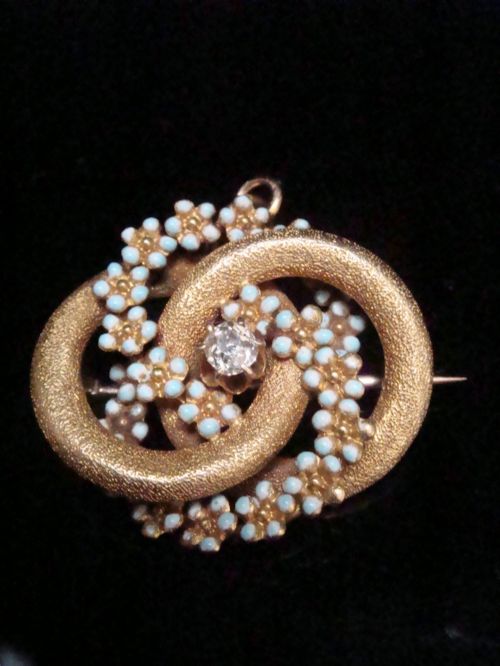
Surface ornamentation involved hand-setting diamonds and seed pearls, alongside delicate blue enamel work to add colour to the metal flora. Pins, hinges, and integrated loops were soldered securely to the reverses to allow multi-functional wear as both pendants and brooches.
Lily of the valley sprays appear in the archive, preserving spring woodland flora permanently in gold and seed pearls.
What Varies in Quality
Quality in these jewels rests on the finesse of the metalwork and the naturalism of the botanical carving. Superior examples display life-like movement in the stems and individual texturing on each leaf, whereas lesser pieces rely on flat stampings with minimal hand-finishing.
The choice and matching of gemstones elevate a piece significantly. Finer brooches integrate well-matched diamonds and luminous seed pearls that enhance the organic design, while simpler versions use sparse or lower-grade stones that lack optical depth.
The Gold Floral Brooch Glossary
- Acanthus
- A classic decorative leaf motif derived from Mediterranean flora, frequently utilised in nineteenth-century scrollwork and ornamentation. This ancient design provides the sculptural foundation for many elaborate Victorian pieces.
- Seed pearl
- A very small, naturally formed pearl, often unnucleated, used extensively in clusters to represent delicate flower heads or buds. Georgian and Edwardian jewellers prized them for creating subtle, shimmering textures.
- Art Deco
- A design movement spanning the 1920s and 1930s characterised by geometric symmetry, stylised motifs, and a preference for white gold and platinum settings. In floral pieces, this translated to clean lines and structured gemstone arrangements.
- Pendant brooch
- A versatile jewellery form featuring a concealed or folding loop alongside a pin, allowing the piece to be worn secured to fabric or suspended from a chain. This dual function was particularly popular during the nineteenth century.
Frequently Asked Questions
How do I wear a convertible brooch?
Convertible pieces feature a fold-down loop or a detachable bale on the reverse, allowing the jewel to slide onto a neck chain when not pinned to clothing. This double functionality was standard for high-grade nineteenth-century pieces.
Ensure the pin mechanism is locked securely when wearing the item as a brooch, and use a suitably sturdy chain when hanging the piece around the neck.
How do I date a gold floral brooch?
Dating relies on stylistic markers and material choices, such as Georgian foiled settings, Victorian acanthus motifs, Edwardian seed pearl sprays, or Art Deco white gold geometry. Examining the construction of the pin and clasp on the reverse also offers strong clues.
Assil hallmarks, where present, provide precise assay office marks and date letters that pinpoint the exact year and city of manufacture.
Are seed pearls fragile?
Seed pearls are historically set on silk threads or fine wire within closed settings, making them vulnerable to moisture, cosmetics, and harsh cleaning agents. Over decades, the original stringing can weaken if exposed to water.
Clean these jewels only with a dry, soft cloth and avoid immersion in ultrasonic cleaning tanks to protect both the pearls and the enamel.
What is the difference between yellow and white gold pieces?
Yellow gold predominates in Georgian and Victorian pieces, offering a warm tone that complements natural gold alloyed with silver and copper. White gold emerges more prominently in later twentieth-century and Art Deco designs to mimic platinum.
The choice of metal colour fundamentally changes the visual mood of the botanical carving, shifting the aesthetic from warm earthiness to crisp modernity.