
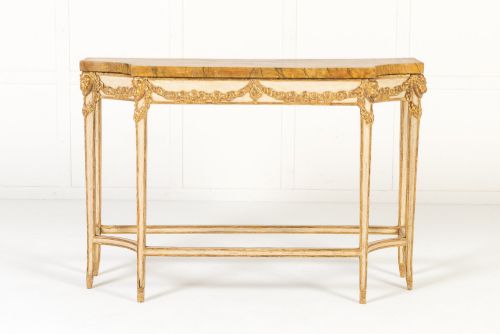

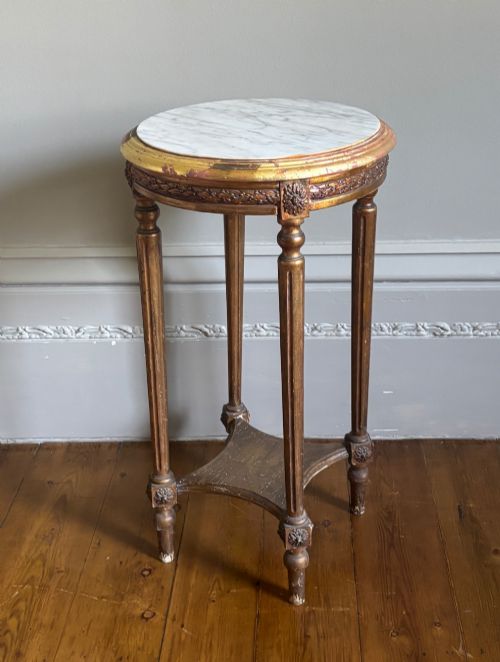


19th Century Giltwood Furniture
These pieces of 19th century giltwood furniture bring gilded splendour and neoclassical elegance to a room.
19th Century Giltwood Furniture
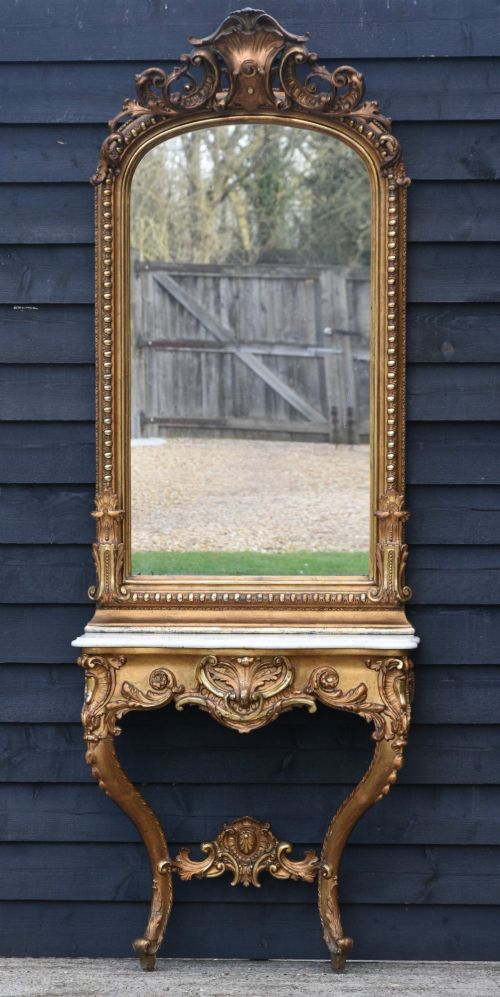
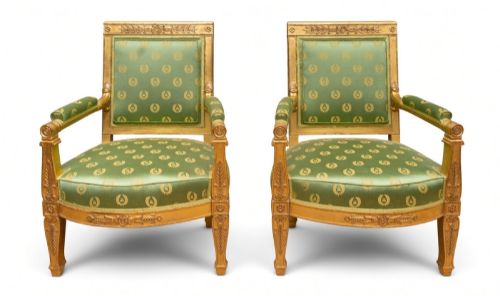
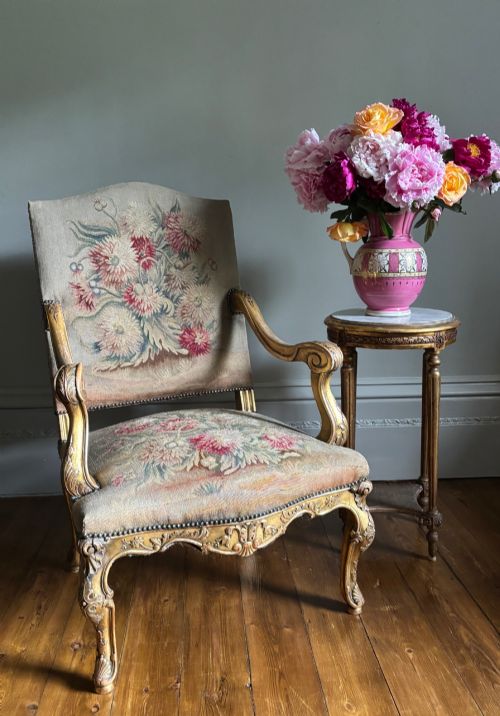
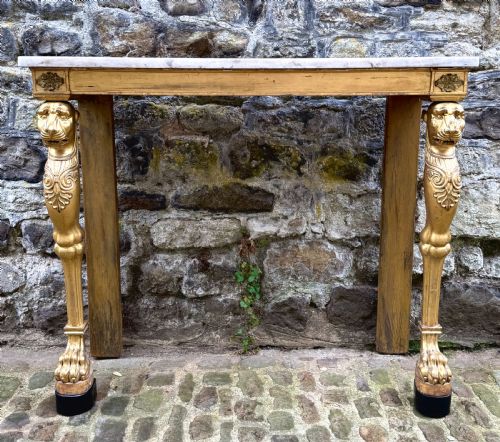
When you search for 19th century giltwood furniture, you encounter a grand selection of console tables, armchairs, centre tables, and complete salon suites. These items emerge from various European origins, including French, Italian, Swedish, and English workshops.
The objects span multiple stylistic revivals, from Regency and Louis XVI to Venetian Rococo and Empire tastes. Console tables often feature marble tops, while seating includes fauteuils, duchesse brisées, and settees upholstered in silk or tapestry.
Pieces frequently arrive paired with matching pier mirrors or trumeau mirrors, designed to create a unified scheme. Many items combine gilded surfaces with secondary woods, paintwork, or contrasting materials like onyx and mahogany.
Materials and Techniques
Maker's hands carved intricate botanical motifs, dolphins, and architectural mouldings into soft woods like pine or hardwoods like walnut and rosewood. Craftsmen then applied gesso as a smooth preparation layer before laying down thin sheets of gold leaf.
Surfaces were meticulously burnished to achieve alternating matt and bright finishes that catch the light. Marble tops, inset glass, caning, and woven tapestries were integrated into tables, seating, and stands to complete the construction.
Materials appearing across the inventory include carved giltwood, white marble, cut glass, silk, tapestry, and painted pine.
Assessing Quality
The depth and crispness of the wood carving distinguish superior examples from simpler productions, as skilled hands achieve greater definition in acanthus leaves and sculptural elements. The preparation of the gesso layer beneath the gold leaf dictates how sharply the underlying details register.
The purity and application of the gilding itself determine visual resonance, with burnished gold leaf holding a warmer lustre than lesser metallic paints. Additionally, the integration of matching components, such as console tables paired with their original pier mirrors, elevates a piece.
Jacob-Desmalter·Strahan of Dublin·Holland and Sons
The 19th Century Giltwood Furniture Glossary
- Giltwood
- Wood that has been coated with gold leaf over a prepared gesso ground. This technique provides the signature metallic brilliance seen across tables and frames.
- Gesso
- A plaster-like mixture applied to wooden carcases to create a smooth surface for gilding. It allows carvers to crisp up fine decorative mouldings before leafing.
- Fauteuil
- An open-framed upholstered armchair with exposed wooden arms originating in France. They typically feature carved gilt frames and padded armrests.
- Console Table
- A wall-mounted or freestanding table supported by decorative brackets or legs. They frequently feature marble tops and coordinate with matching wall mirrors.
- Trumeau Mirror
- A decorative wall mirror incorporating a painted or carved panel above the glass. They are often paired directly with matching console tables below.
19th Century Giltwood Furniture: Frequently Asked Questions
What is giltwood furniture?
Giltwood furniture consists of wooden items decorated with thin sheets of gold leaf applied over a gesso base.
This finish creates a luminous, reflective surface characteristic of formal European interior design throughout the period.
How do I clean giltwood?
Giltwood requires extremely gentle dusting with a soft, dry brush to protect the delicate gold leaf.
Moisture and harsh cleaning agents must be avoided entirely to prevent lifting the metallic surface.
Where were these pieces used?
These items furnished formal reception rooms, salons, and galleries in grand townhouses and palaces.
Console tables and matching mirrors decorated drawing room walls, while salon suites provided coordinated seating for guests.
How do I identify French styles?
French pieces often display specific revival characteristics, such as the straight tapered legs of Louis XVI or the asymmetric curves of Rococo.
Maker labels and stamps can sometimes be found on the underside of frames or tables.