

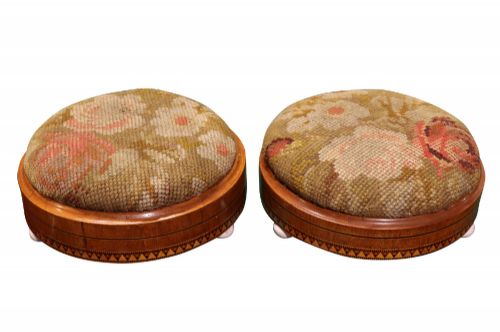


19th Century Foot Stool
A 19th century foot stool brings solid period timber and tactile upholstery together to anchor a traditional room.
19th Century Foot Stool
When you search for a 19th century foot stool, you encounter a surprisingly diverse array of low seating designed for comfort and parlour elegance. The selections on this page span the Regency, William IV, and Victorian eras, reflecting shifting domestic tastes across the decades.
You are most likely to meet mahogany and walnut examples, ranging from simple country turned-leg pieces to heavily carved revival designs. Forms include compact footstools, longer ottomans, adjustable gout stools, and piano stools suited to specific period interiors.
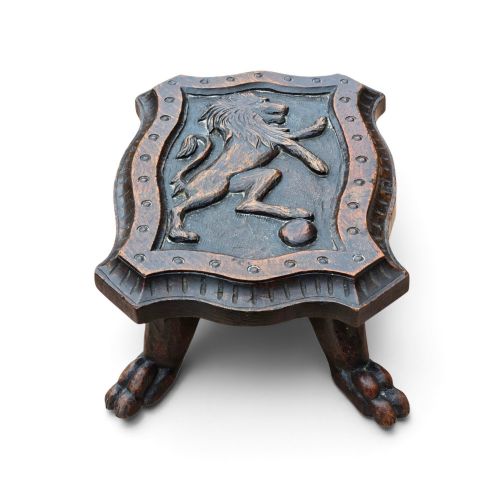
Regional variations appear frequently, including Anglo-Indian carved hardwoods, Scottish oak pieces with heraldic motifs, and Irish X-framed structures. These regional iterations demonstrate how cabinetmakers adapted standard domestic forms to local materials and carving traditions.
Materials and construction
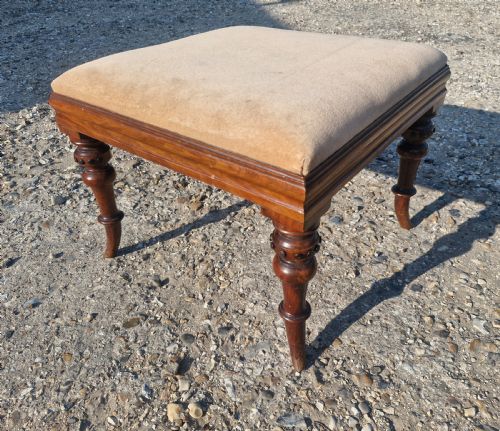
Carpenters relied primarily on dense hardwoods such as mahogany, walnut, rosewood, and oak to build sturdy frames that would withstand daily pressure. Joinery involved traditional mortise and tenon techniques, often reinforced by turned legs, sabre legs, or robust claw-and-ball feet.
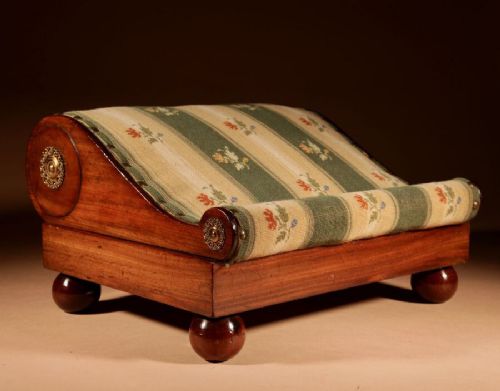
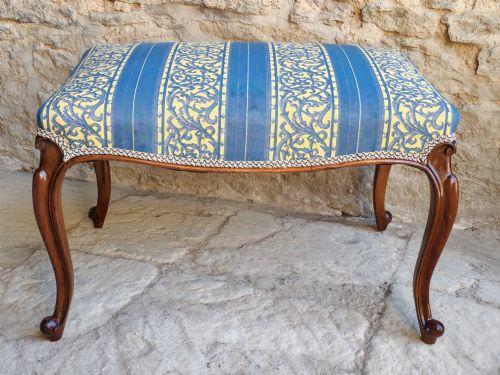
Upholstery formed a central part of the construction, utilising original needlepoint, velvet, floral trellis tapestry, or cream damask stretched over webbing and stuffing. Decorative metal elements like brass mounts, ormolu, and castors finished the pieces, allowing them to move easily across heavy carpets.
19th Century Foot Stool Retail Price Guide 2026
Typical asking prices for 19th century foot stool among the pieces listed under this phrase on Sellingantiques today, from the lower quarter to the upper quarter. They describe what is for sale here now, not the wider market.
The listings span multiple distinct periods, from early Regency forms through to late Victorian and Anglo-Indian walnut and mahogany creations.
Judging the standard of workmanship
Quality rests heavily on the depth and crispness of the timber carving, distinguishing master workshop output from simpler regional joinery. Sharply rendered lion paw feet, detailed tracery, and well-executed scroll tops indicate a higher tier of production.
The integrity of the frame construction and the preservation of original textile coverings elevate certain pieces above standard utility items. Examples retaining period needlepoint or sophisticated adjustable mechanisms command greater attention from collectors of domestic seating.
Mathew Gregson·Awn Pugin
The 19th Century Foot Stool Glossary
- Regency
- A British design period spanning the early decades of the century, known for drawing inspiration from classical Greek, Roman, and Egyptian motifs. Pieces from this era often feature clean lines alongside rosewood or mahogany veneers.
- Ormolu
- Gilded bronze mounts applied to furniture surfaces for decorative effect. This technique was frequently utilised during the Regency and Victorian periods to highlight structural corners or feet.
- Needlepoint
- A form of canvas work embroidery traditionally used to cover seat tops and ottomans. Hand-stitched floral or geometric patterns on these textiles often survive from the nineteenth century.
- Gout stool
- An adjustable seating accessory designed to elevate and support the foot or leg at a comfortable angle. These specialised pieces often include mechanical ratchets to alter the height.
- X-framed
- A structural form where the legs cross in an X shape beneath the seat, creating a curule-style support. This ancient architectural motif saw revivals in high-status nineteenth-century seating.
19th Century Foot Stool: Frequently Asked Questions
How were these stools used originally?
Nineteenth-century households placed these low seats near fireplaces or beside armchairs to rest tired feet during long evenings. Larger versions functioned as ottomans for additional seating when drawing rooms filled with guests.
Specialised variants like piano stools and gout stools served specific daily routines in the Victorian parlour. Their compact size allowed them to be easily repositioned around the room as needed.
How do I identify a Regency piece?
Regency items typically display classical restraint, utilising dark woods like mahogany and rosewood with subtle brass inlay or sabre legs. The silhouette often borrows heavily from ancient Greek or Roman forms.
Craftsmen working in this early era focused on smooth, polished surfaces and restrained classical proportions rather than heavy Victorian carving.
Are original needlepoint covers common?
Many surviving examples retain period textile work, though heavy use meant that many others were reupholstered later in the Victorian era or in modern fabrics. Original needlepoint and tapestry covers show hand-stitched details that match the age of the wooden frame.
When evaluating a piece with period fabric, collectors look closely at how the textile secures to the underside and whether the wear matches the timber structure.
How do I care for antique wood and fabric?
Protect the wooden frames by keeping them away from direct sunlight and sudden temperature shifts that can dry out old timbers. Dust regularly with a dry cloth and apply appropriate wax sparingly to maintain the finish.
For upholstered surfaces, gentle surface vacuuming through a mesh screen helps remove dust without damaging fragile historical textiles or stitching.