


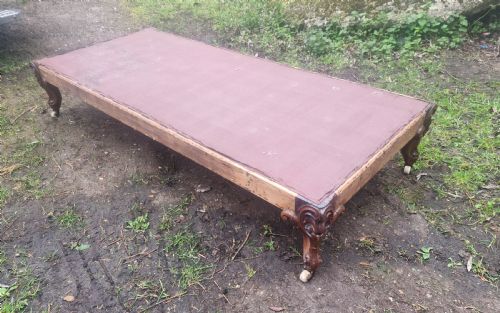


Carved Rosewood Footrest
A carved rosewood footrest brings rich grain and solid timber to a room, offering a quiet elegance that anchors period seating.
Carved Rosewood Footrest
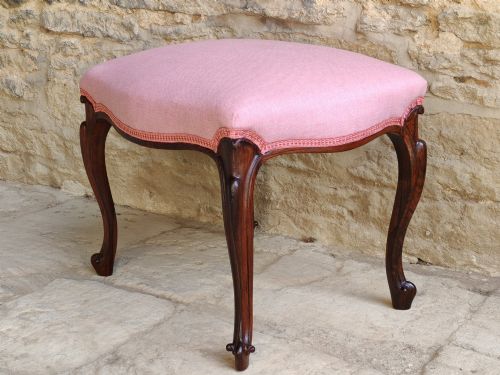
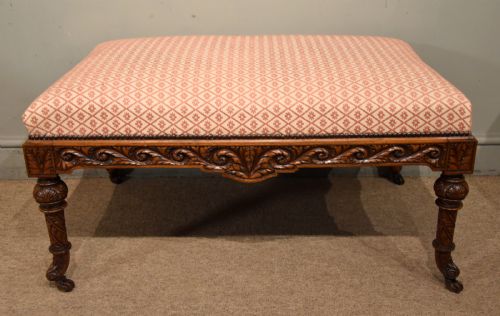
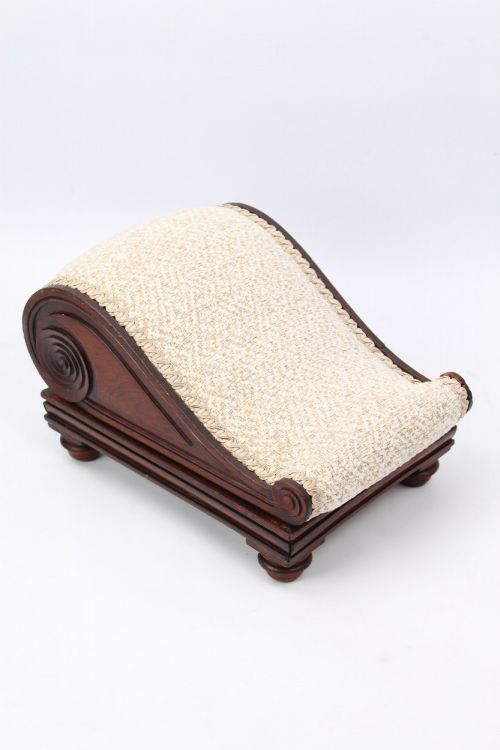
A carved rosewood footrest sits firmly in the nineteenth century, taking the form of low stools, dressing stools, and centre stools designed for comfort and poise. These items span Georgian, Regency, William IV, and Victorian periods, reflecting shifting tastes in domestic seating.
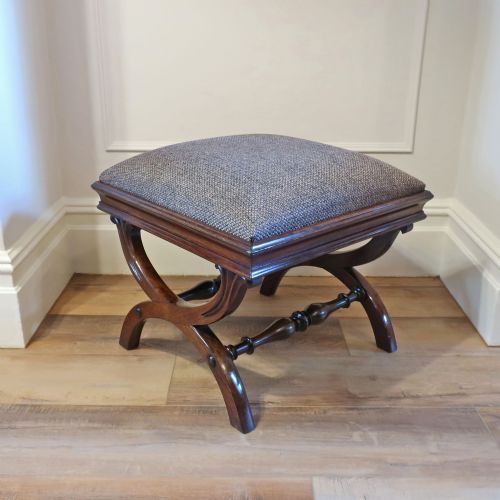
The most common examples on this page are Victorian and Regency pieces, often featuring carved wooden frames and upholstered tops. Buyers also encounter pairs of footstools alongside occasional armchairs and X-framed designs.
Origins stretch from standard British cabinet work to Anglo-Indian production in hardwood. Each carved rosewood footrest serves as a versatile low seat or support, shaped by the decorative conventions of its decade.
How they were made
Makers shaped each carved rosewood footrest from dense tropical timber, valuing the deep reddish-brown tones and distinct grain of rosewood. Frames frequently incorporated detailed manual carving around the rails, apron, and legs.
Structure relied on traditional timber joinery, sometimes reinforced with X-frames or cabriole legs. Upholstery finishes utilised woven fabric, textile, leather, or ceramic elements to complete the upper cushion.
Carved Rosewood Footrest Retail Price Guide 2026
Typical asking prices for carved rosewood footrest among the pieces listed under this phrase on Sellingantiques today, from the lower quarter to the upper quarter. They describe what is for sale here now, not the wider market.
One exceptional library armchair insists on reclining, proving that nineteenth-century relaxation was taken very seriously indeed.
What varies in quality
Quality rests in the crispness of the timber carving and the architectural proportion of the frame. Superior examples display deep, deliberate chisel work that defines the rosewood without softening the edges.
The choice of stock timber and the integrity of the joinery distinguish a workshop piece from mass production. Well-balanced proportions and harmonious execution across pairs elevate the standing of a footrest.
Robert Daws
The Carved Rosewood Footrest Glossary
- Rosewood
- A dense, heavily figured timber prized for its dark grain and durability. It takes a fine polish and was a favoured material for high-status nineteenth-century furniture.
- Cabriole leg
- A furniture leg that curves outward and then tapers inward, inspired by the shape of an animal's leg. This form appears frequently on Victorian stools.
- X-framed
- A structural design where intersecting diagonal members form an X shape to support the seat. This configuration provides both rigidity and decorative movement.
- Centre stool
- A freestanding piece finished on all sides to be placed in the middle of a room rather than against a wall. These items often served dressing or drawing room functions.
- Anglo-Indian
- Describing furniture made in the Indian subcontinent under British rule, combining local timber traditions with European furniture forms.
Carved Rosewood Footrest: Frequently Asked Questions
What periods do these footstools come from?
The listings span the Georgian, Regency, William IV, and Victorian eras.
Most pieces date from the nineteenth century, including specific years like eighteen-sixty and eighteen-eighty.
How were these stools used originally?
They functioned primarily as low supports for feet while sitting in armchairs or by the hearth.
Some served as dressing stools or centre pieces in nineteenth-century drawing rooms.
Are pairs common in these listings?
Matching pairs of footstools do appear among the items offered by dealers.
These paired pieces often share identical carved details and cabriole leg formations.
What materials accompany the rosewood?
Frames combine solid timber with upholstery elements such as leather, woven fabric, and textiles.
Certain items also incorporate brass details or ceramic components within their construction.