


19th Century Floral Illustration
These 19th century floral illustration works capture delicate natural studies on paper, offering collectors authentic botanical artistry from the past.
19th Century Floral Illustration
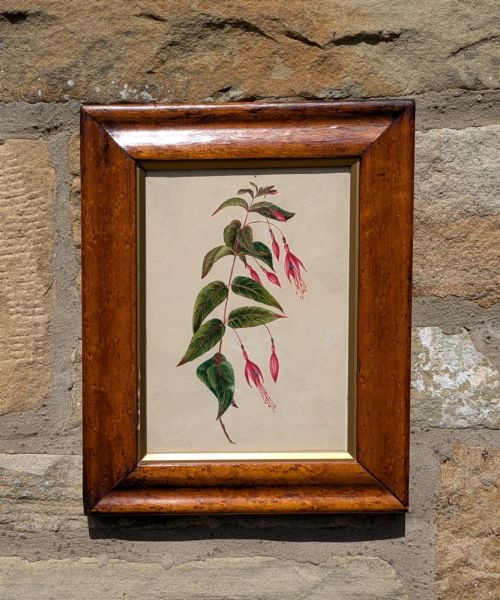
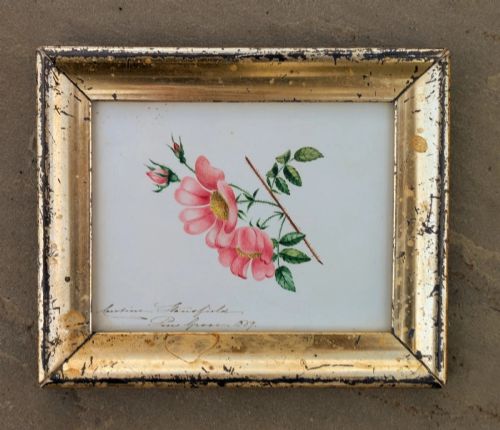
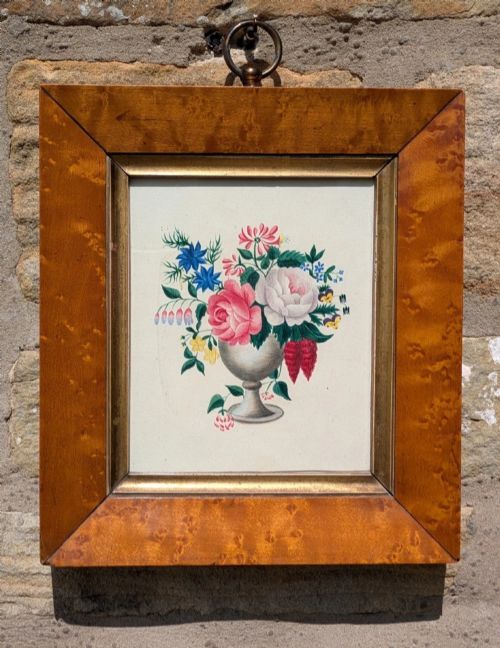
A 19th century floral illustration encompasses botanical watercolours, hand-coloured engravings, and lithographs produced across the Victorian and Regency periods. Buyers examining this page will encounter framed artworks, wall art, and grouped studies depicting wild roses, fuchsias, and pelargoniums.
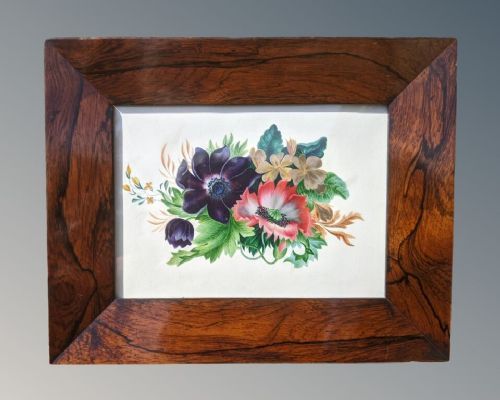
The most common formats on this page are paper works housed behind glass within rosewood, burr wood, gilt wood, and standard wooden frames. They provide direct insight into nineteenth century naturalist pursuits and interior decoration.
How these pieces were made
Artists and makers created these works on paper utilising watercolour, gouache, and pencil, often combining mediums to achieve tonal depth in botanical subjects. Engravings and lithographs were produced using metal plates and stone matrices before receiving individual hand-colouring.
Framing materials recorded in the evidence include rosewood, burr wood, and gilt wood, which housed the delicate paper sheets behind protective glass. Metal fixings and timber backboards completed the construction of these wall art pieces.
Listings feature works spanning the Regency period through to the early twentieth century, utilising paper, watercolour, gouache, and wood.
What varies in quality
Quality in a 19th century floral illustration depends on the precision of the draughtsmanship and the vibrancy retained in the watercolour pigments or printed hues over time. Works by identified artists or established print series demonstrate superior execution in botanical detail.
The preservation of the paper substrate and the integrity of the original wood or gilt frames significantly influence the standing of each piece. Complete sets maintain greater cohesion than scattered single plates.
Catherine Thomas·Henrietta Creswell·William Hough·Pancrace Bessa·John Curtis·Annie Mary Youngman
The 19th Century Floral Illustration Glossary
- Lithograph
- A print made by drawing an image on limestone or a metal plate with a greasy medium so that ink adheres only to the drawn areas. This technique allowed for the mass production of detailed illustrations in the nineteenth century.
- Gouache
- An opaque water-based paint consisting of pigment, water, and a binding agent such as gum arabic, often heightened with white. Artists used it alongside watercolour to add solid areas of colour and highlights to botanical studies.
- Engraving
- A printmaking process where an artist cuts lines directly into a metal plate using a sharp tool called a burin. The resulting incisions hold ink to transfer fine, precise lines onto paper.
19th Century Floral Illustration: Frequently Asked Questions
How should I hang these?
Keep these paper works out of direct sunlight to prevent the watercolour pigments and printed colours from fading over time. Ensure the hanging room maintains a stable humidity level to protect both the antique paper and the wooden frames.
Group related botanical studies together on a wall to replicate the display styles of nineteenth-century interiors. Secure the frames firmly using appropriate wall fixings suitable for the weight of the wood and glass.
Are these original watercolours?
The inventory includes both original hand-painted watercolours on paper and printed works such as engravings and lithographs. Check the listing details to distinguish between a unique painted study and a multi-plate printed series.
Original watercolours often show brushwork texture and pencil guidelines beneath the pigment. Printed editions frequently display fine ink matrix lines characteristic of nineteenth-century engraving techniques.
What frames are original?
Many pieces are housed in period frames made from rosewood, burr wood, or gilt wood that complement the nineteenth-century origin of the art. These frames often exhibit signs of age consistent with their materials.
Assess the fit of the paper within the rebate and the consistency of wear on the wooden or gilt surfaces to understand its history. Original glass may display minor bubbles or imperfections typical of historic manufacturing methods.
How do I care for antique paper?
Protect the delicate paper surface by leaving the protective glass intact and avoiding direct contact with moisture or cleaning sprays. Professional framing materials should be used if re-framing is ever required.
Avoid placing these artworks near heat sources or fluctuating temperatures that can cause the paper to become brittle. Regular gentle dusting of the exterior frame helps maintain the overall condition.