






Green Floral Watercolour Painting
A green floral watercolour painting brings delicate botanical studies and lush garden scenes directly onto paper, capturing soft light and natural colour.
Green Floral Watercolour Painting
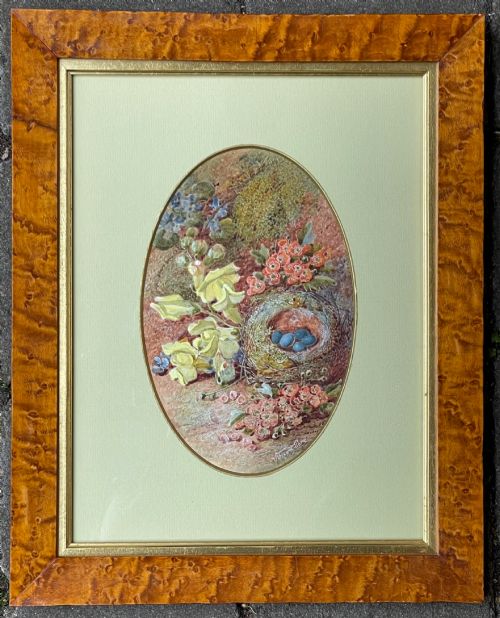
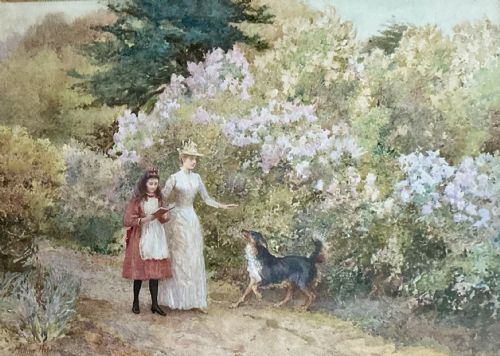
A green floral watercolour painting gathers botanical studies, garden landscapes and still-life compositions executed on paper from the Victorian period through to the mid-twentieth century. These works frequently depict walled gardens, cottage borders and detailed arrangements of roses, primroses and blossoming branches.
Buyers encountering this selection will find framed watercolours created by named nineteenth and twentieth-century British artists alongside atmospheric pieces by the English School. The subjects range from tightly rendered floral arrangements on mossy banks to expansive summer garden views dominated by rich foliage and natural greenery.
How they were made
Artists painted these works primarily using watercolour pigment and gouache applied to paper, occasionally incorporating pencil underdrawings to define the structure of petals and leaves. Pigments were layered thinly to exploit the reflective quality of the paper beneath, creating luminous washes of green and floral hues.
Framing typically involves wood and glass to protect the delicate water-soluble pigments from moisture and light damage over the decades. The combination of paper supports and traditional framing methods ensures these watercolours retain their fine detail and paper texture.
Materials recorded across these listings include paper, watercolour pigment, gouache, glass, and wood.
What varies in quality
Quality in a green floral watercolour painting rests upon the precision of the brushwork and the artist's ability to render natural forms with botanical accuracy and atmospheric depth. Works by established regional and Victorian painters display superior control over pigment dilution and tonal graduation within complex garden foliage.
The preservation of the paper support and the vibrancy of the original watercolour pigments also distinguish finer examples from standard decorative pieces. Superior works maintain crisp definition in floral details without excessive fading or discoloration from historical exposure to light.
Vincent Clare·James Tower·Harry Wanless·Henrietta Creswell·Arthur Hopkins·Theresa Stannard·Lilian Stannard·William Hough·Alfred W. Parsons·Owen Bowen·David Woodlock·Beatrice Parsons·John Sherrin·George Frederick Nicholls·Helen Cordelia Angell·Wiliam Stephen Coleman·Minnie Smythe
The Green Floral Watercolour Painting Glossary
- Watercolour
- A painting method in which the pigments are suspended in a water-based solution, traditionally applied to paper sheets. This medium relies on the white of the paper to provide luminosity through translucent washes.
- Gouache
- An opaque water-based paint that includes a white pigment to create solid, matte areas of colour. Artists often combined gouache with transparent watercolour to add highlights to leaves and flowers.
- Still life
- An artwork depicting inanimate subject matter, typically featuring natural objects such as cut flowers in vases, fruit or mossy banks. This genre highlights the artist's arrangement of light and texture.
- English School
- A term used to describe works produced by a collective of artists working within England whose styles share regional and chronological characteristics. It frequently denotes nineteenth-century painters working outside major academic institutions.
Green Floral Watercolour Painting: Frequently Asked Questions
How should I hang a watercolour painting?
Watercolour paintings require protection from direct sunlight to prevent the pigments and paper from fading over time. Position them on interior walls away from damp areas like kitchens and bathrooms.
Ensure the frame is properly sealed behind glass to keep out dust and moisture while allowing the paper to breathe. Using UV-filtering glass provides an extra layer of conservation for antique paper works.
What periods do these paintings come from?
The selection spans from the late nineteenth century through the Victorian and Edwardian eras into the mid-twentieth century. Many pieces date from the Victorian period and the early nineteen-hundreds.
Victorian naturalism heavily influenced the botanical accuracy and garden scenes found in these watercolours. Later works stretch into the nineteen-forties, maintaining traditional British landscape and floral themes.
What subjects are typical for these pieces?
Typical subjects include walled cottage gardens, summer garden seats, and detailed still-life arrangements of roses and primroses. Artists frequently captured scenes featuring blooming flora alongside traditional English architecture.
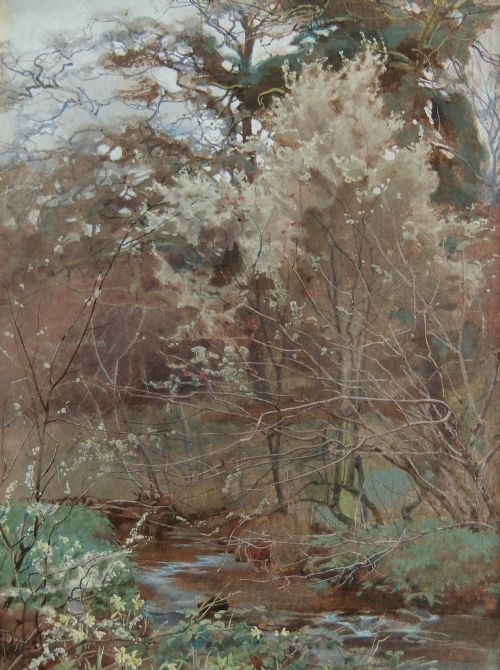
Botanical studies and landscapes with vibrant yellow rudbeckia or apple blossoms form the core imagery. These compositions reflect a Victorian and Edwardian preoccupation with domestic gardens and naturalism.