
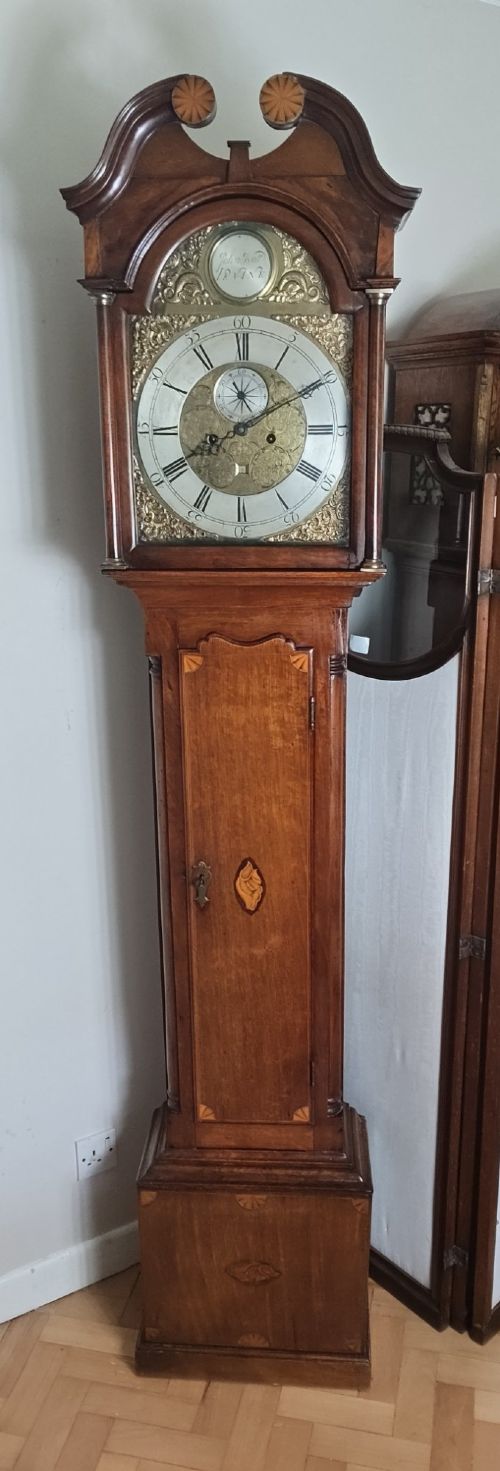
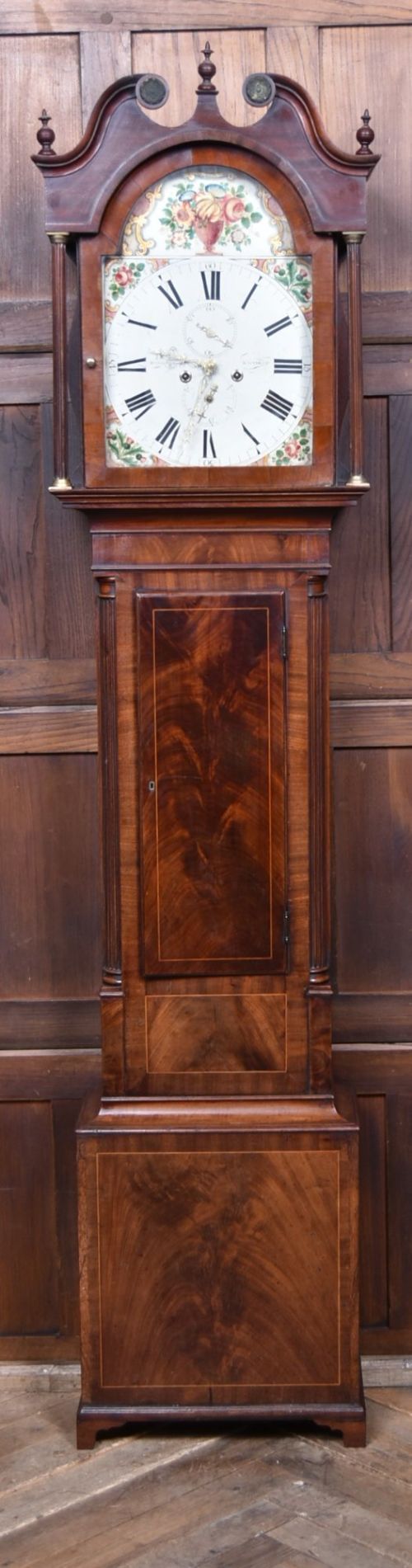

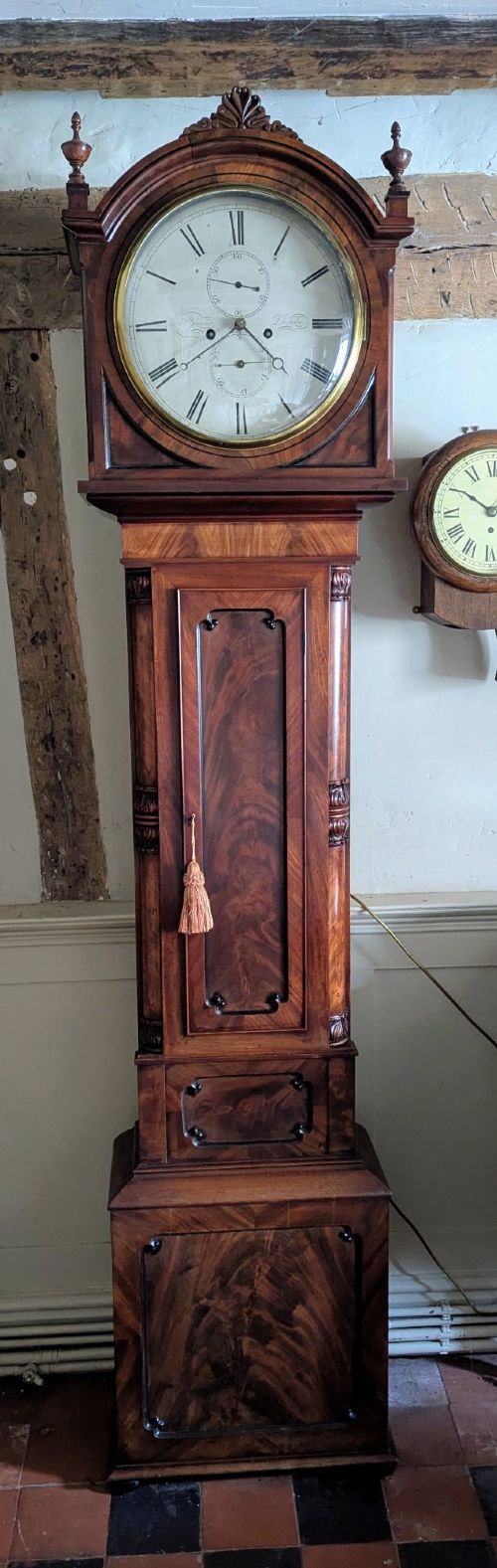
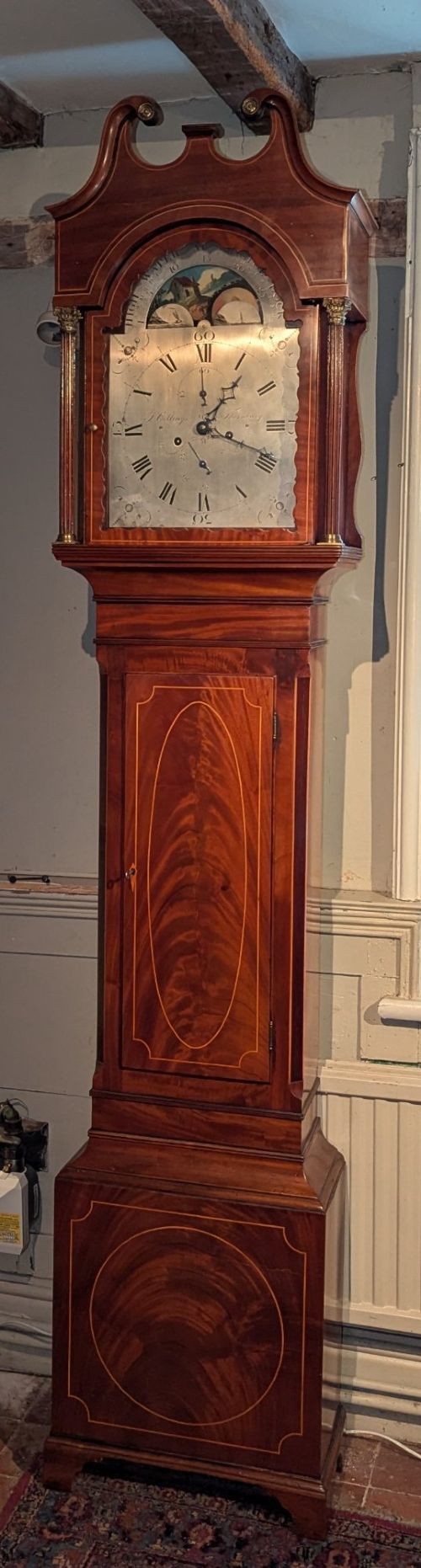
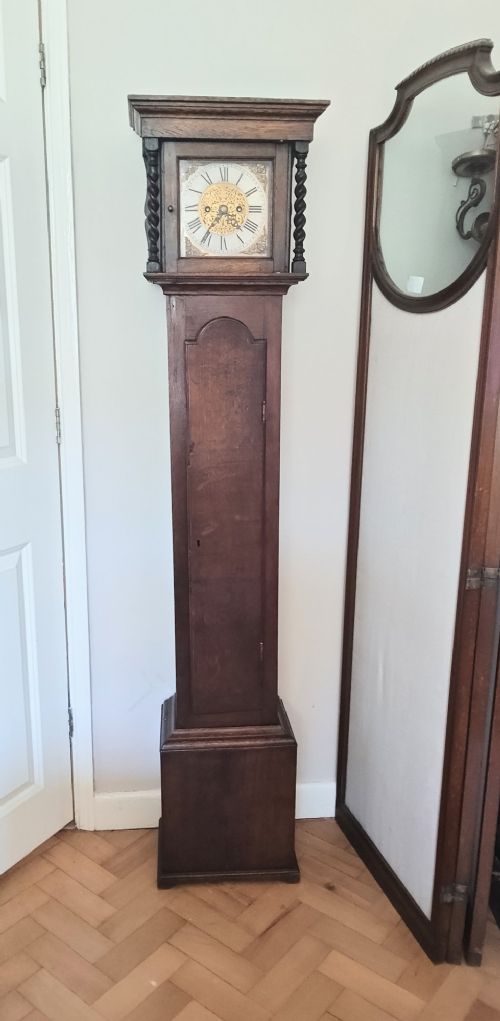


19th Century Floor Clock
These 19th century floor clock examples bring towering presence and mechanical mastery into a room, offering both reliable timekeeping and stately architectural form.
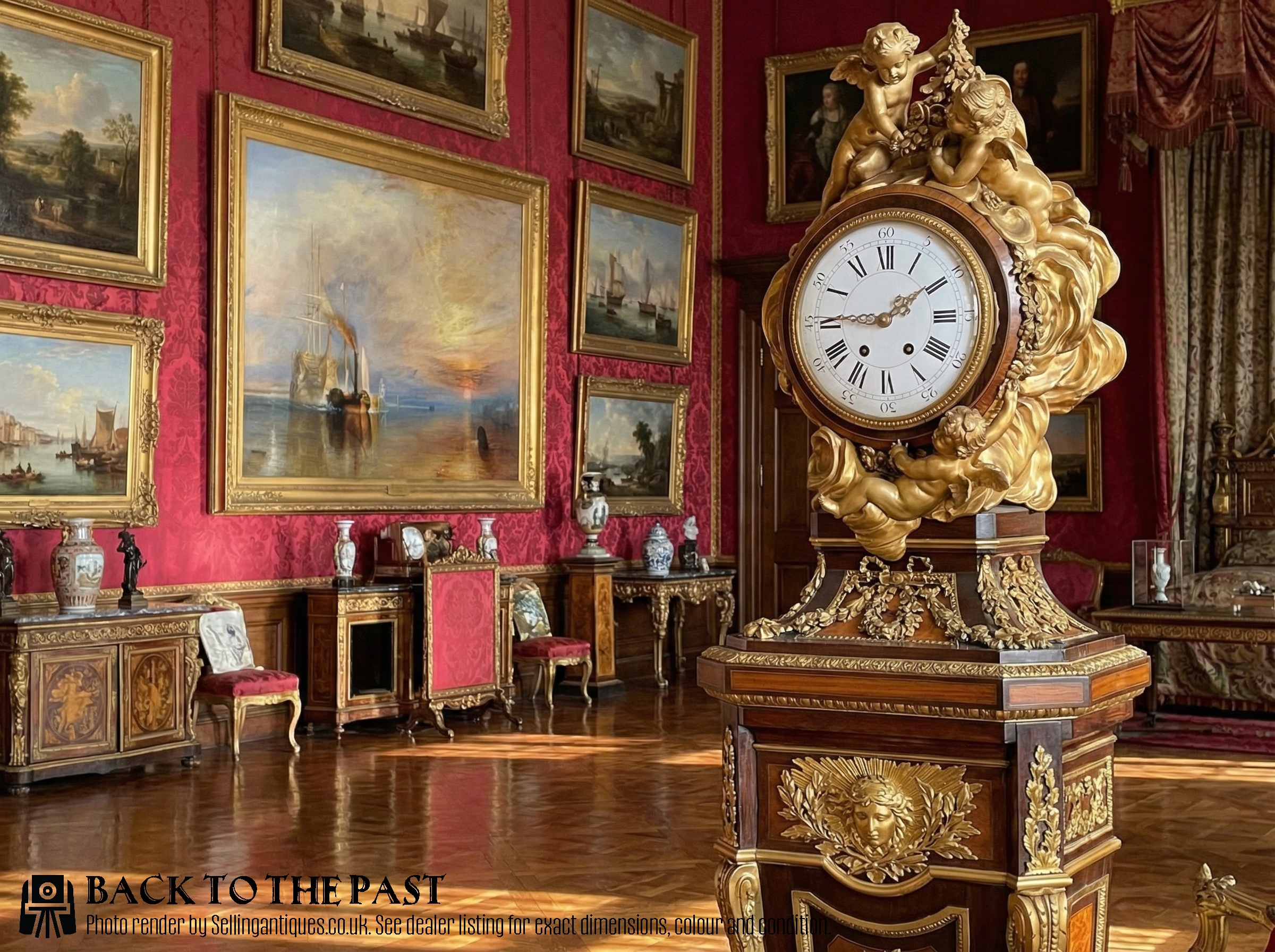
19th Century Floor Clock
A 19th century floor clock typically takes the form of a tall longcase or grandfather clock designed to house a weight-driven movement within a protective wooden housing. These pieces anchor domestic spaces with their vertical proportion, combining practical horology with furniture design.
The versions most frequently met on this page span Georgian, Regency, and Victorian periods, often framed in mahogany, flame mahogany, or oak. Regional variations such as Scottish longcase clocks and Welsh examples appear alongside English and French styles.
Object types include standard longcase clocks, smaller grandmother clocks, pedestal clocks, and specialised domestic regulators. Dials range from painted arched faces to moon dials and drum heads.
Materials and construction
Cabinet makers built these tall cases predominantly from solid hardwoods like mahogany and oak, frequently applying flame mahogany veneer or contrasting inlay for decorative depth. Secondary woods and pine appear in regional builds.
Movements incorporate brass gears, iron components, and glass dial covers, sometimes utilising intricate systems like gong tubes or rolling moon phases. Dial faces feature hand-painted details or engraved brass chapter rings.
19th Century Floor Clock Retail Price Guide 2026
Typical asking prices for 19th century floor clock among the pieces listed under this phrase on Sellingantiques today, from the lower quarter to the upper quarter. They describe what is for sale here now, not the wider market.
Listings feature cases built from mahogany, flame mahogany veneer, oak, burr oak, and pine, paired with brass and glass components.
Distinctions in quality
Quality rests in the precision of the cabinet work, seen in the grain selection of flame mahogany veneers and the crispness of inlay and paterae. Superior cases display balanced proportions and seamless joinery in the hood and trunk.
The sophistication of the movement and the clarity of the dial work separate standard pieces from finer examples. Signed dials by noted makers and complex mechanisms such as 8-day movements or regulators elevate the horological merit.
Hendrie Ogg·Tait·Thomas Webbe·Richard Sharkey·Thwaites·David Morice·Parkinson and Frodsham·Richardson·William Smith·Rob Parry·Jno Lane·Ganthony·John Jones·David Griffith·Pearce and Sons·Joyce
The 19th Century Floor Clock Glossary
- Longcase clock
- A tall, weight-driven pendulum clock enclosed in a wooden case standing directly on the floor. This term is synonymous with the grandfather clock.
- Moon dial
- A specialised clock face featuring a rotating disk that tracks the phases of the moon. This mechanism requires careful gearing behind the painted dial.
- Regulator
- A high-precision pendulum clock designed for exact timekeeping and calibration. These movements prioritise accuracy above domestic chime complications.
- Paterae
- Small circular decorative reliefs carved or inlaid into furniture surfaces. They often accent the architectural frieze of a clock hood.
- Drum head
- A circular clock case head resembling a drum, sitting atop the trunk of the clock. This style appears frequently in Victorian variations.
19th Century Floor Clock: Frequently Asked Questions
Where should a longcase clock be placed?
These tall clocks require a stable, dry interior wall with a solid floor to ensure the pendulum swings without interference. Positioning them away from direct sunlight and temperature fluctuations helps protect the wood case and delicate internal mechanics.
Because of their height, they must be securely anchored to the wall using internal brackets to prevent tipping. Adequate clearance around the weights and pendulum inside the trunk is essential for proper operation.
How do 30 hour and 8 day movements differ?
A thirty-hour clock requires winding once a day and typically uses a simpler gear train driven by single or paired weights. These were common in more modest regional homes and simpler oak cases.
An eight-day movement needs winding much less frequently, roughly once a week, through heavier or more complex gear configurations. This convenience often correlates with finer cabinet work and more sophisticated dial designs.
How do you identify a regional style?
Regional styles reveal themselves through the choice of local timbers, such as Welsh oak or Scottish mahogany, and the specific artistic traditions of the regional clockmaker. Painted dials often bear the name of the town and maker, pointing directly to provincial workshops.
Cabinet proportions and hood designs also vary by geography, reflecting the preferences of local makers working outside major metropolitan centres like London.