

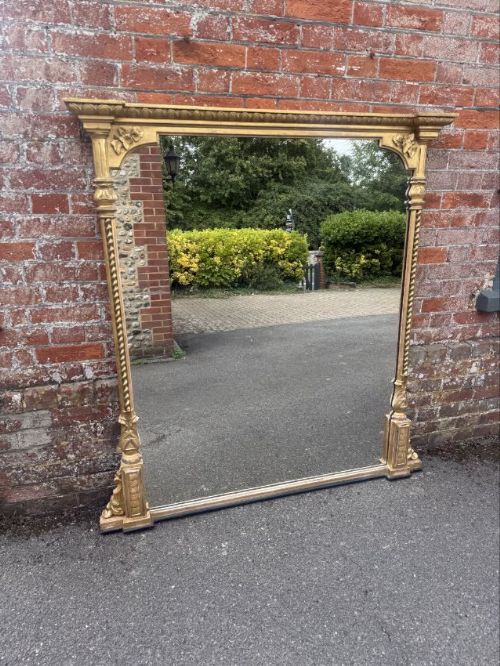
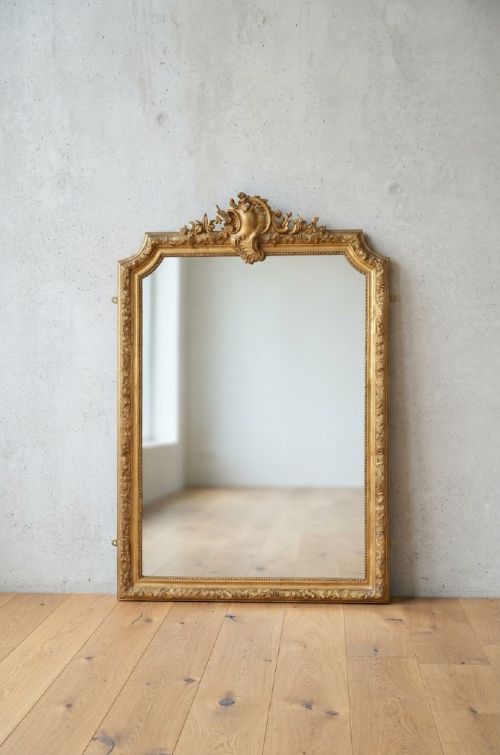
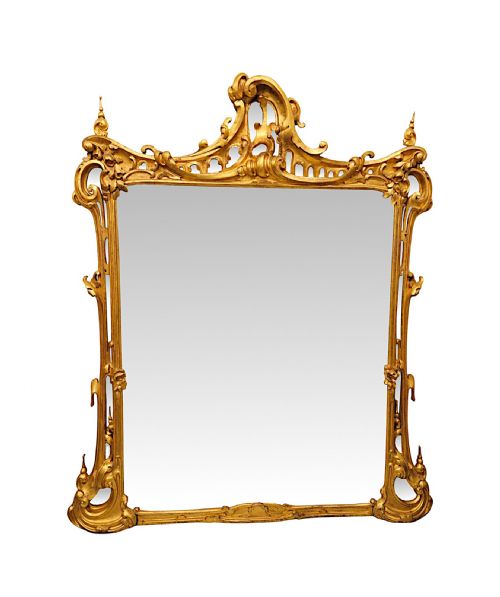
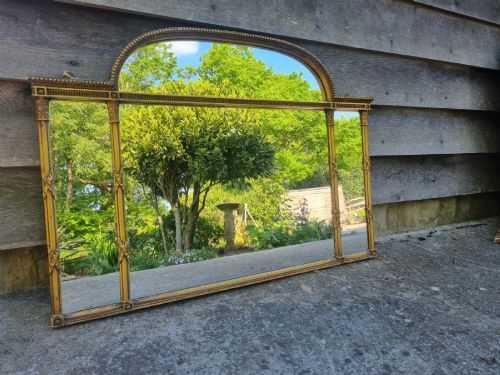
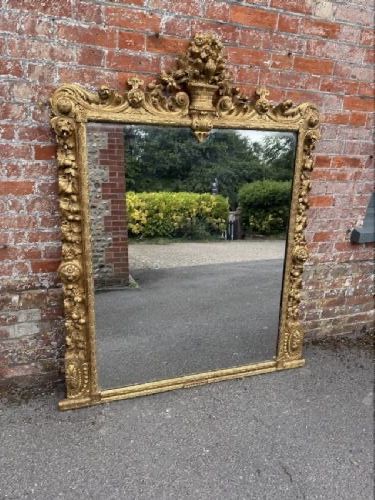
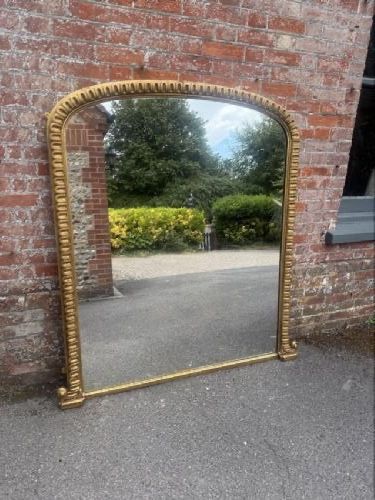
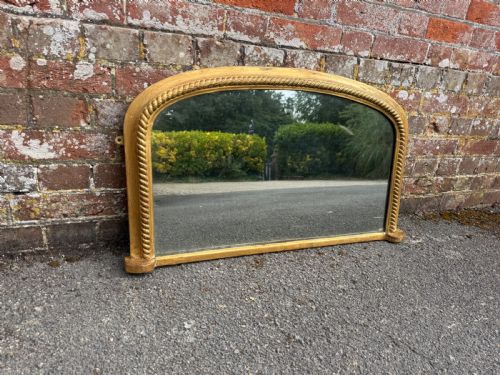
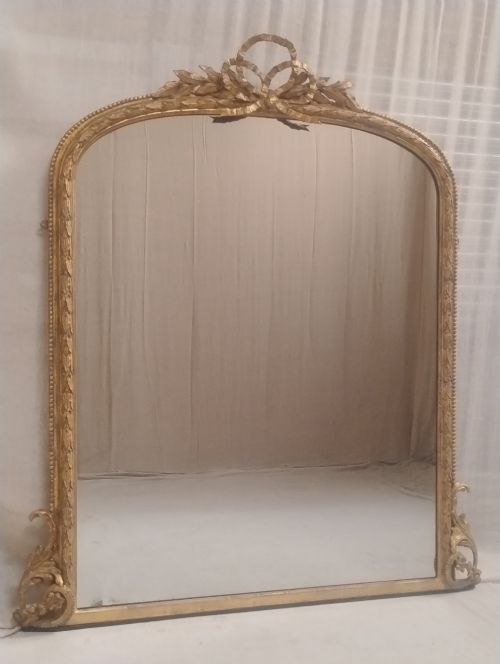
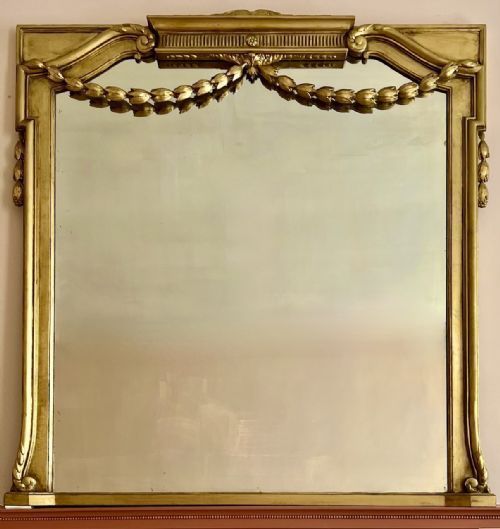
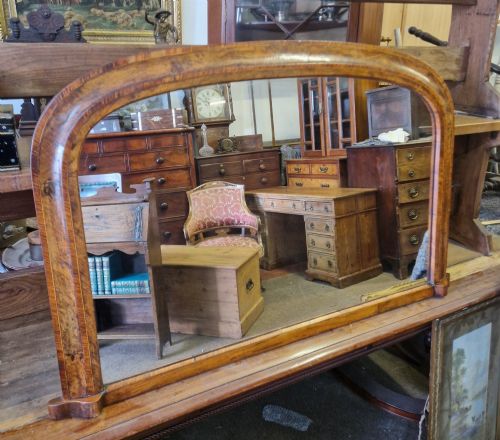
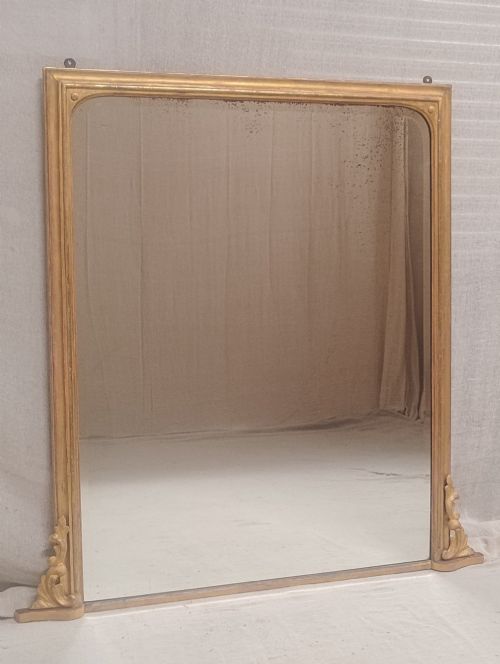
19th Century Fireplace Mirror
These 19th century fireplace mirror pieces are grand overmantels built to anchor a room, offering clients scale and presence.
What these pieces are
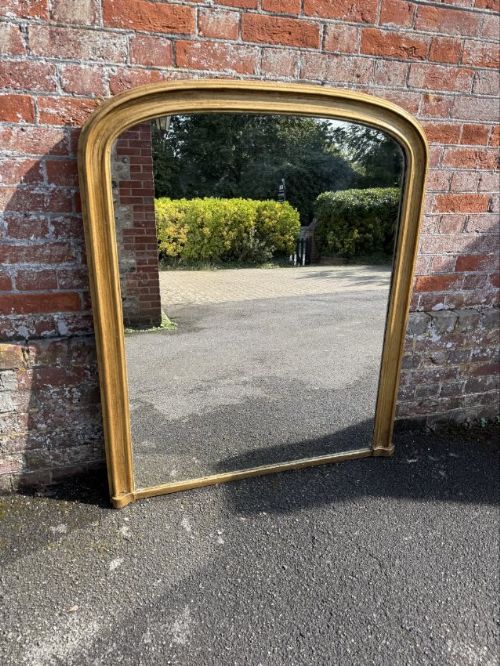
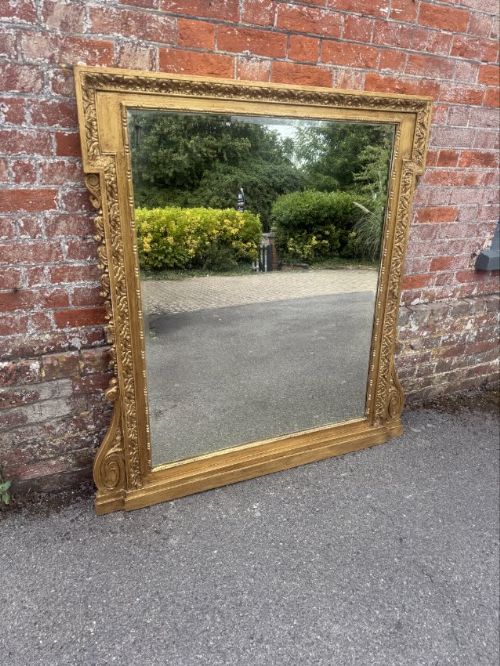
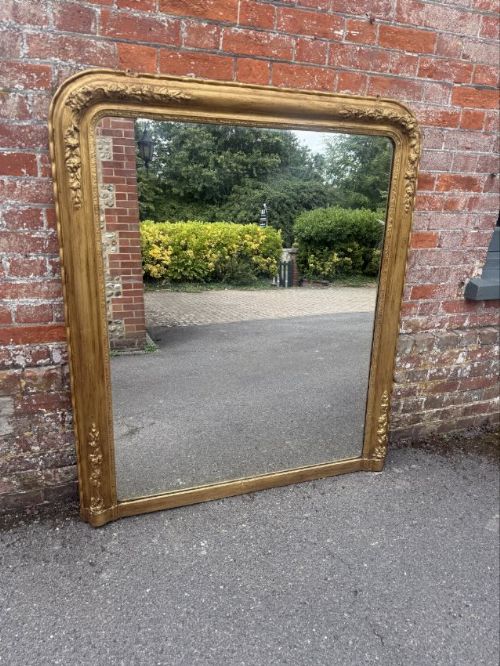
A 19th century fireplace mirror primarily takes the form of an overmantel mirror designed to sit directly above a hearth. These large looking glasses date from the Victorian period, spanning years such as 1850, 1860, 1870, and 1880.
The most common formats on this page include archtop and arched top wall mirrors, alongside heavy cast iron variants. English country and neoclassical styles shape the visual character of these furnishings.
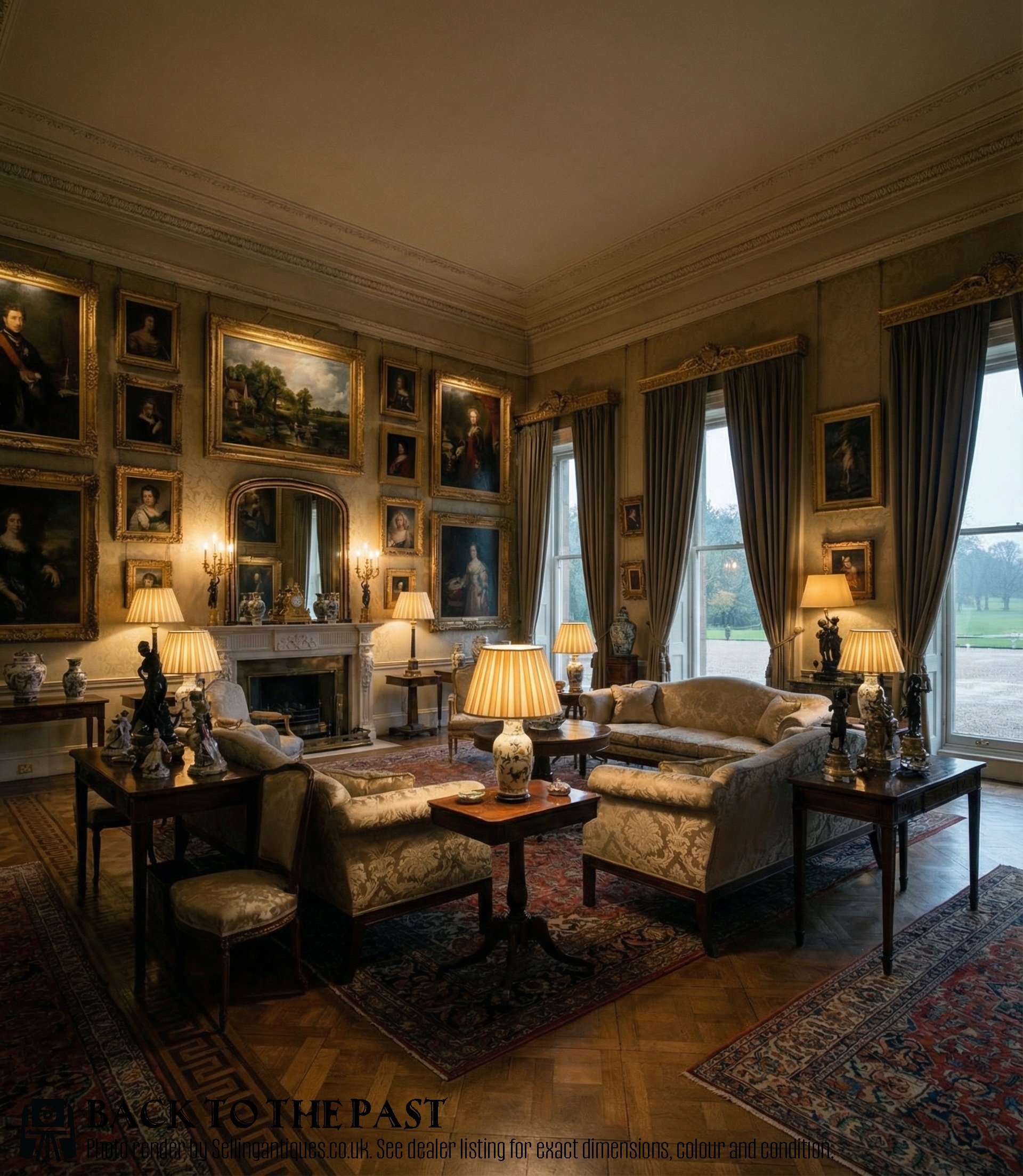
Makers constructed these overmantel mirrors to reflect light and magnify the perceived space of nineteenth-century reception rooms. Their substantial proportions demand specific wall space above a mantelpiece.
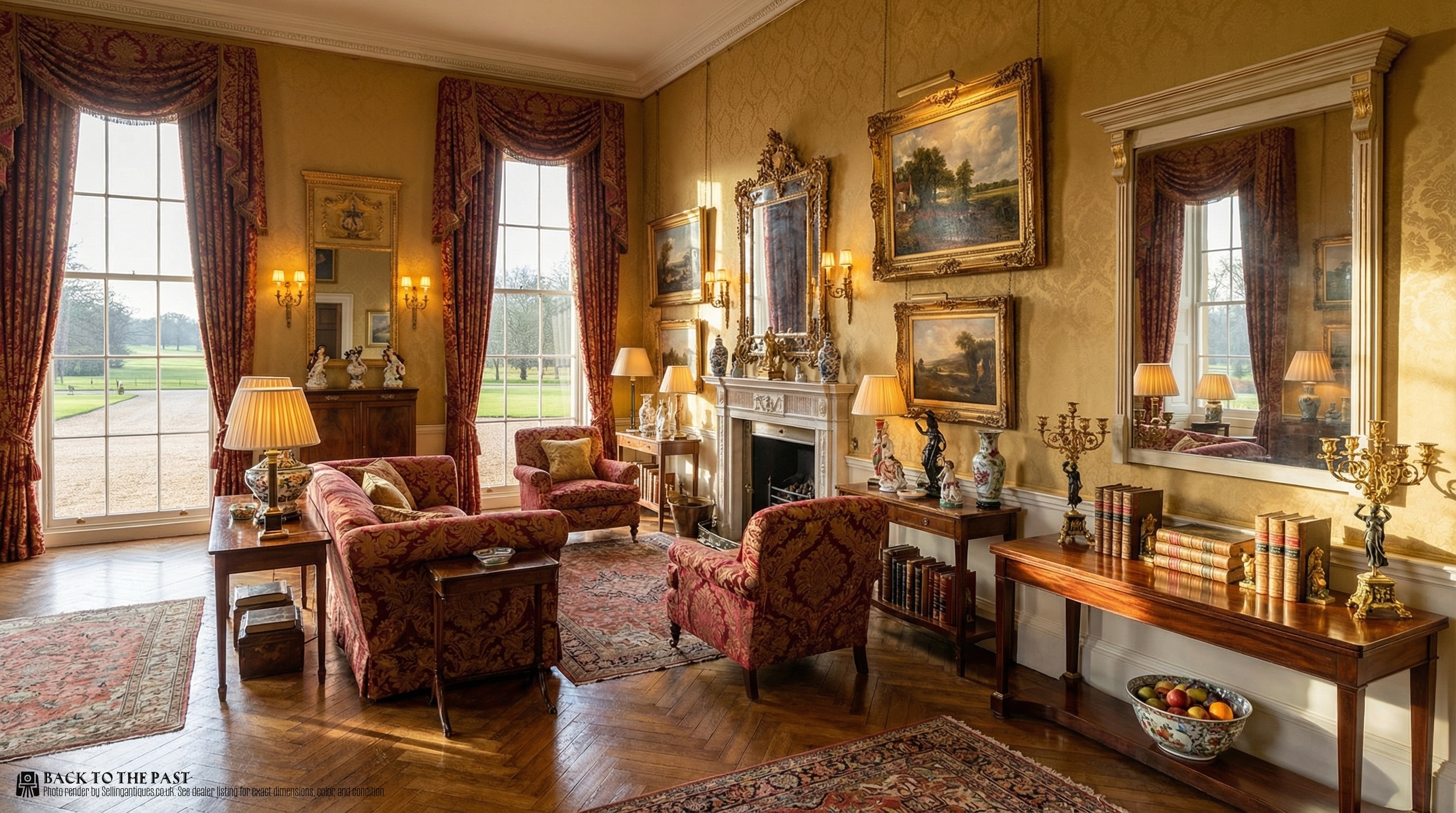
How they were made
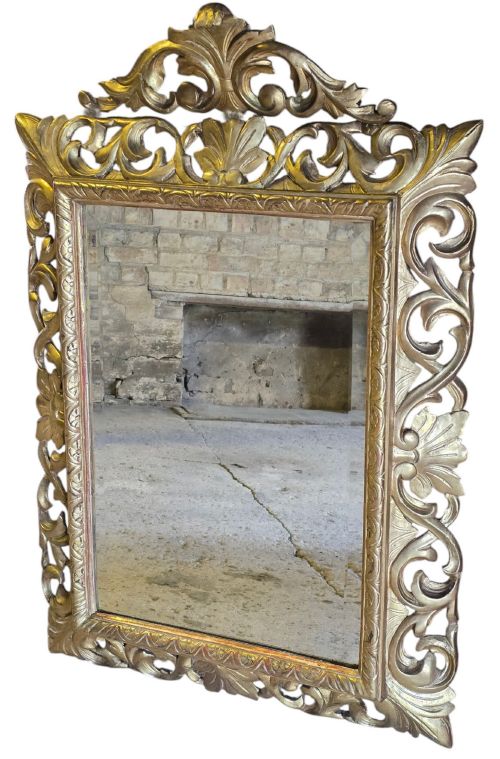
Craftsmen utilised wood and carved gesso as the foundational structure for giltwood and painted finishes. Artisans applied gold leaf and paint to these carved wooden surfaces to achieve decorative lustre.
Alternative materials include cast iron for heavier industrial frames, alongside mahogany and simulated wood. Glass forms the central reflective plate within these architectural surrounds.
Retail Price Guide 2026
Typical UK retail prices for 19th century fireplace mirror, calculated from the Sellingantiques database of over a million retail prices indexed since 2003. This retail price guide relies exclusively on Sellingantiques data; no external sources or auction records are used, so the figures do not describe the wider market.
These mirrors spent generations watching nineteenth-century dinner parties unfold from their permanent vantage points above the coal fire.
What varies in quality
The refinement of the carved wood and gesso ornamentation separates standard examples from superior pieces. Deeply carved archtop profiles and meticulous parcel-gilt application indicate greater workshop investment.
Finishes range from simple painted surfaces to complex giltwood and parcel-gilt treatments. The integrity of the underlying wood and the weight of the cast iron elements determine the physical substance of the mirror.
The 19th Century Fireplace Mirror Glossary
- Overmantel mirror
- A large looking glass specifically designed to hang or rest upon the mantelpiece above a fireplace. These pieces often feature wide proportions to match the width of the hearth below.
- Giltwood
- Timber coated with gold leaf or a gold-coloured metallic finish. This material reflects candlelight and daylight effectively.
- Gesso
- A plaster-like mixture applied to wood surfaces and sculpted before gilding or painting. It allows intricate relief decoration on mirror frames.
- Parcel-gilt
- A decorative treatment where only specific portions of an object receive gilding, leaving other areas painted or stained. This creates contrast across the carved details.
- Archtop
- A frame construction featuring a curved upper section rather than a purely rectangular shape. This silhouette softens the imposing scale of large mirrors.
Frequently Asked Questions
How do I hang a heavy overmantel mirror safely?
These pieces require secure fixing directly into wall studs or solid masonry due to their substantial weight in wood, iron, and glass. Professional installation ensures the mirror stays stable above a fireplace.
Hardware must match the specific weight of cast iron or carved timber frames to prevent shifting over time.
Where should I place a fireplace mirror?
Traditional placement positions the mirror directly on the mantel shelf or mounted to the wall immediately above the hearth. This positioning captures and bounces light from windows across the room.
Ceiling height dictates whether an archtop or rectangular format suits the proportions of the chimney breast.
What defines Victorian mirror styles?
Victorian design draws on neoclassical influences and English country traditions, incorporating arched tops and carved gesso details. Frames often utilise heavy wood, cast iron, or painted surfaces.
Proportions remain grand to complement nineteenth-century domestic architecture and high ceilings.
How do I maintain giltwood and painted frames?
Gentle dusting with a dry, soft cloth preserves delicate gesso and gold leaf without disturbing the historic finish. Moisture and abrasive cleaners damage exposed gilding and painted surfaces.
Regular inspection of the joints helps keep heavy frames stable in rooms with fluctuating temperatures.