





19th Century Female Bust
A 19th century female bust captures classical grace and literary heroines in bronze, marble, and terracotta, bringing sculptural presence to any room.
19th Century Female Bust
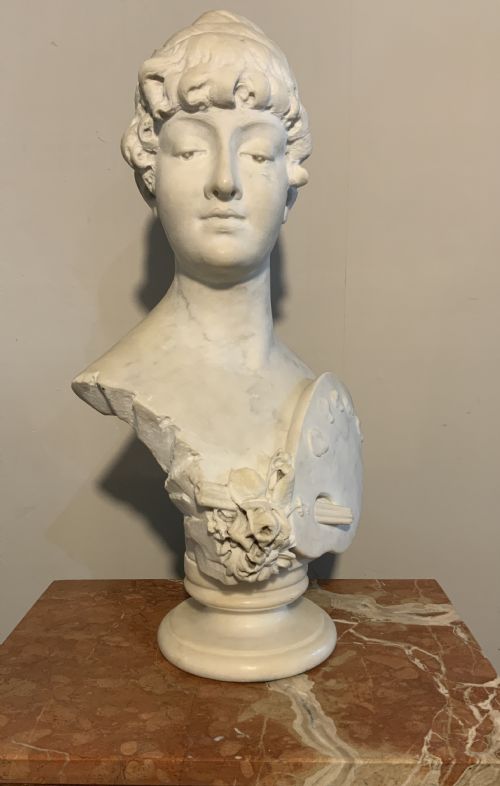
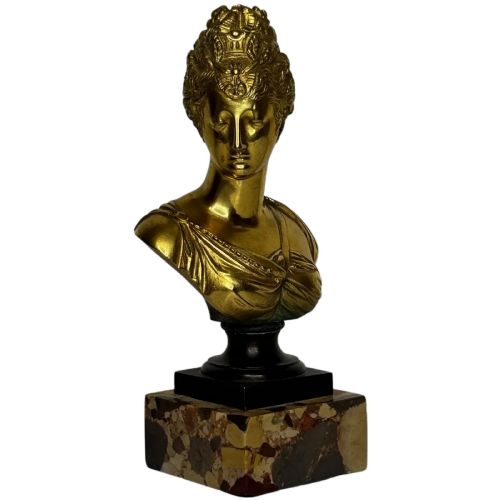
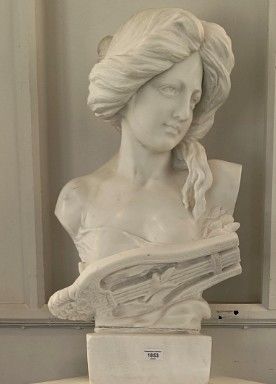
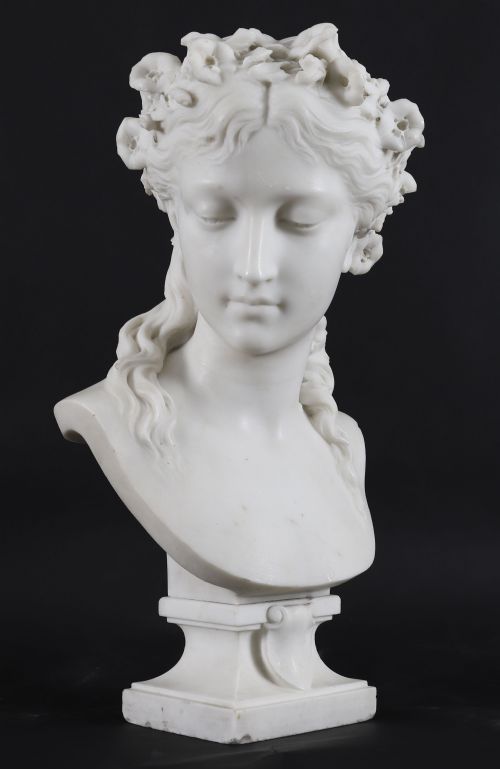
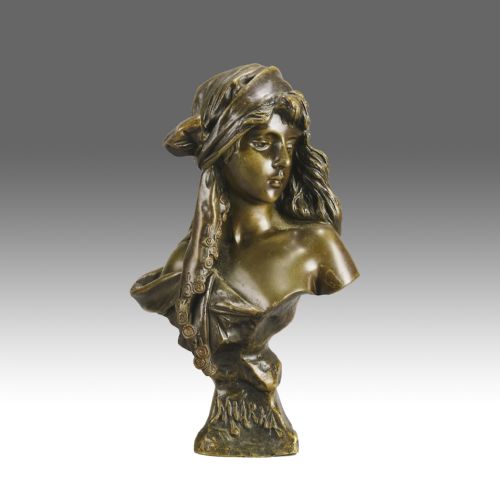
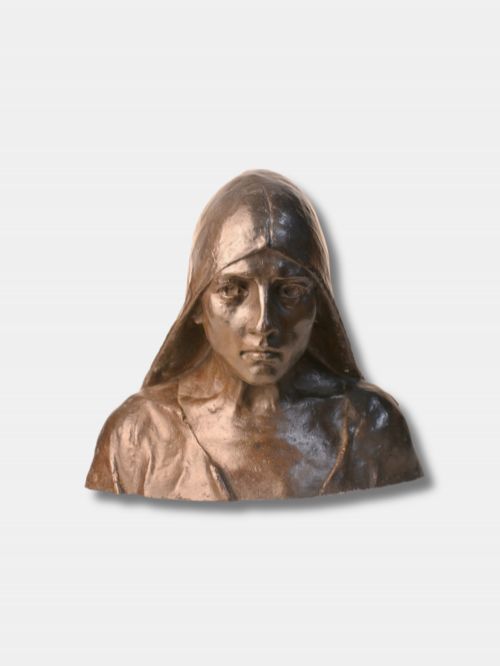
A 19th century female bust portrays women ranging from mythological figures and classical muses to noblewomen and literary characters, carved or cast to sit upon pedestals or tabletops. The versions met on this page span white Carrara marble, patinated bronze, alabaster, and terracotta, reflecting the period's fascination with antiquity and portraiture.
Makers and sculptors often drew inspiration from Greek mythology, depicting figures such as Diana, Venus, or the muse Erato, alongside romantic subjects titled after literary heroines. These pieces frequently manifest in Neoclassical and Art Nouveau styles, shifting from rigid classical symmetry toward flowing organic lines as the century progressed toward 1900.
How they were made
Carved stone pieces utilised solid blocks of marble and alabaster, shaped with chisels and rasps before being polished to varying degrees of smoothness. Bronze and spelter versions relied on metal casting techniques, often finished with a dark or patinated surface and mounted on marble bases.
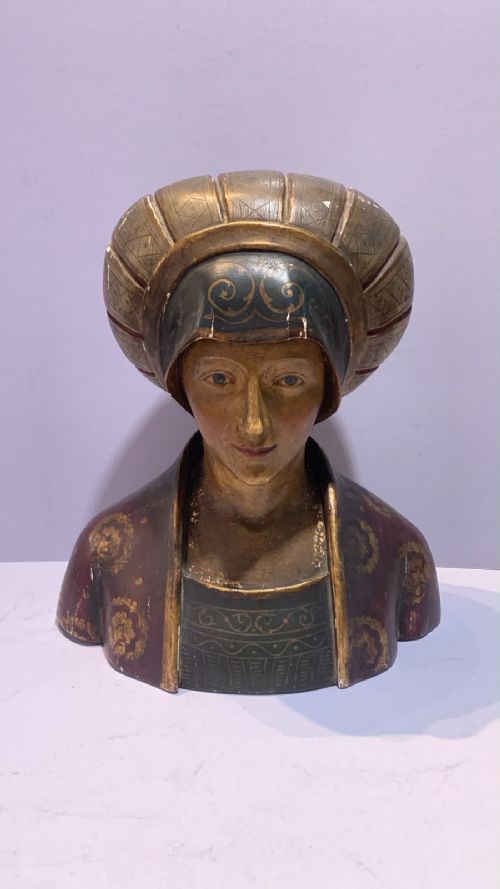
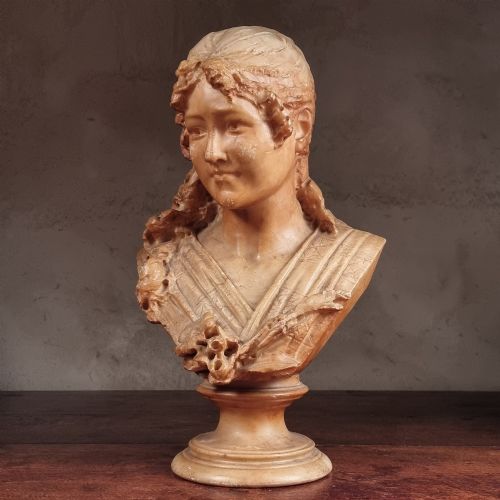
Terracotta and ceramic examples were moulded from clay and fired in kilns, sometimes receiving painted details or glazes. Detail work like gilded accents or mixed marble elements required skilled assembly of disparate components by foundry workers and studio artisans.
Listings feature works spanning the 19th century, with materials ranging from Carrara marble and patinated bronze to terracotta and alabaster.
What varies in quality
The refinement of the carving or casting separates the finest examples from standard studio output, particularly in the rendering of facial expressions, hair texture, and drapery folds. Superior works display a subtle handling of the medium where stone feels supple or metal gains lifelike warmth.
The choice of material and the reputation of the foundry or sculptor heavily influence the standing of a piece. Signed works by established makers command attention through precise chasing of bronze or the pristine selection of flawless white marble.
Eugene Aizelin·Emmanuel Villanis·Achille Mollica·Auguste Moreau·Eutrope Bouret
The 19th Century Female Bust Glossary
- Carrara marble
- A type of white or blue-grey marble from the city of Carrara in Italy, prized by sculptors for its fine grain and uniform appearance.
- Patinated bronze
- Bronze that has been treated with chemical solutions to produce a specific surface colour or aged finish.
- Terracotta
- Baked red-orange clay used for sculptural modelling before being fired.
- Neoclassical
- A style originating in architecture and the arts that drew inspiration from the classical art and culture of ancient Greece and Rome.
- Art Nouveau
- An international style of art and architecture that was most popular during the late 19th century, characterised by natural forms and curved lines.
19th Century Female Bust: Frequently Asked Questions
What materials were used for a 19th century female bust?
Sculptors of this era utilised a range of mediums, most notably white Carrara marble, cast bronze, alabaster, terracotta, and various ceramics.
Some pieces combined mixed marbles or added patinated finishes and gold leaf highlights to enhance the visual depth of the drapery and hair.
How do I distinguish Neoclassical from Art Nouveau styles?
Neoclassical pieces rely on strict symmetry, classical drapery, and direct references to Greek and Roman antiquity, reflecting a restrained aesthetic.
Art Nouveau examples, appearing towards the end of the century, introduce asymmetrical flowing hair, botanical motifs, and romantic literary titles.
Were these busts intended for indoor display?
These sculptures were designed exclusively for interior display, serving as ornamental centrepieces in nineteenth-century drawing rooms, libraries, and hallways.
They frequently rested on matching marble pedestals, wooden columns, or sturdy furniture tops to elevate the portrait to eye level.
How can I identify the subject of a bust?
Many sculptures include carved inscriptions on the base or reverse naming mythological figures like Diana or literary heroines such as Miarka and Thaïs.
Costume details, attributes like lyres or laurel wreaths, and signature titles left by the sculptor often clarify the identity of the portrayed woman.