


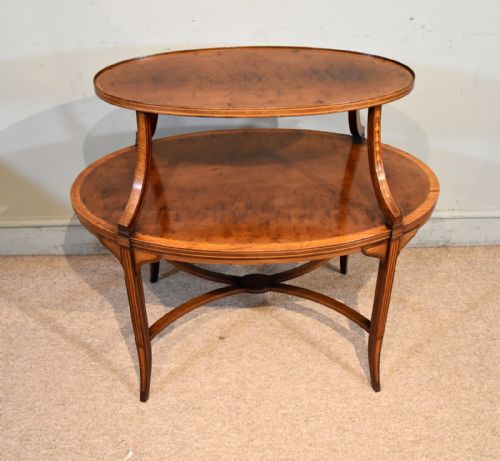


19th Century Etagere Table
These multi-tiered 19th century etagere tables offer tiered display and surface space, bringing practical elegance and period character to any interior.
19th Century Etagere Table
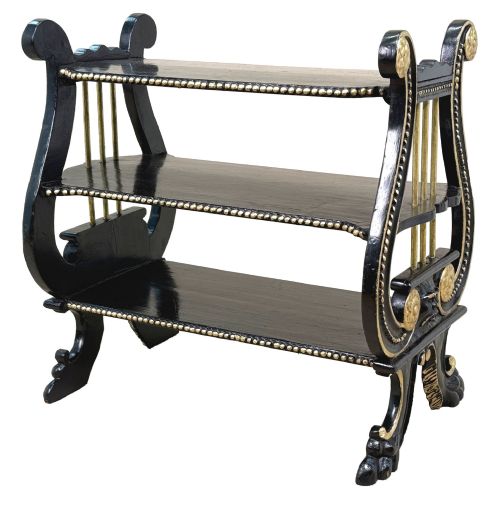
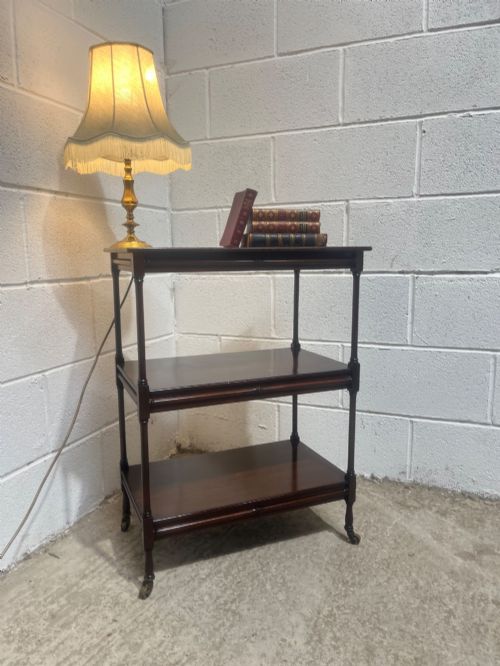
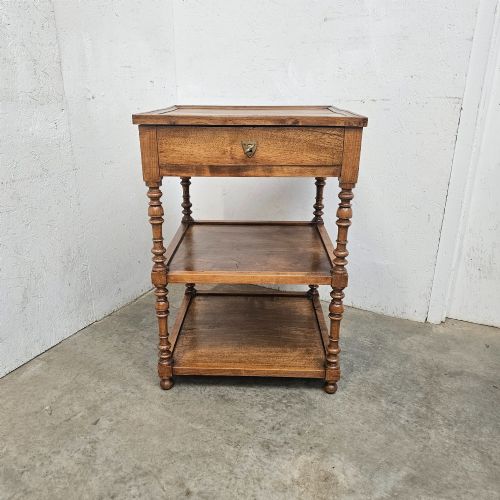
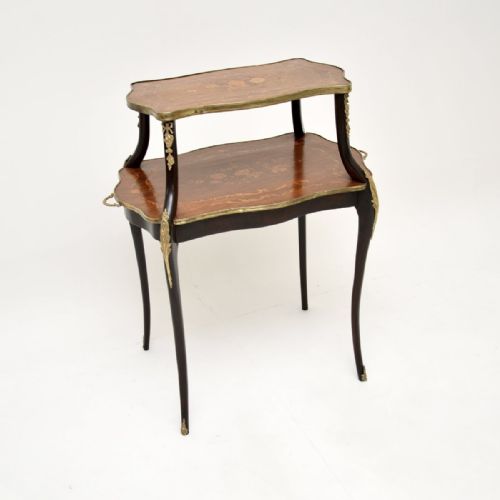
A 19th century etagere table is primarily a tiered display stand or occasional table designed for holding decorative objects, books, or serving items. Most examples found here originate from the Victorian and Regency periods, alongside pieces bearing French styles such as Louis XV and Rococo Revival.
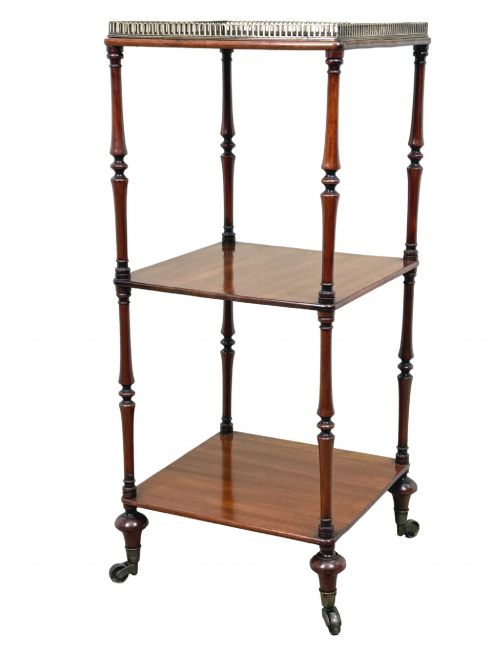
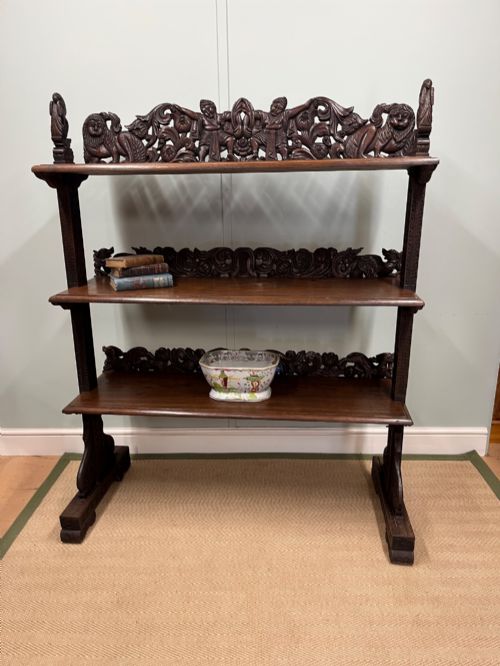
The physical form ranges from compact two-tier occasional tables and tray tables to multi-tiered whatnots and dumb waiters. These pieces cross over with related forms like side tables, display stands, and open bookcases.
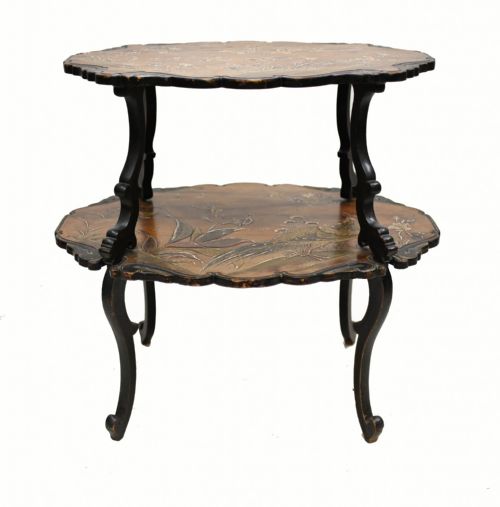
Makers and workshops often utilised distinct regional traits, balancing English proportions with French marquetry inlay, japanning, or brass mounts. Buyers encounter timber varieties including mahogany, walnut, rosewood, and ebonised wood across the selection.
How they were made
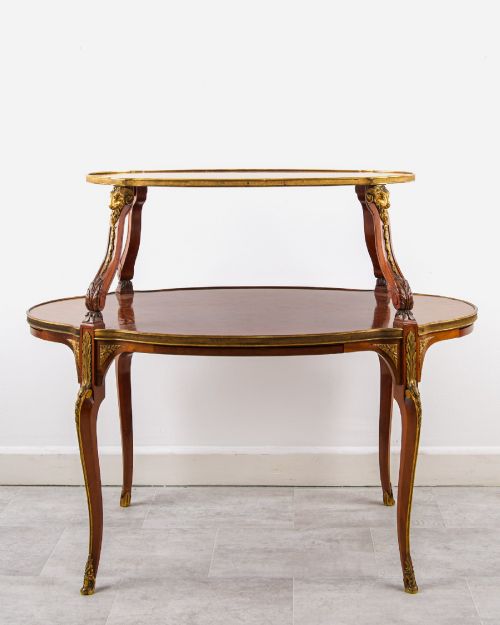
Cabinetmakers constructed these pieces using dense hardwoods like mahogany, walnut, rosewood, and satinwood, frequently applying burr walnut or kingwood veneers to primary surfaces. Marquetry inlay, parcel gilding, and brass or ormolu mounts added ornamental contrast to the timber framework.
Turned legs, slender upright supports, and glass trays defined the structural layout of multi-tiered etagere tables and whatnots. Japanning and French polishing techniques provided the protective, polished finish observed across the 19th century output.
Listings feature woods like mahogany, rosewood, walnut, and satinwood, spanning the Georgian, Regency, Victorian, and Edwardian periods.
What varies in quality
Quality rests in the crispness of the turning on the upright supports, the precision of the marquetry inlay, and the weight of the brass or ormolu mounts. Finer examples display carefully matched timber veneers and balanced proportions across multiple tiers.
The integrity of the structural joints and the depth of the hand-applied polish distinguish workshops of higher repute from standard commercial output.
Edwards & Roberts·W. Turner Lord & Co
The 19th Century Etagere Table Glossary
- Etagere
- A piece of furniture consisting of a set of open shelves for displaying small objects or ornaments. These tiers provide vertical surface area without heavy proportions.
- Whatnot
- A multi-shelved piece of furniture used for storing or displaying books, ornaments, or china. It shares close functional roots with the etagere and dumb waiter.
- Japanning
- A European imitation of Japanese and Chinese lacquering and varnishing techniques. It creates a dark, glossy surface finish often seen on specific decorative tables.
- Ormolu
- Gilded bronze mounts applied to furniture for decorative effect. These metal ornaments highlight corners, legs, and aprons on refined pieces.
- Dumb waiter
- A tiered serving table or stand used to hold dishes or silver. Examples frequently overlap with the heavier three-tier etagere and whatnot forms.
19th Century Etagere Table: Frequently Asked Questions
What is an etagere table used for?
An etagere table serves as a multi-tiered display surface for ornaments, small books, or decorative collections. Its stacked shelves provide vertical storage capacity while maintaining a light visual footprint in a room.
Historically, these pieces functioned in salons and drawing rooms to exhibit prized possessions or assist with serving. Today, they suit similar display purposes in living spaces and hallways.
Which woods were used for these tables?
Nineteenth century makers utilised dense cabinet timbers including mahogany, walnut, rosewood, and satinwood. Exotic veneers such as burr walnut, kingwood, and amboyna provided figured surfaces on finer examples.
Ebonised wood and japanned finishes also appear, particularly on pieces influenced by French design or Chinoiserie tastes. Secondary woods like pine or oak frequently form the internal framing.
How do I place an etagere table in a room?
These tables fit easily against walls, beside seating, or as freestanding centre tables depending on the base design. Their open tiered structure prevents them from blocking light or making a space feel cramped.
Pairing a multi-tier etagere with low upholstery balances the vertical lines in the room. The shelves accommodate books, ceramics, and small lamps without cluttering the surface area.