



19th Century Empire Side Table
A 19th century empire side table brings architectural discipline and striking classical proportions into a room through rich timbers and polished stone.
19th Century Empire Side Table
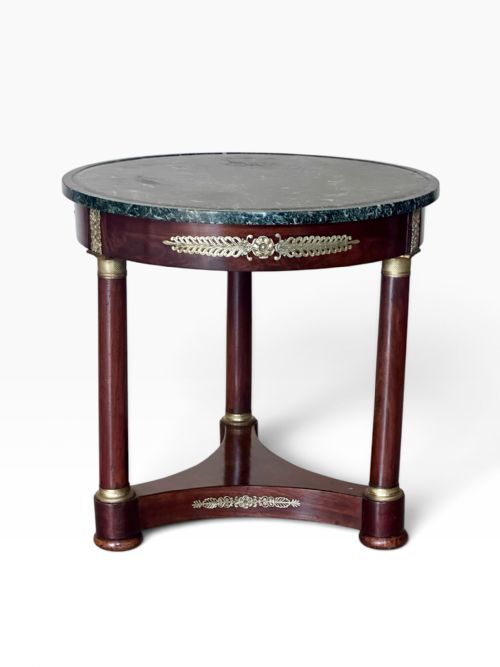
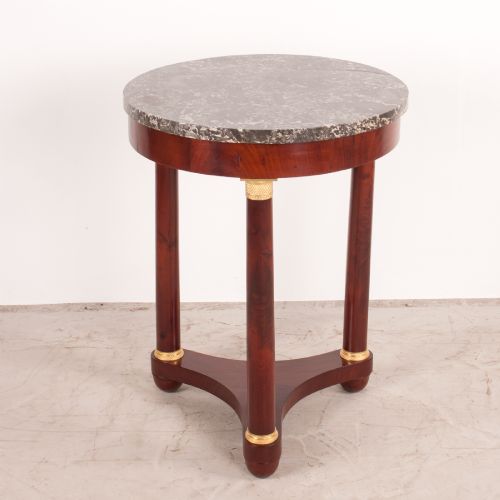
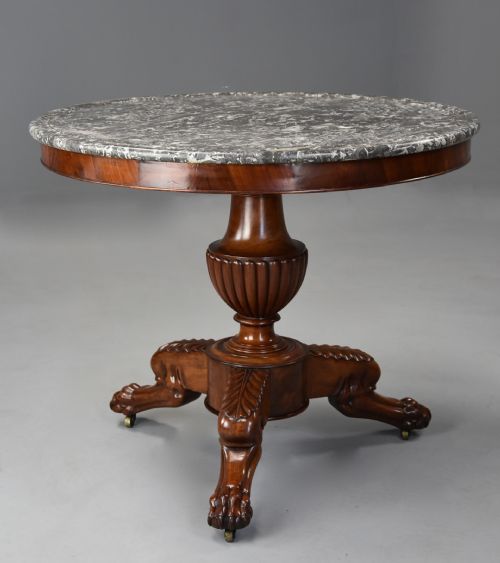
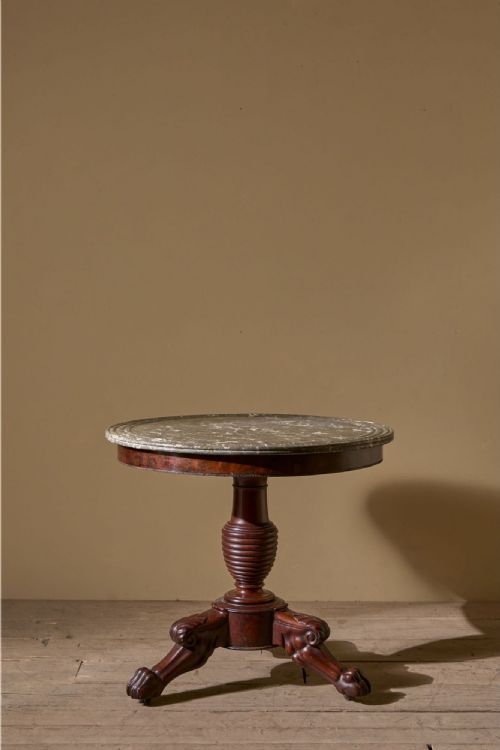
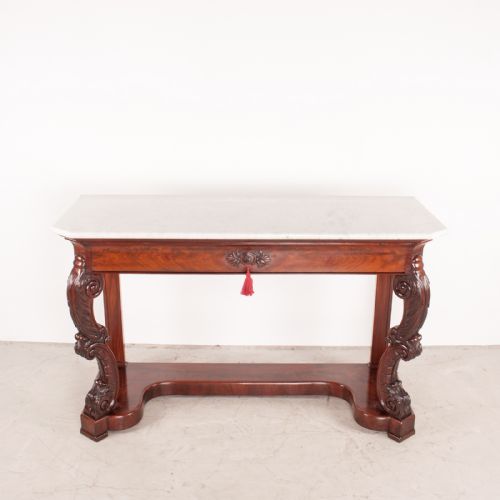
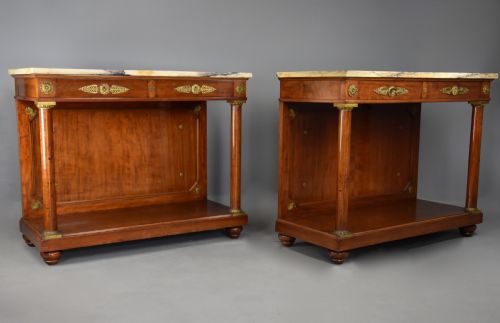
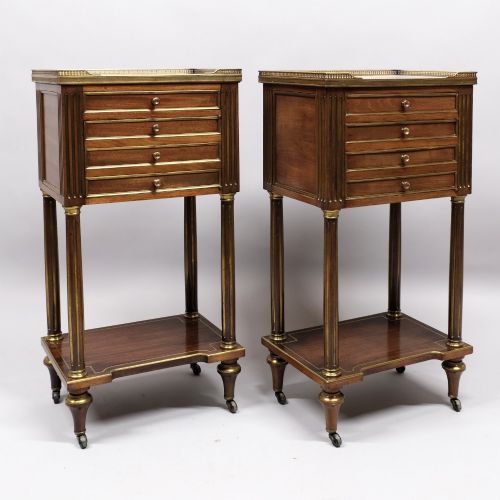
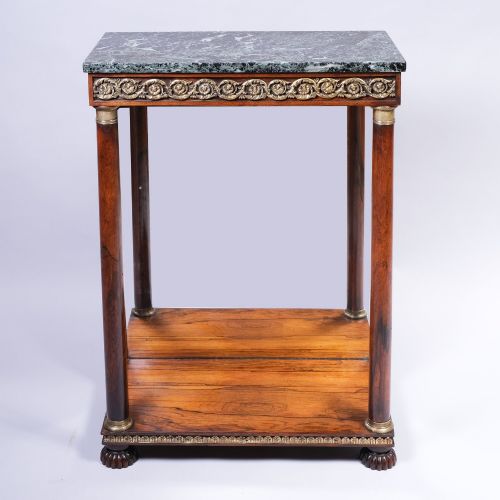
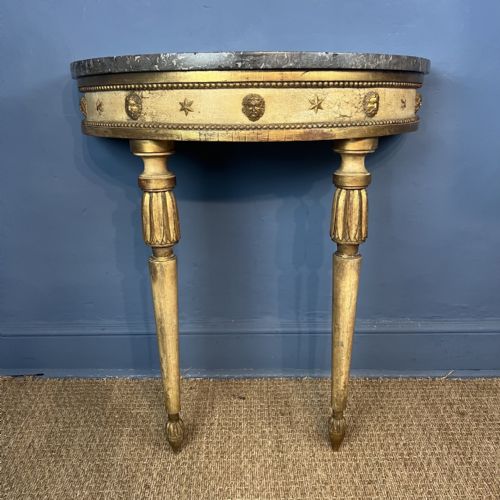
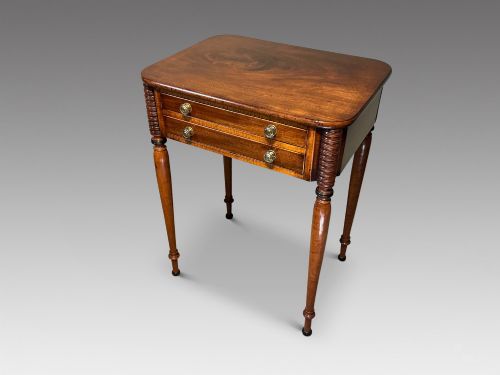
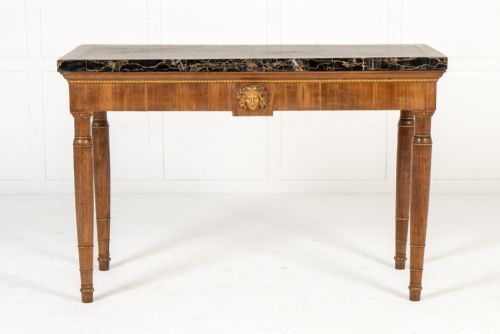
A 19th century empire side table encompasses formal console tables, round pedestal guéridons, and drop-leaf sofa tables spanning the nineteenth century. These pieces originate primarily from French workshops alongside Italian, Swedish, and Biedermeier makers.
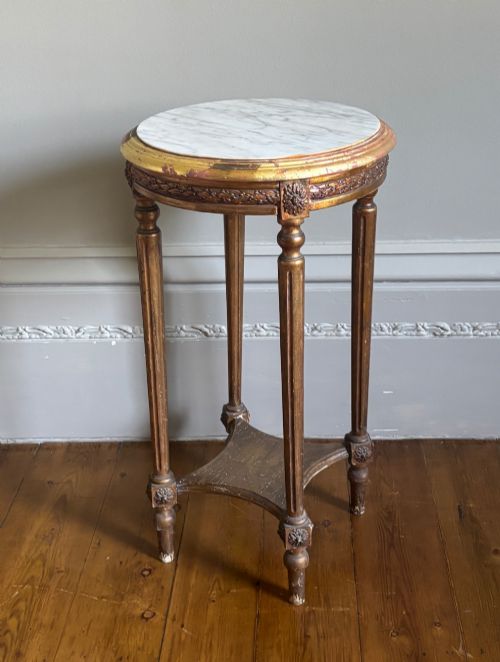
The version most commonly met on this page is the circular guéridon or the rectangular console table, frequently topped with white or grey marble and supported by mahogany or walnut frames.
How they were made
Cabinetmakers constructed the primary carcases using dense timbers such as mahogany, walnut, burr elm, and birch, often applying meticulous marquetry inlay or French polishing to the surfaces.
Cast bronze, ormolu mounts, brass details, and carved giltwood provided the classical mounts and rams' head terminals characteristic of the period style.
Listings feature mahogany, walnut, burr elm, and birch alongside marble, brass, ormolu, and bronze across the nineteenth century.
What varies in quality
The standard of carving in wooden elements and the crispness of chased ormolu mounts separate exceptional examples from standard production.
Originality of the veined or fossil marble top and the depth of patina in the underlying mahogany or burr birch heavily influence the character of the piece.
Krieger Paris·Jean-Joseph Chapuis
The 19th Century Empire Side Table Glossary
- Guéridon
- A small circular table on a central pillar, frequently topped with marble. These pieces served diverse roles as centre tables and lamp tables.
- Ormolu
- Gilt bronze mounted to furniture frames. The technique involves applying a mercury and gold amalgam to cast bronze.
- Console table
- A wall table supported on console brackets or legs. They often display upright mirrors or pair well with architectural interiors.
- Biedermeier
- A Central European style prioritising clean lines and warm domestic woods. Birch and walnut feature prominently in these designs.
19th Century Empire Side Table: Frequently Asked Questions
What rooms suit an empire side table?
These tables fit naturally into entrance halls, living rooms, and studies where architectural lines create a focal point.
Console variants sit flat against walls beneath mirrors or artwork, while round pedestal pieces occupy the centre of a room.
How do I care for marble tops?
Marble requires gentle cleaning with warm water and soft cloths to preserve the polished surface.
Avoid acidic liquids and abrasive cleaners that can etch or dull the stone over time.
Are these tables sturdy enough for daily use?
Solid mahogany and walnut construction provides robust support for lamps, books, and decorative objects.
Pedestal bases on guéridon tables distribute weight evenly across tripod or platform feet.
How do I identify Biedermeier pieces?
Biedermeier tables emphasise pale blonde timbers like Karelian birch and straightforward geometric forms.
Ornate bronze mounts give way to minimalist wood grains and subtle restraint in this regional style.