



19th Century Ebonised Credenza
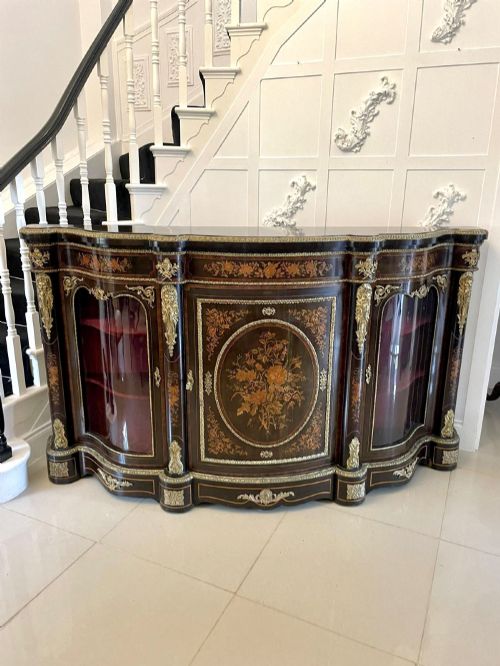
A 19th century ebonised credenza brings dramatic dark wood finishes and gleaming brass mounts into a room to hold display items or books with formal weight.
19th Century Ebonised Credenza
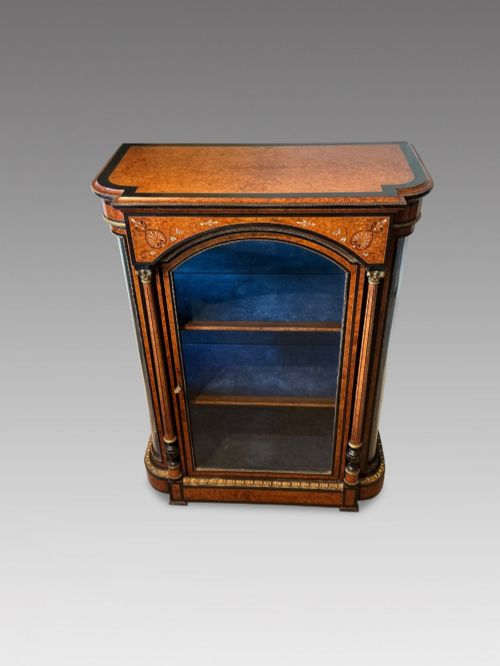
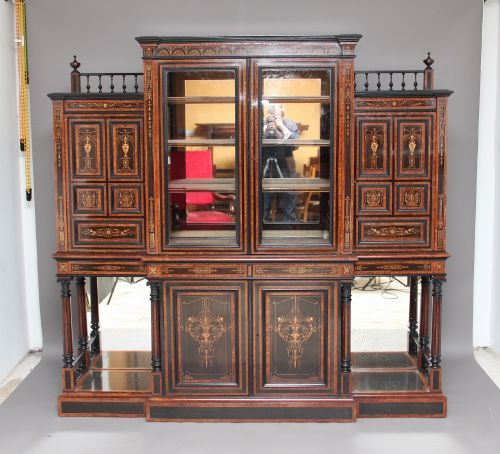
A 19th century ebonised credenza sits low to the floor as a grand cabinet or sideboard, designed primarily for formal display and storage in principal reception rooms. These pieces emerged across the Victorian era and the French Napoleon III period, taking the form of serpentine credenzas, compact pier cabinets, and broad breakfront bookcases.
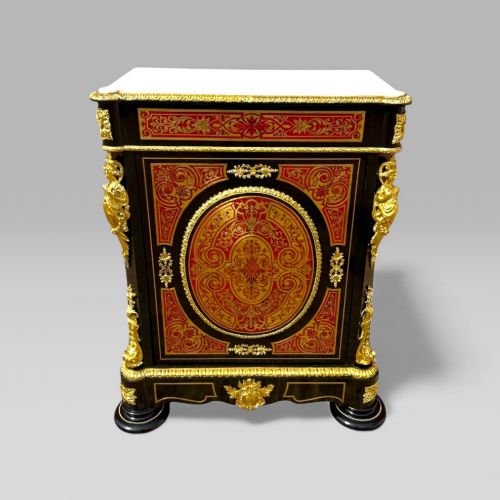
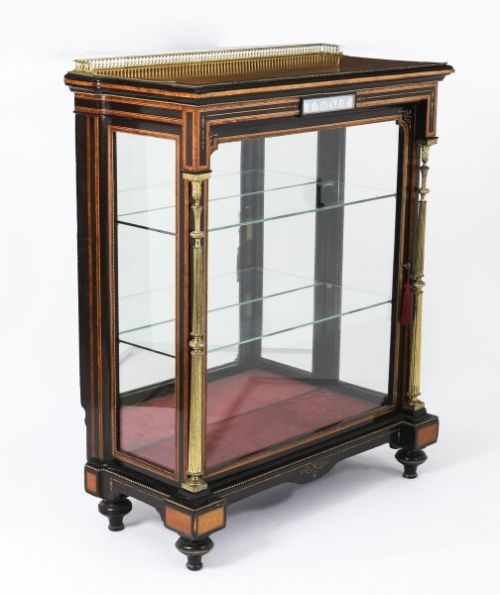
The versions most commonly found here combine deep black ebonised wood with contrasting veneers such as amboyna, burr walnut, and tortoiseshell. Many examples feature glazed central doors flanked by curved side cabinets, while others adopt the upright proportions of a narrower pier cabinet designed to fit between windows.
Makers and workshops across England and France produced these cabinets using diverse stylistic revivals, drawing on French Rococo, Neoclassical, and Aesthetic Movement idioms. The resulting furniture ranges from sober architectural sideboards to intensely ornate pieces covered in marquetry and gilt metal.
How They Were Made
Cabinet makers achieved the characteristic black finish by staining or painting dense hardwoods to imitate ebony, often combining the ebonised surfaces with contrasting natural timbers like burr walnut and amboyna. Carcases were constructed from sturdy timber frames before receiving complex decorative veneers and inlay work.
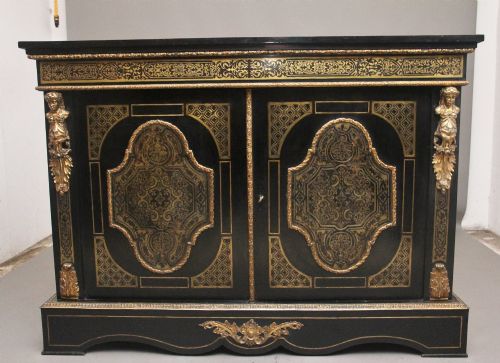
Gleaming ormolu mounts and cast brass stringing provide structural highlights that edge panels, doors, and cornices. Boullework marquetry panels incorporating brass and tortoiseshell appear frequently on French models, requiring precise hand-cutting and fitting into the wood ground.
Glazed doors house interior shelving for display, whilst marble tops provide durable and cooling upper surfaces on many side cabinets and credenzas. Porcelain plaques, sometimes painted in the Sevres style, are inset into the cabinetry alongside intricate floral marquetry.
What Varies in Quality
The refinement of the surface preparation and the depth of the ebonised finish dictate the initial visual impact of the piece. Superior cabinets show a smooth, consistent black ground that allows grain or mounts to register sharply without muddying the underlying timber.
The ambition and execution of the secondary materials elevate certain pieces above standard production. Hand-cut boullework, deeply chased ormolu mounts, and finely detailed floral marquetry demand exceptional artisanal skill that distinguishes high-tier workshops from simpler regional output.
Structural integrity relies on the quality of the primary carcase timbers and the stability of the joints under heavy marble tops and glass doors. Well-preserved veneers and tightly fitted mounts indicate careful historical maintenance and robust original construction.
Lamb of Manchester·Gillow·H. Ogden Manchester
The 19th Century Ebonised Credenza Glossary
- Ebonised Wood
- Timber treated with a black stain or finish to imitate solid ebony. This dark treatment gained immense popularity during the Victorian and Napoleon III periods to create stark contrasts with gilt mounts.
- Boulle
- An elaborate marquetry technique using brass and tortoiseshell inlaid into wood. Named after the famous French cabinet maker André-Charles Boulle, it defines much 19th century Napoleon III furniture.
- Ormolu
- Gilt bronze mounts cast and chased by hand to adorn furniture edges and panels. These metallic enrichments add bright golden highlights to dark ebonised carcases.
- Pier Cabinet
- A narrow upright display cabinet built to stand against the wall space between windows. They typically feature single glazed doors and flat backs.
- Marquetry
- Decorative patterns formed from thin pieces of wood veneer and other materials applied to a structure. Floral and geometric designs appear frequently on Victorian credenzas.
19th Century Ebonised Credenza: Frequently Asked Questions
What is a credenza?
A credenza is a low cabinet or sideboard traditionally used for display and storage in formal entertaining spaces. During the nineteenth century, these pieces evolved to incorporate glass display doors and elaborate surface decoration.
They typically stand on plinth bases or short feet, offering a combination of central shelving and flanking compartments. Their low profile made them ideal for displaying porcelain and decorative objects beneath wall mirrors or paintings.
How do I style a credenza at home?
A credenza works well as a focal point in a dining room, hallway, or drawing room where its surface can be used for display. Pairing the dark ebonised wood with lighter walls allows the intricate brass mounts and tortoiseshell details to stand out.
Interior shelving behind glass doors provides a protected space to exhibit collections of ceramics or glass. Placing lamps or bronze ornaments on the top surface completes the traditional arrangement.
What is Napoleon III style?
Napoleon III style refers to the eclectic French design aesthetic popular during the Second Empire period. It draws heavily on earlier historical precedents, particularly Louis XIV and Rococo revivals.
Furniture from this era often combines ebonised finishes with exuberant ormolu mounts and complex boullework marquetry. The aesthetic values theatrical display and meticulous craftsmanship above strict historical purity.
Are these cabinets English or French?
Nineteenth century ebonised cabinets were produced in both England and France, each region retaining distinct characteristics. French pieces frequently lean towards Napoleon III boullework and elaborate ormolu mounts.
English makers working in Victorian or Aesthetic Movement styles often favoured combinations of ebonised wood with burr walnut, amboyna, and subtle marquetry. Both traditions utilised high levels of hand-craftsmanship in their principal workshops.