



19th Century Desktop Organiser
A 19th century desktop organiser keeps letters, ink and papers in order, bringing fine timbers and brass mounts to a writing table.
19th Century Desktop Organiser
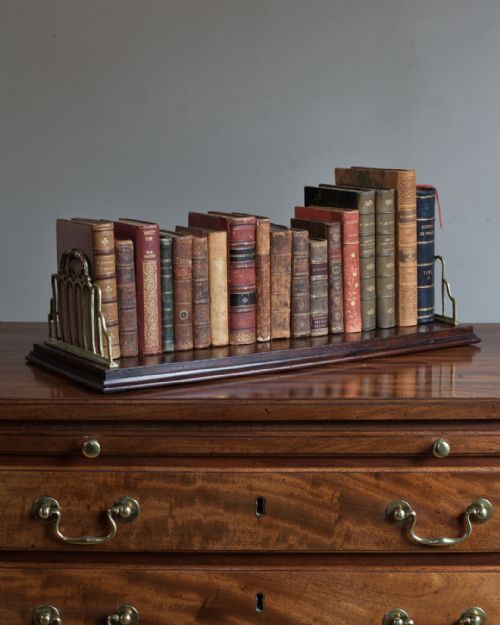
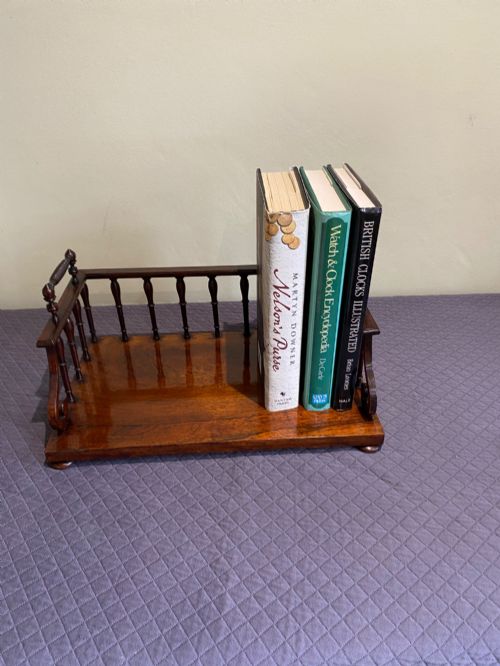
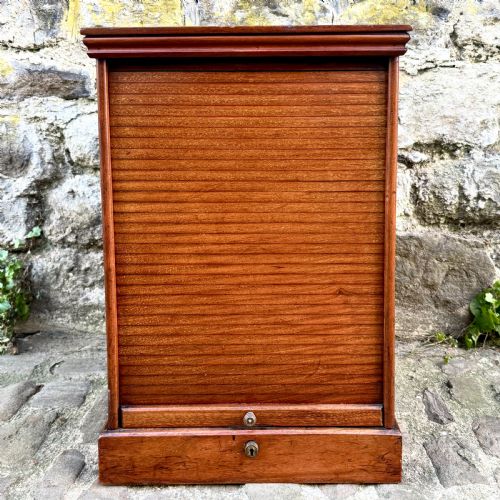
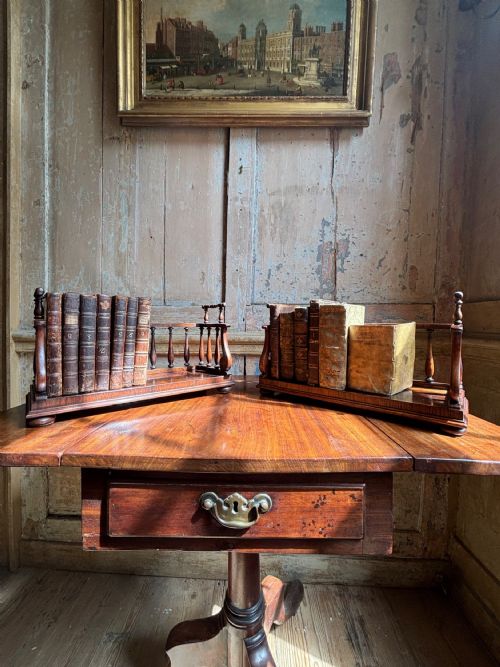
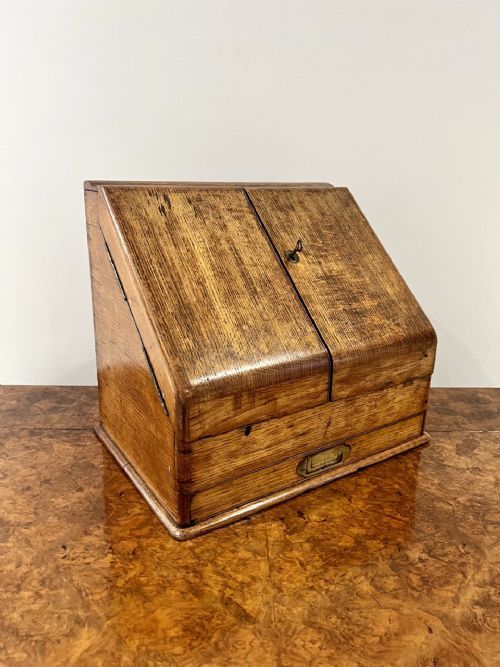
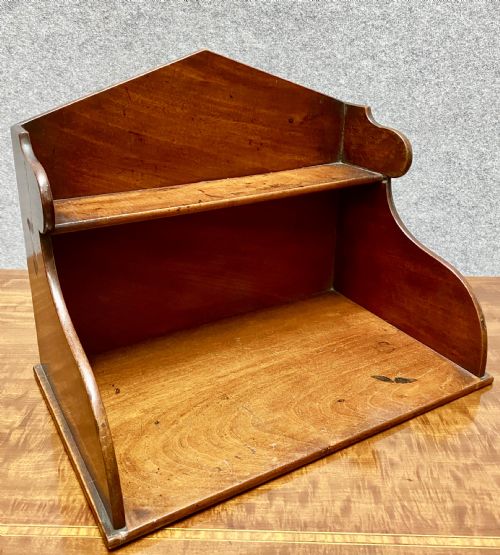
A 19th century desktop organiser covers a varied group of wooden and papier-mache furnishings designed to keep correspondence and writing materials tidy. The selection includes stationery boxes, letter racks, book stands, inkstands, filing cabinets and miniature chests of drawers.
The pieces span periods from the Regency and William IV eras through to the late Victorian years, alongside a few Georgian and 18th century examples. Makers utilised dense timbers such as rosewood, mahogany, walnut and oak to construct these functional desk accessories.
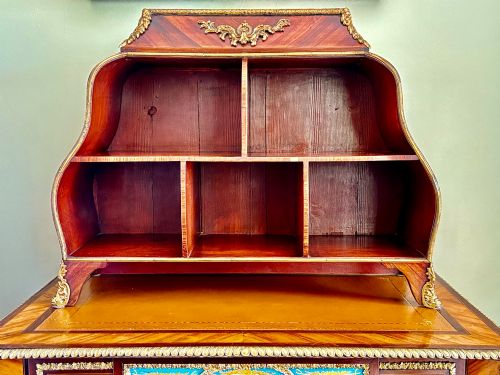
Regional and continental influences appear in styles like Louis XV and Black Forest carvings, showing bears and foliate mounts. Buyers find everything from simple oak letter racks to elaborate rosewood cartonniers fitted with ormolu mounts.
Materials and Construction
Cabinetmakers constructed these organisers primarily in mahogany, rosewood, walnut and oak, often selecting timbers for rich grain and warm patina. Woodwork was hand-carved in decorative items such as Black Forest inkstands or shaped into miniature bow-front chests.
Metal components like brass hinges, locks, handles and gilt bronze or ormolu mounts added structural reinforcement and visual contrast to the polished timber. Glass inserts occasionally appeared within inkstands and desk sets alongside papier-mache bodies.
19th Century Desktop Organiser Retail Price Guide 2026
Typical asking prices for 19th century desktop organiser among the pieces listed under this phrase on Sellingantiques today, from the lower quarter to the upper quarter. They describe what is for sale here now, not the wider market.
A bear carved from wood holds your inkpot steady while glaring across the desk.
Quality and Craftsmanship
The standard of a 19th century desktop organiser depends on the selection of timber and the precision of the cabinetwork. Fine pieces display well-matched grain patterns, tight joinery and careful proportions across miniature drawers and stationery compartments.
Decorative embellishments set finer items apart, whether through hand-carved animal figures, cast ormolu mounts or patinated brass hardware. Superior examples maintain intact fitted interiors and working locks that reflect high-grade workshop production.
Gillows
The 19th Century Desktop Organiser Glossary
- Cartonnuer
- A desktop cabinet fitted with compartments or drawers specifically for holding papers, documents and cartons. These often feature decorative mounts in styles such as Louis XV.
- Stationery box
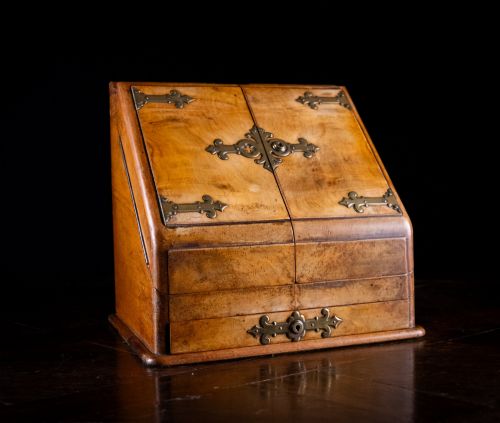
- A wooden box designed to hold writing paper and envelopes, frequently featuring internal dividers and a sloping lid. Examples appear in oak, walnut and mahogany.
- Inkstand
- A desk tray or stand holding one or more inkwells alongside pen troughs. Materials range from carved wood to brass and glass.
19th Century Desktop Organiser: Frequently Asked Questions
What fits inside a stationery box?
Stationery boxes hold writing paper, envelopes and sometimes pens within dedicated internal slots and dividers.
Larger models accommodate correspondence files while maintaining an orderly appearance on the desk surface.
How do I date a rosewood desk organiser?
Dating relies on the prevailing furniture styles, construction methods and secondary timbers used inside the piece. Regency and Victorian examples show distinct aesthetic preferences in their mouldings and mounts.
Comparative study of hardware like brass hinges helps narrow the decade of production.
Where were Black Forest inkstands made?
These carved wooden items originated in the mountainous Brienz region of Switzerland during the nineteenth century. Artisans specialised in detailed animal carvings, particularly bears with logs and forest foliage.
Export demand brought these novelty pieces into British and European studies.
Are miniature chests practical for storage?
Miniature chests of drawers provide small-scale storage for stamps, keys, nibs and other tiny desk items. Their multiple drawers keep loose desk clutter contained.
They sit comfortably on top of writing tables without taking up excessive workspace.