





19th Century Decorative Ewers
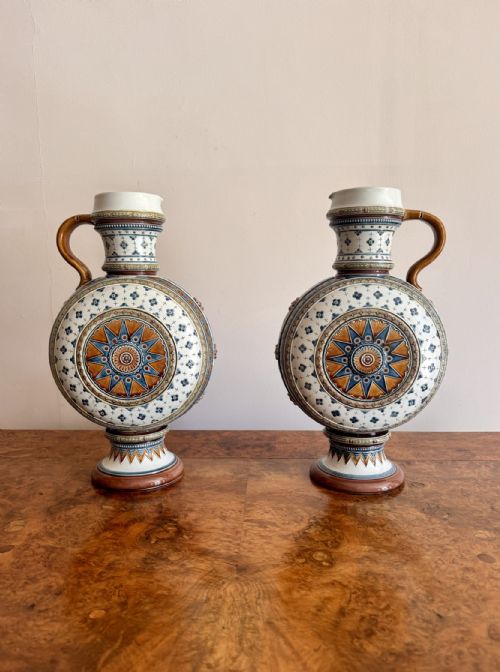
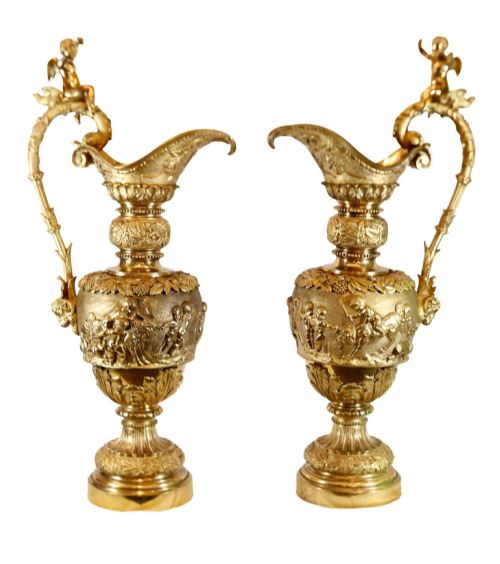
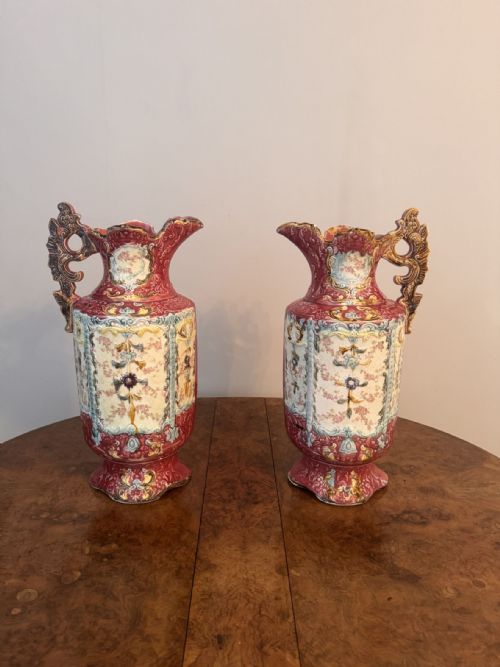
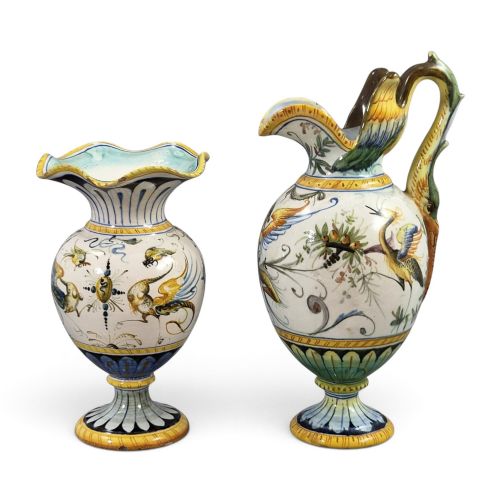
These 19th century decorative ewers bring sculptural form and rich material surface into a room.
19th Century Decorative Ewers
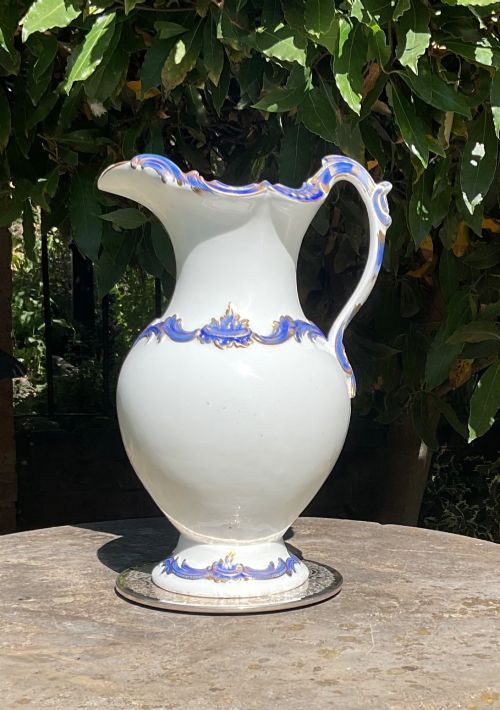
When you search for 19th century decorative ewers, you encounter vessels that bridge functional water pitchers and purely ornamental display objects. These pieces range from grand pairs in cast bronze to delicate porcelain water jugs and majolica vases produced across the Victorian era.
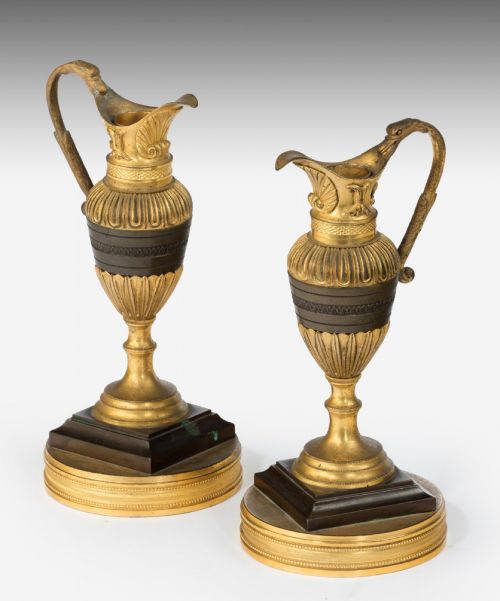
The selection here draws primarily upon Victorian production, spanning styles from Renaissance Revival and Rococo Revival to Neoclassical and Aesthetic Movement designs. You will find matched pairs intended for mantelpieces alongside individual water jugs and cleft pitchers.
Origins include English factories such as Royal Worcester, Doulton Burslem, Spode, Minton, and Rockingham, alongside continental porcelain and bronze works. Forms vary from monumental gilt metal ewers to reticulated porcelain and flower-encrusted scent bottles.
What varies in quality
The standard of modelling and crispness of cast detail separates finer bronze and ormolu ewers from simpler production. In ceramics, the precision of reticulation, hand-painted enamel depth, and the richness of gilding define the upper tier of the range.
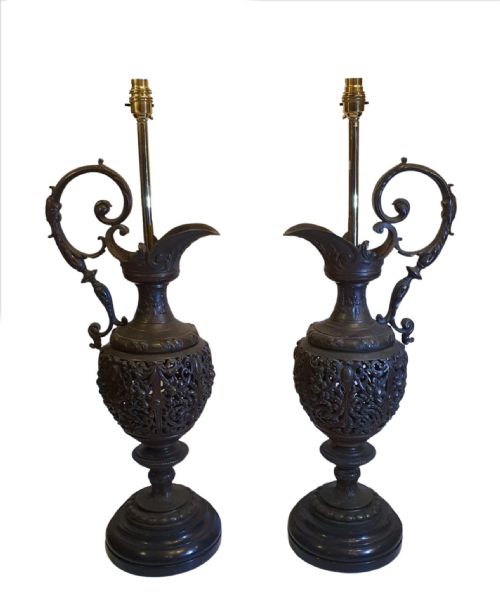
The presence of matched pairs and original factory marks adds distinction, whereas later conversions, such as ewers adapted into table lamps, alter the original object's intended form and integrity.
19th Century Decorative Ewers Retail Price Guide 2026
Typical asking prices for 19th century decorative ewers among the pieces listed under this phrase on Sellingantiques today, from the lower quarter to the upper quarter. They describe what is for sale here now, not the wider market.
Listings feature materials spanning bronze, porcelain, earthenware, ormolu, and enamel across the Victorian period.
Royal Worcester·Doulton Burslem·Cantagalli Florence·Grainger Worcester·Royal Crown Derby·Minton·Spode·Rockingham·Vienna
The 19th Century Decorative Ewers Glossary
- Ormolu
- Gilded bronze used for decorative mounts and handles on furniture and ornamental objects. It provides a bright golden finish that contrasts with dark patinated bronze.
- Reticulated
- Openwork ceramic decoration formed by cutting or piercing a pattern into the clay before firing. This technique creates delicate, lace-like porcelain walls.
- Majolica
- Earthenware covered with an opaque tin glaze and painted with brightly coloured metal oxides. It achieved great popularity during the Renaissance Revival period.
- Ewer
- A large jug with a wide spout and handled shape, historically used for pouring water but valued here for its decorative silhouette.
19th Century Decorative Ewers: Frequently Asked Questions
What were 19th century decorative ewers used for?
While originating as water jugs and washing pitchers, by the 19th century these vessels served largely as ornamental centrepieces, mantel ornaments, and trophy displays.
Many ceramic and bronze examples were produced purely for visual effect within wealthy Victorian interiors rather than practical service.
How do I style a decorative ewer at home?
These sculptural vessels work well displayed singly on side tables or as balanced pairs on mantelpieces, consoles, and sideboards.
Their varied heights and silhouettes allow them to anchor a room or draw the eye when placed against panelled walls.
How do I tell a porcelain ewer from an earthenware one?
Porcelain bodies tend to be denser, thinner, and sometimes translucent under bright light, often featuring refined hand-painted enamel and gilded details.
Earthenware versions, such as majolica or Persian-influenced pottery, display heavier walls and vibrant opaque glazes with deep relief modelling.
What is the difference between Neoclassical and Renaissance Revival styles?
Neoclassical pieces draw upon ancient Greek and Roman clean lines, symmetrical motifs, and restrained classical restraint.
Renaissance Revival ewers feature exuberant ornamentation, strapwork, and sculptural figures reminiscent of sixteenth-century European metalwork.