

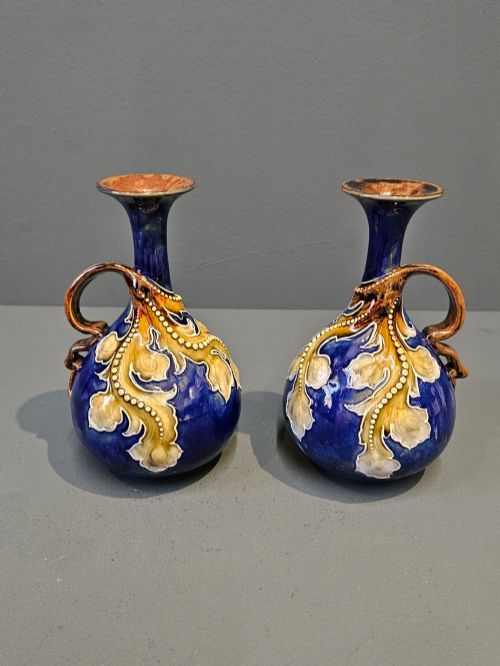


Pair of Victorian Ewers
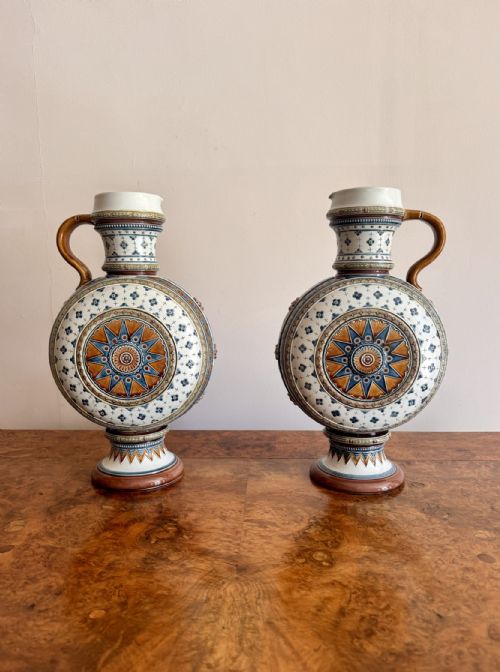
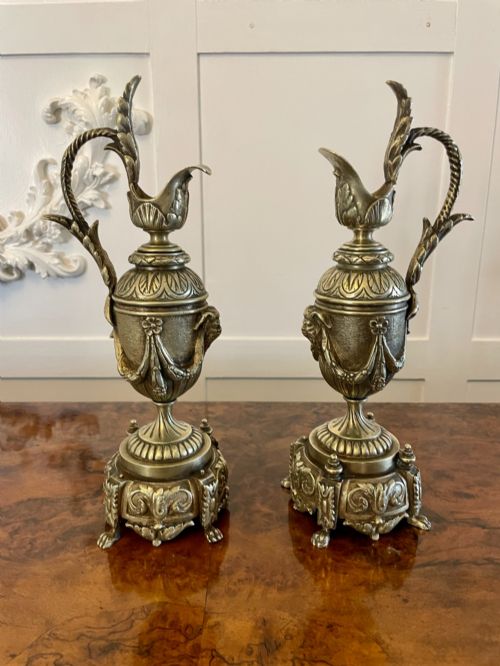
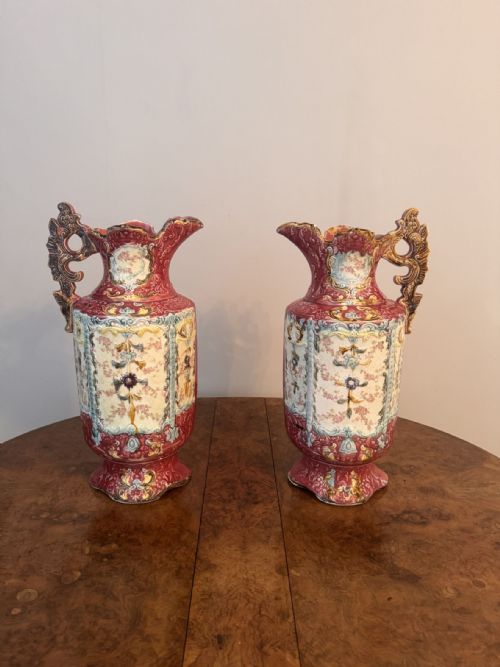
A pair of Victorian ewers brings sculptural elegance to a room, offering classical forms shaped in porcelain, bronze, and brass.
Pair of Victorian Ewers
A pair of Victorian ewers spans decorative table vessels, grand tour urns, and functional wine flagons originating across the nineteenth century. These matching duos arrive in styles ranging from neoclassical and renaissance revival to arts and crafts and rococo revival.
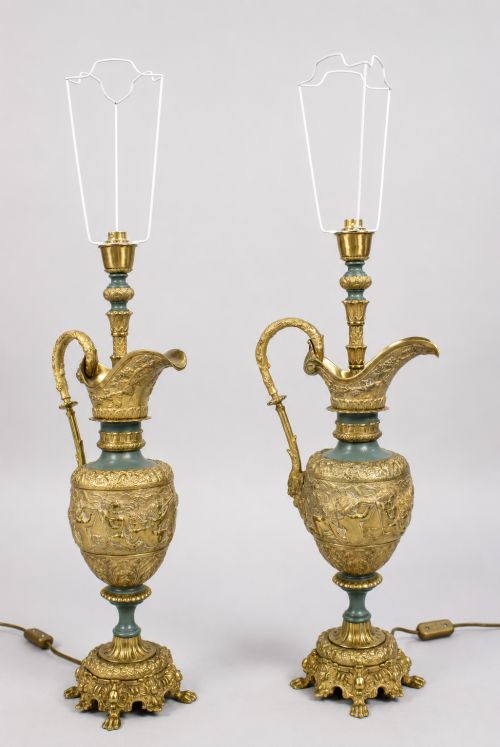
Buyers most frequently encounter decorative metal or porcelain examples designed as ornamental garnitures rather than functional pouring vessels. Many survivors exhibit elaborate handles and spouts, whilst others have found new life as converted table lamps.
Materials and construction methods
Metal ewers rely upon cast bronze, brass, and gilt metal, often enriched with gold leaf, gilding, or silver plating. Makers shaped these materials through intricate casting and chasing to produce high relief ornamentation.
Ceramic examples utilise porcelain, glaze, and enamel, frequently decorated with hand-painted details or flower encrustations. Glass pieces incorporate latticino techniques to achieve delicate interior patterns within the body.
Pair of Victorian Ewers Retail Price Guide 2026
Typical asking prices for pair of victorian ewers among the pieces listed under this phrase on Sellingantiques today, from the lower quarter to the upper quarter. They describe what is for sale here now, not the wider market.
Several ewers found a second career illuminating Victorian parlours after being thoughtfully converted into table lamps.
Distinctions in quality
Quality rests upon the crispness of the casting in metal pieces and the precision of the hand-painting on porcelain surfaces. Superior examples display deep relief work, well-finished seams, and balanced proportions between the body, handle, and spout.
The sophistication of the stylistic revival dictates the distinction between standard decorative items and exceptional studio output. Maker attribution and retained gilding or enamel integrity further elevate the standing of a pair.
Royal Worcester·Doulton Lambeth Ware·Doulton Burslem·Royal Crown Derby·Minton·H F Fearncombe & Co of Wolverhampton·Vienna
The Pair of Victorian Ewers Glossary
- Ewer
- A large jug with a wide spout and handle, traditionally used for water or wine but collected primarily as a decorative object in the nineteenth century.
- Grand Tour
- A cultural journey undertaken by wealthy Europeans that inspired the acquisition of classical bronzes and ornamental urns.
- Gilding
- The application of a thin layer of gold or gold leaf to the surface of metal or ceramic objects to impart a rich finish.
- Latticino
- A glass-making technique involving opaque white or coloured glass threads embedded within clear glass to create intricate linear patterns.
- Blush Ivory
- A specialised ceramic finish developed by potteries featuring soft, warm ivory-toned grounds decorated with gilt and floral motifs.
Pair of Victorian Ewers: Frequently Asked Questions
How were Victorian ewers originally used?
Most decorative pairs served as mantel garnitures, display pieces, or part of large washstand sets in wealthy nineteenth century homes. Some metal and glass variants functioned practically for serving wine or water at the table.
Over time, many of these decorative forms transitioned purely into ornamental display objects, reflecting the Victorian taste for elaborate interior decoration and classical motifs.
Can converted ewer lamps be restored?
Converting an ewer into a table lamp often involved drilling a base or running a cord through the original structure. Reverting the piece depends entirely on the nature of the initial conversion and whether structural alterations were made.
Consulting a professional restorer helps determine if wiring can be removed safely without compromising the integrity of the antique body.
How do I identify the period of an ewer?
Dating relies upon examining the base for maker marks, registration diamonds, or pottery stamps associated with nineteenth century factories. Stylistic clues such as neoclassical restraint or rococo revival ornamentation also offer clear chronological markers.
Materials provide further evidence, as specific ceramic finishes like blush ivory and techniques like latticino glass correspond directly to distinct decades within the era.
How do I care for gilt bronze and porcelain ewers?
Metal surfaces require gentle dusting with a soft, dry cloth to prevent the accumulation of dirt within chased details. Avoid harsh cleaning products, which can strip away delicate gilding or gold leaf.
Porcelain and glass pieces should be cleaned sparingly using lukewarm water and mild soap where necessary, ensuring painted or enamel details remain entirely undisturbed.