


19th Century Decanter Set
A 19th century decanter set brings together functional glassware and secure cabinetry, designed to display and preserve fine spirits in the home.

19th Century Decanter Set
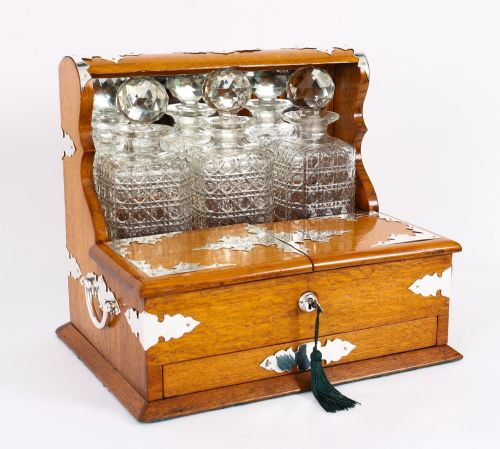
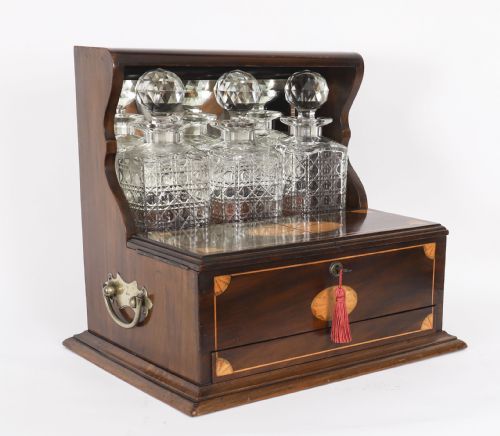
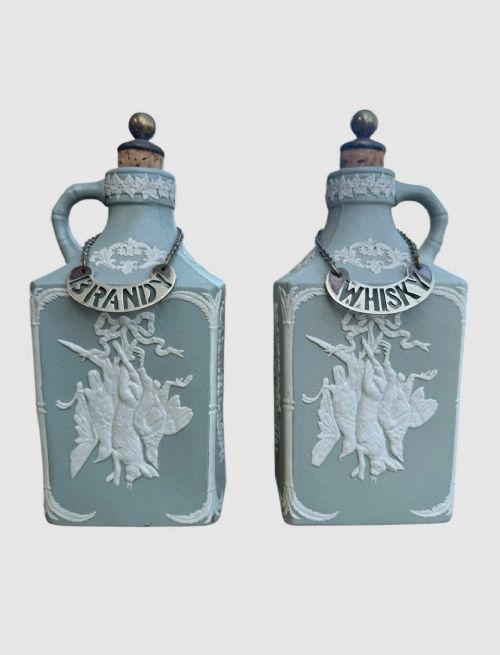
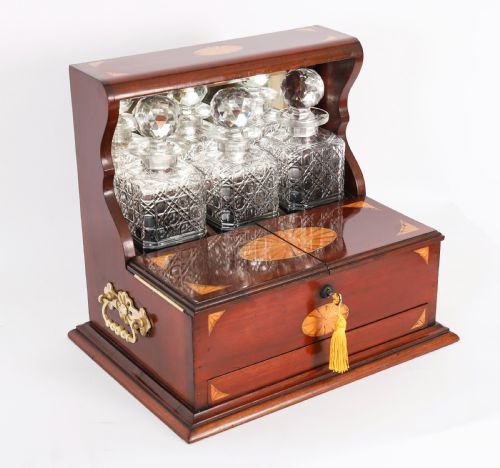
A 19th century decanter set comprises various vessel arrangements housed within fitted boxes, frames, or locking tantalus mechanisms. These groupings often include multiple bottles alongside glasses, games compendiums, or compartmented dry bars.
The dominant forms on this page include tantalus sets fitted with cut crystal decanters and locking mechanisms, alongside framed carriage coasters and cased liquor cabinets. Materials span blonde oak, mahogany, walnut, and coromandel combined with silver plate and brass.
Origins stretch across Victorian England and continental Europe, incorporating French Napoleon III and Black Forest styling. The grouping serves as both a portable bar and a stationary display piece for entertaining.
What Varies in Quality
The sophistication of the mechanism and cabinetry sets exceptional examples apart from standard production. Fully integrated games compendiums, complex locking systems, and dense exotic timbers such as coromandel elevate the standing of a piece.
The clarity and depth of the crystal work, combined with the matching integrity of the decanter set and its original glassware, determine the standard of the ensemble. Maker attribution and heavy silver plating further distinguish the finest items.
Listings feature oak, mahogany, walnut, and coromandel housings paired with silver-plated mounts and hand-blown crystal.
The Goldsmith Co.·Wade Wingfield Wilkins·Philip Ashberry·Mappin Brothers
The 19th Century Decanter Set Glossary
- Tantalus
- A locking security frame designed to hold decanters upright while preventing the removal of the bottles without a key. The wooden or metal bar secures the stoppers firmly in place.
- Cave a Liqueur
- A French fitted liquor cabinet or box containing matching decanters and small glasses. These portable canteens are often lined with velvet or silk within burr wood cases.
- Cut Crystal
- Glassware shaped with wheel-cut geometric facets that refract light and enhance the brilliance of the material. The depth and precision of the cutting define the execution.
- Old Sheffield Plate
- A composite material formed by fusing a thin sheet of silver to a thicker copper base. This technique preceded modern electroplating and leaves characteristic copper seams along edges.
- Cruet Set
- A matched collection of small bottles or jars held within a metal frame for condiments or oils. They share similar silver-plated mountings and handling rings with beverage sets.
19th Century Decanter Set: Frequently Asked Questions
What is a tantalus set?
A tantalus set is a locking beverage cabinet or frame that secures decanters beneath a metal bar. This design allowed hosts to display spirits while restricting unauthorized access by household staff.
The locking mechanism traps the glass stoppers so the bottles cannot be withdrawn until the key is turned. Most examples house three cut crystal decanters within an oak or mahogany frame.
How were decanter boxes used?
Decanter boxes functioned as portable bars for travel or entertaining in different rooms of a grand home. Interiors were fitted precisely to cushion delicate glass bottles and prevent breakage during transport.
Many versions include integrated games compendiums or removable trays. They served as social centerpieces during the Victorian era.
How do I identify a Napoleon III set?
Napoleon III pieces originate from France during the mid to late nineteenth century and often feature ornate aesthetic choices. These sets typically employ exotic veneers and elaborate brass or tortoiseshell inlay.
Cabinets of this period frequently open to reveal tiered bottle platforms lined with velvet. The styling leans toward dramatic decorative presentation.
What is Bristol blue glass?
Bristol blue glass is a distinct deep cobalt-coloured material produced in English glassworks during the period. The rich hue comes from the addition of cobalt oxide to the molten glass batch.
Items in this material often feature gilt labelling or silver-plated mounts. They provide strong visual contrast against silver plate and mahogany.