



Novelty Silver Decanter
These novelty silver decanter pieces range from animal forms to mechanical spirit barrels, offering eccentric charm for the dining table.
Novelty Silver Decanter
When you search for a novelty silver decanter, you enter a sphere of Victorian and twentieth-century drinkware that mimics animals, vehicles, and everyday objects. These whimsical vessels disguise their pouring function within humorous or theatrical shapes.
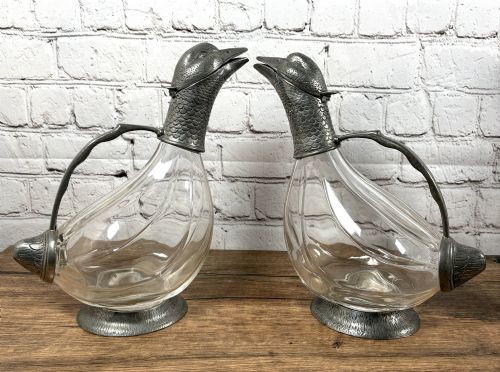
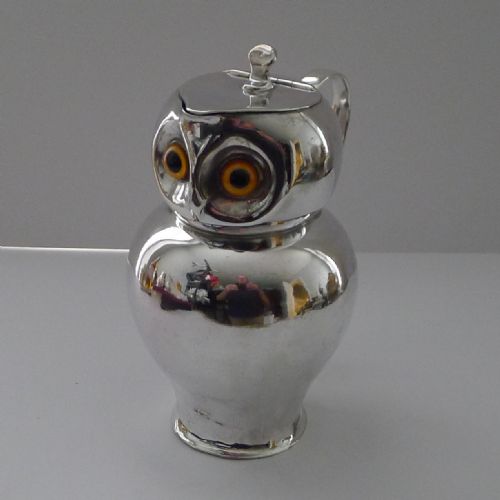
The most common examples on this page take the form of birds and mammals, such as owls, ducks, monkeys, and boars, alongside functional objects like champagne bottles and Scottish thistles. They combine silver plating or solid silver mounts with cut glass, frosted crystal, or ceramic bodies.
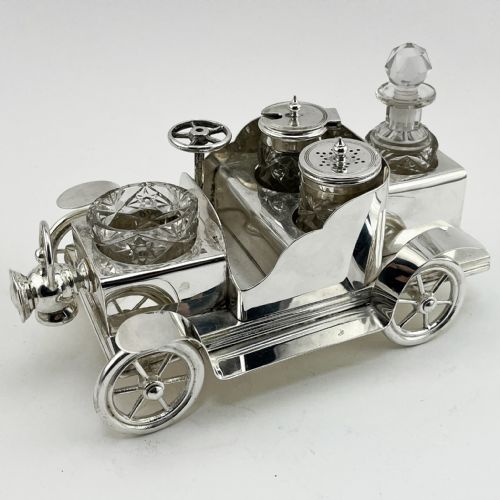
Originating largely from the Victorian era and stretching through the Edwardian period into Art Deco and Mid-Century Modern designs, these pieces served as conversation starters at formal dinners and gatherings. Their primary appeal lies in the clever mechanics required to pour a drink from an animal head or a miniature vehicle.
Materials and construction
Silversmiths and manufacturers utilised silver plate and sterling silver for the mounts, hinged heads, and chassis, often pairing them with heavy cut glass, moulded glass, or frosted crystal bodies. Internal cork stoppers and metal mechanisms allowed hinged animal heads to lift smoothly for pouring.
Detailing was achieved through hand-chasing, engraving, and occasional enamel work, particularly on mid-century designs. Glass barrels and bottles were frequently wheel-cut or moulded to resemble natural textures like feathers, fur, or wooden staves.
Novelty Silver Decanter Retail Price Guide 2026
Typical asking prices for novelty silver decanter among the pieces listed under this phrase on Sellingantiques today, from the lower quarter to the upper quarter. They describe what is for sale here now, not the wider market.
Materials span from simple silver plate and cut glass to frosted crystal, oak staves, and enamel finishes across multiple decades.
Judging quality in novelty drinkware
Quality rests upon the crispness of the casting and the naturalism of the animal or object portrayed. Superior pieces exhibit fine hand-chased feather or fur work and balanced proportions that conceal the functional vessel effectively.
The integration between the silver mount and the glass body dictates durability and refinement. Tighter tolerances in the hinged mechanisms and intact, clear glass or crystal without clouding separate the finest workshop output from simpler production.
Marples And Co·Valenti·Asprey
The Novelty Silver Decanter Glossary
- Silver Plate
- A base metal, typically copper or nickel brass, coated with a thin layer of silver through electroplating or old Sheffield methods. This technique allowed manufacturers to produce elaborate hollowware at a lower cost than solid sterling silver.
- Claret Jug
- A vessel specifically designed for serving red wine, usually featuring a glass body with a hinged metal spout and handle. In novelty forms, these jugs take the shape of animals or figures.
- Cut Glass
- Glass decorated by hand with rotating wheels to grind geometric or floral patterns into the surface. It catches the light and adds weight to the base of the decanter.
- Spirit Barrel
- A cylindrical container mounted horizontally on a stand or carriage, used for dispensing spirits like whiskey or gin. They often appear as single, double, or triple barrels with tap spigots.
- Frosted Crystal
- Glass treated with acid or sandblasting to create a matte, opaque finish. It provides a tactile contrast to polished silver mounts.
Novelty Silver Decanter: Frequently Asked Questions
How do you pour from an animal decanter?
Most animal decanters feature a hinged head or neck that lifts upwards or detaches entirely when a release button or lever is pressed. The liquid then flows through the spout concealed within the beak or muzzle.
Internal cork or rubber stoppers help maintain a tight seal to prevent evaporation of the spirits stored inside.
Are these decanters safe for holding alcohol?
Many historical decanters were manufactured for display or occasional use rather than long-term spirit storage. Inspecting the interior glass and cork condition is essential before introducing fresh beverages.
Hand washing with lukewarm water is necessary to protect delicate silver plating and historical glass bodies from damage.
How do I date a silver plated novelty piece?
Dating relies on stylistic clues, registration marks, and the specific manufacturing techniques used in the silver plate or mount. Victorian pieces often display registration lozenges or patent dates stamped into the metal.
Comparing the aesthetic markers, such as Art Deco geometric lines or Victorian naturalism, helps narrow down the decade of production.
What is the difference between a decanter and a spirit barrel?
A decanter typically stands upright with a removable stopper at the top, pouring through an integrated spout or neck. Spirit barrels sit horizontally on a frame and utilise a small tap or spigot at the front for dispensing.
Barrels were frequently constructed as single or multiple vessels to serve different liquors simultaneously from a sideboard.