


19th Century Cut Decanter
A 19th century cut decanter brings heavy lead crystal, deep wheel-cut facets, and substantial service to the dining table.
19th Century Cut Decanter
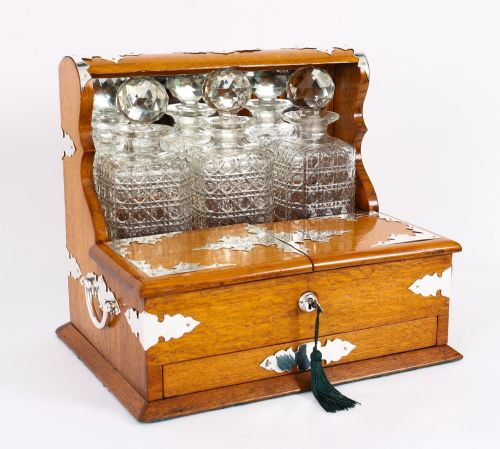
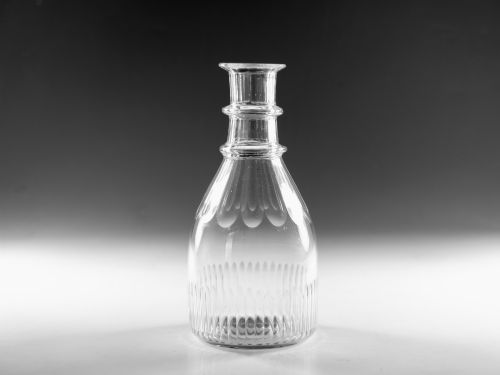
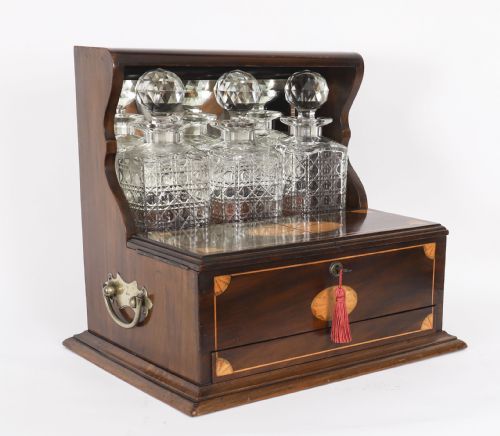
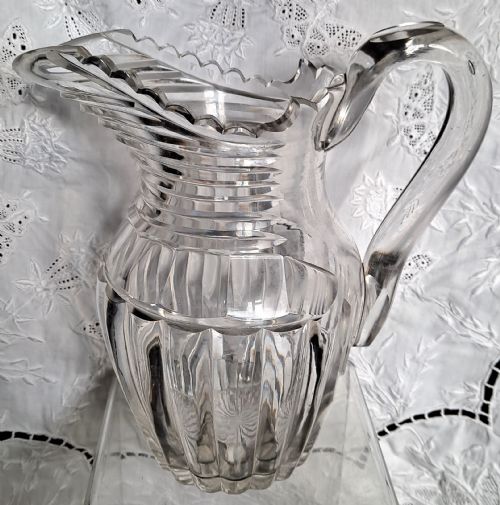
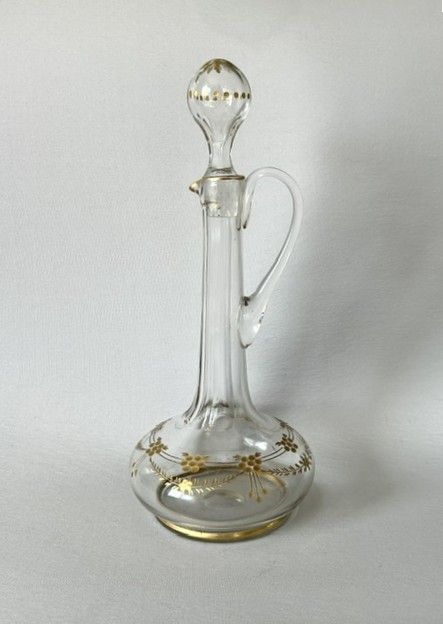
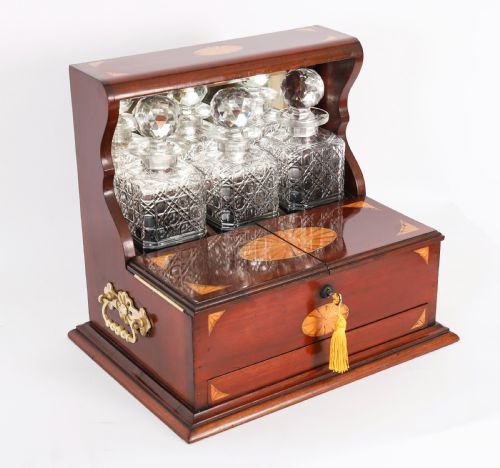
A 19th century cut decanter serves wine, spirits, and water through periods stretching from the Regency era through the Victorian age. The pieces met on this page range from standalone ship decanters and globe shapes to complex tantalus sets housed in oak, walnut, and coromandel.
Makers produced these vessels for formal dining and drawing room hospitality across England, Scotland, France, and Bohemia. They survive today either as single bottles, matched pairs, or nested inside locking wooden frames with silver-plated mounts.
Materials and manufacture
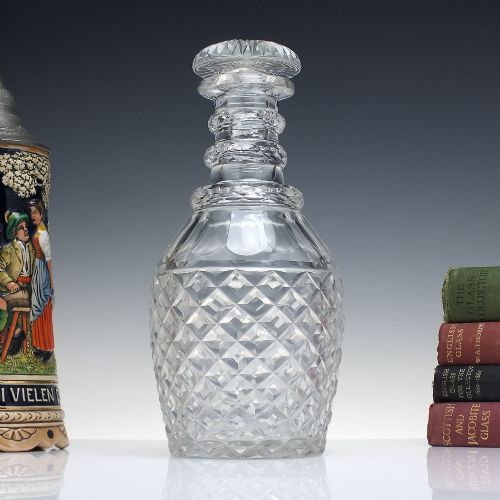
Heavy lead crystal and glass form the primary body of these vessels, shaped through blowing and finished with thick wheel-cut facets, flutes, or pillar patterns. Overlay techniques also appear, fusing layers of ruby, green, or amber glass over clear crystal before cutting back to reveal contrasting colours.
Mounts incorporate silver plate, brass, and gilt bronze, whilst housing cabinets utilise hardwoods such as oak, satinwood, pollard oak, and coromandel. Engraved decoration, etched grapevine motifs, and enamel detailing frequently complement the deep structural cutting of the glass.
Some Victorian decanters spent their evenings locked firmly inside wooden cages to deter thirsty houseguests.
Judging quality and execution
Quality rests upon the crispness of the wheel-cutting and the weight of the metal. Superior pieces display sharp, clean facets that catch the light directly, alongside well-proportioned stoppers that match the neck finish precisely.
The sophistication of the housing influences the overall standard, moving from simple glass bottles to complex combination boxes featuring games compendiums and secure locking mechanisms. The clarity of the crystal and the integration of silver-plated mounts further separate standard production from high-end workshop output.
The 19th Century Cut Decanter Glossary
- Tantalus
- A locking wooden frame that secures decanters behind a bar to prevent unauthorized access while displaying the bottles. These cases often incorporate games compendiums or cigar compartments.
- Ship decanters
- A low, wide-based decanter designed with a broad conical body that prevents tipping at sea. They are typically heavy at the base and feature plain or cut glass rings around the neck.
- Overlay
- A glassmaking technique where a thin layer of coloured glass is fused over a clear crystal core. Craftsmen cut through the outer layer to expose the clear glass beneath.
- Toddy lifter
- A small glass vessel used to transfer hot punch or toddy from a punch bowl to individual glasses. It operates on a vacuum principle controlled by a thumb opening.
- Pillar cut
- A heavy vertical facet cutting style applied to the body of decanters. This technique creates strong architectural lines that reflect light deeply through thick crystal.
19th Century Cut Decanter: Frequently Asked Questions
Are stoppers usually original to the decanter?
Stoppers were individually ground to fit each specific neck during manufacture, meaning replacements often sit unevenly or lack matching facet cuts.
Inspect the ground glass seating area on both the stopper and the neck to check for matching wear patterns and correct numbering.
What is a liquor cave?
A liquor cave, or cave à liqueur, is a portable French fitted box containing a set of decanters and matching glasses.
These lockable containers were designed for elegant entertaining in drawing rooms and feature ornate woodwork and metal mounts.
How do I tell a Regency decanter from a Victorian one?
Regency decanters typically feature three plain or triple-ring necks, heavy kick-up bases, and simple geometric cutting styles like flutes or hobnails.
Victorian examples often display heavier, denser lead crystal, more elaborate botanical etching, and integration into multi-bottle locking tantalus frames.