
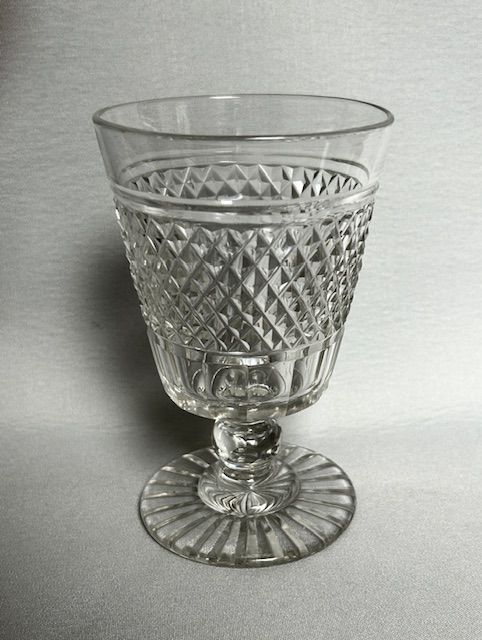


19th Century Crystal Bowl
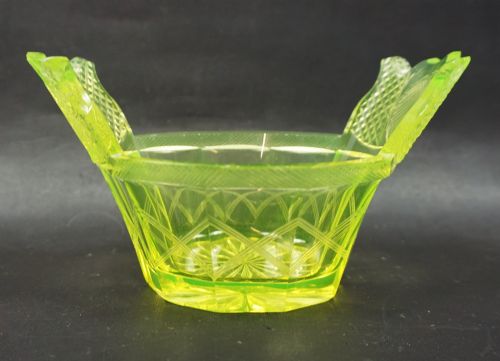
A 19th century crystal bowl brings weight and sharp refraction to a table, combining heavy lead glass with brass or silver mounts.
19th Century Crystal Bowl
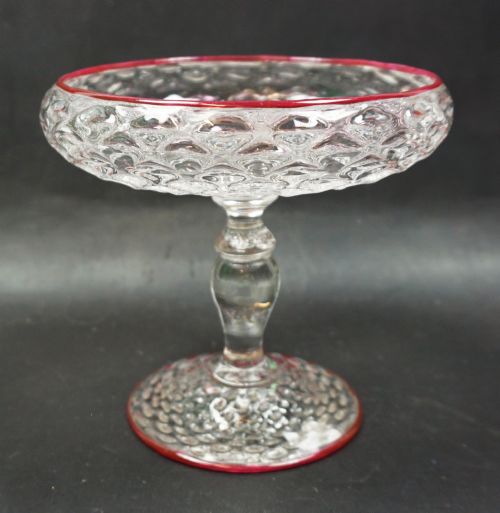
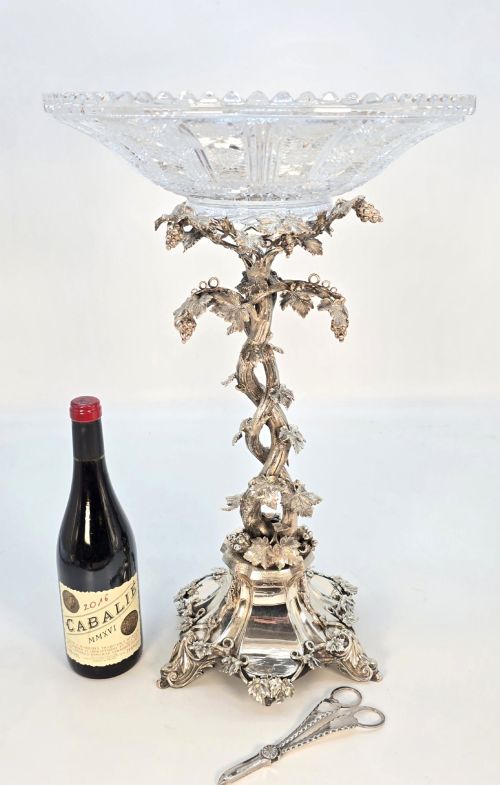
When searching for a 19th century crystal bowl, you encounter heavy table centrepieces, footed tazzas, epergnes, and smaller fruit or finger bowls designed for formal dining. These pieces cross several periods, appearing in Regency, Georgian, and Victorian styles alongside continental French and Bohemian designs.
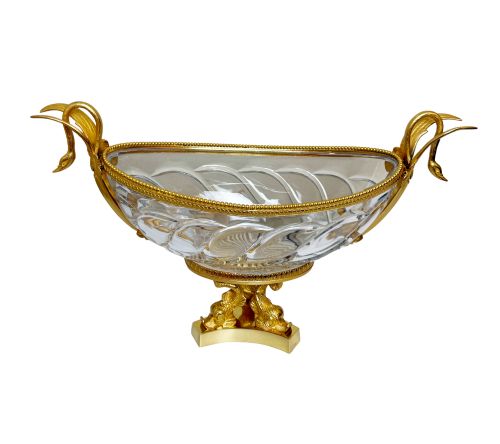
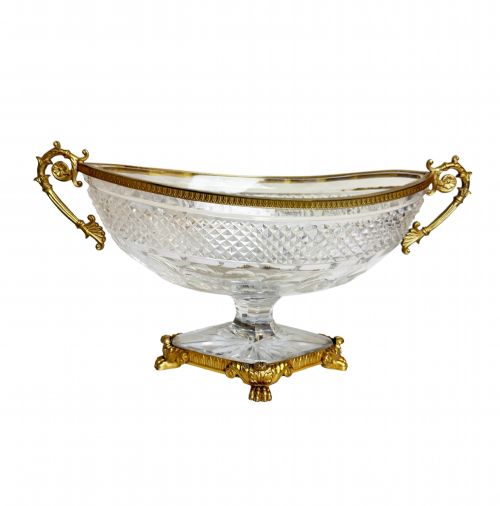
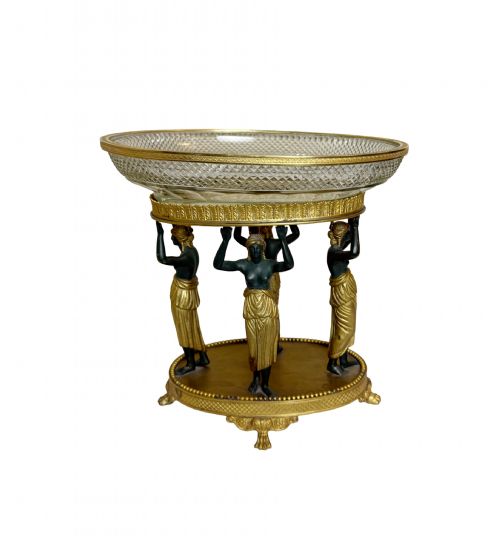
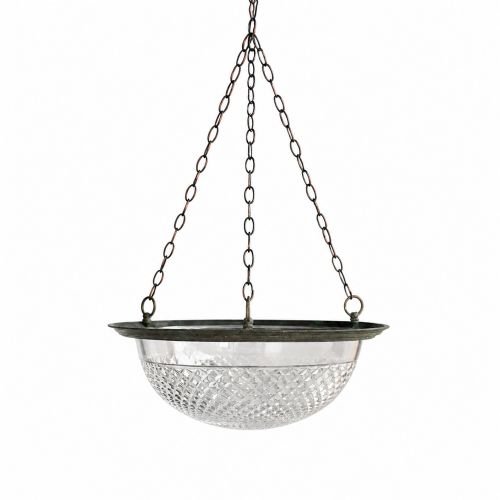
The most common form on this page is the substantial table centrepiece or pedestal comport, frequently mounted in gilt bronze, ormolu, or silver plate. These vessels often feature deep facet cutting, honeycombing, or hobnail patterns that catch the light from every angle.
How they were made
The vessels rely on lead crystal or glass that is either hand-blown or mould-blown before undergoing deep wheel-cutting to create sharp geometric facets and hobnail patterns. Makers also utilised casing techniques, overlaying coloured glass such as red cane or flash layers onto clear crystal to permit intricate surface engraving.
Metal mounts in gilt bronze, ormolu, bronze, Old Sheffield plate, and silver plate are frequently integrated into the design, secured with pins or screws to support heavy crystal bowls, tazzas, and epergnes.
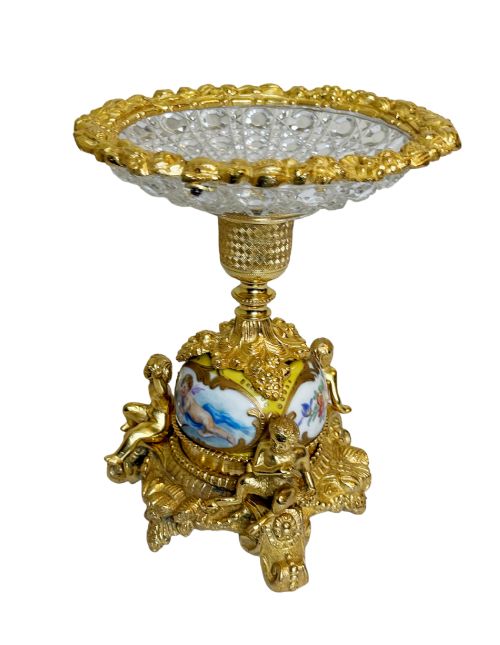
Cherubs peer over the rims of gilt bronze mounts, watching over centuries of preserved fruit and sweetmeats.
What varies in quality
Quality rests primarily in the crispness of the glass cutting and the weight of the lead crystal itself. Superior pieces exhibit sharp, clean facets without softness in the edges, alongside heavy, stable metal mounts that show precise chasing rather than coarse casting.
The integration between the glass bowl and its metal or silver-plated stand dictates the grade of the object. Masterworks combine flawless hand-blown or deeply cut crystal with structural metalwork featuring detailed figural elements such as cherubs or naturalistic motifs.
Baccarat·François-Eugène Rousseau
The 19th Century Crystal Bowl Glossary
- Tazza
- A shallow bowl or plate mounted upon a stem and foot, used for serving fruit or sweets on the table. These pieces often feature cut glass patterns and matching stands.
- Hobnail
- A raised, faceted pattern cut into the surface of glassware, resembling the iron heads used on rustic boots. This texture provides exceptional light refraction.
- Epergne
- A large table centrepiece featuring a central bowl with branching arms and smaller hanging baskets for fruit, sweetmeats, or flowers. They combine cut crystal with silver plate or carved wood supports.
- Comport
- A pedestal bowl raised on a foot, designed for presenting fruit or confectionary at dessert. They appear frequently in heavy hand-blown lead crystal.
- Ormolu
- Gilded bronze used for mounts and stands on decorative objects. This material brings a warm golden tone to contrast with clear or coloured crystal bowls.
19th Century Crystal Bowl: Frequently Asked Questions
How were crystal bowls used?
These vessels served primarily as centrepieces for formal dining tables, holding fruit, sweetmeats, or punch during dessert courses. Larger examples acted as ornamental centrepieces designed to reflect candle and gas light.
Smaller finger bowls sat at individual places for washing hands between courses, while tazzas elevated sweet dishes above the cloth to create height and symmetry on the table.
How do I date a crystal bowl?
Dating relies on combining the cutting style, the shape of the bowl, and the materials used for any accompanying metal mounts. Georgian and Regency pieces often show heavier, simpler proportions with deep hobnail cutting, while Victorian examples introduce etched decoration and complex silver-plated or gilt bronze stands.
Maker signatures or registration marks, where present on the metal or glass, provide exact chronological markers. Stylistic shifts from Georgian restraint to ornate French Rococo Revival and Empire modes further anchor the decade of production.
How do I care for antique crystal?
Wash these pieces by hand using lukewarm water and mild detergent, avoiding sudden temperature changes that can crack old glass. Line the sink with a towel to cushion the heavy lead crystal during cleaning.
Dry immediately with a lint-free cloth to maintain the brilliance of the cut facets. Keep metal mounts dry and polish them only when necessary without touching the surrounding crystal surface.
What is the difference between glass and crystal?
Lead crystal contains a significant proportion of lead oxide, which increases the weight, density, and refractive index of the material. This composition allows artisans to cut deeper, sharper facets that scatter light more brilliantly than standard soda-lime glass.
Objects made of lead crystal also produce a clear, resonant tone when tapped gently, whereas regular glass yields a duller sound.