
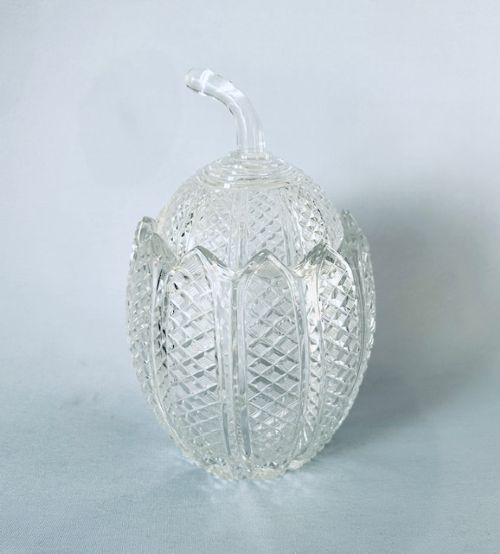


Diamond Cut Crystal Jar
A diamond cut crystal jar brings brilliant light and heavy handling to a table, spanning Georgian novelty melon barrels to Edwardian preserve pots.
Diamond Cut Crystal Jar
When you search for a diamond cut crystal jar, you are looking at heavy domestic hollowware designed to catch the light and hold foodstuffs or condiments upon the table. The forms appearing on this page stretch from Georgian novelty melon biscuit barrels and large tea mixing bowls to Regency condiments, Edwardian preserve pots, and late nineteenth century sweetmeat jars.
The version you are most likely to meet here is the Victorian or Edwardian lidded biscuit jar or preserve pot, often mounted with silver or brass, alongside occasional ceiling lighting and large lidded vases. These pieces cross several periods, predominantly Georgian, Regency, Victorian, and Edwardian, utilising lead crystal and cut glass shaped into deep geometric patterns.
How they were made
The construction of these objects begins with hand-blown glass and heavy lead crystal, shaped into vessels before receiving deep mechanical or wheel-cut facets. Artisans ground the diamond patterns directly into the thick walls of the blank, creating sharp refraction lines that define the exterior surface.
Many examples incorporate fitted metal mounts, utilising silver, Dutch silver, or brass for rims, lids, and swing handles. These metal elements are secured directly to the glass bodies, combining heavy refractive crystal with polished metal hardware.
Someone once decided that crystal could convincingly pretend to be a melon, giving us the delightful novelty of a faceted fruit sitting on the Victorian sideboard.
What varies in quality
The distinction between ordinary and superior examples lies in the crispness of the cutting and the weight of the metal mounts. Deep, sharp facets distribute light more evenly than shallow or softened grinding, while substantial silver or brass mountings indicate a higher grade of original manufacture.
Proportion and form also dictate distinction, separating simple utilitarian pots from ambitious novelty shapes like melon barrels or grand covered sweet bowls. The clarity of the crystal material itself, free from heavy clouding, completes the measure of quality.
The Diamond Cut Crystal Jar Glossary
- Biscuit barrel
- A covered ceramic or glass jar traditionally used for storing dry biscuits in the nineteenth-century parlour. These pieces often feature hinged metal handles and decorative silver-plated or solid silver mounts.
- Sweetmeat jar
- A small lidded vessel designed to hold confectioneries, sweetmeats, or candied fruits during formal dining. They frequently appear in pairs from the nineteenth century.
- Lead crystal
- Glass containing a high percentage of lead oxide, which increases the material weight, refractive index, and brilliance. This composition allows for deeper and sharper cutting without fracturing.
- Preserve pot
- A small container with a fitted lid intended for jams, jellies, or marmalades upon the breakfast or tea table. They are commonly encountered with matched spoons and silver rims.
- Tea mixing bowl
- A large open bowl used during the Georgian era to blend different grades of tea leaves before brewing. These vessels typically display thick walls and heavy cut glass decoration.
Diamond Cut Crystal Jar: Frequently Asked Questions
What were diamond cut crystal jars used for?
These vessels served primarily as functional containers for foodstuffs on the dining or drawing-room table. They held biscuits, preserves, sweetmeats, or condiments, keeping them protected beneath heavy fitted glass lids.
The deep cutting was designed to catch the candlelight or gaslight of the period, turning a utilitarian storage jar into a decorative centrepiece for the room.
How do I distinguish Georgian from Victorian jars?
Georgian pieces often display broader, hand-cut facets and heavier, softer metal handling with distinctive novelty forms like melons. Victorian and Edwardian examples tend towards more mechanical precision in the cutting and frequently feature standardised silver or brass mounts.
Examining the weight of the crystal and the style of the metal fittings usually clarifies the period of manufacture.
Can I use these jars for food today?
Most of these historic jars remain structurally sound enough to hold dry goods, sweets, or preserves in a modern setting. Lead crystal is generally safe for short-term food storage, though modern acidic foods should not be left in them indefinitely.
Hand washing in lukewarm water is essential to protect both the old crystal and any delicate silver or brass mounts.
Why do some jars have silver mounts?
Silver mounts were added to protect the vulnerable rims of the glass vessels from chipping during the removal of heavy lids. They also provided secure attachment points for swing handles on biscuit barrels and preserve pots.
These mounts often carry hallmarks that help date the exact year the metalwork was applied to the glass body.