
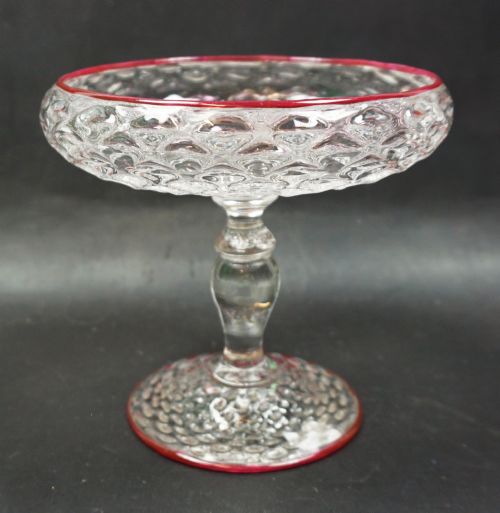
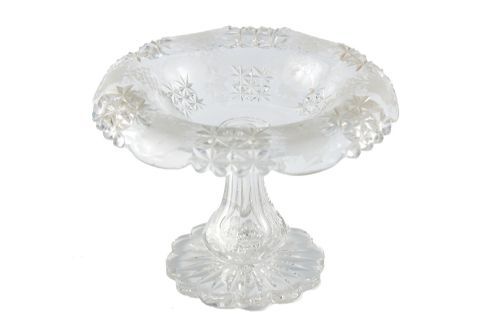


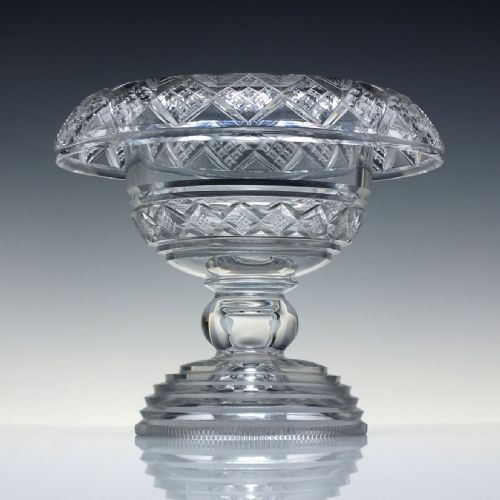


Clear Crystal Pedestal Bowl
These clear crystal pedestal bowls bring dramatic height and brilliant refractive light to a dining table.
Clear Crystal Pedestal Bowl
When you search for a clear crystal pedestal bowl, you are looking at elevated serving vessels designed to hold fruit, sweets, or floral arrangements. These pieces lift the display above the table surface, creating a distinct focal point in a dining room or drawing room. Most examples found here date from the Georgian, Victorian, and Edwardian eras, spanning from the early nineteenth century into the early twentieth century.
The forms encompass several traditional variations, including deep centrepiece bowls, shallow comports, and pedestal tazzas. You will encounter round and oval silhouettes, some fitted with matching covers or accented with coloured overlays such as red and yellow. The origins range from English glasshouses to traditional Irish workshops, reflecting diverse regional cutting traditions.
Makers often utilised pedestal bases to give visual weight and stability to heavily cut vessels. These elevated forms served practical functions on grand dining tables, holding seasonal fruits or confections for guests. Today, collectors value them both as decorative objects and as functional serving pieces that retain their period charm.
What varies in quality
Proportion and form define the upper tier of these pieces. A well-balanced pedestal supports the bowl harmoniously without appearing clumsy or top-heavy. Furthermore, the clarity of the metal itself matters significantly, as high-grade crystal remains free of heavy cloudiness or excessive internal bubbles.
The object forms recorded on this page include tazzas, comports, centrepieces, and fruit bowls, alongside fitted items such as covered sweet bowls.
The Clear Crystal Pedestal Bowl Glossary
- Tazza
- An Italian term for a shallow bowl or cup mounted on a stem and foot. In English and Irish glass, it functions as a display stand for fruit or sweetmeats.
- Comport
- A standing dish or bowl used for serving fruit or dessert at the end of a meal. These pieces typically feature a pronounced pedestal base.
- Hobnail
- A raised, sharp-pointed glass-cutting pattern resembling the hobnails used in traditional boot soles. It creates a heavily textured, tactile surface.
- Cased glass
- A vessel composed of two or more distinct layers of glass, often contrasting in colour. Craftsmen cut through the outer layer to expose the clear or differently coloured glass beneath.
- Lead crystal
- Glass containing a significant proportion of lead oxide, which increases weight, clarity, and light dispersion. This material allows for deeper and sharper facet cutting.
Clear Crystal Pedestal Bowl: Frequently Asked Questions
What is a pedestal bowl used for?
These elevated vessels primarily served to present fruit, sweetmeats, or confections during formal dining. Their raised profile kept the tabletop visually interesting and allowed dishes to be passed easily.
Today, they function well as table centrepieces or decorative display pieces in living spaces.
How do I tell Georgian cut glass apart from Victorian?
Georgian pieces often display heavier metal with greyish undertones and broader, hand-polished facets. The cutting tends to be deep and robustly executed.
Victorian glass frequently exhibits sharper, more precise machine-assisted cutting and sometimes incorporates coloured overlays or etched motifs.
What is a tazza stand?
A tazza is a flat-topped pedestal bowl or dish designed specifically for presenting small cakes, fruit, or sweet items. The elevated platform lifts the food above the table level.
Victorian examples often included etched decoration around the rim of the flat plateau.