



19th Century Corner Shelf
A 19th century corner shelf brings structured display space to awkward angles using rich timbers like mahogany and walnut.
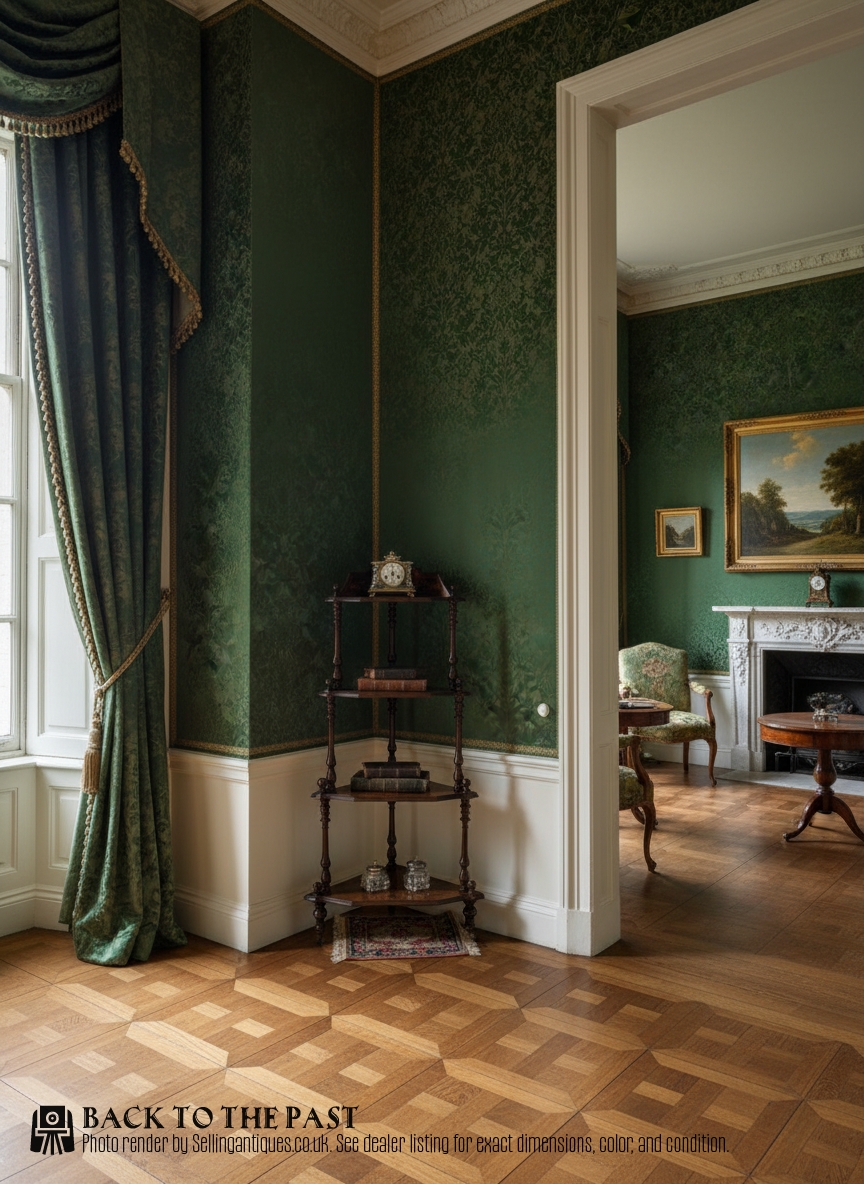
19th Century Corner Shelf
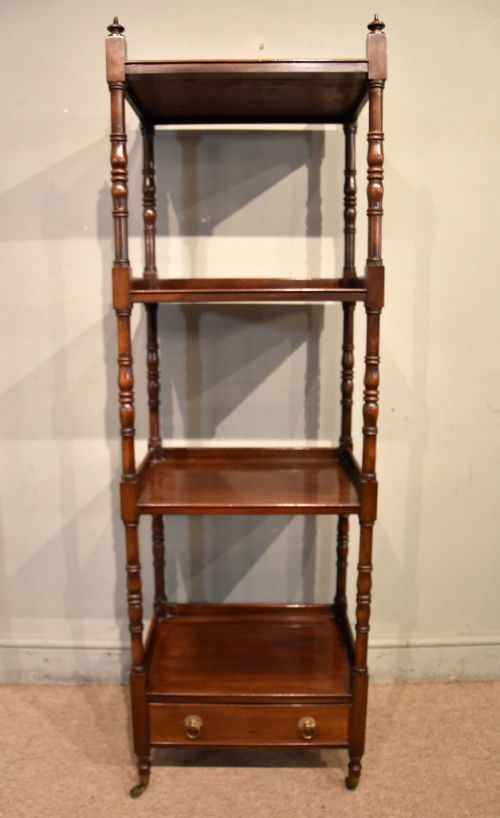
A 19th century corner shelf utilises neglected room angles for storage and display, appearing primarily as multi-tiered whatnots, etageres, and dedicated corner wall brackets. These pieces emerge across the Georgian, Regency, and Victorian periods, adapting domestic interiors to display decorative items.
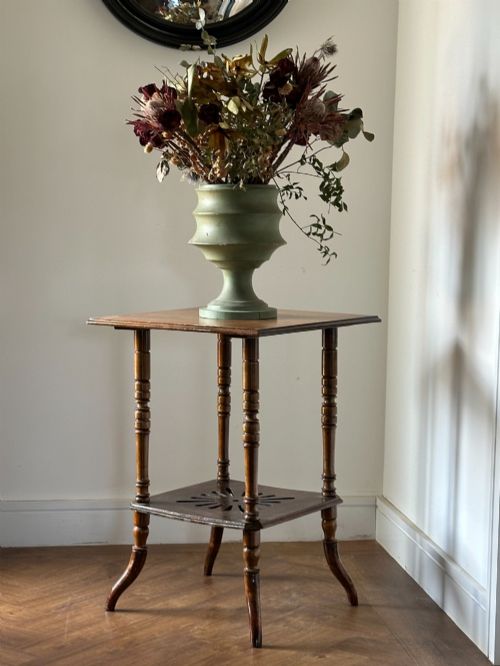
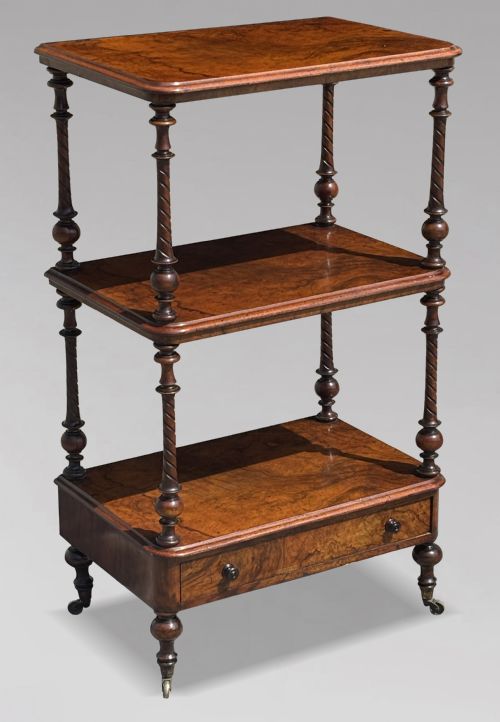
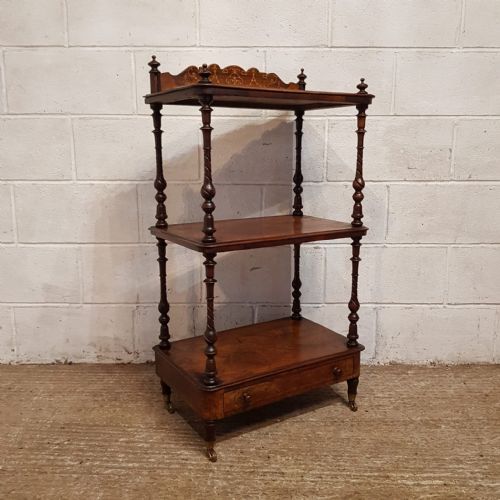
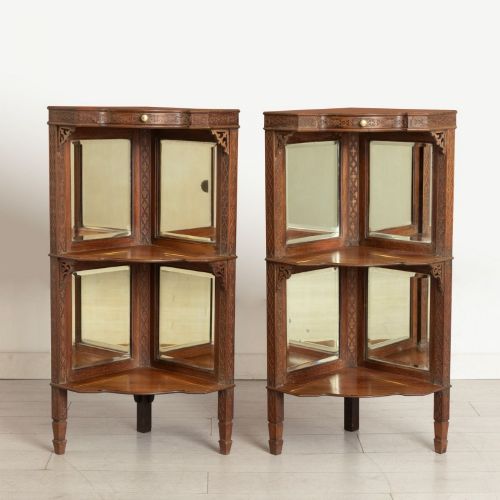
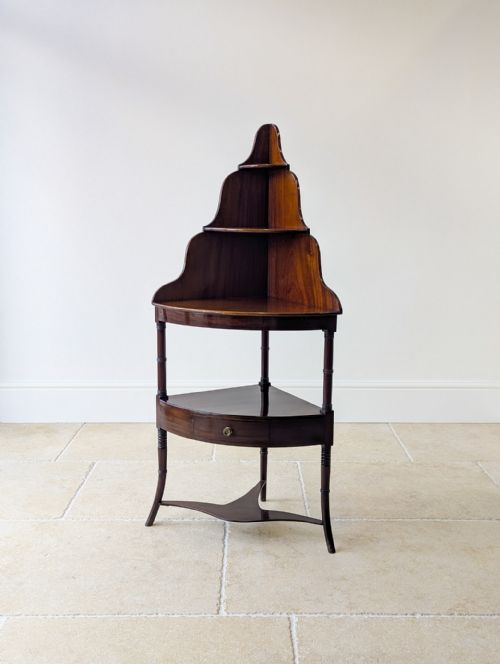
The selections on this page span several decades of the nineteenth century, featuring formats such as open three-tier stands, glazed corner display cabinets, and mirrored back units. Timber choices dominate the selection, with mahogany and walnut forming the backbone of the available forms.
How they were made
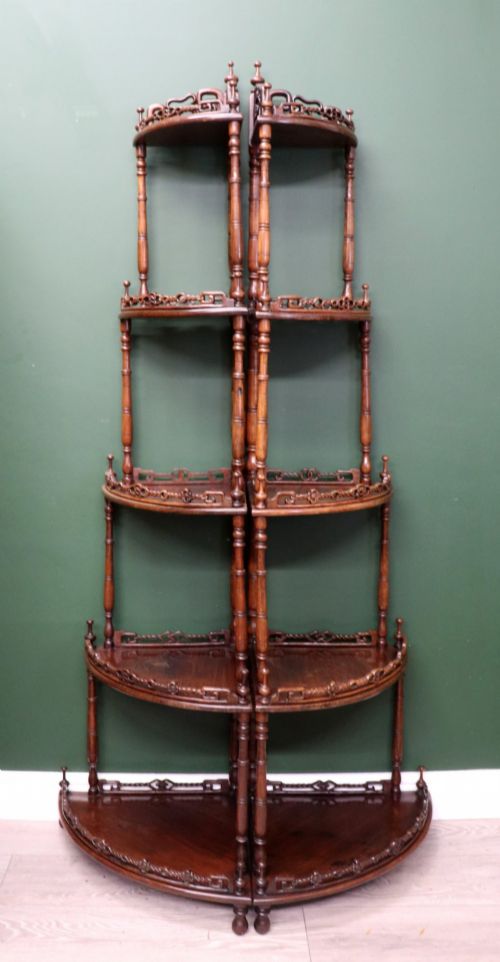
Cabinet makers built these pieces using solid and veneered hardwoods, predominantly selecting mahogany, burr walnut, and rosewood for their rich grain patterns. Secondary construction methods involved shaped shelving supported by turned upright columns or delicate fretwork panels.
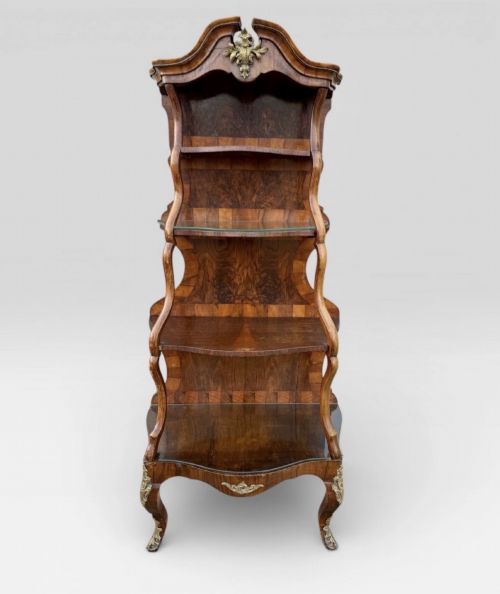
Makers integrated decorative elements such as gilt metal mounts, brass details, and inlaid woodwork to enhance the surface appearance. Mirrored glass backing occasionally appeared to reflect light behind the tiered display platforms.
Retail shop counters rubbed shoulders with domestic wall brackets, proving that nineteenth-century shelves worked just as hard selling ribbons as holding teacups.
What varies in quality
Quality rests on the selection of timber veneers, such as figured burr walnut or dense mahogany, and the precision of the joinery connecting the tiers. Pieces featuring refined details like fine inlay, gilt metal mounts, or carved fretwork stand apart from simpler utilitarian shelves.
Proportion and stability dictate the standing of a piece within its type, where balanced tier spacing and secure upright supports demonstrate superior nineteenth-century cabinet making.
Edwards and Roberts·John Stow Ltd of Bradford
The 19th Century Corner Shelf Glossary
- Whatnot
- A movable set of open shelves, typically with three or four tiers, used for displaying ornaments and small objects. It originated in the eighteenth century and remained popular throughout the Victorian era.
- Etagere
- A piece of furniture consisting of a series of open shelves for displaying small articles, closely related in form to the whatnot. These units often feature slender upright supports.
- Burr walnut
- Wood taken from the warted growth on a walnut tree, yielding highly decorative swirling grain patterns. Cabinet makers utilised burr walnut veneers on prominent surfaces of nineteenth-century furniture.
- Demi-lune
- Half-moon shaped, describing furniture with a curved front and a flat back designed to sit flush against a wall. This profile appears on console tables and specialised display pieces.
19th Century Corner Shelf: Frequently Asked Questions
What is a 19th century corner shelf?
A 19th century corner shelf is a tiered display unit or wall bracket designed to fit neatly into room angles, providing vertical storage for ornaments.
These pieces range from open mahogany and walnut whatnots to mirrored back display cabinets originating from the Georgian and Victorian eras.
How do you use a corner shelf?
These shelves serve to display decorative objects, ceramics, and small books while utilising vacant wall angles in living spaces.
Their tiered structure allows collectors to arrange items vertically without occupying significant floor space in smaller rooms.
What materials were used?
Makers primarily constructed these pieces using dense hardwoods like mahogany, walnut, burr walnut, and rosewood, often enhanced with grain figuring.
Additional materials include brass details, gilt metal mounts, mirrored glass backings, and occasional maple or oak.
How do you identify Victorian pieces?
Victorian examples often feature darker woods like burr walnut, intricate inlay work, mirrored backs, or aesthetic movement styling typical of the later nineteenth century.
Earlier Georgian and Regency variants generally display cleaner lines in solid mahogany with simpler tiered supports.