

19th Century Classical Wall Art
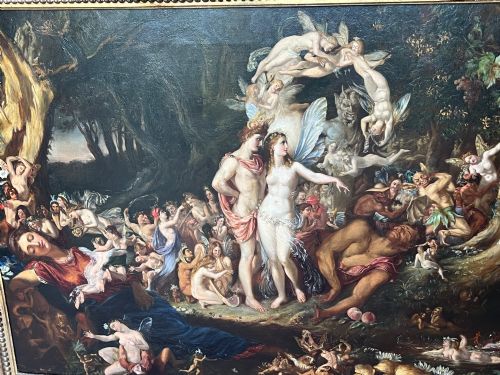
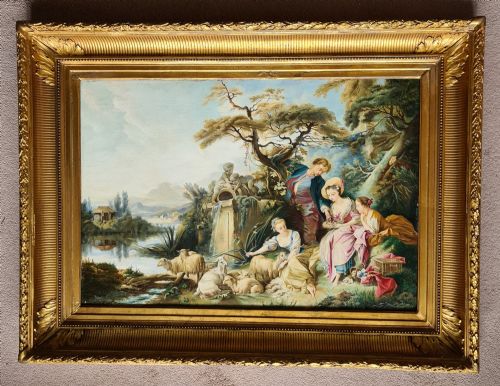
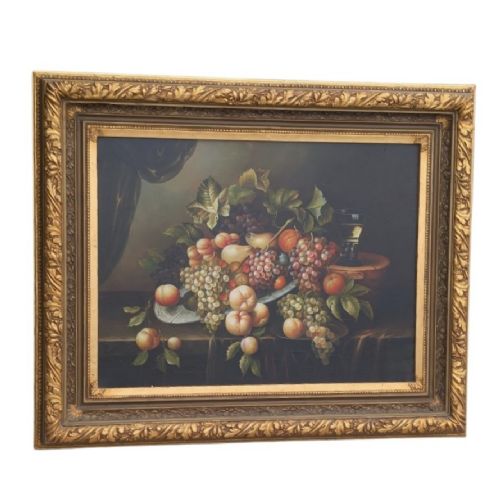
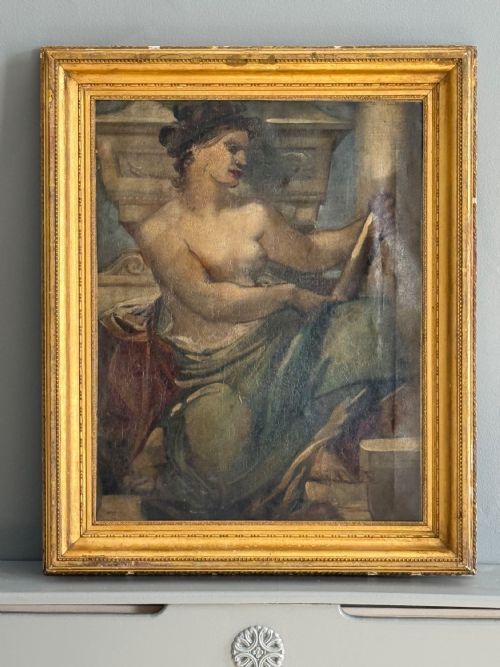
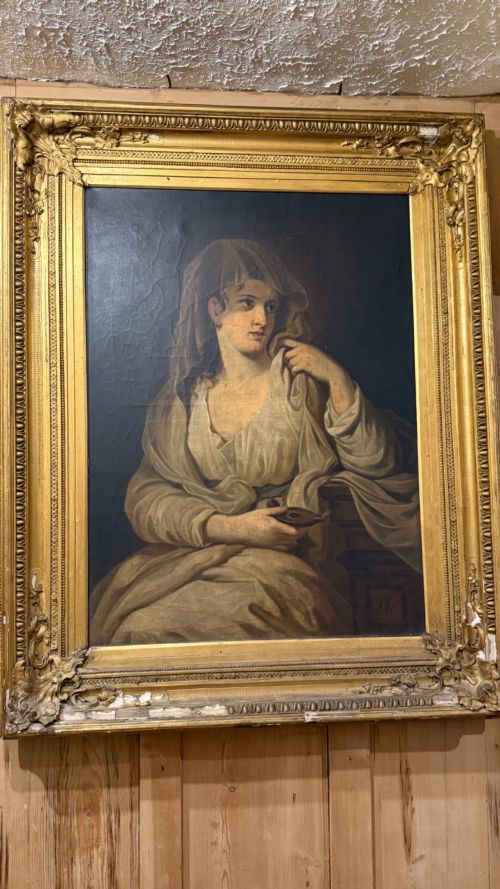
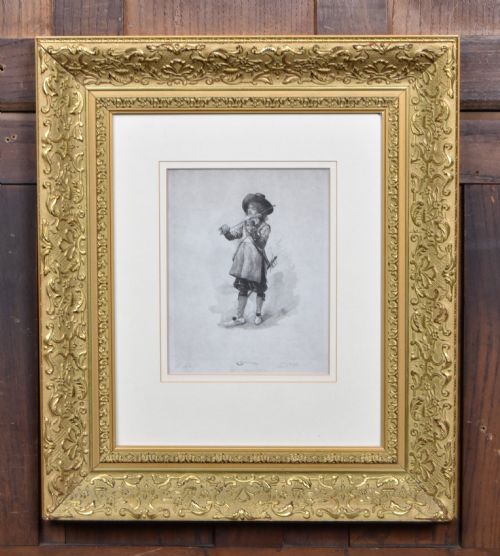
19th century classical wall art comprises framed oil paintings, engravings, and intaglio panels that bring historical and mythological subjects into the interior.
19th Century Classical Wall Art
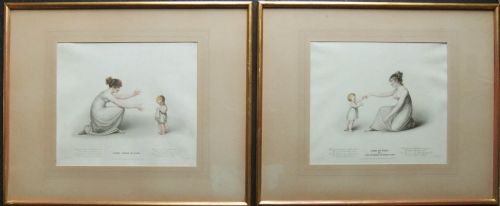
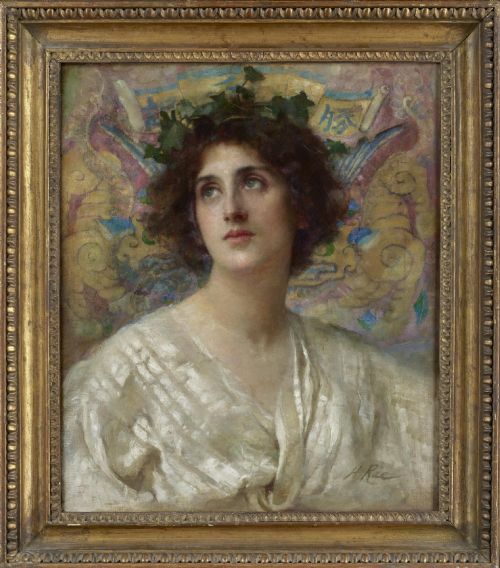
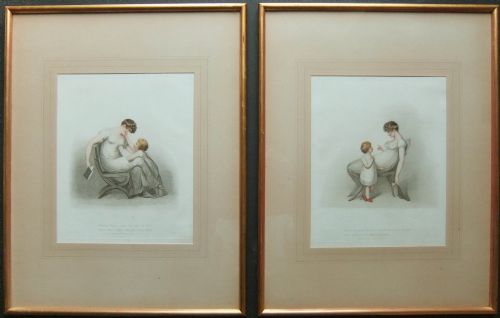
19th century classical wall art encompasses framed oil paintings, drawings on paper, prints, and framed collections of classical intaglios and cameo panels. These pieces draw heavily on historical, mythological, and academic subjects, reflecting the aesthetic priorities of the period.
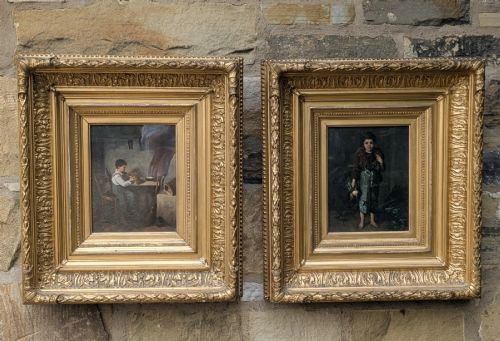
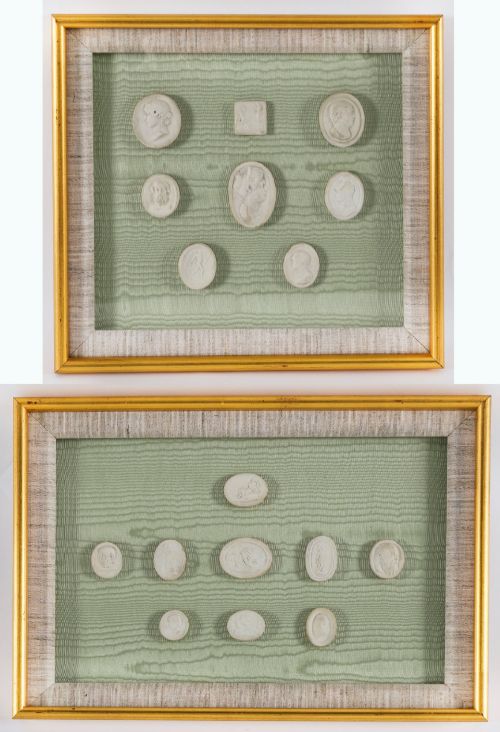
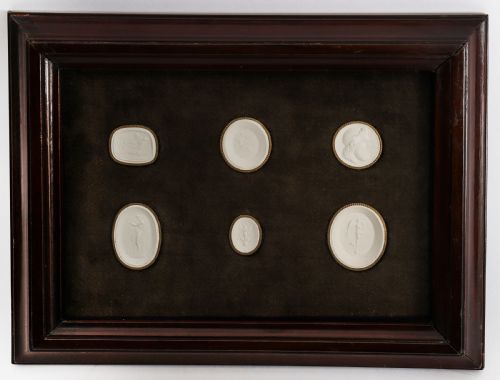
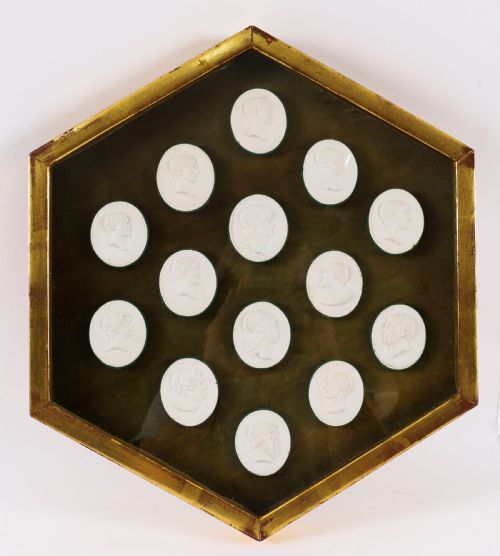
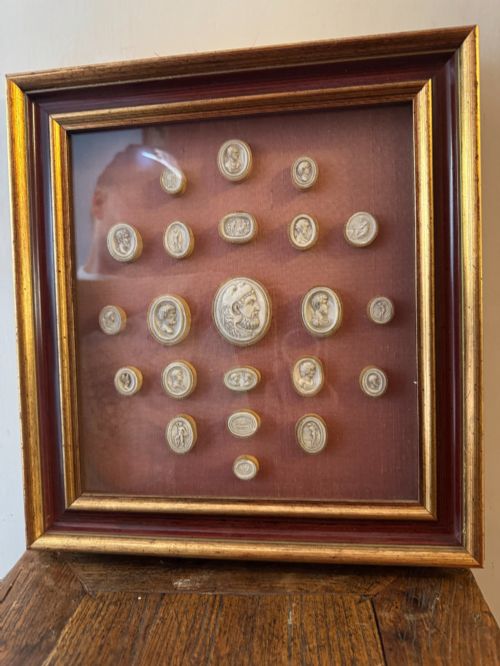
The selection on this page is dominated by oil paintings on canvas and framed Grand Tour intaglios housed in giltwood frames. Works span various academic styles, including Victorian Neoclassical and Renaissance Revival compositions.
What Varies in Quality
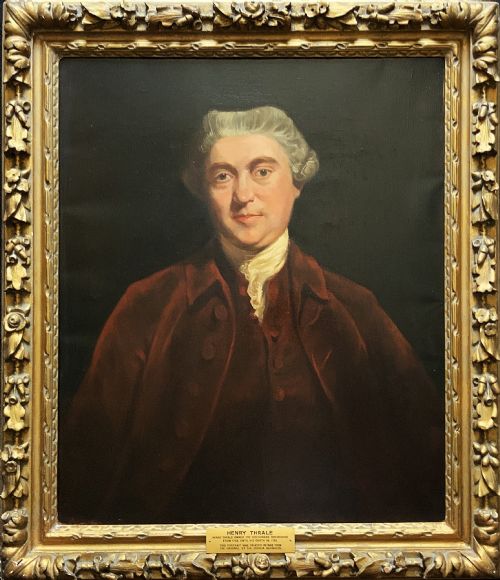
Quality rests upon the execution of the hand, whether in the brushwork of an oil painting after an earlier master or the crispness of carved marble profile plaques. Academic life studies and portraits demonstrate varying degrees of anatomical precision and tonal depth.
The presentation also influences the object, particularly the integrity of the original giltwood frames and the careful mounting of intaglio collections behind glass.
Several pieces capture the Victorian enthusiasm for collecting miniature classical profiles of Virgil and Dante alongside sleepy cherubs.
Sir Joseph Noel Paton·Francois Boucher·Sir Joshua Reynolds·Adam Buck·Henrietta Rae·Johannes Brahms·Renato Moretti·Jacob Akkersdijk·Raphael·Theodore Jensen·John A Monteith·Giovanni Liberotti·John Ferneley Senior·John Hunter·John Watkins Chapman·Virgil and Dante·Frederick Waters Watts·Carl Adolf Mende·Domenico Zampieri
The 19th Century Classical Wall Art Glossary
- Intaglio
- A design engraved or incised into a material so that the impression rises above the surface. Grand Tour collections often mounted plaster or gypsum intaglios in framed panels.
- Neoclassical
- A style revived in the 19th century inspired by the classical art and culture of ancient Greece and Rome. It prioritises solemn composition and classical motifs.
- Oleograph
- A mechanical colour lithograph made to imitate an oil painting on canvas. These textured reproductions were popular during the Victorian era.
- Giltwood
- Wood carved and covered with a thin layer of gold leaf or gesso. It is frequently seen on frames surrounding 19th-century oil paintings.
19th Century Classical Wall Art: Frequently Asked Questions
What is 19th century classical wall art?
It includes oil paintings, prints, drawings, and framed intaglio panels created during the 19th century that focus on classical, mythological, or historical themes.
These pieces reflect academic traditions and the Grand Tour collecting culture of the era.
How were Grand Tour intaglios displayed?
Grand Tour intaglios were typically cast in plaster, gypsum, or glass, then mounted in framed collections for study and display.
Collectors brought these home as souvenirs of classical antiquities seen during European travels.
How do I identify a Victorian oil painting?
Victorian oil paintings often use canvas or wood panel supports and feature academic realism, portraiture, or landscape subjects.
Examining the canvas preparation and the accompanying giltwood frame helps determine the period.
How do I care for framed paper artworks?
Framed drawings, prints, and engravings require protection from direct sunlight to prevent fading of the ink and paper.
Maintaining stable indoor humidity prevents warping of the wooden frames and degradation of the paper.