


19th Century Censer
A 19th century censer brings the rich ritual metalwork and porcelain of Asian and European workshops straight onto a modern desk or mantelpiece.
19th Century Censer
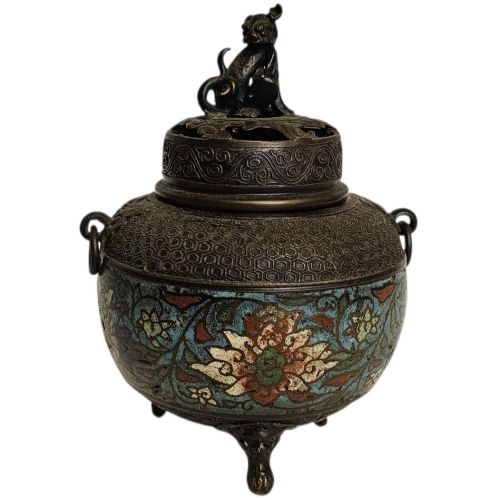
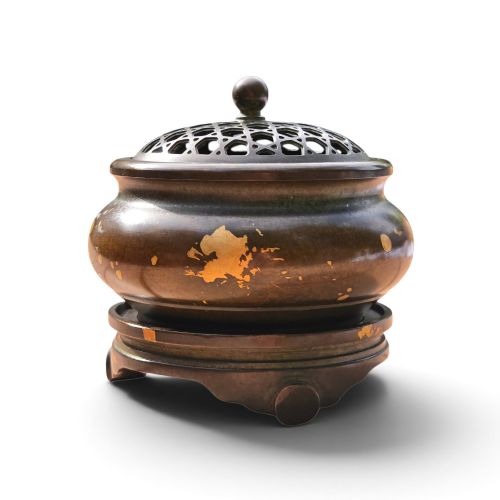
When you search for a 19th century censer, you enter a field dominated by Chinese bronze tripod vessels, heavy cast bowls and lidded ritual pieces from the Qing Dynasty. These objects served utilitarian and ceremonial purposes in scholar's studies and temples alike, often featuring cast dragon handles, qilin lions and mask motifs.
Beyond East Asian bronzes, the category expands to include French Empire inkstands, English Regency classical urns and Japanese Imari porcelain koro from the Meiji period. You are most likely to encounter substantial bronze vessels ranging from compact desk pots to monumental pieces weighing several kilograms.
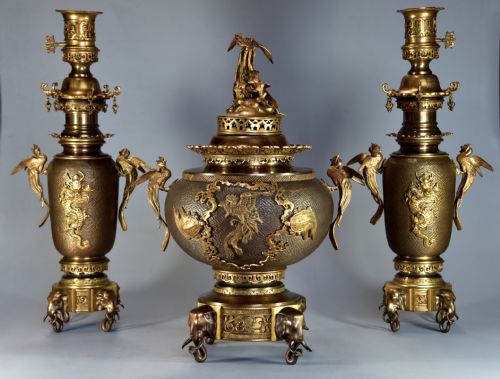
The forms extend beyond traditional burners to incorporate sectional jardinieres, decorative bowls and garniture sets. Each piece reflects the specific decorative tastes of its origin, whether the detailed cloisonne enamel of late Qing workshops or the crisp patination of European foundry work.
How they were made
Foundries relied upon heavy casting techniques for bronze and brass vessels, producing thick walls that yielded a bell-ring resonance when struck. Artisans applied surface treatments such as gold gilding, gold-splashing and dark patination to accentuate the underlying metal.
Ceramic pieces utilised porcelain bodies finished with hand-painted glazes, frequently paired with intricate cloisonne enamel work where thin metal wires created cells for coloured pastes. Craftsmen often combined gilt bronze mounts with marble bases or porcelain vessels to construct complex decorative objects.
19th Century Censer Retail Price Guide 2026
Typical asking prices for 19th century censer among the pieces listed under this phrase on Sellingantiques today, from the lower quarter to the upper quarter. They describe what is for sale here now, not the wider market.
Some master-cast bronzes are so densely weighted they ring like a church bell when struck.
What varies in quality
The distinction between ordinary production and superior work rests upon the precision of the casting and the crispness of applied detail. Heavy, thick-walled bronze vessels with cleanly chased dragon handles and masks demonstrate a higher standard of workshop execution than lighter, simpler forms.
Surface finish dictates visual success, where even patination, secure gilding and well-fired enamels hold their appearance over time. The integration of matched stands, covers and sectional components also separates standard utilitarian wares from ambitious decorative statements.
Lefebvre of Belgium
The 19th Century Censer Glossary
- Censer
- A vessel designed for burning incense during ritual or domestic activities. These objects typically feature pierced covers to allow fragrant smoke to escape.
- Cloisonne
- A decorative metalwork technique where flat wire is soldered to a metal base to form compartments, which are then filled with enamel paste and fired.
- Koro
- A Japanese incense burner, commonly ceramic or bronze, often fitted with a perforated lid and resting on three or more feet.
- Qilin
- A mythical hooved Chinese creature symbolising good fortune and prosperity, frequently modelled in bronze upon the lids or handles of censers.
- Garniture
- A set of matching ornamental vases, jars or censers designed to be displayed together on a mantelpiece or sideboard.
19th Century Censer: Frequently Asked Questions
What is a censer used for?
These vessels held burning incense for ceremonial worship, meditation or simply to perfume the air in scholar's studies and reception rooms.
Over time, many lost their ritual function and became decorative ornaments, prized for their sculptural form and patinated metal surfaces.
How do I tell Chinese bronzes apart?
Chinese bronzes rely heavily on cast motifs like dragons, qilin lions and monster masks, often displaying deep patination or gold-splash effects.
Heavier cast pieces with clean interior surfaces and bell-ring resonance typically point to careful Qing Dynasty workshop production.
Where should I display a censer?
Substantial bronze censers sit well as focal points on large tables, desks or empty mantelpieces where their weight and form can be appreciated.
Smaller desk pots and porcelain koro work effectively on sideboards or bookshelves alongside other decorative vessels.