


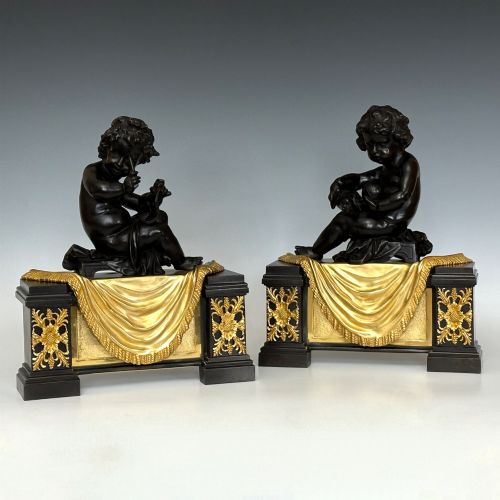
French Empire Bronze
French empire bronze pieces bring neoclassical geometry and gilt highlights to interior spaces, combining weighty metalwork with classical motifs.

French Empire Bronze
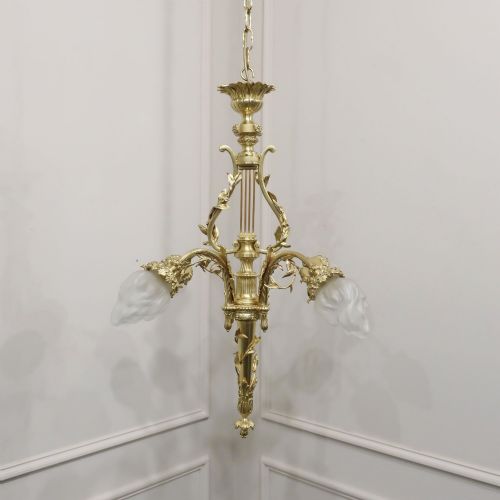
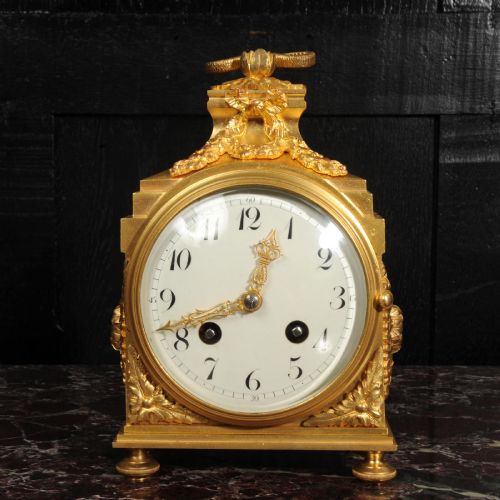
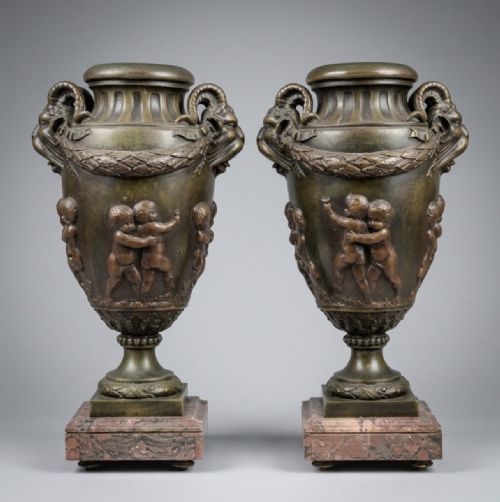
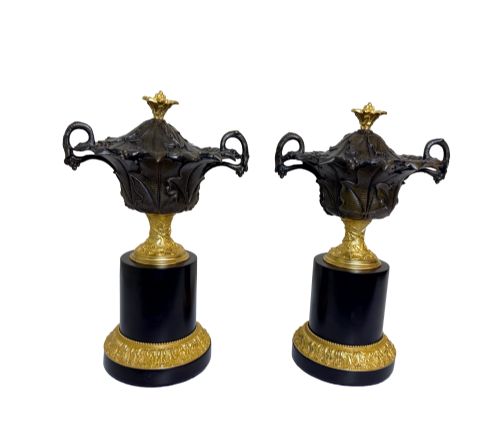
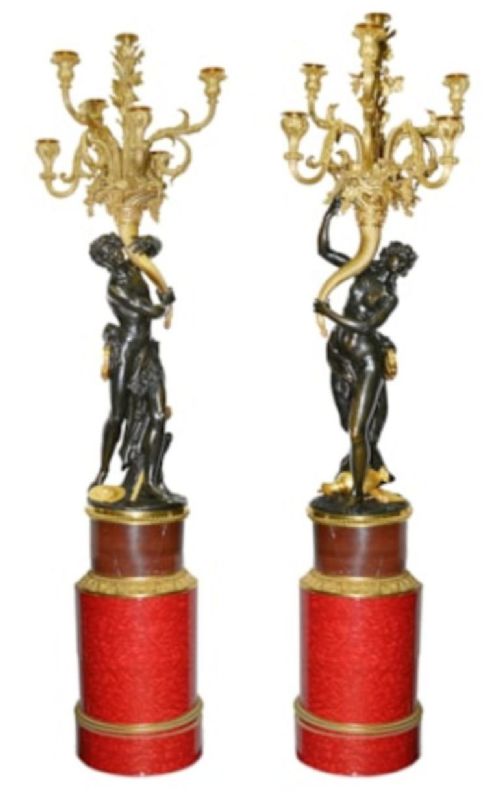
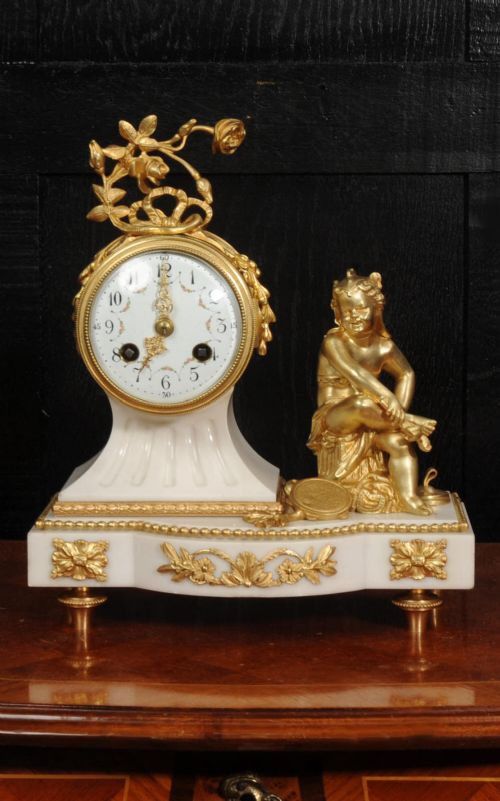
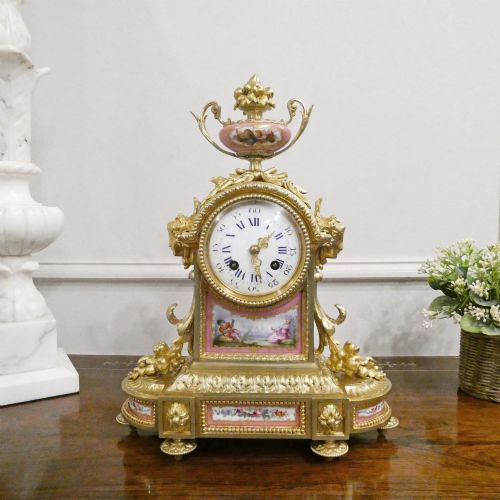
When searching for french empire bronze, a buyer encounters domestic objects, lighting, and timepieces created within neoclassical design traditions. These items span functional lighting fixtures, mantel clocks, and decorative urns rooted in nineteenth-century production.
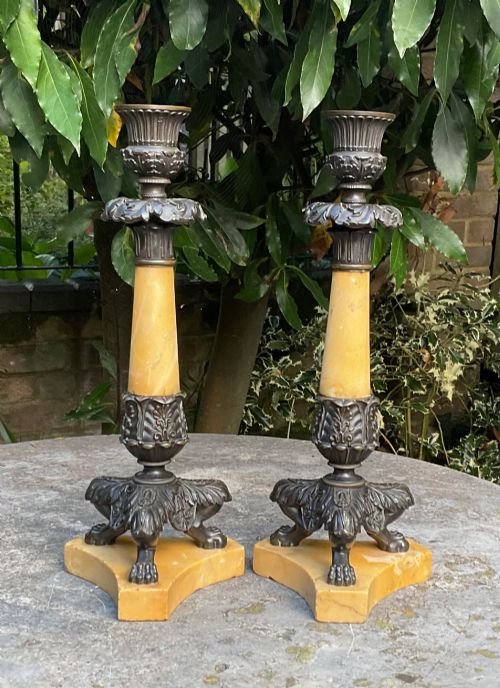
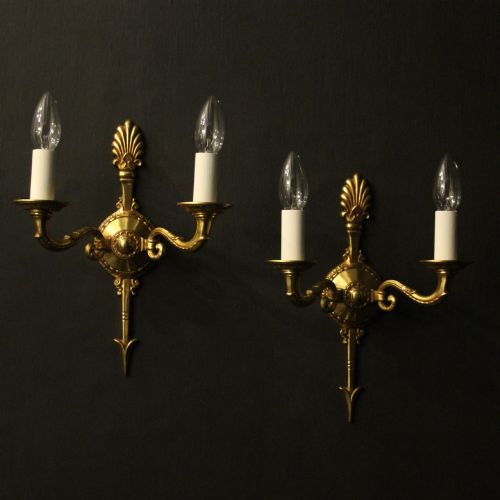
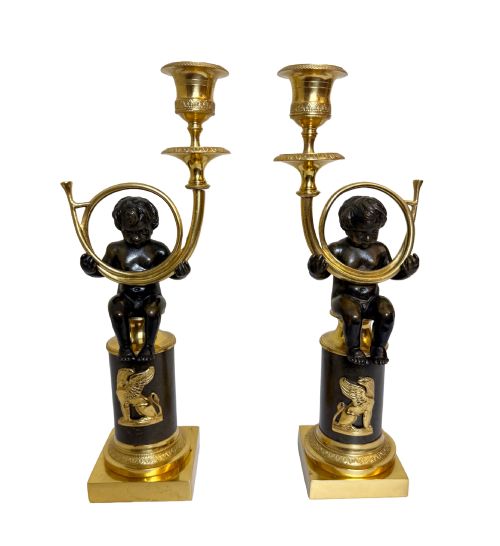
The most common forms on this page include pairs of candelabra, wall lights, and mantel clocks incorporating contrasting patinated and gilded surfaces. Furniture mounted with bronze accents also appears regularly alongside smaller desk accessories.
Originating predominantly from French workshops, these pieces reflect classical antiquity through military trophies, laurel wreaths, and mythological figures. Their scale ranges from small chamber sticks to large multi-arm chandeliers.
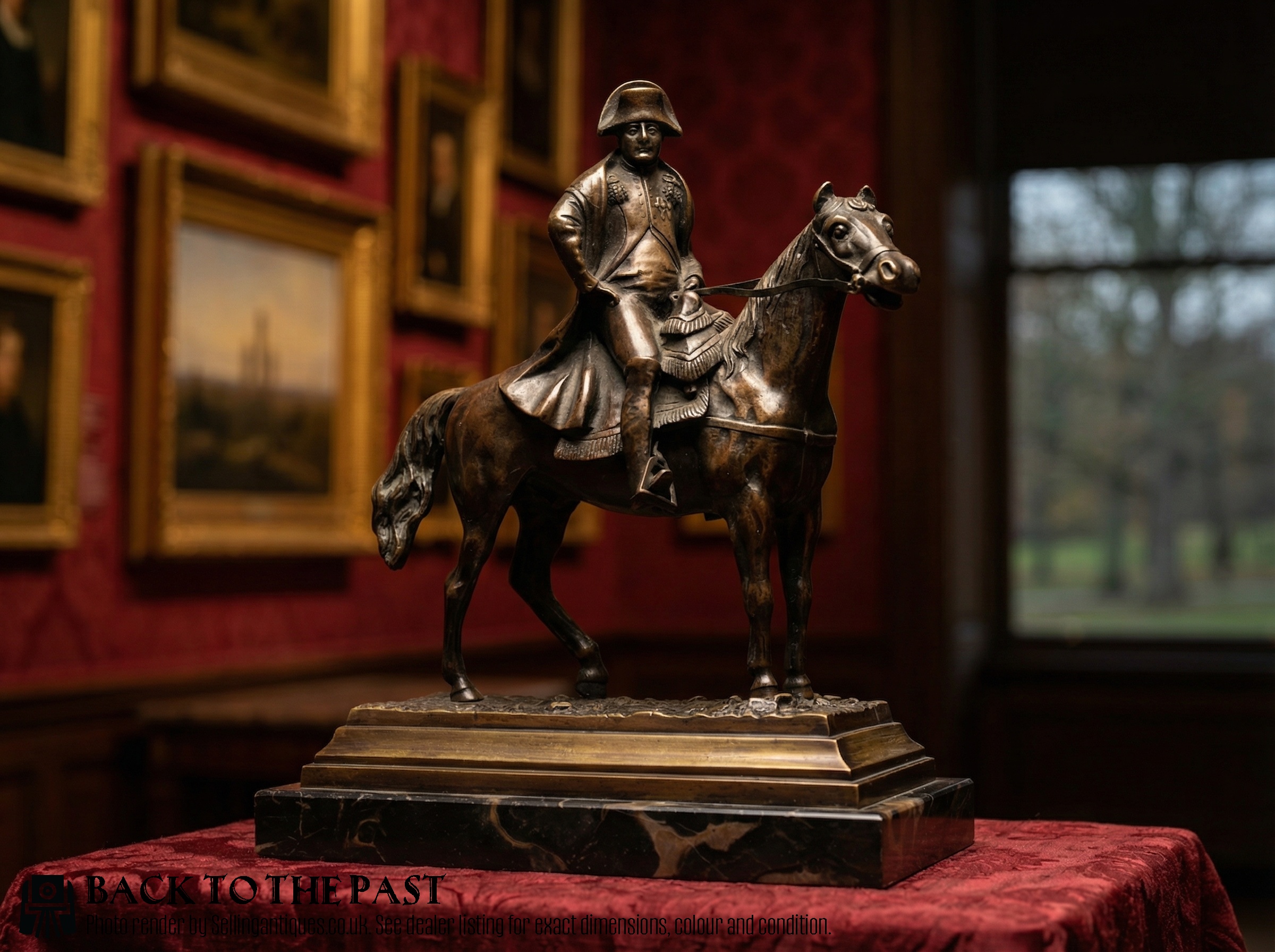
Materials and Techniques
Foundry workers utilised cast bronze combined with hand-chased surface details to create sharp relief on mounts and figures. Artisans applied mercury gilding, known as ormolu, to selected areas while leaving other sections with a dark patinated finish.
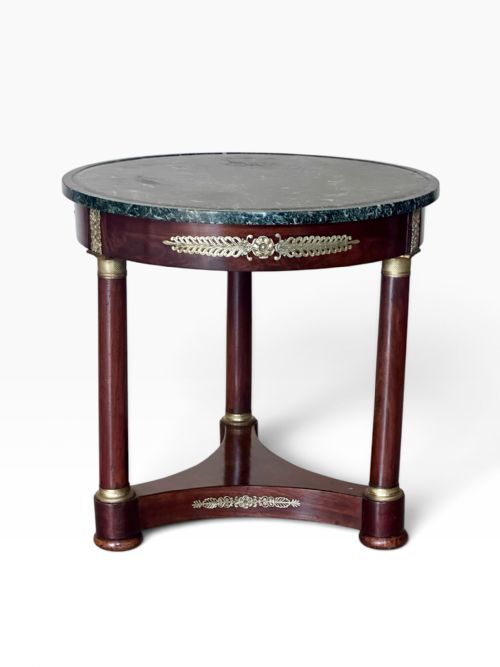
Many objects integrate white or rouge marble bases that anchor the heavy metal components visually and physically. Cabinetmakers combined solid mahogany and walnut structures with bronze mounts on tables, chests, and desks.
French Empire Bronze Retail Price Guide 2026
Typical asking prices for french empire bronze among the pieces listed under this phrase on Sellingantiques today, from the lower quarter to the upper quarter. They describe what is for sale here now, not the wider market.
Listings feature items from the nineteenth century alongside later revival pieces produced around eighteen-ninety and nineteen-twenty.
Evaluating Quality
The depth and durability of the gilding indicate the level of craftsmanship invested in the object during production. Heavy mercury layers retain a warm lustre, while thin plating wears away to reveal the base metal underneath.
Pierre Philippe Thomire·Japy Freres·Claude Galle·Siffel and Cartier·Krieger
The French Empire Bronze Glossary
- Ormolu
- Gilded bronze achieved through the application of a mercury and gold amalgam, fired to leave a rich metallic coating. This technique creates a distinctive matte and bright finish characteristic of the period.
- Patinated bronze
- Metal treated with chemical solutions to produce a dark brown or green surface tone. It provides contrast against bright gilded mounts.
- Chenet
- An ornamental firedog placed at the front of a hearth to support logs. These fixtures often feature classical figures or urns matching other room metalwork.
- Tazza
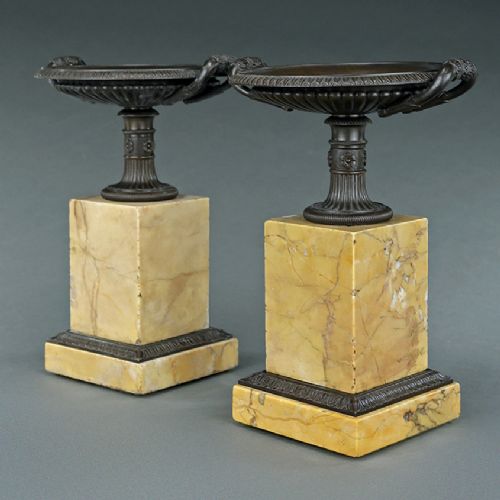
- A shallow saucer-like cup raised on a stem and foot, used traditionally for display or serving. In this metalwork, they frequently sit on marble pedestals.
- Gueridon
- A small circular table supported by a single central column or three legs. These often incorporate mahogany timbers and gilt bronze mounts.
French Empire Bronze: Frequently Asked Questions
How do I clean gilt bronze?
Dust surfaces gently with a soft dry brush to remove particles without disturbing the metal. Avoid abrasive cleaners or chemical polishes that strip away historical gilding.
Water can damage underlying materials like marble or wood panels attached to the metalwork. Professional conservation remains advisable for valuable pieces requiring intervention.
Are antique clocks in working order?
Many movements function properly, though listings specify whether an item has been restored or tested. Pendulum clocks often require professional setup after transport to keep accurate time.
Silk suspension movements demand careful handling during adjustment. Buyers should expect minor servicing for older clock mechanisms.
What is the difference between ormolu and brass?
Ormolu consists of a cast bronze base coated in gold amalgam, giving it a deep dual-tone finish. Brass is a yellow alloy of copper and zinc used for simpler structural components.
True ormolu displays heavier weight and finer hand-chased detailing across the surface. Brass appears more uniform in colour and lacks the rich historical gilding.
How do I identify Empire style pieces?
Empire designs draw direct inspiration from ancient Roman, Greek, and Egyptian military campaigns. Look for symbols like sphinxes, swans, torches, and laurel wreaths.
Proportions remain symmetrical and architectural, frequently paired with dark woods or black marble. Ormolu mounts contrast sharply against dark patinated bronze bodies.