
19th Century Card Game
A 19th century card game demands a proper table, combining fold-over leaves and polished timbers to furnish a drawing room for evening play.
19th Century Card Game
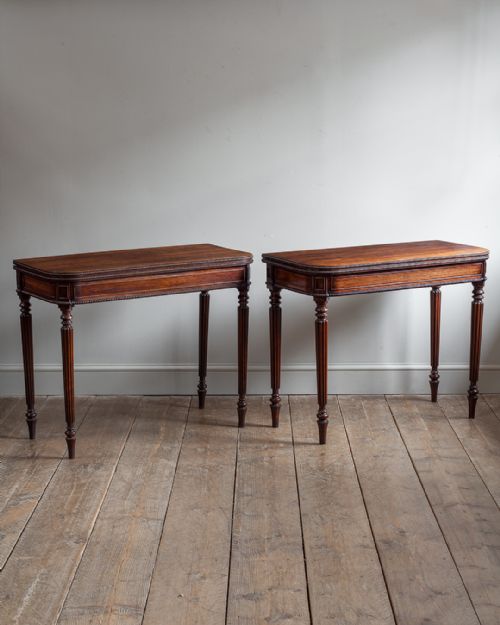
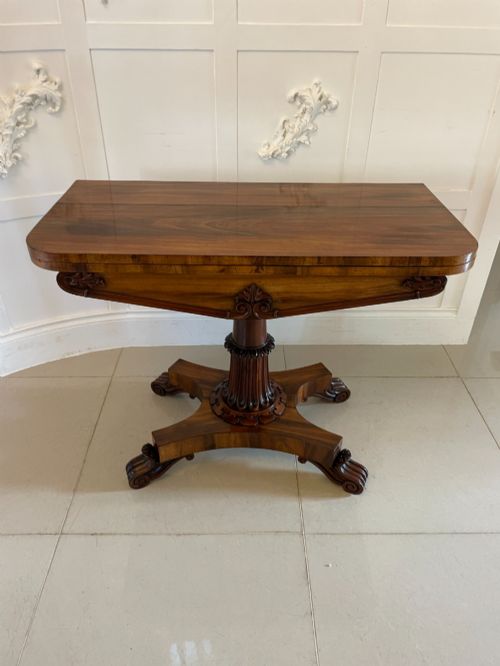
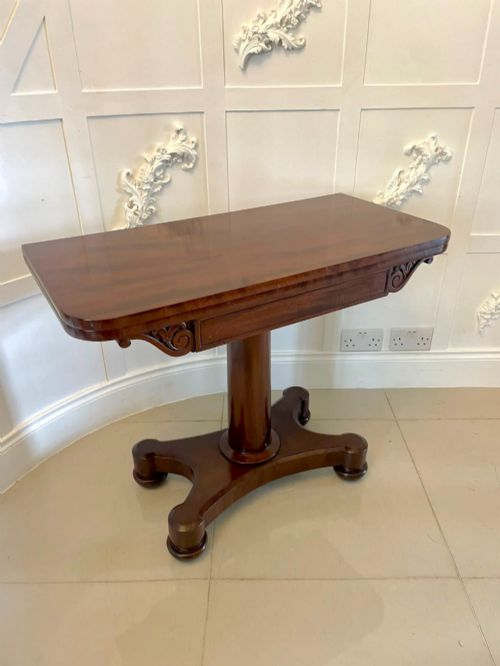
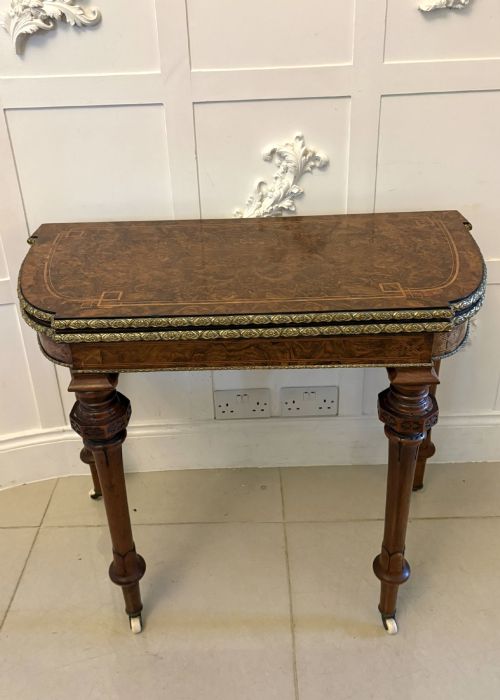
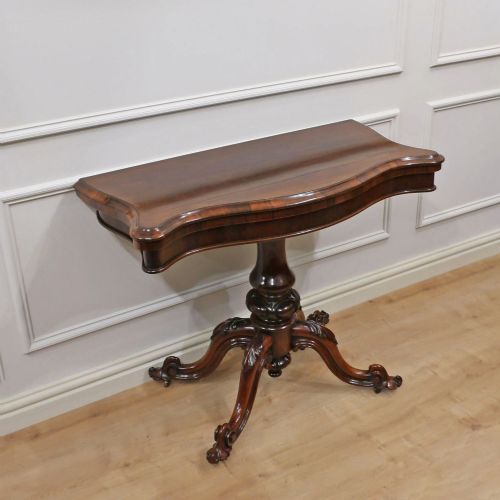
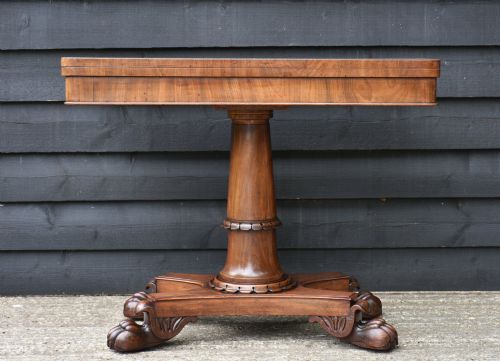
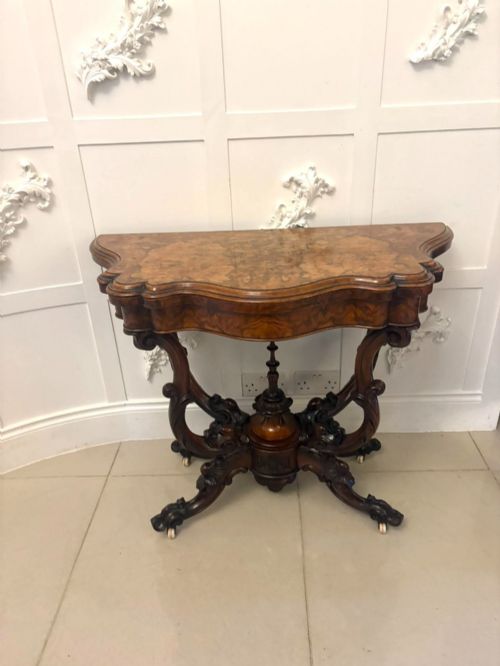
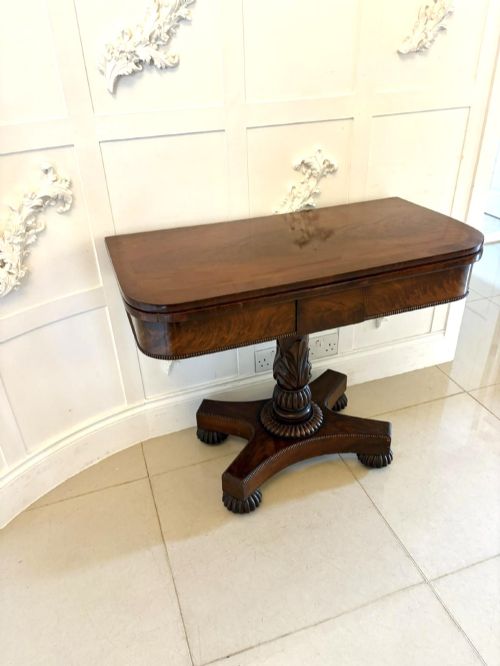
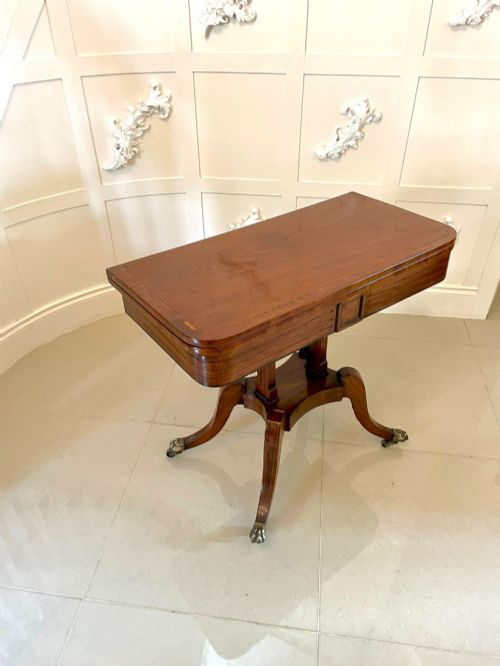
A 19th century card game unfolds across specialised tables designed to transform from side or console tables into stable surfaces for play. The pieces on this page span the Regency, William IV and Victorian periods, alongside French revival styles.
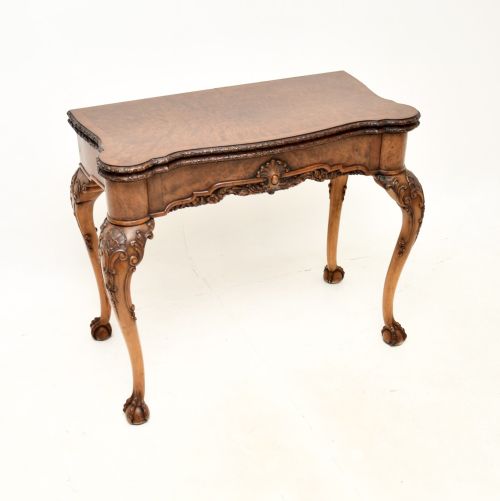
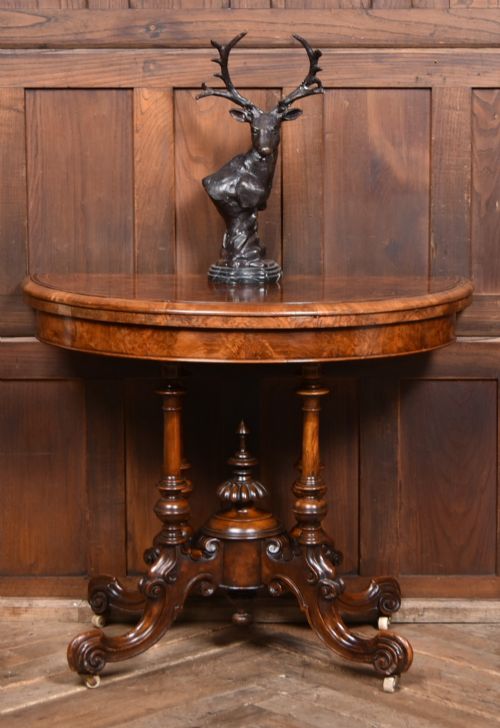
Mahogany and rosewood dominate the earlier decades, while burr walnut and kingwood mark the mid-Victorian era. Fold-over tops, swivel mechanisms and concertina actions define the mechanics of these pieces.
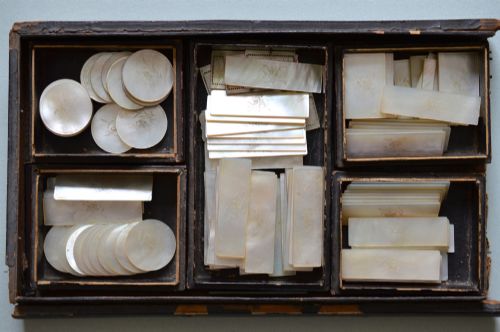
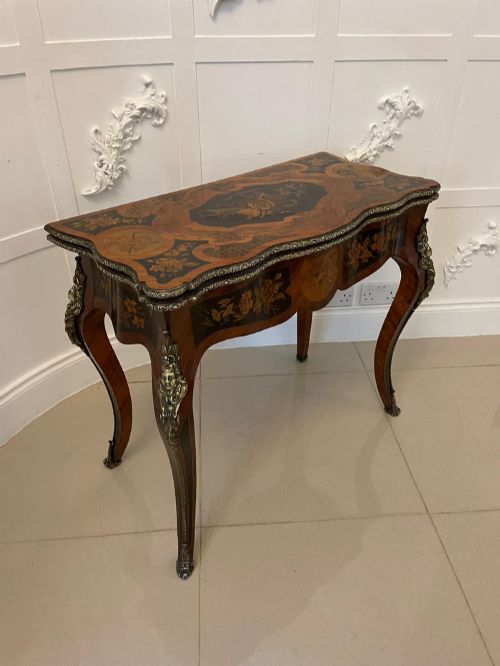
Tables range from plain figured mahogany to ornate inlaid pieces with ormolu mounts and mother of pearl gaming counters. Alongside card tables, the selection includes games tables, tea tables and bouillotte tables.
Timbers and construction
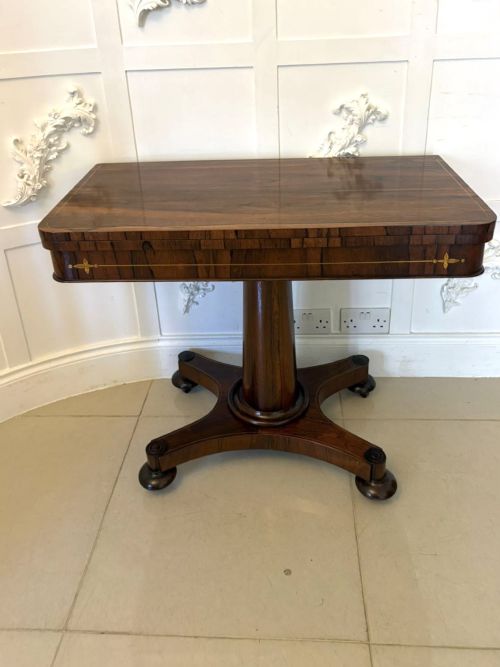
Cabinet makers utilised solid and veneered timbers including mahogany, rosewood, walnut, and burr walnut, often enhanced with brass inlay, wood inlay and crossbanding. Ormolu mounts appear on French Louis style pieces.
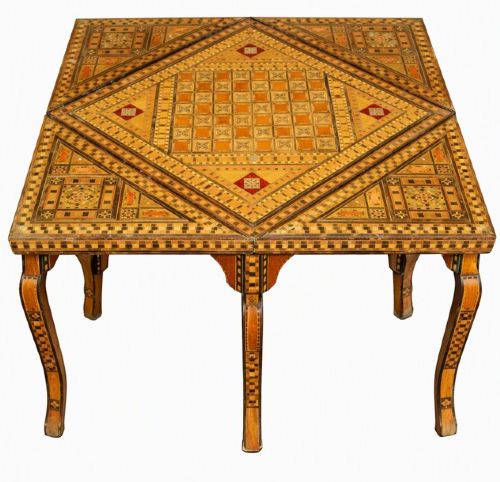
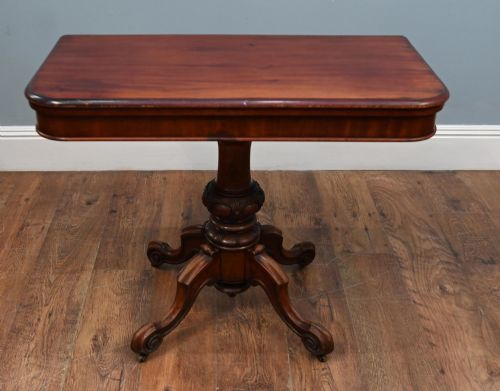
The engineering relies on turning, carving, and complex fold-over hinge systems. Bases take the form of pillar and claw pedestals, carved basket bases, or concertina frames.
Listings feature mahogany, rosewood, walnut, burr walnut, brass and ormolu across Regency, William IV and Victorian periods.
Judging construction and finish
Quality rests on the selection of timber figures, such as flame mahogany or burr walnut, matched across the fold-over top. Secondary woods and the precision of the brass inlay or marquetry indicate workshop standards.
The integrity of the hinge mechanism and the stability of the turnover top determine structural success. Carved details on pedestals and legs show the hand of skilled cabinet makers.
Antoine Lampre
The 19th Century Card Game Glossary
- Concertina action
- An expanding frame that pulls out to support a fold-over table top evenly on all four sides.
- Crossbanding
- A border of veneer laid perpendicular to the grain of the main surface.
- Bouillotte table
- A small round card table with a raised gallery, often topped with marble.
- Ormolu
- Gilt-bronze mounts applied as decorative ornaments to furniture.
- Marquetry
- Decorative patterns formed from fitted pieces of coloured wood veneer.
19th Century Card Game: Frequently Asked Questions
How do fold-over card tables work?
The top surface splits and hinges open to double the area for play, supported by a pivoting leg, a concertina frame, or a swing-out drawer.
This mechanism conceals a shallow well beneath the top, originally intended for storing cards and counters.
What woods were used?
Makers relied heavily on mahogany and rosewood during the Regency period, shifting towards walnut and burr walnut in the Victorian era.
Exotic veneers such as kingwood and satinwood also appear on French style pieces, complemented by brass and wood inlay.
Where were these tables placed?
They sat against drawing room walls as console or side tables when closed, requiring minimal floor space between games.
During evening gatherings, they moved into the centre of the room to accommodate players.
How do I date a table?
Stilistic markers reveal the period, from Regency brass inlay and pillar pedestals to Victorian burr walnut and carved basket bases.
Timber choice and leg design provide further clues, moving from early mahogany to mid-century walnut.