


19th Century Bronze Dog
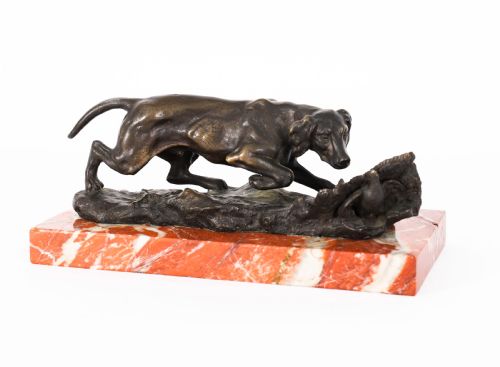
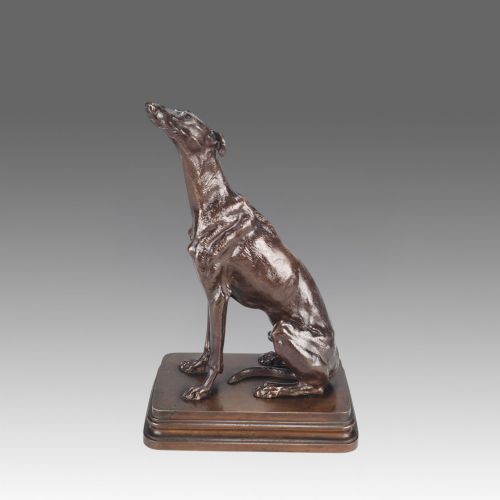
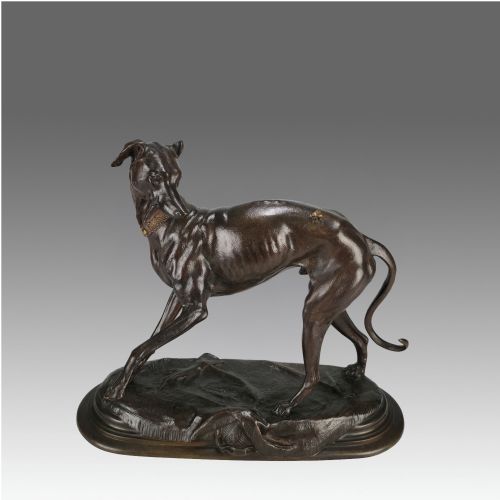
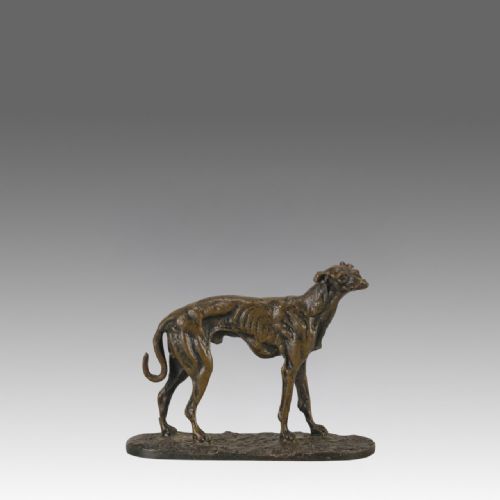
A 19th century bronze dog brings the muscular tension and alert character of hounds, gun dogs and temple guardians straight into your room.
19th Century Bronze Dog
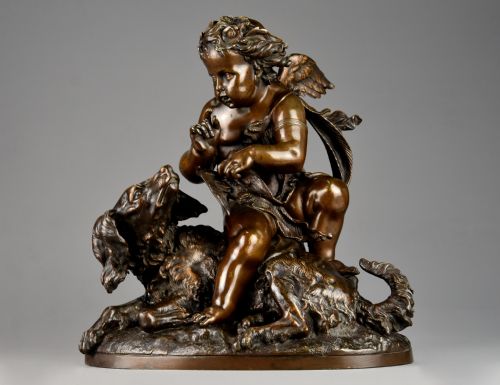
When you search for a 19th century bronze dog, you enter a field dominated by French Animalier sculpture, Victorian domestic subjects, and Austrian cold-painted novelties. The physical forms range from resting sighthounds and pointer hunting dogs to humorous cold-painted figures and monumental temple lions.
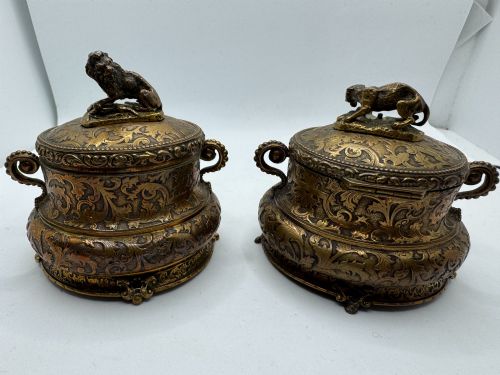
French foundries produced the majority of these animal studies, capturing breeds like the greyhound, basset, mastiff and setter with intense anatomical realism. You will also encounter pairs of gilded candlestick holders, Grand Tour antiquities such as the Jennings Dog, and cast bronze censors featuring Fo dog lid handles.
The aesthetic stretches from gritty realism depicting hunting dogs at rest to stylised temple guardians from China and Tibet. These pieces served variously as mantel ornaments, desk seals, inkwells, lighting components and cabinet bronzes.
Materials and casting methods
Every piece relies on traditional bronze casting, often utilising the lost-wax method to capture complex muscle structures, fur textures and expressive poses. The resulting metal alloy accepts fine detail readily, allowing sculptors to render everything from smooth greyhound skin to the thick manes of temple lions.
Surface treatments vary widely, featuring rich dark patinas, fire gilding, and colourful cold-painted enamels applied over the metal base. Many European animalier sculptures and European hounds are mounted directly onto heavy marble plinths, providing stability and visual contrast to the dark metal.
19th Century Bronze Dog Retail Price Guide 2026
Typical asking prices for 19th century bronze dog among the pieces listed under this phrase on Sellingantiques today, from the lower quarter to the upper quarter. They describe what is for sale here now, not the wider market.
Listings feature bronzes cast in France, Austria and China, spanning domestic gun dogs, classical antiquities and temple guardians.
Distinctions in sculpture quality
Quality rests entirely in the sharpness of the chisel work and the fidelity of the casting after it leaves the mould. Finer pieces retain crisp muscle definition, subtle facial expressions and cleanly finished undersides, whereas lesser casts lose detail in the fur and paws.
The nuance of the patina or the precision of the cold-painted colour marks the boundary between standard workshop output and exceptional sculptural art. A superior cast breathes life into the animal, while a weak one feels static and heavy.
P J Mêne·Pierre Jules Mene·Antoine Louis Barye·Stephan Buchinger·Jules Moigniez·Richard·Alfred Dubucand·Joseph Victor Chemin·Prosper Lecourtier·E.Drouot
The 19th Century Bronze Dog Glossary
- Animalier
- A nineteenth-century artistic movement dedicated to the realistic portrayal of animals. Practitioners focused heavily on anatomical accuracy and dynamic movement.
- Cold painted
- A technique where paint is applied to a bronze object without subsequent firing or heat treatment. This method appears frequently on small Austrian figures.
- Patina
- The surface sheen and coloration developed naturally over time or applied chemically by the foundry. It accentuates the bronze contours.
- Grand Tour
- Souvenirs collected by affluent travellers touring classical European sites. These include miniature bronzes after famous antique sculptures.
- Dog of Foo
- Traditional guardian lion figures found in East Asian art. They often appear as lids on censors or in matched pairs.
19th Century Bronze Dog: Frequently Asked Questions
What is an Animalier bronze?
An Animalier bronze is a nineteenth-century sculpture focused specifically on the realistic depiction of animals in motion or repose.
These works gained immense popularity across Europe as middle-class homes embraced natural history and domestic pet ownership.
What is cold-painted bronze?
Cold painting involves applying oil or varnish-based pigments directly onto the unheated bronze surface after casting.
This technique achieved bright, vibrant finishes on small decorative table ornaments, particularly in Austrian workshops.
Where were these figures displayed?
Nineteenth-century dog sculptures sat upon library desks, mantelpieces, and occasional tables as decorative conversation pieces.
Larger models and pairs of figures often anchored entrance halls or served as functional items like candlesticks and inkwells.