



19th Century Brass Candleholder
These pieces of 19th century brass candleholder range from utilitarian ejector sticks to elaborate French ormolu candelabra, bringing period character to a room.
19th Century Brass Candleholder
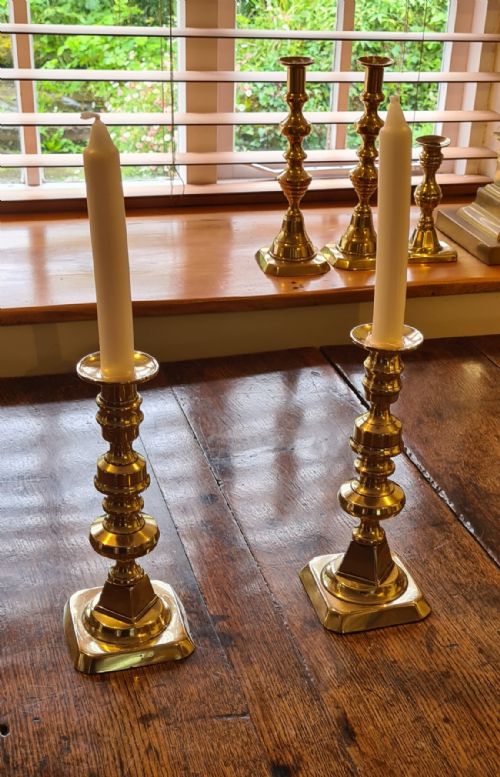
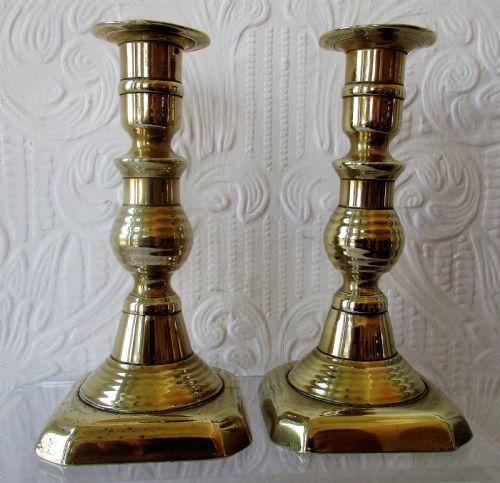
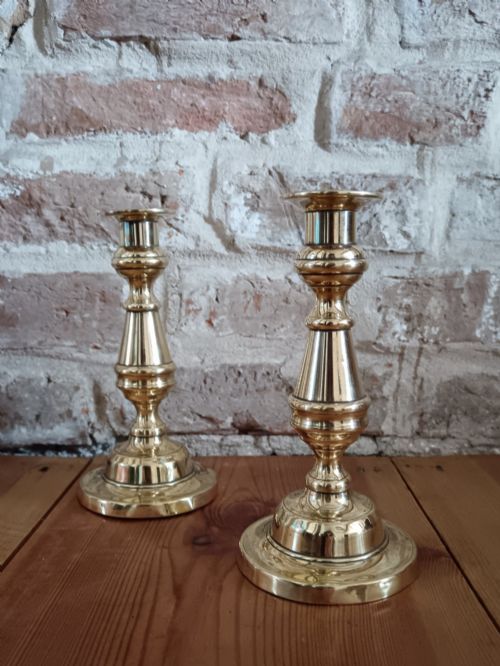
A 19th century brass candleholder encompasses domestic candlesticks, desk lamps, wall sconces and multi-branch candelabra produced throughout the Victorian, Regency and Gothic Revival periods. The most common survivals on this page are domestic brass candlesticks, often found in matched pairs originating from English and French workshops.
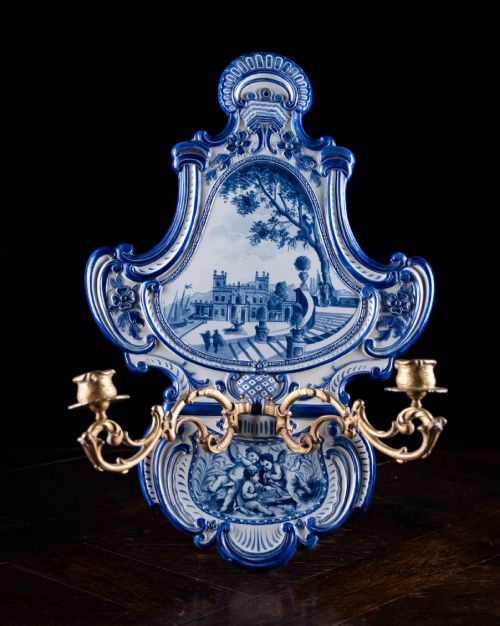
Makers utilised various supporting materials alongside brass, combining marble bases, porcelain figures, and glass elements to create decorative lighting for parlours and dining tables. Alongside standard domestic designs, ecclesiastical wall sconces and heavy tavern candlesticks reflect the wider utility of metal lighting during the era.
Materials and Technique
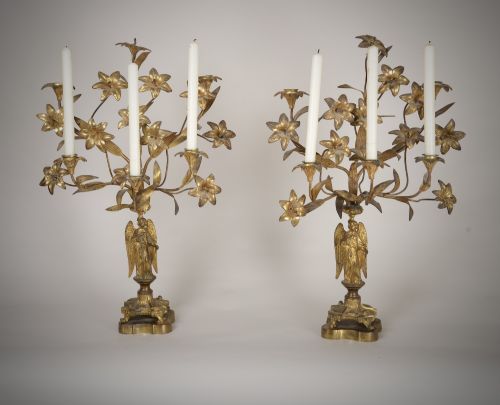
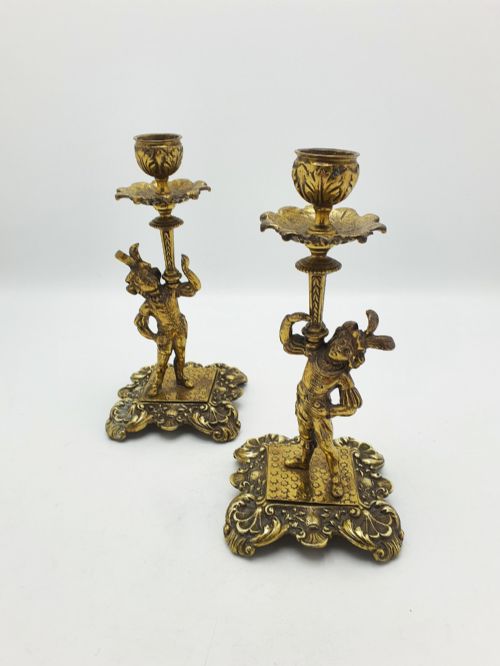
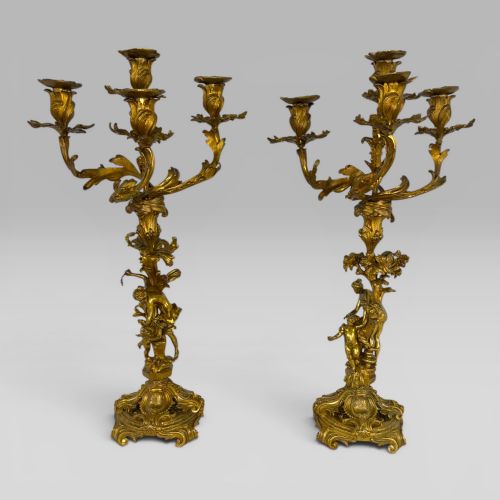
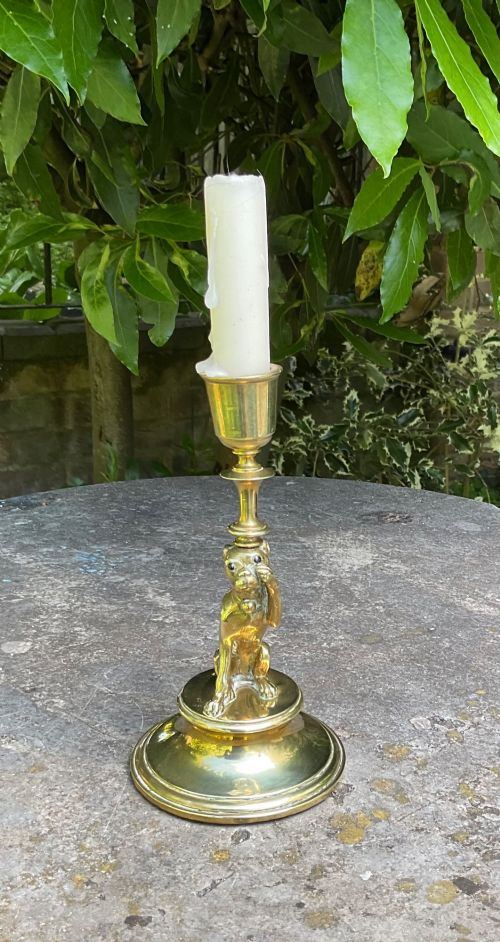
Decorative pieces often merge cast metalwork with applied patination, gilding, porcelain inserts, and carved marble bases. Workshop assemblies combined structural brass components with detailed figural castings representing cherubs, birds, and pug dogs.
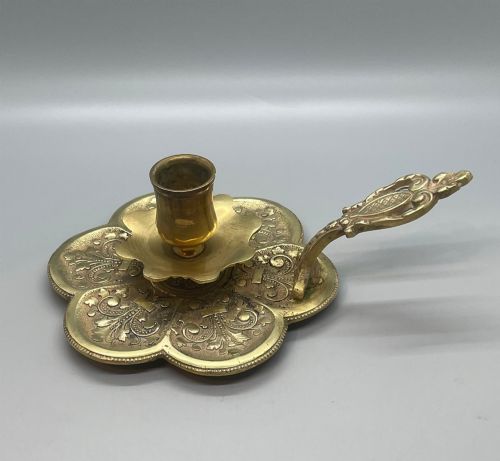
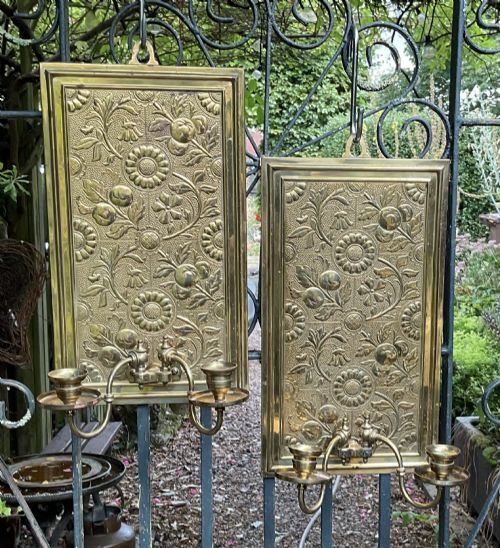
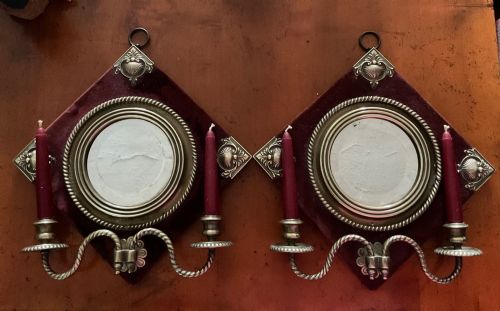
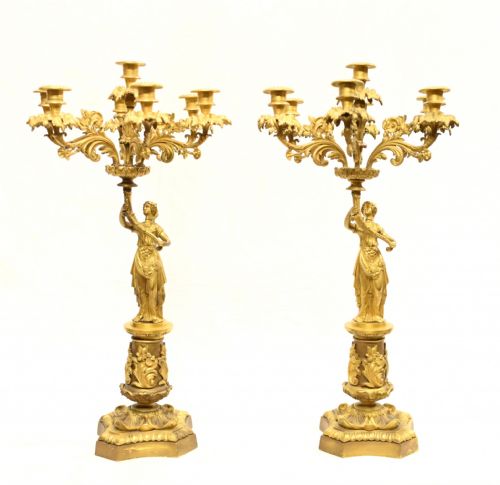
The selection includes Gothic Revival wall sconces, French Rococo candelabra, and utilitarian English ejector candlesticks.
Distinctions in Manufacture
Quality in a 19th century brass candleholder depends upon the crispness of the original casting and the weight of the metal utilised in the stem and base. Heavier, finely chased examples retain sharp detail in figural elements and floral motifs, whereas mass-produced utilitarian pieces show softer edges and simpler turning.
The integration of mixed media also dictates standard; pairs incorporating fine porcelain, untouched patinated bronze, or fire-gilt ormolu represent more ambitious workshop output than plain cast brass utilitarian items.
Bruce Talbert·Villeroy and Boch·James Clews
The 19th Century Brass Candleholder Glossary
- Ejector candlestick
- A domestic candlestick fitted with an internal sliding mechanism to raise and remove remnants of wax or tallow. This mechanical addition helped householders clear sockets safely.
- Ormolu
- Finely ground high-carat gold applied to a bronze or brass base using a mercury amalgamation technique. This finish created a rich, durable golden sheen popular in French decorative arts.
- Candelabra
- A branched lighting fixture designed to hold multiple candles simultaneously. These larger pieces often stood as centrepieces on dining tables or sideboards.
- Wall sconce
- A lighting fixture affixed directly to a vertical wall surface to support candles or lamps. They frequently incorporated reflective brass backplates or mirrors to amplify candlelight.
- Patinated bronze
- Metal treated chemically or exposed to environmental elements to produce a stable surface colour ranging from deep brown to verdigris green. This treatment protected the alloy and added visual depth.
19th Century Brass Candleholder: Frequently Asked Questions
What is an ejector candlestick?
An ejector candlestick contains a hidden internal stem or thumbpiece that pushes upwards from the base. This mechanism lifts remaining candle wax out of the socket for easy cleaning.
Such designs proved particularly popular for domestic household use during the Victorian era.
Were these items used daily?
Many brass items served practical daily functions in nineteenth-century homes before widespread gas and electric lighting. Heavy tavern candlesticks and student lamps saw regular handling.
Other elaborate gilt bronze candelabra remained decorative drawing-room fixtures rather than working light sources.
How should I clean antique brass?
Antique brass benefits from gentle dusting and minimal intervention to preserve its historic surface patination. Harsh chemical polishes strip away the aged character that collectors value.
Warm water and a soft cloth suffice for removing surface grime without altering the metal.