



Antique Brass Candle Tray
These antique brass candle tray pieces are small metal vessels designed to catch wax, bringing practical function and rich period character to any tabletop.
Antique Brass Candle Tray
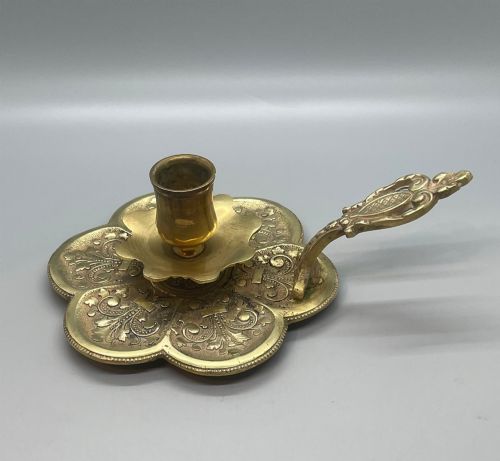
An antique brass candle tray provides a secure base for holding wax lights, protecting furniture while allowing easy movement around a room by hand. When buyers search for an antique brass candle tray, they find chambersticks featuring attached saucers, snuffer trays paired with cutting implements, and low fitted bases designed to catch drips.
The examples recorded here span from the seventeenth century through the Edwardian era, taking forms such as chamber candlesticks, tavern pairs, and specialised snuffer dishes. Victorian pieces and items from around nineteen hundred appear most frequently on this page, often incorporating handles or fitted saucer bases for daily utility.
How these pieces were made
Makers shaped these items primarily from solid brass and cast brass, utilising traditional casting and turning methods to create sockets, stems, and drip pans. Some exceptional early forms employ paktong, a copper-nickel-zinc alloy prized for its bright, silvery appearance and difficult working properties.
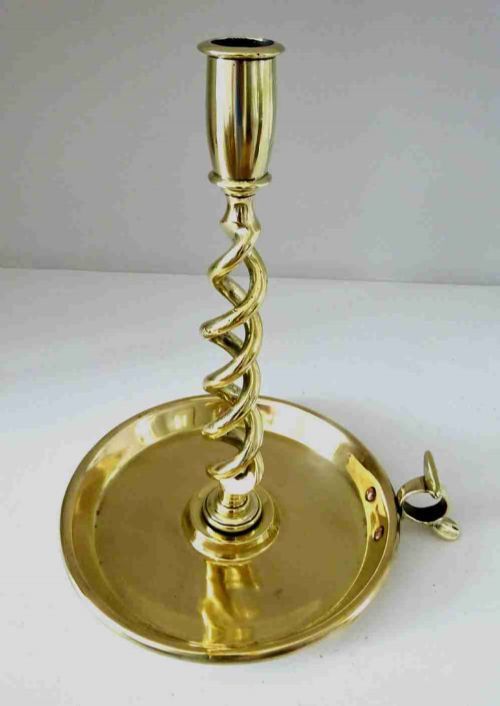
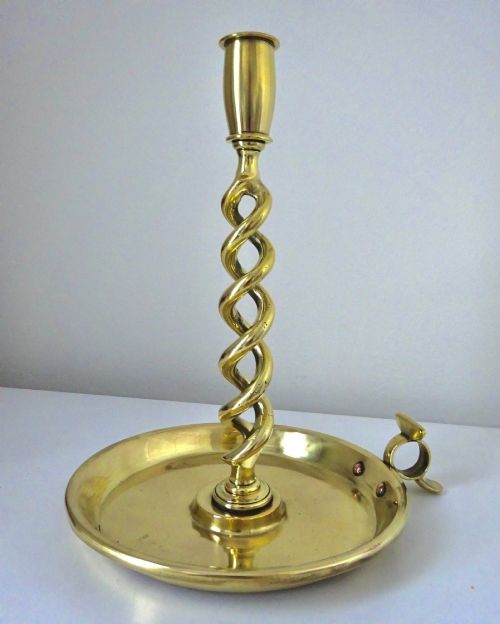
Design details across the periods include twisted stems, applied handles, and combined ceramic elements that demonstrate varied workshop techniques. The construction ranges from heavy seventeenth-century Heemskerk types to lighter Edwardian sheet and cast components.
What varies in quality
The standard of a piece depends on the crispness of the casting, the weight of the metal, and the integrity of the original construction rather than mere age. Finer examples retain their original components, such as matched snuffers or unpolished surfaces that show genuine tactile wear from period use.
Design ambition separates basic utility wares from items styled in the Aesthetic Movement or Arts and Crafts traditions. Better workshops applied considered proportions, integrated handles securely, and employed superior alloys like paktong to create distinct visual depth.
Benhan and Froud
The Antique Brass Candle Tray Glossary
- Chamberstick
- A portable candlestick mounted in a shallow pan or tray with a loop handle, used for carrying light through a house at night. These items protect the carrier from falling wax.
- Paktong
- A traditional Chinese copper-nickel-zinc alloy imported to Europe and used for high-end metalware. It mimics silver and takes a sharp, bright finish.
- Heemskerk candlestick
- An early heavy brass candlestick type featuring a central drip ring and a bell-shaped base, originating in the low countries during the seventeenth century. They represent some of the earliest brass lighting forms.
- Snuffers
- Scissors with an attached box designed to trim candle wicks while extinguishing the flame, frequently resting in a dedicated matching tray. They kept indoor lighting bright and smoke-free.
Antique Brass Candle Tray: Frequently Asked Questions
What is a chamberstick?
A chamberstick is a portable candle holder featuring a low tray or saucer base with a finger loop handle. This design allowed people to carry a light safely from room to room before the invention of electric lighting.
The wide tray served the vital purpose of catching stray hot wax drips, protecting hands and clothing during transit.
How do I date an antique brass candle tray?
Dating relies on observing manufacturing techniques, metal composition, and stylistic details such as stem turning and base shape. Seventeenth and eighteenth-century examples often show heavier, simpler cast construction, while Victorian and Edwardian pieces feature twisted stems or applied aesthetic decoration.
Comparing the form to documented periods in the archive helps narrow down the decade of production.
What are candle snuffers used for?
Candle snuffers are specialised scissor-like tools equipped with a small box on one blade to trim the charred wick of a burning candle. Trimming prevented excessive smoke and sputtering, extending the burning time of tallow or beeswax candles.
They were typically kept resting on a dedicated matching tray when not in active use.
How do I clean brass safely?
Cleaning antique brass requires minimal intervention to preserve the natural dark oxidation and surface character built up over centuries. Using mild soap and water removes surface dirt without stripping away the historic patina.
Harsh metal polishes should be avoided because they remove original surface skin and diminish the collectible value.