
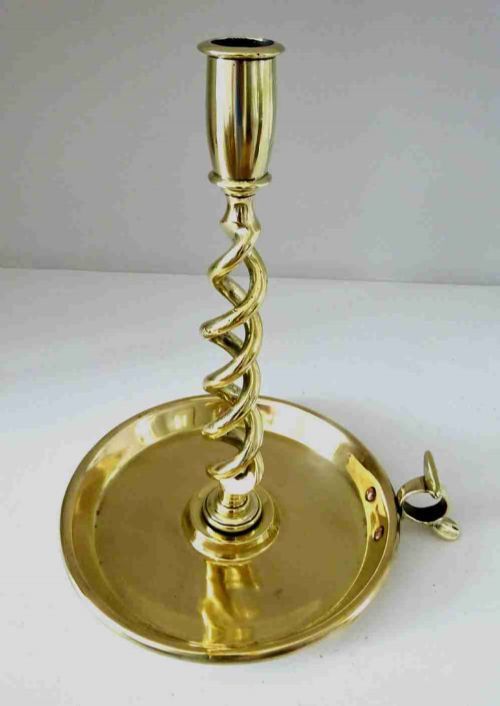

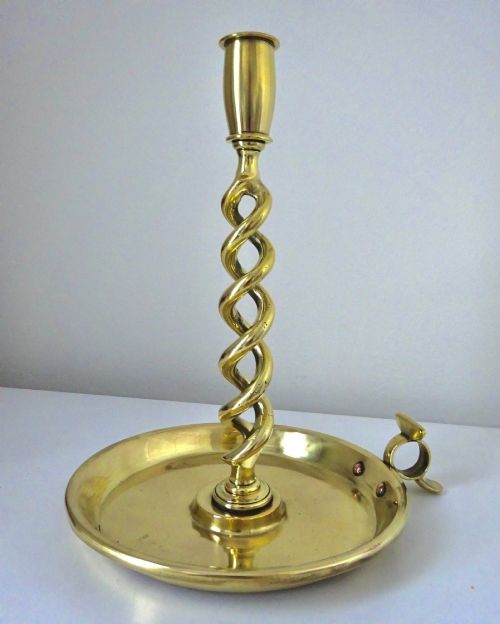


Open Twist Brass Candlestick
An open twist brass candlestick brings sculptural form to lighting, pairing helicoidal metal columns with period weight and presence.
Open Twist Brass Candlestick
An open twist brass candlestick combines metal columns formed into helical spirals with traditional domestic lighting uses. These items appear primarily from the Victorian and Edwardian eras, extending into the early twentieth century alongside oak and glass combinations.
The versions most common on this page are tall pairs utilising cast brass or oak shafts with brass thistle tops. Table lamps converted or constructed from these forms also emerge regularly across the listings.
Design influences draw upon Jacobean revival motifs, translating seventeenth-century woodturning techniques into metal and mixed-material desk and tabletop accessories.
Materials and construction methods
Makers utilised brass casting and turning to achieve the distinctive spiral columns, often pairing the metal with solid oak shafts and fitted bases. Components frequently include threaded joins securing thistle-shaped brass tops to wooden or metal stems.
The open helix structure requires precision in metalwork to maintain balance and symmetry along the vertical axis of the candlestick or table lamp.
Some towering oak stems reach seventeen inches, standing ready to illuminate a very tall Victorian room.
Judging quality and proportion
Weight and height distinguish finer examples, with taller pieces and solid cast elements demonstrating superior material substance. The clarity and sharpness of the spiral twist define the visual success of the turning.
Fitted bases, integrated trays with handles, and well-matched pairs indicate higher initial manufacture compared to singular or mismatched items.
The Open Twist Brass Candlestick Glossary
- Barley twist
- A spiral column resembling the shape of a barley stalk, turned into wood or cast in metal. This motif appears widely across Victorian and Edwardian furnishings.
- Double helix
- A decorative form featuring two intertwined spiral strands running parallel along a central shaft. Edwardian table lamps utilise this complex configuration.
- Thistle top
- A socket or drip pan shaped like the bloom of a thistle flower. These brass components cap many period oak and metal candlesticks.
- Fitted tray
- A matching base plate designed to catch melting wax and hold the candlestick upright. Some Victorian examples include an attached carrying handle.
Open Twist Brass Candlestick: Frequently Asked Questions
How do I date an open twist brass candlestick?
Dating relies on material combinations, manufacturing marks, and prevailing styles recorded across Victorian and Edwardian production periods. Examining the construction of the base and sockets helps place the item within the nineteenth or early twentieth century.
Oak and brass pairings frequently point towards the later decades around nineteen hundred to nineteen twenty, while marked tray bases often align with Victorian domestic pieces.
Were these items used for dining tables?
These candlesticks served primarily on sideboards, mantelpieces, and desks rather than crowded dining tables. Their height and reflective metal surfaces provided functional illumination for rooms before electric lighting predominated.
Pairs allowed symmetrical placement on furniture surfaces, a standard arrangement in period domestic interiors.
Can I convert these candlesticks into lamps?
Many examples on the market already function as table lamps through period or later adaptations. The hollow core of the twist shaft accommodates wiring without altering the exterior metalwork.
Buyers should inspect existing fittings to determine whether the conversion preserves the original structural integrity of the piece.
How do I clean antique brass safely?
Preserving the aged patina involves gentle dusting and avoiding harsh abrasive polishes that remove surface character. Mild soapy water on a soft cloth removes accumulated grime from the crevices of the twist.
Leaving the natural oxidation intact maintains the historical appearance valued by collectors of vintage metalwork.