


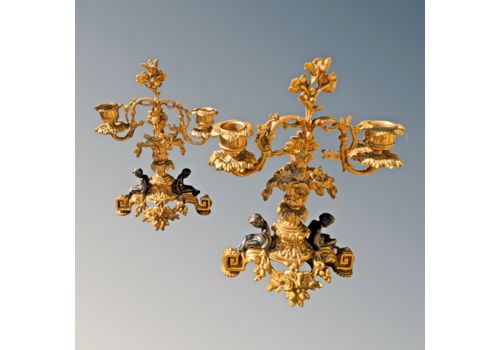


French Rococo Brass Candlestick
These french rococo brass candlestick items bring flamboyant nineteenth-century design to interiors, offering elaborate, scrolling forms that elevate any mantelpiece.
French Rococo Brass Candlestick
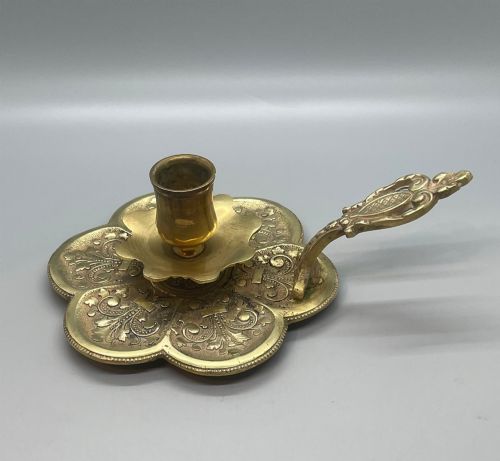
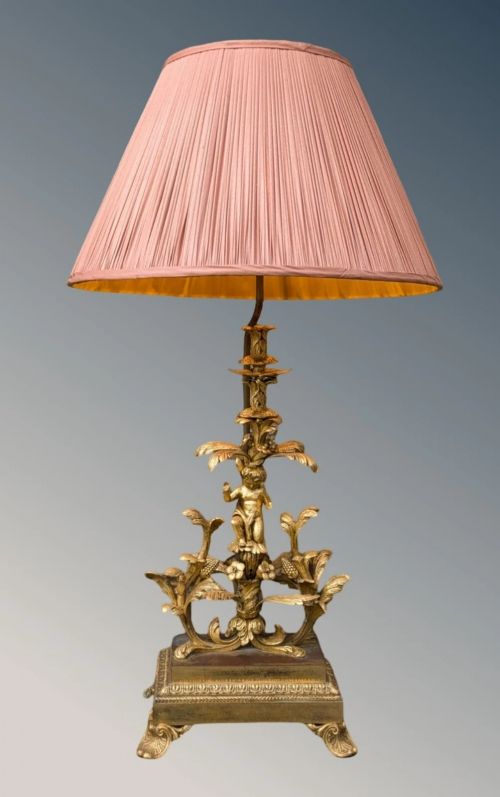
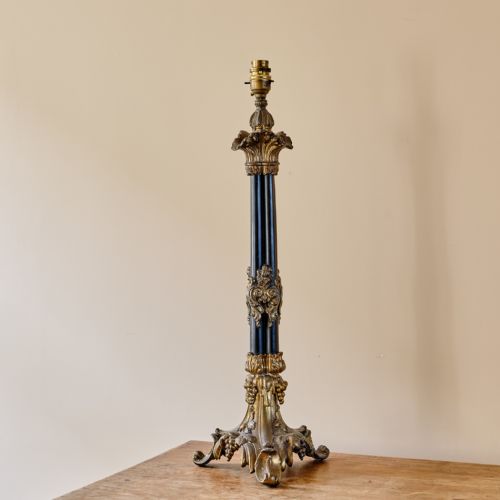
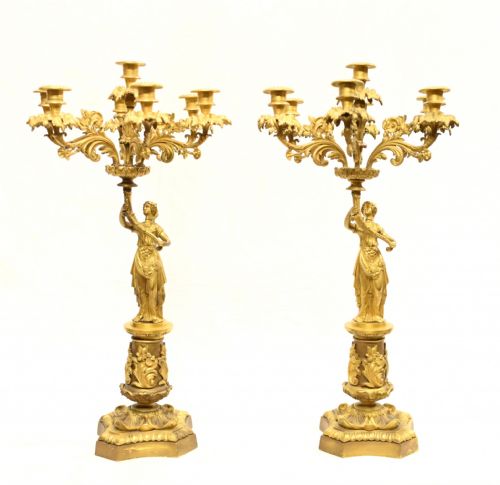
A french rococo brass candlestick embodies the ornate, asymmetrical ornamentation typical of nineteenth-century revival periods. These lighting items span single candleholders, multi-branch candelabra, and electrified lamp bases designed for domestic illumination.
Most examples originate from the Victorian era and the latter half of the nineteenth century. Makers frequently produced matched pairs, incorporating sculptural figures, cherubs, or classical motifs alongside swirling foliage.
Beyond standard candlesticks, the selection includes desk accessories, heavy multi-stem candelabra, and pieces combined with marble bases or glass components. Each object reflects the decorative ambitions of French chateau and second empire aesthetics.
How they were made
Foundries utilised casting techniques in brass, bronze, and gilt metal to achieve deep relief and intricate scrollwork. Artisans frequently applied fire gilding or ormolu finishes to bronze bases, creating a bright metallic sheen.
Many items incorporate contrasting materials such as carved marble plinths, blue glass bodies, or hanging lustres. These mixed-media constructions required skilled assembly to join heavy metal stems securely to stone foundations.
Listings feature nineteenth-century materials including gilt bronze, brass, ormolu, glass, and marble.
What varies in quality
The definition and depth of the cast ornamentation dictate the standard of execution across these objects. Finer examples display crisp chasing and detailed hand-finishing on foliage and figural elements, whereas simpler versions show softer contours.
Weight and structural composition also differentiate the range, particularly in multi-arm candelabra and heavy bronze pieces mounted on marble. Substantial metal thickness and integrated construction point to superior nineteenth-century workshops.
The French Rococo Brass Candlestick Glossary
- Ormolu
- A gilded bronze finish applied through mercury amalgamation or modern electroplating to imitate solid gold. This treatment gave nineteenth-century metalwork its characteristic bright yellow lustre.
- Candelabra
- A branched lighting fixture designed to hold multiple candles simultaneously. These pieces often feature removable arms or central stems decorated with scrollwork.
- Lustre
- A glass pendant or prism hung from a candlestick or lamp to reflect candlelight. They appear frequently on nineteenth-century decorative lighting.
- Gilt Bronze
- An alloy of copper and tin coated with a layer of gold. It provides durability while maintaining a rich metallic surface appearance.
French Rococo Brass Candlestick: Frequently Asked Questions
How do I clean an ormolu candlestick?
Dust gently with a soft dry cloth to protect the thin gold surface. Avoid abrasive polishes that strip the historic gilding.
Water and chemical solvents cause damage to nineteenth-century metal finishes. Professional care is recommended for heavily tarnished pieces.
Are these candlesticks wired for electricity?
Many items function as period lamp bases or have been converted for modern electrical use. Unconverted candlesticks retain their original candle sockets.
Check individual listings to confirm whether wiring has been added or if the piece remains in its original lighting configuration.
How do I date a french rococo piece?
Examine the casting quality, fastening screws, and base materials for nineteenth-century manufacturing traits. Periods span from the eighteen-fifties through the early twentieth century.
Stylistic revivals during the Victorian era often drew heavily on earlier Louis Quinze designs, making material analysis essential.
Can I use real candles in antique candelabra?
Standard taper candles fit most historical sockets, though inner diameters vary across nineteenth-century foundry work. Drip catchers protect delicate metal and marble surfaces.
Ensure the candelabra stands level on a stable surface before lighting multiple candles to prevent tipping.